
Guggenheim Securities software equity research analyst John DiFucci discusses his market picks and recent activity on Wall Street on ‘Making Money.’
**Key Takeaways:**
* **Strategic Vertical Integration:** Fox Corp.’s $22 billion acquisition of Roku marks a pivotal move towards vertical integration, uniting Fox’s premium live content (sports, news) with Roku’s dominant connected TV platform and advertising technology. This positions Fox to control distribution, monetization, and user experience in the competitive streaming landscape.
* **Dominance in Ad-Supported Streaming (FAST):** The combination significantly bolsters Fox’s footprint in the burgeoning ad-supported streaming market. By merging Fox’s content assets, including Tubi, with Roku’s vast reach of over 100 million households and sophisticated ad tech, the new entity is poised to capture a larger share of the accelerating shift of advertising dollars from linear TV to CTV.
* **Financial Acuity and Future-Proofing:** Despite the substantial price tag, the deal projects $400 million in run-rate cost synergies within two years, alongside considerable revenue upside from enhanced ad targeting and cross-platform promotion. This financial rationale, expected to be accretive to free cash flow per share, underscores Fox’s aggressive strategy to future-proof its business amidst declining traditional media revenues.
**FOX Corp. Reshapes Streaming Landscape with $22 Billion Roku Acquisition: A Bold Vertical Integration Play**
In a move that reverberates across the media and technology sectors, Fox Corp. announced on Friday the successful completion of its landmark $22 billion acquisition of Roku. This strategic consolidation not only expands Fox’s burgeoning streaming presence, which already includes its free ad-supported streaming TV (FAST) service Tubi and FOX One, but fundamentally reshapes the competitive dynamics of the connected TV (CTV) and digital advertising markets. The deal, initially announced in June 2026, culminates Fox’s ambitious drive to establish itself as a formidable, vertically integrated powerhouse in the new era of media consumption.
The company’s announcement underscored the profound synergies expected from the union: the combination of FOX’s highly coveted live sports, breaking news, and local programming with Roku’s expansive open connected TV platform, which reaches over 100 million households. This integration is designed to unlock “new opportunities for the company to serve its viewers, advertisers and partners,” creating a holistic ecosystem from content creation to distribution and monetization. For investors, the promise of significant financial upside was a key highlight, with FOX expecting to achieve approximately $400 million of run-rate cost synergies within two years of the transaction’s close. Beyond operational efficiencies, the company anticipates additional potential revenue upside, projecting the deal to be accretive to free cash flow per share by the second full year after closing – a critical metric signaling long-term value creation.
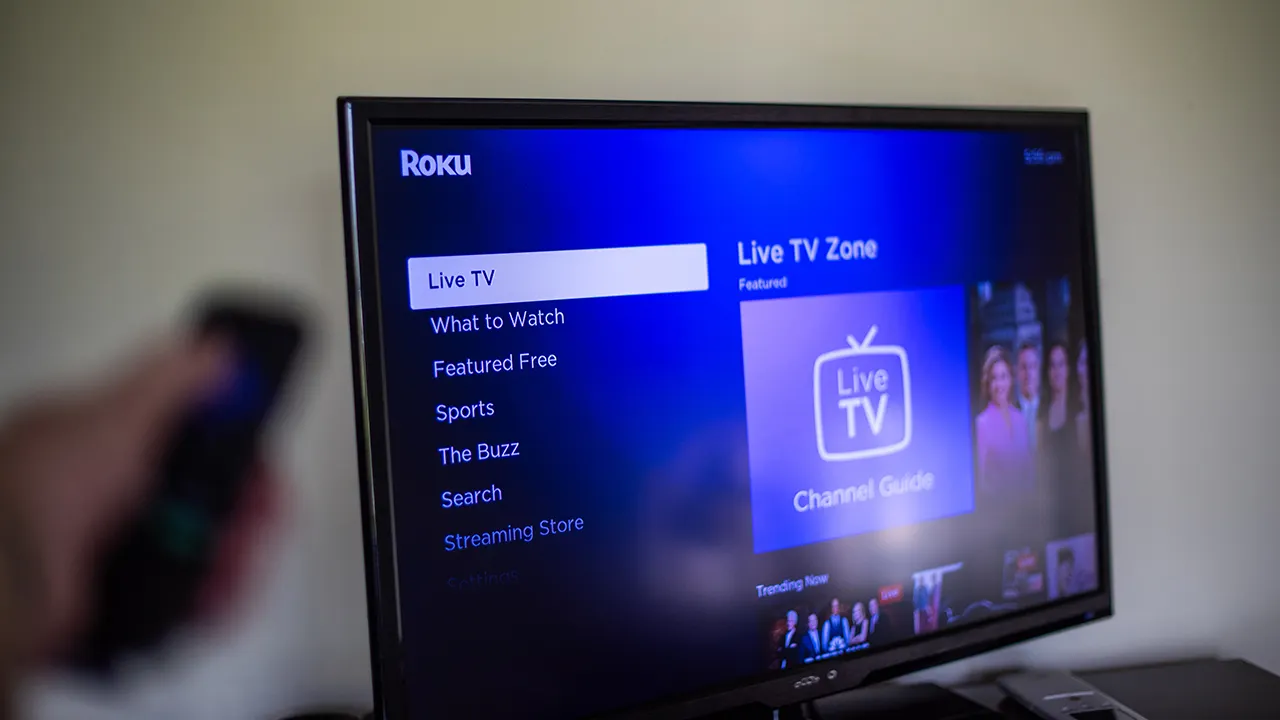
Fox Corp. said that acquiring Roku will create new opportunities for the company to serve viewers, advertisers and partners.(Tiffany Hagler-Geard/Bloomberg via Getty Images)
Lachlan Murdoch, executive chair and CEO of Fox Corp., articulated the strategic imperative behind the acquisition, stating that the “closing of this acquisition advances the long-term strategy of FOX.” His vision for the combined entity prioritizes relentless service to audiences and partners, while crucially reinforcing “the openness and choice that is the essence of the Roku platform.” This emphasis on maintaining Roku’s platform-agnostic approach is vital to retaining its diverse content partnerships and user base, ensuring a smooth transition and continued growth. Murdoch’s confidence was palpable, adding, “Our shared entrepreneurial passion and clear conviction toward building the future together with our new Roku colleagues gives us great confidence in the opportunities ahead of us.”
The deal’s magnitude, at $22 billion, signals Fox’s aggressive pivot away from its traditional reliance on linear television revenues, which continue to face secular decline. By acquiring Roku, Fox gains not just a massive distribution platform but also sophisticated advertising technology and invaluable first-party data on viewing habits across millions of households. This data-driven approach is paramount in the evolving digital advertising landscape, where targeted advertising commands higher premiums and delivers superior returns for brands. The ability to integrate Fox’s premium, brand-safe content with Roku’s advanced advertising stack creates a potent offering for advertisers looking to shift budgets from fragmented traditional media to measurable and scalable CTV environments.

Fox Corp. announced the deal to acquire Roku for $22 billion in June 2026, with the deal being completed in November.(Tiffany Hagler-Geard/Bloomberg via Getty Images; Roy Rochlin/Getty Images)
The leadership structure for the newly expanded digital arm underscores a commitment to continuity and expertise. Roku founder Anthony Wood will join the FOX board of directors, a critical move to ensure institutional knowledge and strategic vision are retained. Furthermore, Wood will serve as co-chair of FOX Digital Platforms, a newly formed division encompassing Roku, Tubi, FOX One, Red Seat Ventures, and other digital products and services across the company. He will serve alongside Paul Cheesbrough, who transitions into the role of co-chair and CEO of this pivotal division. This dual leadership model aims to blend Roku’s innovative spirit with Fox’s operational scale.
Anthony Wood, reflecting on Roku’s journey, stated, “We started Roku more than two decades ago to give people a better way to watch TV, and that mission doesn’t change today.” He acknowledged the transformative impact of the acquisition, noting, “What does change is our reach and resources. FOX has a deep respect for Roku’s culture and wholly shares our commitment to staying open to every content partner.” This reassurance about preserving Roku’s open ecosystem is crucial for maintaining relationships with other content providers, which is a cornerstone of Roku’s market appeal. Wood expressed enthusiasm for the future, adding, “Our teams will keep building and innovating as they always have, now with the support and capabilities of FOX behind us. I’m proud of what Roku’s employees have built, and I’m excited about what comes next.”
The competitive landscape in streaming and CTV is fierce, dominated by tech giants like Amazon, Google (with Android TV), and Apple, alongside media conglomerates such as Disney, Warner Bros. Discovery, and NBCUniversal. Fox’s acquisition of Roku represents a concerted effort to carve out a dominant position by combining premium, live, and highly engaging content with a leading hardware and software platform. This vertical integration strategy mirrors similar plays by companies like Comcast with Xumo and Samsung with Samsung TV Plus, but at a scale that positions Fox as a significant challenger in the battle for audience attention and advertising dollars. The ability to cross-promote content, leverage unified ad sales teams, and innovate on a combined tech stack provides a significant competitive moat against pure-play streamers and platform providers alike. The deal not only secures Fox’s distribution but also provides an invaluable direct relationship with consumers, bypassing potential gatekeepers and fostering a more direct monetization path.

Roku founder Anthony Wood will join the FOX board of directors and will also serve as co-chair of FOX Digital Platforms.(Tiffany Hagler-Geard/Bloomberg via Getty Images)
**Market Impact:**
The completion of Fox Corp.’s $22 billion acquisition of Roku is expected to send ripples across the media, advertising, and technology sectors. For Fox investors, while the significant outlay may introduce short-term integration risks and balance sheet scrutiny, the long-term outlook is buoyed by reduced reliance on linear TV, diversified digital revenue streams, and the promise of accretive free cash flow. This strategic pivot firmly establishes Fox as a major player in the high-growth ad-supported streaming economy. Competitors, particularly other traditional media companies struggling with digital transformation, will likely feel increased pressure to accelerate their own platform strategies or consider similar vertical integrations to secure distribution and monetization. Tech giants with their own CTV platforms will face a more formidable, content-rich challenger, potentially intensifying the battle for market share in both hardware and advertising. For advertisers, the combined entity presents a more streamlined and potent avenue for CTV advertising, offering enhanced data, targeting capabilities, and a massive, engaged audience base, likely driving further shifts in ad budgets away from legacy media.
**CLICK HERE TO DOWNLOAD THE FOX NEWS APP**
Fox Corp. is the parent company of FOX Business.