
**Key Takeaways:**
1. **Language Reflects Economic Shifts:** Merriam-Webster’s latest dictionary update serves as a powerful barometer of evolving consumer behavior, technological disruption, and wealth dynamics, offering insights into emerging market trends from luxury real estate to the AI-driven content economy.
2. **Tech and AI Drive New Investment Frontiers:** The proliferation of AI-related terms like “AGI” and “compute” signals significant capital allocation into advanced computing infrastructure, software development, and ethical AI frameworks, reshaping industries from finance to media.
3. **Consumer Culture Shapes Niche Markets:** From “landmaxxing” illustrating ultra-luxury market dynamics to “meme coins” reflecting speculative retail investor sentiment, the new lexicon highlights the growing influence of digital communities and lifestyle trends on spending patterns and investment preferences across diverse sectors.
‘The Big Money Show’ panel discusses ‘Landmaxxing,’ a new real estate trend where billionaires purchase entire blocks of neighboring homes to create massive private compounds.
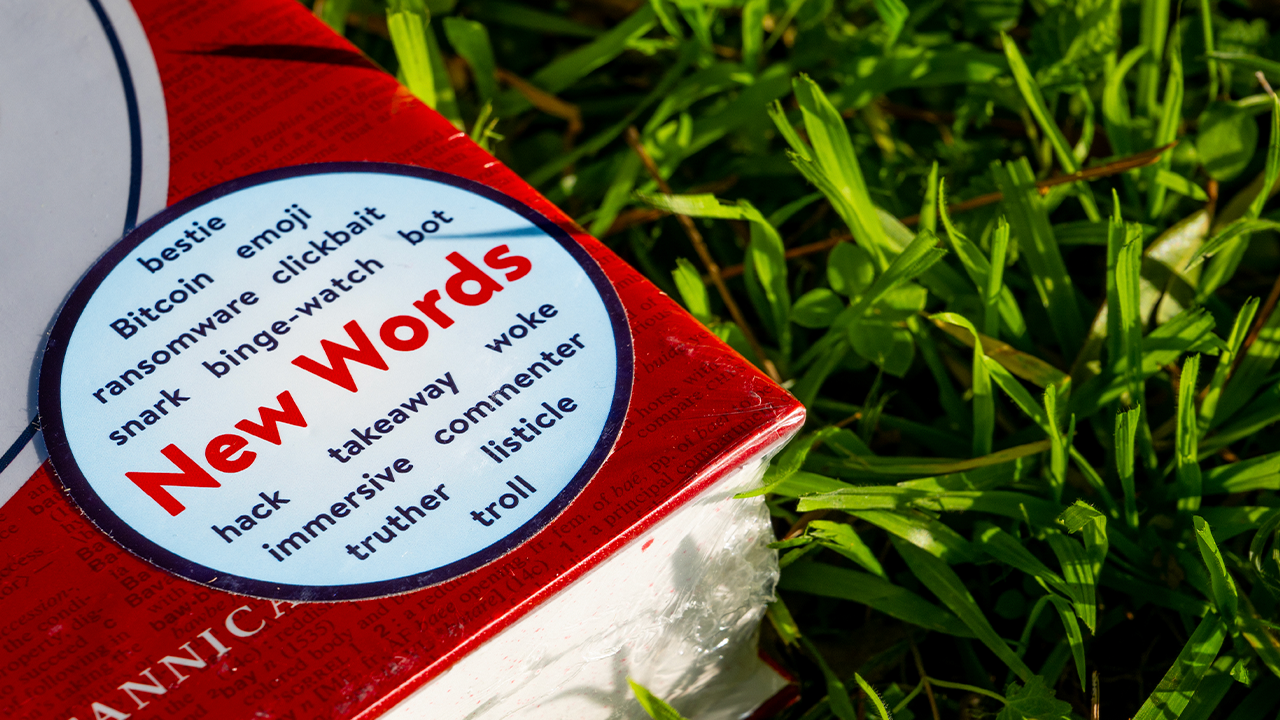
From “vibe coding” to “trash panda,” the internet has officially talked its way into the dictionary, yet again offering a fascinating snapshot of the prevailing cultural, technological, and economic forces shaping our world. Merriam-Webster’s latest update, featuring 1,400 new words and definitions, isn’t just a linguistic exercise; it’s a critical barometer for financial journalists and investors seeking to understand the undercurrents driving market shifts, consumer behavior, and emerging industry trends. This digital-age “glow-up” of the lexicon provides official recognition to an internet-fueled mix that also includes “looksmaxxing,” “parasocial,” and “Rickroll,” each carrying subtle, yet significant, market implications.
Perhaps one of the most compelling additions from a financial perspective is “Landmaxxing.” As highlighted on ‘The Big Money Show,’ this burgeoning real estate trend involves billionaires strategically acquiring entire blocks of neighboring homes to consolidate vast private compounds. This phenomenon speaks volumes about the current state of ultra-luxury real estate, where wealth concentration continues to drive demand for scarce, premium assets. “Landmaxxing” isn’t merely a lifestyle choice; it’s an investment strategy that can significantly impact local housing markets, land values, and even the financial viability of public infrastructure in affected communities. For investors, it underscores the resilience of the high-end property market, often seen as a hedge against inflation and a repository for generational wealth, while also pointing to potential opportunities in niche real estate development and property management catering to the ultra-wealthy.
CONTROVERSIAL STREAMER CLAVICULAR EXPLAINS VIRAL ‘LOOKSMAXXING’ TREND AS GEN Z ADOPTS EXTREME REGIMEN
Words and definitions appear on a printed dictionary page in a file image. Merriam-Webster said new entries must demonstrate widespread use over time.(Karen Bleier/AFP via Getty Images / Getty Images)
Merriam-Webster points to social media culture as a primary engine behind many new additions, a clear indicator of its pervasive economic influence. Terms like “looksmaxxing,” related to intensive efforts to improve one’s physical appearance, reflect a burgeoning wellness and aesthetic industry, fueled by social media influencers and consumer demand for self-improvement products and services. The “parasocial” relationship, describing a one-sided connection felt towards public figures, underpins the entire creator economy, quantifying the intangible value of influencer marketing and the multi-billion-dollar ecosystem built around digital personalities. The inclusion of “meme coin” is particularly telling for the financial sector, acknowledging the legitimacy of speculative, digitally-native assets driven by community sentiment rather than traditional fundamentals, a phenomenon that continues to challenge conventional investment wisdom and regulatory frameworks. Similarly, “promposal” and “Rickroll” highlight the cultural penetration of internet phenomena, influencing consumer spending on entertainment, events, and digital content.
NEW YORK MAKES HISTORY WITH FIRST-OF-ITS-KIND LAW REGULATING AI-POWERED COMMERCIALS
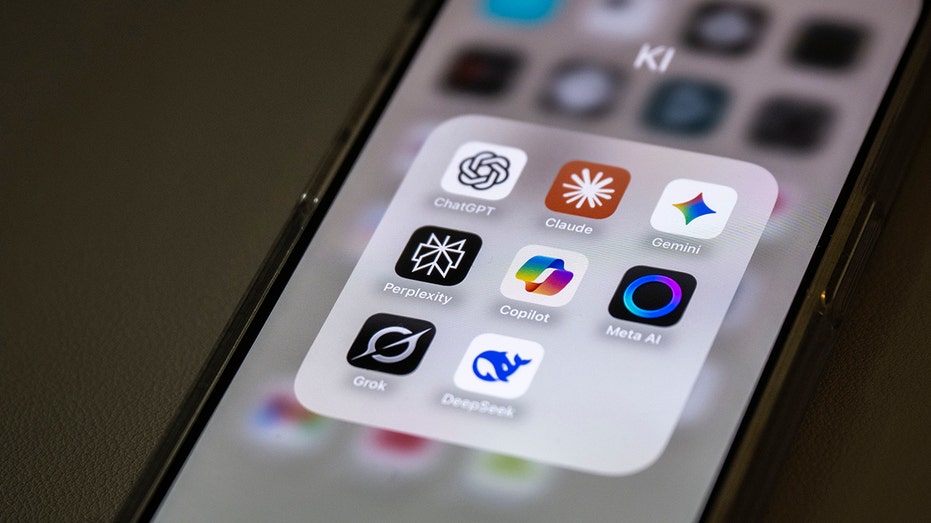
Several AI applications can be seen on a smartphone screen, including ChatGPT, Claude, Gemini, Perplexity, Microsoft Copilot, Meta AI, Grok and DeepSeek. (Philip Dulian/dpa/Getty Images / Getty Images)
Artificial intelligence, undoubtedly the most transformative technological force of our era, left an indelible imprint on this update. Terms such as “vibe coding,” “AGI” (Artificial General Intelligence), and a new noun form of “compute” are not mere jargon; they represent the frontier of innovation and significant capital expenditure. “AGI” underscores the ambitious long-term goals of tech giants and venture capitalists pouring billions into developing AI that can perform human-level cognitive tasks across various domains. The elevation of “compute” to a noun signals the increasing recognition of computational power as a fundamental economic resource, akin to electricity or raw materials, driving demand for advanced semiconductors, data centers, and cloud infrastructure. Furthermore, “uncanny valley,” describing the unsettling feeling sparked by nearly human-like artificial creations, highlights growing public discourse and ethical considerations around AI deployment, which could influence regulatory landscapes and investor confidence in AI-driven products and services.
The additions stretch well beyond screens and Silicon Valley, touching upon the food and beverage industry, another sector profoundly influenced by consumer preferences and global trade. Food-related newcomers like “superfood,” “cake pop,” “shishito,” “bao,” and “chili crisp” indicate shifting dietary trends, a growing appetite for international flavors, and the continued premium placed on health-conscious and gourmet options. These terms reflect market opportunities for food manufacturers, restaurant chains, and agricultural producers specializing in specialty crops and ingredients. The proliferation of such terms can guide investors towards companies innovating in food science, sustainable agriculture, and ethnic food markets.
VIRAL RACCOON JIMOTHY GETS HIS OWN MLB THEME NIGHT AS SEATTLE MARINERS EMBRACE THE TREND
The Merriam-Webster logo is displayed on a smartphone. The publisher added 1,400 new words and definitions to its online dictionary.(Thomas Fuller/SOPA Images/LightRocket via Getty Images / Getty Images)
Other entries capture the mood of modern life, reflecting a blend of psychological states and leisure pursuits that have financial implications. “Sunday scaries,” for instance, speaks to the mental health impact of work culture, influencing demand for wellness apps and stress-relief products. “Crashout,” “copium,” and “California sober” point to evolving social norms around mental well-being and substance use, creating market segments for therapeutic services, non-alcoholic beverages, and mindfulness products. “Yacht rock” signals a nostalgic consumption trend, boosting sales in music streaming, retro fashion, and themed entertainment. Even “shapewear” and “neckbeard” illustrate niche consumer segments and fashion trends impacting retail. These terms, while seemingly informal, offer insights into consumer psychology and spending patterns that can be leveraged by savvy marketers and investors.
The “Mandela Effect,” a term for a shared false memory, and “trash panda,” a playful name for a raccoon, serve as reminders that collective narratives and even lighthearted internet culture can have tangential economic ripples, from viral marketing campaigns to themed merchandise. Merriam-Webster’s editorial rigor, requiring sustained, widespread use before inclusion, means these words are not fleeting fads but established markers of shifts in public consciousness, reflecting deeply embedded economic and social transformations.

The one-of-one gold Jimothy rookie card pulled by 13-year-old Mariners fan Abby sold for $21,100 after attracting 100 bids on eBay.(oscar_j104 via eBay / Fox News)
This sweeping update precedes Merriam-Webster’s 2026 Word of the Year announcement. The previous year’s selection, “slop,” defined as “digital content of low quality that is produced usually in quantity by means of artificial intelligence,” perfectly encapsulated the nascent challenges and opportunities within the generative AI landscape. The “flood of slop” in 2025 – from “absurd videos” to “fake news” and “junky AI-written books” – highlighted the rapid scalability of AI content generation and its double-edged sword: efficiency versus quality. For media companies, content creators, and advertisers, “slop” represents both a threat to authenticity and a potential for hyper-efficient, albeit low-cost, content production. It underscores the critical market demand for AI governance, content moderation, and discerning human curation amidst an increasingly automated digital environment.
THE AI YOU USE EVERY DAY IS BIASED — AND IT’S QUIETLY SHAPING YOUR WORLDVIEW, NEW REPORT SAYS
Other terms highlighted by the publisher in 2025, such as “gerrymander” (political influence on demographics and thus markets), “tariff” (global trade and supply chain impacts), and “performative” (social signaling in corporate responsibility), further demonstrate how language captures the economic and geopolitical zeitgeist. Each word, when viewed through a financial lens, offers a narrative of changing consumer values, technological leaps, investment priorities, and regulatory challenges that will continue to shape market dynamics for the foreseeable future.
CLICK HERE TO DOWNLOAD THE FOX NEWS APP
**Market Impact:**
The latest additions to the Merriam-Webster dictionary serve as a rich, albeit unconventional, dataset for investors and financial analysts. They illuminate the profound economic shifts driven by technological advancements, evolving consumer preferences, and global wealth distribution. The rise of terms like “Landmaxxing” and “AGI” signal robust investment trends in luxury assets and transformative AI, respectively. Concurrently, the proliferation of social media and wellness-related vocabulary points to dynamic growth in the creator economy, digital marketing, and health-focused consumer goods. Understanding these linguistic indicators can provide an early warning system for emerging market opportunities, potential regulatory hurdles, and shifts in societal values that directly impact corporate strategies and long-term investment returns across diverse sectors.