
**Key Takeaways:**
* **Meta’s Entry into Wearable AI**: Despite market skepticism surrounding physical AI companions, Meta has unveiled Muse Charm, a dedicated wearable device designed to provide instant access to its personal AI agent, Muse.
* **Frictionless AI Interaction**: The Muse Charm aims to offer a novel, low-friction way to engage with AI by eliminating the need to unlock a phone or open an app, emphasizing speed and constant availability.
* **Strategic “Low-Stakes” Experiment**: Positioned as a quasi-Tamagotchi, the Charm represents a calculated move by Meta to test consumer appetite for dedicated AI hardware, gather vital user interaction data, and broadly distribute its AI agent ahead of more ambitious wearable ventures.
The concept of a dedicated AI companion device – often dubbed the “AI amulet” – has become a familiar, if somewhat fraught, presence in the tech landscape. For many consumers and industry observers, devices like Friend have turned the idea of physical AI into little more than an exercise in eye-rolling, often failing to deliver on promises of seamless integration and profound utility. The market has witnessed a flurry of ambitious, yet often underwhelming, attempts to bring AI out of our phones and into a more tangible, always-on form factor. These early forays have frequently been met with skepticism regarding their true value proposition, their potential for user friction, and the looming questions surrounding privacy and data security.
Yet, this prevailing caution hasn’t deterred tech giant Meta from entering the arena. At its annual Connect event, the company unveiled its own AI wearable, dubbed Muse Charm. This device is meticulously designed to offer consumers a new, tactile pathway to interact with its recently launched, and already garnering significant interest, personal AI agent, Muse. Meta’s move signals a distinct belief that despite past missteps in the category, there remains a compelling opportunity to redefine how individuals engage with artificial intelligence in their daily lives, moving beyond screen-centric interactions to something more ambient and omnipresent.
Unveiling the Charm: A Glimpse into Meta’s AI Future
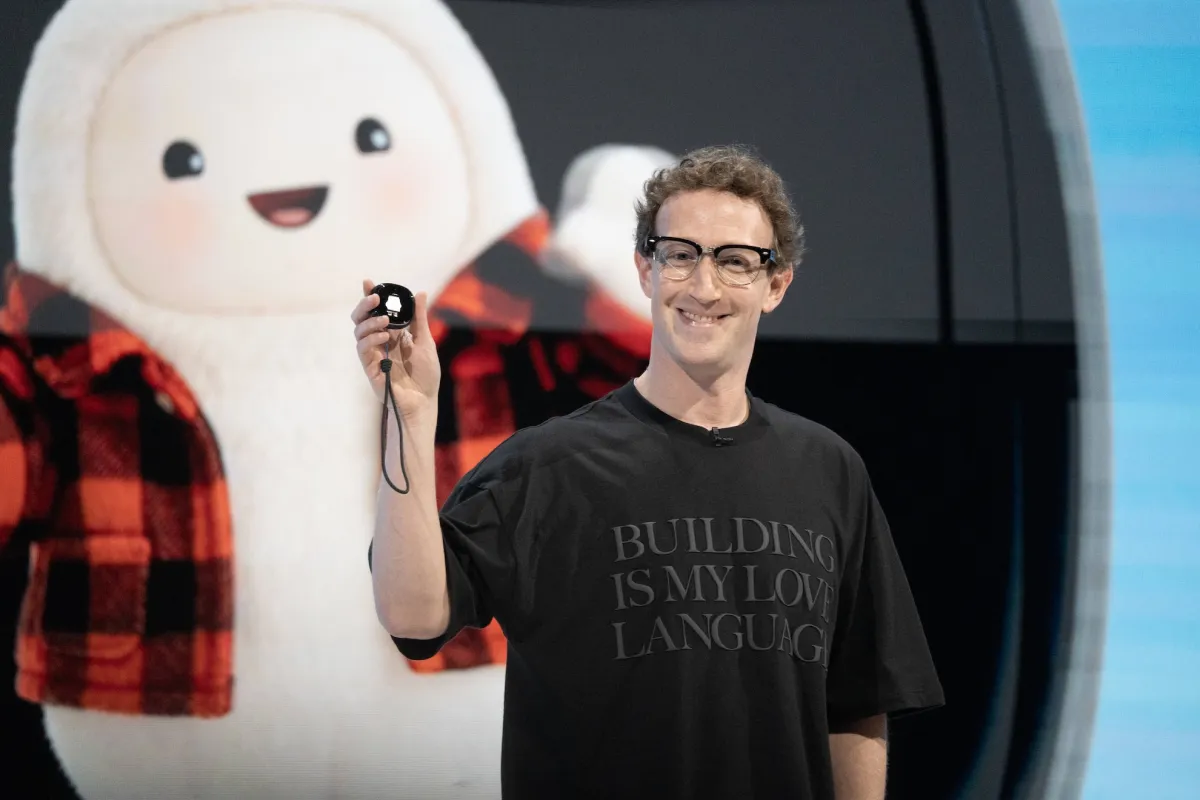
During a highly anticipated “one more thing” segment at Connect, CEO Mark Zuckerberg personally revealed the Muse Charm, positioning it as a pivotal piece of Meta’s evolving AI strategy. While the device isn’t ready to ship immediately, Zuckerberg assured attendees that his team was diligently working to “finalize laying out the components,” promising that these innovative devices would be “ready to ship in time for the holidays in December.” This strategic timing aims to capitalize on the crucial holiday shopping season, potentially introducing the Charm as a unique tech gift that could jumpstart its adoption.
At its core, the Muse Charm embodies Meta’s personal AI agent, Muse, which is playfully represented by a cute digital avatar known internally as Jolly. This digital companion resides within the palm-sized totem, a compact and lightweight gadget that users can effortlessly carry in their pockets or attach to a keychain. The device integrates a tiny screen, which serves as a window to display the Jolly avatar, imbuing the inanimate object with a sense of personality and immediate recognition. Interaction with the Charm is designed to be intuitive and vocal; users can simply talk to the device, which is then presumably capable of interpreting commands and carrying out various tasks on their behalf, bridging the gap between spoken intent and digital action.
Zuckerberg himself highlighted the Charm’s technological prowess and user-centric design during his keynote. “We packed the whole Muse experience, including the whole real-time voice and avatar stack, into something that fits on a keychain and is always available to talk to,” he explained. This engineering feat underscores Meta’s commitment to miniaturization and pervasive AI access. The mechanism for activation is equally streamlined: “You just go ahead and tap here in the fingerprint sensor in the corner, and you can start talking without having to unlock a phone or open an app.” This emphasis on immediate, frictionless access is a direct response to the perceived clunkiness of current AI interactions, where users often have to navigate multiple steps just to engage a digital assistant.
Further underscoring its utility, Zuckerberg added a crucial distinction: “So if you’re not wearing glasses, this is going to be by far the fastest way to talk to your Muse and to show what’s going on around you.” This statement subtly positions the Muse Charm as an intermediary step, complementing Meta’s smart glasses offerings while also serving a broader audience who might not yet be ready for AR wearables. It suggests a future where AI access is ubiquitous, available across various form factors tailored to different user preferences and situations.
Beyond Novelty: Meta’s Strategic Play in Ambient Computing
The Muse Charm, with its endearing Jolly avatar and interactive nature, naturally evokes a quasi-Tamagotchi feel – a lightweight, personality-filled device designed to keep users perpetually connected to Meta’s software ecosystem. This nostalgic aesthetic is not merely a design choice but a strategic one, aiming to foster a sense of companionship and engagement that previous “AI amulets” have struggled to achieve. By making the AI feel more like a pet or a constant companion, Meta hopes to embed it more deeply into users’ daily routines, transforming a utility into a delightful presence.
From a broader strategic perspective, the Muse Charm also represents a relatively low-stakes yet highly significant way for the social media giant to experiment with AI wearables. Developing and launching complex devices like AR/VR headsets involves immense capital investment and carries substantial risks. The Charm, by contrast, offers a more agile and cost-effective platform to test consumer appetite for dedicated AI hardware, gather invaluable data on user interaction patterns, and refine the underlying AI agent’s capabilities in a real-world setting. This iterative approach allows Meta to learn and adapt without the pressure of a make-or-break product launch, paving the way for more integrated and advanced wearables in the future.
Furthermore, the Charm serves as yet another channel for Meta to broadly distribute its AI agent to the masses. In an increasingly competitive landscape where tech giants are vying for AI dominance, ensuring that one’s proprietary AI is easily accessible across multiple devices and platforms is paramount. By offering a standalone physical embodiment of Muse, Meta not only expands its AI’s reach beyond its core social media platforms and smart glasses but also cultivates a distinct brand identity for its AI – one that is personal, ever-present, and always ready to assist. This move is less about immediate revenue from the Charm itself and more about solidifying Muse’s position as a ubiquitous personal assistant in the burgeoning era of ambient computing, where AI seamlessly integrates into every facet of our environment.
The success of the Muse Charm will undoubtedly hinge on its ability to transcend the “eye-rolling” reputation of its predecessors. Its true test will be whether it can offer genuinely useful functions that justify its existence as a dedicated device, beyond merely duplicating smartphone capabilities. If Meta can deliver on the promise of frictionless, intelligent assistance, the Muse Charm could become an unexpected yet critical piece in the company’s ambitious vision for an AI-powered future.
Bottom Line
Meta’s Muse Charm is more than just another wearable; it’s a deliberate foray into the challenging, yet potentially transformative, world of dedicated AI companions. By offering a low-friction, personalized access point to its Muse AI agent, Meta is attempting to sidestep the pitfalls of previous “AI amulets” and redefine user interaction with artificial intelligence. This “low-stakes” experiment, wrapped in a nostalgic and charming form factor, serves as a crucial testing ground for future AI hardware and a strategic move to ensure widespread distribution of Meta’s foundational AI technology. Its success will not only validate Meta’s vision for ambient computing but could also signal a significant shift in how we perceive and integrate AI into our everyday lives, moving towards an era where our digital assistants are truly always by our side.
When you purchase through links in our articles, we may earn a small commission. This doesn’t affect our editorial independence.
{content}
Source:{feed_title}