
US-UK Atlantic Thunder 2026 Exercise Concludes Without Uncrewed Systems, Despite Initial Focus
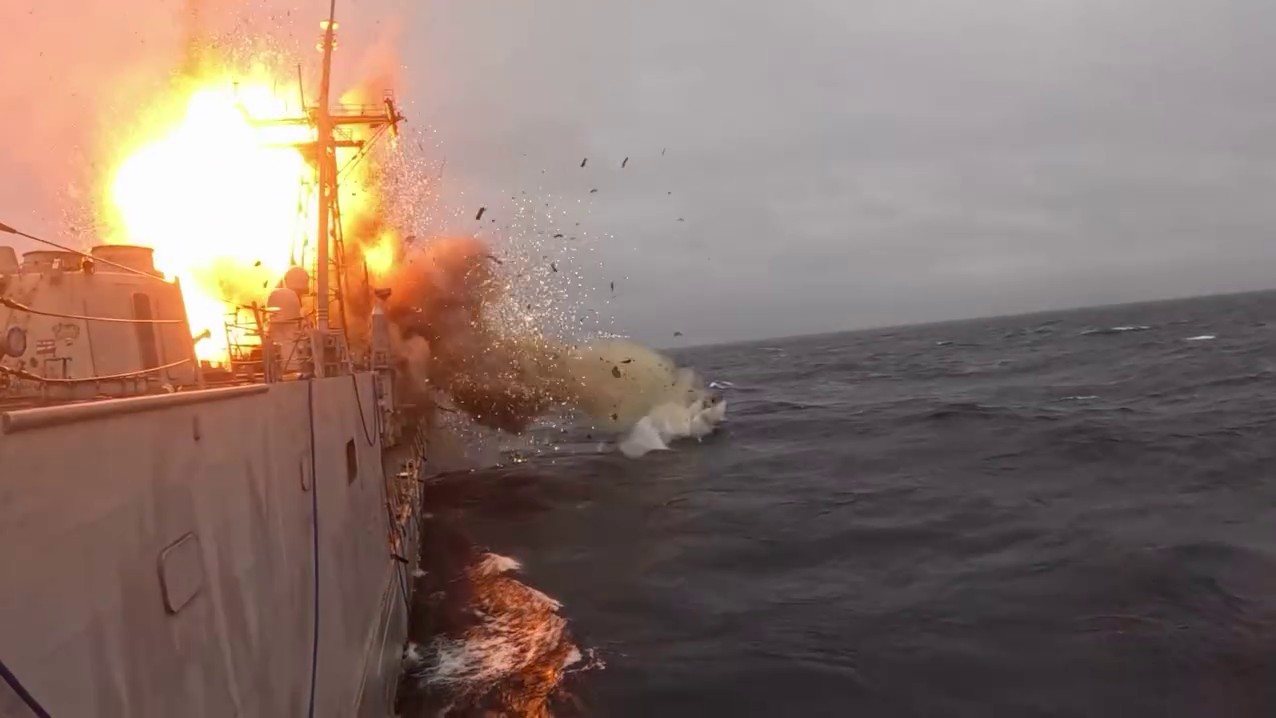
A significant joint military exercise between the United States and the United Kingdom, “Atlantic Thunder 2026,” concluded off the Hebrides with the controlled sinking of the decommissioned American frigate USS Klakring. Notably, and contrary to initial planning documents, no uncrewed systems participated at any stage of the exercise’s kinetic phase, as confirmed by Captain Kelechi Ndukwe, commander of Task Force 65 at Naval Station Rota, who led the operation.
During a media roundtable, Captain Ndukwe directly addressed questions regarding the use of unmanned systems during Atlantic Thunder 2026, stating unequivocally,“No, they were not.”This confirmation marks a notable departure from the Ministry of Defence’s original vision for the exercise, which had placed considerable emphasis on autonomous and uncrewed underwater capabilities.
An extensive Request for Information (RFI) issued by the Ministry of Defence in August 2025 had invited industry participation with a strong focus on advanced uncrewed technologies. The RFI sought solutions for high-resolution scanning at depths reaching up to 6,000 feet, autonomous and AI-driven mission tools, long-endurance and low-signature platforms, innovative launch and recovery methods, and communication systems capable of operating in bandwidth-constrained environments. The stated outcomes of this initial scoping included accelerating national and bilateral maritime uncrewed systems development, fostering interoperability and interchangeability, and promoting the operational exploitation of these capabilities to address existing maritime capability gaps.
The 2025 document described Atlantic Thunder 26 as“a US-UK multi-domain exercise designed to validate SUW [Surface Warfare] kill chains, build resilient kill webs and deliver strategic messaging through kinetic demonstration that will take place off the coast of the Hebrides in Scotland from 11th-22nd May 2026.”It also clarified that while the event offered opportunities for technology showcasing, its primary purpose was developmental.“Whilst AT26 presents opportunities to showcase technology, and for Industry contributions to be highlighted during the exercise to an appropriate audience, it must be understood that this is a development exercise,”the department stated.“The focus will be on accelerating capability delivery by addressing the capability blockers listed.”
In the absence of uncrewed battle damage assessment, the evaluation of the Klakring’s destruction relied on sensors pre-fitted to the frigate’s hull before it was towed into position. Equipment installed by the Naval Surface Warfare Center Carderock and the Naval Information Warfare Center Pacific gathered critical data. The Sixth Fleet indicated that this data will be crucial for post-exercise assessments, aimed at rapidly identifying system failures, determining repair requirements, and strengthening naval responses in genuine combat scenarios. Captain Ndukwe further informed the UK Defence Journal that the results would be processed over several months and shared between the U.S. and Royal Navies.
The USS Klakring now rests in a deep valley off the Hebrides, at a depth estimated by earlier planning documents to be around 6,000 feet. Whether uncrewed vehicles will be subsequently deployed to survey the sunken vessel remains undetermined.
Despite the lack of uncrewed participation in Atlantic Thunder 2026’s kinetic phase, both navies have made significant strides and investments in autonomous platforms elsewhere. The Royal Navy, for instance, is transitioning its mine countermeasures operations to remotely operated and autonomous systems as its Hunt and Sandown class vessels are phased out. It has also conducted trials of autonomous boats on the Clyde and has committed £1.3 billion towards autonomous ships and underwater vessels under its Defence Investment Plan, a figure recently reiterated by Labour Party shadow minister Wes Streeting. Broader programmes such as Atlantic Bastion and associated seabed and anti-submarine warfare initiatives are also fundamentally reliant on these emerging technologies.
Instead of uncrewed systems, Atlantic Thunder 2026 primarily served to test and validate long-range strike capabilities from conventional, crewed platforms across multiple domains. The USS Paul Ignatius successfully fired an anti-surface variant of the Standard Missile 6, achieving the longest range available for this type of test. The submarine USS Massachusetts delivered the final blow to the frigate with a Mark 48 Advanced Capability Torpedo. Concurrently, HMS Portland fired the Naval Strike Missile, and a Wildcat helicopter launched a Sea Venom missile. Overhead, P-8 maritime patrol aircraft from both nations and United States Air Force F-15E Strike Eagles also contributed to the exercise, demonstrating integrated air and naval power.
Captain Ndukwe highlighted the extended reach as the key differentiator between this exercise and its predecessor, held off the same range in 2022.“In past iterations of Atlantic Thunder, we weren’t able to test at the longest range, and I think that’s the biggest change from previous exercises,”he explained, attributing this advancement to the involvement of air forces and technological developments achieved during the four years of planning for the event.
Planning for a further iteration of Atlantic Thunder is already underway, with both navies aiming to conduct the next joint exercise in 2028.
Why This Matters
The outcomes of Atlantic Thunder 2026 offer a critical insight into the current state of naval modernization and the practical integration of advanced technologies, particularly uncrewed systems, into complex military operations. The explicit confirmation that no uncrewed systems were used in the kinetic phase of this major US-UK exercise, despite initial intentions and a detailed Request for Information heavily soliciting such capabilities, signals a potential gap between strategic ambition and current operational readiness or developmental maturity.
Firstly, it underscores the challenges in rapidly developing and integrating cutting-edge autonomous technologies into real-world, live-fire scenarios. While both the U.S. and Royal Navies are investing heavily in uncrewed platforms – with the UK alone committing £1.3 billion – the absence of these systems in a key developmental exercise suggests that their readiness for complex “kill chain” validation might be further off than initially hoped, or that other priorities took precedence. This could impact the timelines for achieving stated goals like accelerating capability delivery and filling maritime gaps with autonomous solutions.
Secondly, the exercise’s shift to focusing on long-range strike capabilities from crewed platforms highlights that conventional warfare assets remain central to strategic messaging and deterrence. The successful demonstration of extended-range missile and torpedo engagements from destroyers, submarines, and aircraft reinforces the continued relevance of traditional platforms while the autonomous revolution unfolds. It also suggests that the path to a fully integrated, uncrewed-centric fleet is likely to be incremental, with conventional assets bridging the gap.
Thirdly, for industry partners and technology developers, this outcome provides a clear, albeit perhaps unexpected, signal regarding the immediate operational priorities of these navies. While the RFI generated significant interest in uncrewed solutions, the exercise’s execution indicates that more foundational or mature technologies may still be preferred for critical demonstration phases. This could influence research and development investments and partnership strategies for companies aiming to contribute to future naval capabilities.
Finally, Atlantic Thunder 2026 served as an important test of interoperability and resilience within the US-UK defense alliance. Regardless of the specific technologies employed, the successful coordination of multi-domain assets and the sharing of post-exercise data are crucial for strengthening bilateral cooperation and ensuring that the two navies can operate seamlessly together in future engagements. The planning for a 2028 iteration further emphasizes the enduring commitment to this strategic partnership and continuous military development.