
The U.S. Air Force Air Mobility Command (AMC) has initiated a significant modernization effort with a $21 million contract awarded to three software companies. This initiative aims to equip the Air Force’s critical airlift and tanker units with the capability to receive real-time software updates and access crucial operational data, such as fuel status and logistics information, even in environments where traditional network connectivity is severely limited or unavailable. This advancement is projected to enhance mission effectiveness and operational readiness across the mobility fleet.
Announced on September 15 by the Defense Innovation Unit (DIU) and Air Mobility Command, the contracts were awarded to Defense Unicorns, Stator Integration Labs, and Air Space Intelligence. Each company is tasked with contributing distinct tools and expertise to facilitate the transition of prototype software into a deployable, production-ready system for integration across AMC platforms. This collaborative approach underscores the Pentagon’s strategy to leverage commercial technology for defense applications.
This modernization initiative operates under the umbrella of AMC’s Open Mission Engine program, officially dubbed OMEN. The primary objective of OMEN is to provide aircrews and mobility commanders with a superior common operating picture and up-to-the-minute information in what the military refers to as denied, degraded, intermittent, and limited (DDIL) environments. These challenging operational settings, common in contested airspace or remote regions, often impede the reliable flow of data and communication, presenting a significant hurdle to real-time decision-making.
According to an AMC spokesperson, the program is designed to ensure that aircrew mission software is “present, current, and usable” without requiring a constant connection to ground networks or cloud infrastructure for updates or data retrieval. This capability is vital for maintaining operational tempo and adapting to rapidly evolving tactical situations in areas where internet or satellite connectivity cannot be guaranteed.
The OMEN program currently remains in its prototype phase, and as such, specific timelines for initial operational capability (IOC) and full operational capability (FOC) have not yet been disclosed by AMC officials. However, the foundational work is underway to develop a robust system capable of operating independently when necessary.
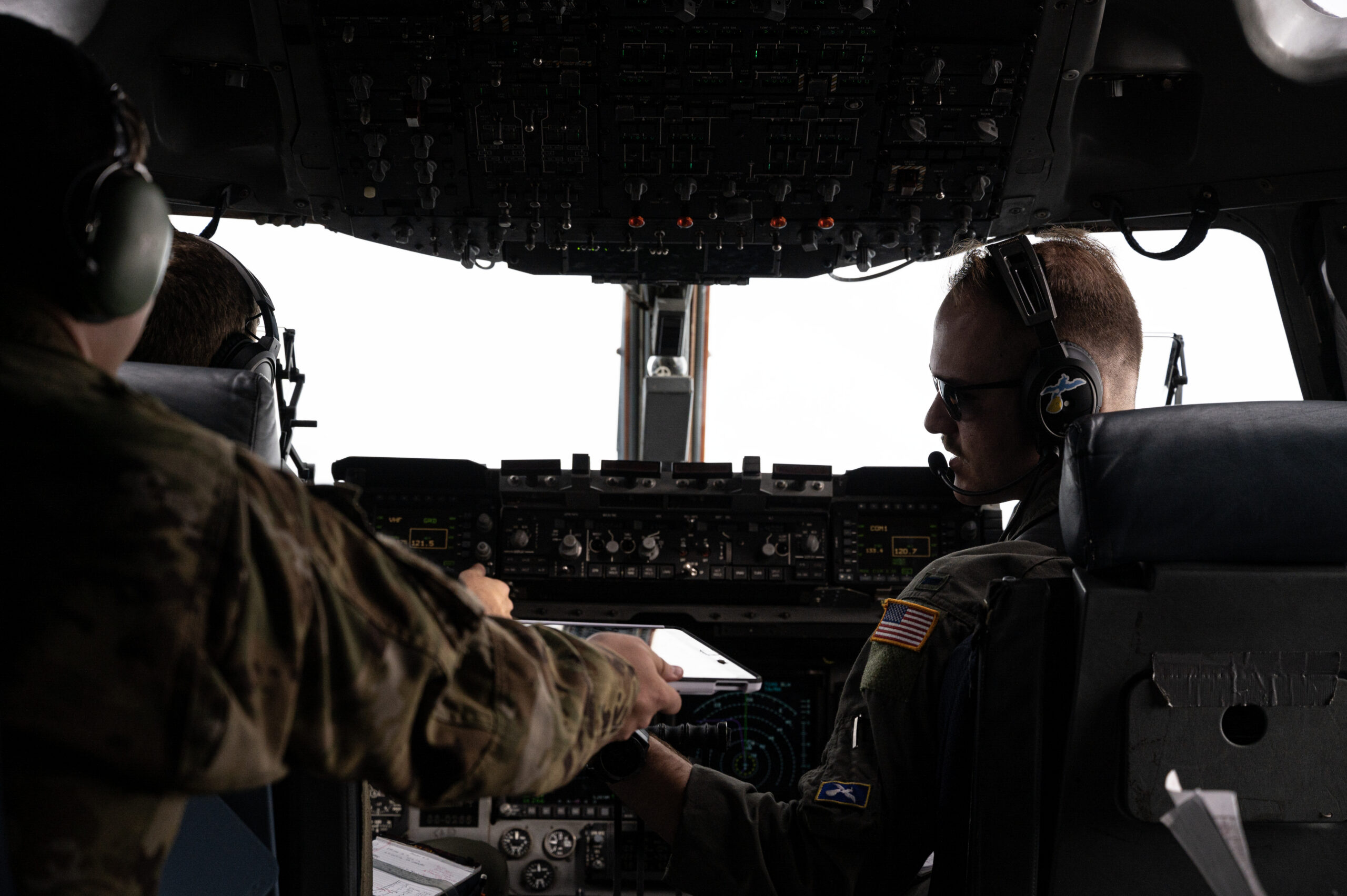
Officials involved in the program have highlighted that OMEN is engineered to create a “common operating picture” for mobility forces, a capability that has historically lagged due to sophisticated connectivity requirements. Leveraging advanced “edge computing” principles, the system will be able to process and store data closer to its source – in this case, on the aircraft itself. This localized processing capability will enable the system to track critical information such as fuel levels, facilitate secure software updates, and fuse diverse data streams to construct a comprehensive operational view. This integrated data will then be accessible to aircrews via aircraft cockpits and portable tablets, providing a unified and consistent understanding of the mission environment.
Robert Slaughter, CEO and co-founder of Defense Unicorns, emphasized the unique aspect of OMEN, stating that the program’s ability to consolidate information across various AMC assets into a single, coherent operating picture is what “makes OMEN special.” He underscored the importance of this capability for the diverse fleet of mobility aircraft.
Slaughter, a former Air Force major, further explained that OMEN’s core function is to fuse disparate data from multiple inputs, thereby providing each user with a precise understanding of dynamic mission parameters, including location, timing, and operational status. He stressed the strategic imperative of enabling software delivery and operational readiness “on your worst day,” asserting that “accelerat[ing] the speed of software delivery on the nation’s worst day” is the ultimate goal of OMEN.
The objective, as outlined by Slaughter, is to transition from a cycle of software updates measured in months or weeks to one measured in mere hours, directly placing on-demand software updates into the hands of military users. This rapid update capability is crucial for responding swiftly to new threats, mission changes, or emerging vulnerabilities, a challenge he described as “a gnarly problem” given the complexity of military aviation systems.
Mark Lepczyk, Vice President of Defense at Air Space Intelligence, elaborated on the current challenges faced by mobility crews, noting that they often reconcile “pulling numbers from separate systems” while mission situations continue to evolve. Under the OMEN program, ASI’s application aims to revolutionize this process. Lepczyk explained that their system reads crucial data, such as fuel state, directly from the aircraft. This data is then fused on a single screen with other vital information, including potential threats, weather conditions, and mission-specific details. This integration allows aircrews to receive optimal course of action recommendations and make “accurate decisions at machine speed.”
ASI’s application, which utilizes data fusion technology provided by Stator Integration Labs, is designed to run on the standard tablets currently carried by aircrews. This ensures compatibility and minimizes the need for new, specialized hardware. Lepczyk highlighted that the system ensures both the aircraft and the command center operate from “identical information,” connecting to existing Air Force systems, shared data services, and beyond-line-of-sight connectivity. Unlike traditional operating pictures that reflect the immediate present, OMEN’s capabilities project forward, enabling crews to immediately understand “all impacts and options to mitigate” if, for instance, weather patterns shift significantly hundreds of miles ahead.
The OMEN software is engineered to assess the “ripple effect” of any disruption—be it to fuel, timing, or mission objectives—and subsequently provide users with “executable options” for rapid replanning. This predictive and prescriptive capability is a core advantage, allowing for proactive rather than reactive mission management.
Furthermore, Lepczyk noted that the solution was configured with the explicit assumption that “any network can fail.” To mitigate this, data can be cached locally on the aircraft, and applications intuitively alert the crew if any information is degraded or stale. This design philosophy prioritizes resilience and operational continuity in the most challenging communication environments.
Finding the Tools
The Defense Innovation Unit (DIU) played a pivotal role in identifying and securing these technological solutions. According to DIU spokesperson Caroline Thompson, the unit specifically sought a software solution that incorporated both open-source protocols and a purpose-built capability stack meticulously tailored to OMEN’s specific operational requirements. The DIU acts as an intermediary, connecting military organizations like Air Mobility Command with innovative industry vendors to source and adapt cutting-edge prototype solutions for pressing military challenges.
Thompson emphasized that the OMEN fleet software is an integral component of a broader DIU initiative aimed at accelerating the deployment of quickly updateable and upgradable software across all Pentagon entities. She stated that “the OMEN project exemplifies DIU’s strategy to bridge this gap” between rapid technological advancement and military adoption. By establishing an “air-gapped-native fleet management layer,” OMEN is creating a replicable framework to push software updates and advanced Artificial Intelligence (AI) capabilities directly onto operational aircraft. This project furnishes Air Mobility Command with a scalable blueprint to maintain tactical edge software that is both current and mission-ready.
The implications of delayed software updates are widely felt across military fleets, impacting everything from security to operational readiness. Thompson underscored that “this agility is key because software is only useful if it can be accessed and updated in the environments where it is required, in this case, on aircraft in austere locations or at 35,000 feet in the air.” The ability to update software in situ, rather than requiring aircraft to return to a base, represents a significant leap forward in military logistics and operational flexibility.
Defense Unicorns’ Unified Defense Stack-Fleet (UDS-Fleet) software is the specific technology Airmen will utilize through the OMEN program. Components of the UDS software have previously been deployed to upgrade other significant Air Force platforms, including F-22s, F-16s, and C-17s, demonstrating its proven capability in complex military environments.
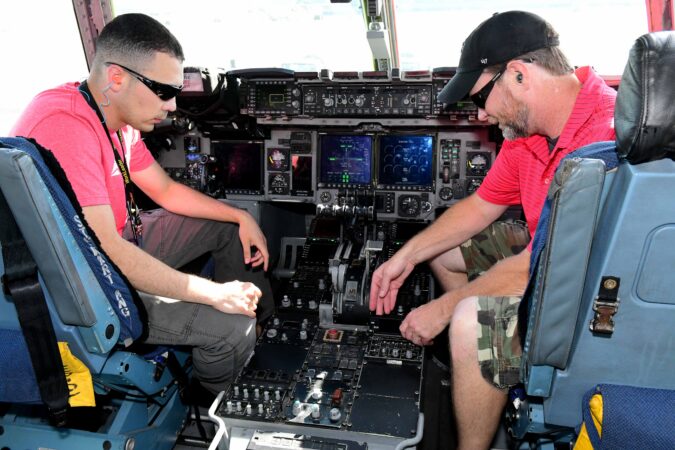
Drawing from his personal experience as an Airman deployed with AMC assets, Robert Slaughter possesses a keen understanding of the detrimental effects that delayed software updates can have on a fleet. He noted that, historically, software updates on many legacy platforms have often necessitated depot-level maintenance—a lengthy and resource-intensive process. This typically means an aircraft not only undergoes a maintenance period on the flight line but must also be flown to a specific facility and grounded completely, effectively removing it from operational readiness. Slaughter highlighted the severe strategic implications of such a system: “Imagine the entire fleet saying, ‘Hey, all of you have to go to depot-level maintenance, and it’s going to take several days or a week per plane’…You literally couldn’t fight and win wars with that posture.” The OMEN program directly addresses this vulnerability by enabling in-field, rapid updates.
While Defense Unicorns’ UDS software is primarily designed for large platforms such as airlift assets and tankers, Slaughter affirmed its scalability. The software can be adapted and “trimmed down” for integration into smaller platforms, including fighter jets and unmanned aerial vehicles (drones), indicating its potential for broader application across the Air Force’s diverse fleet. While contractors are currently managing the software updates during the prototype phase of OMEN, the long-term plan specifies that Airmen will assume responsibility for these updates once the program transitions into its full production phase, ensuring military ownership and expertise in maintaining these critical systems.
Why This Matters
The U.S. Air Force’s Open Mission Engine (OMEN) program represents a critical advancement in military logistics, operational readiness, and strategic capabilities, with far-reaching implications for national security. Firstly, its ability to provide real-time software updates and crucial data in denied, degraded, intermittent, and limited (DDIL) environments directly addresses a longstanding vulnerability in modern military operations. In an era of increasing geopolitical competition, adversaries are actively developing capabilities to disrupt communication and data networks. OMEN ensures that U.S. mobility forces can operate effectively and adapt to dynamic threats without relying on vulnerable ground or cloud infrastructure. This significantly enhances the resilience and autonomy of critical airlift and tanker missions, which are the backbone of global power projection and humanitarian assistance.
Secondly, the transition from software update cycles measured in months to mere hours dramatically improves the Air Force’s agility. Rapid patching of cybersecurity vulnerabilities becomes feasible, protecting sensitive systems from exploitation. More importantly, new mission-specific software, intelligence updates, or tactical adjustments can be deployed almost instantaneously. This agility is indispensable for modern warfare, where the pace of technological and tactical evolution demands constant adaptation. Without such a capability, valuable aircraft would be grounded for extended periods, reducing their availability for critical operations and potentially compromising national defense in a major conflict. The OMEN program transforms these aircraft from static hardware into dynamic platforms capable of continuous software-driven evolution.
Furthermore, the creation of a “common operating picture” through data fusion and edge computing is a cornerstone for the military’s broader Joint All-Domain Command and Control (JADC2) strategy. By providing aircrews and commanders with a unified, predictive view of the battlespace, encompassing fuel, logistics, weather, and threat intelligence, OMEN enhances decision-making speed and accuracy. This shift from reactive to proactive mission planning and execution can be a decisive factor in complex operational scenarios. The localized processing capabilities of edge computing reduce latency and bandwidth requirements, making sophisticated data analysis possible even at 35,000 feet or in remote locations, integrating diverse platforms into a cohesive, intelligent network.
Finally, the OMEN program’s emphasis on leveraging commercial off-the-shelf technologies and open-source protocols, facilitated by the Defense Innovation Unit, demonstrates a strategic shift in military procurement. This approach fosters collaboration with innovative private sector companies, accelerating the adoption of cutting-edge solutions and reducing development costs and timelines. The planned transition of update responsibilities to Airmen signifies a commitment to building in-house expertise, ensuring long-term sustainability and adaptability of these critical systems. Ultimately, OMEN is not just about updating software; it is about fundamentally redefining how the Air Force operates, ensuring its mobility forces remain technologically superior, adaptable, and ready to meet any challenge in an increasingly complex global security landscape.