
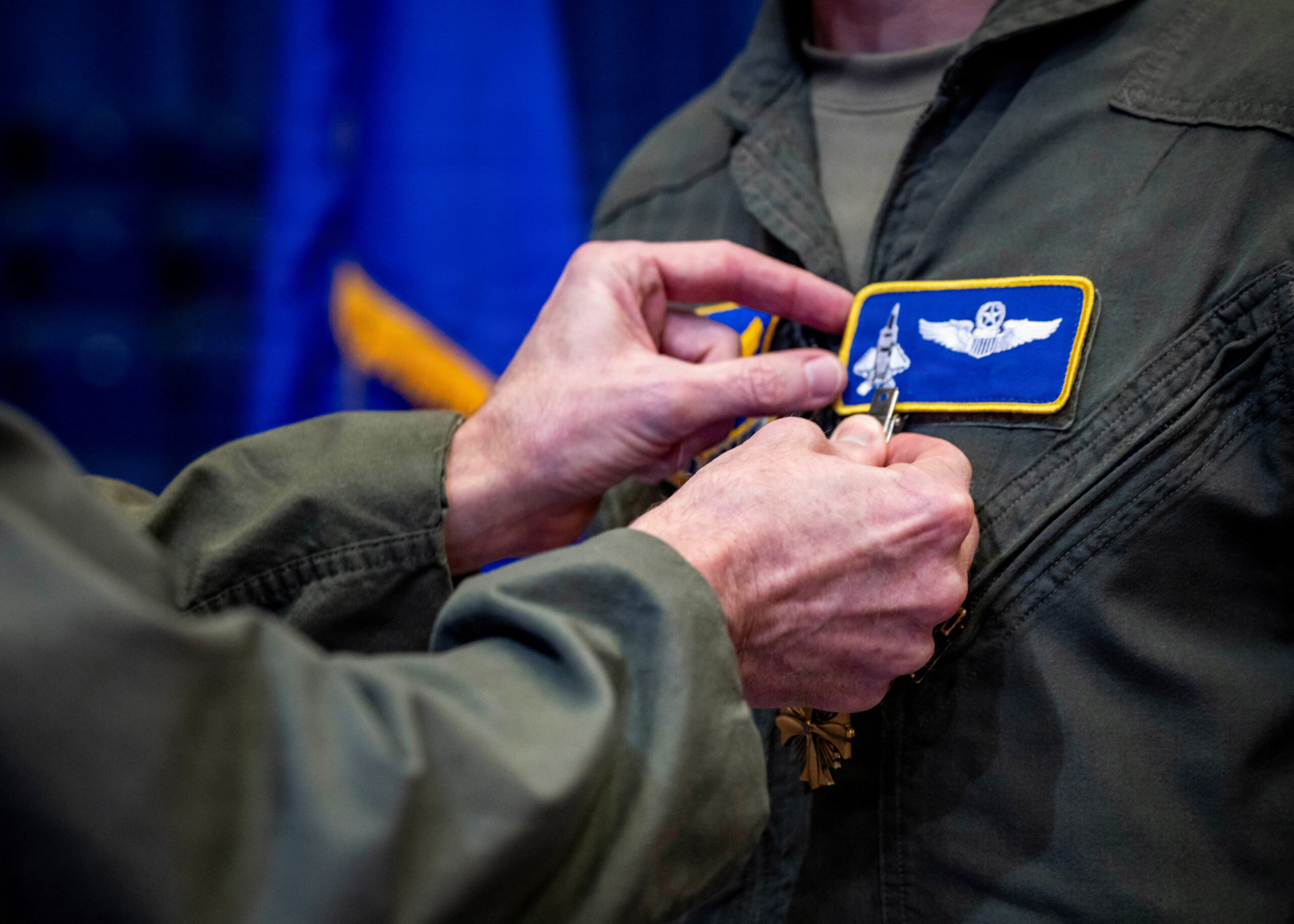
Seven F-22 Raptor pilots have recently been honored with the Distinguished Flying Cross (DFC), one of the U.S. military’s highest decorations, for their actions during distinct operations in the Middle East. The awards recognize extraordinary achievement and heroism demonstrated in aerial flight during high-stakes missions.
Six of the decorated pilots received the DFC for their pivotal roles in Operation Midnight Hammer, a series of U.S. strikes conducted in June 2025 targeting Iranian nuclear facilities. These strikes followed a nearly two-week Israeli air campaign against Iran, signaling a significant escalation in regional tensions.
A seventh F-22 pilot, currently stationed in Europe, was also awarded a DFC for a separate mission in the Middle East. However, the U.S. Air Force has not publicly disclosed the specific date or location of the actions that led to this individual’s recognition, citing operational security.
The six Airmen from Joint Base Langley-Eustis, Virginia, were decorated for their critical function in escorting B-2 Spirit stealth bombers during the Operation Midnight Hammer strikes. The bombers targeted the Fordow and Natanz nuclear sites in Iran, which international observers have long identified as key components of Iran’s nuclear program. The extensive strike package for Operation Midnight Hammer also incorporated F-16 Fighting Falcons and F-35 Lightning II fighters, with pilots from these units having received DFCs earlier in the year. Tanker crews from various units were also recognized with the award for their essential support in extending the range and endurance of the mission. As of the latest announcements, individual awards for the B-2 aviators who executed the primary strike in Midnight Hammer have not yet been announced.
The Distinguished Flying Cross is a highly esteemed military decoration. It is awarded to any officer or enlisted member of the U.S. Armed Forces who distinguishes themselves by heroism or extraordinary achievement while participating in aerial flight. It holds the distinction of being the military’s fourth-highest award for heroism, signifying a profound level of courage and skill displayed in combat or critical operational environments.
Among the six pilots recognized for Operation Midnight Hammer, four belong to the Active-Duty 94th Fighter Squadron, part of the 1st Fighter Wing at Joint Base Langley-Eustis. The remaining two pilots are members of the Virginia Air National Guard’s 149th Fighter Squadron, which is associated with the 192nd Wing. This highlights the integrated nature of Active-Duty and National Guard components in complex military operations.
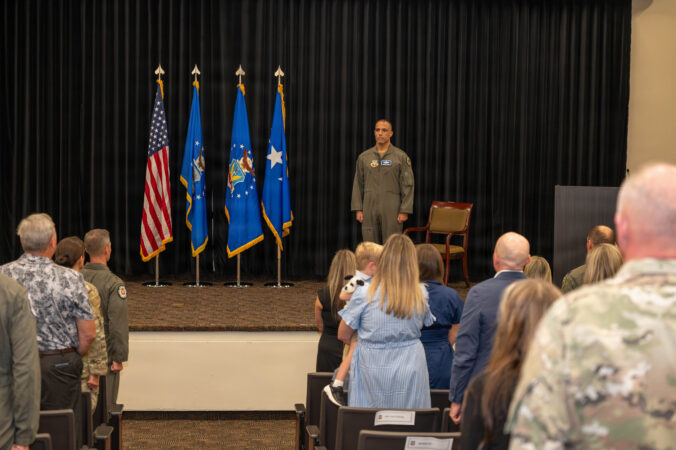
The medals for the six F-22 pilots were formally presented on August 31 by Gen. Adrian L. Spain, the commander of Air Combat Command (ACC), during a ceremony held at the Virginia base. The event underscored the significance of their contributions to the mission.
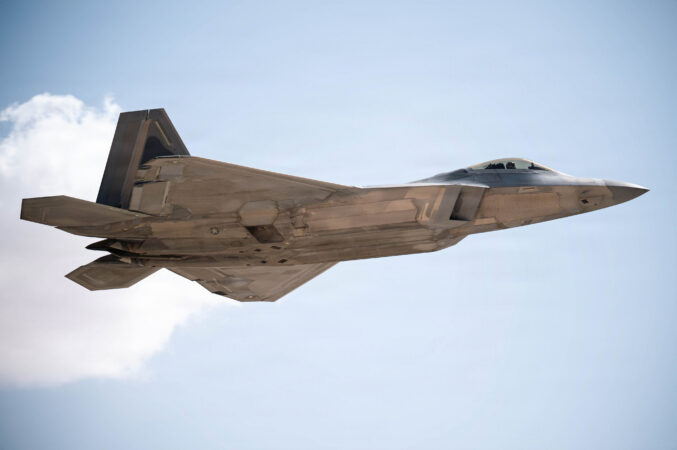
Operation Midnight Hammer involved a large contingent of U.S. aircraft. The F-22s were part of an extensive formation that escorted seven B-2 stealth bombers. These bombers delivered a total of 14 GBU-57 Massive Ordnance Penetrator weapons, each weighing 30,000 pounds, on the Iranian nuclear facilities. In total, approximately 125 U.S. aircraft of various types participated in the mission. The F-22 Raptor, recognized for its stealth capabilities and advanced air-to-air combat prowess, serves as a primary air superiority fighter for the Air Force, enabling it to penetrate and operate effectively within heavily defended airspace.
Gen. Spain emphasized the F-22 pilots’ crucial role, stating, “Their job was to provide air superiority. The bombers and the rest of the support package relied on these Raptor pilots to clear the skies, shield them from surface threats, and ensure a safe route through heavily contested airspace.” These remarks, according to an account provided by the 1st Fighter Wing, highlight the F-22’s defensive and offensive capabilities in establishing control of the air during sensitive operations.
In line with established military protocols regarding sensitive missions, officials from both Air Combat Command and the 1st Fighter Wing declined to furnish additional specific details regarding the missions that led to the awards or to release the pilots’ individual citations or identities. This practice is standard for reasons of operational security, particularly concerning missions in active or highly volatile regions.
Gen. Spain underscored the rarity and significance of the DFC, noting, “We haven’t awarded many of these in the last few decades, as it’s intended to recognize true heroism and highly exceptional accomplishment in flight, which means that it should be rare, and it is.” This statement reinforces the high bar for receiving such an honor.
The air environment during these operations was complex, despite reports that Iran’s air force was significantly degraded during the broader 2026 air campaign against the country, known as Operation Epic Fury. Even during Midnight Hammer, Iran maintained a limited air-to-air threat. Its existing air capabilities largely consist of aircraft acquired prior to the 1979 Iranian revolution, when Iran was a major purchaser of American military hardware under the Shah. Additionally, Iran operates various Soviet-designed fighter jets. The historical context highlights the challenges of operating in a region with diverse and aging, but still potentially effective, air defenses.
Despite its reduced capacity, Iran demonstrated an ability to project some airpower during the earlier phases of the conflict. Following the commencement of Israeli and Iranian air campaigns on February 28 of this year, Iran launched aircraft to attack Gulf countries. Notably, an aging Iranian fighter jet was reportedly able to strike a U.S. base in Kuwait, underscoring the persistent, albeit diminished, threat posed by Iran’s air force.
F-22s from Langley Air Force Base had previously deployed to support Operation Epic Fury and subsequent actions against Iran earlier in 2026, but have since returned to their home station, indicating the dynamic nature of U.S. military presence in the region.
Gen. Spain also took the opportunity to acknowledge the broader support network crucial to the success of such missions. He stated, “It was your support that enabled their excellence—from the maintainers, the operations team, the intel professionals, and the logistics involved. Let there be no doubt heroism like this is earned by the entire formation. These pilots were the leading edge that day, but the foundation of their success was laid by the hard work of the entire organization in the days prior and every day since. And that’s what Air Force readiness looks like.” This statement underscores the interconnectedness of various military roles in achieving operational objectives.
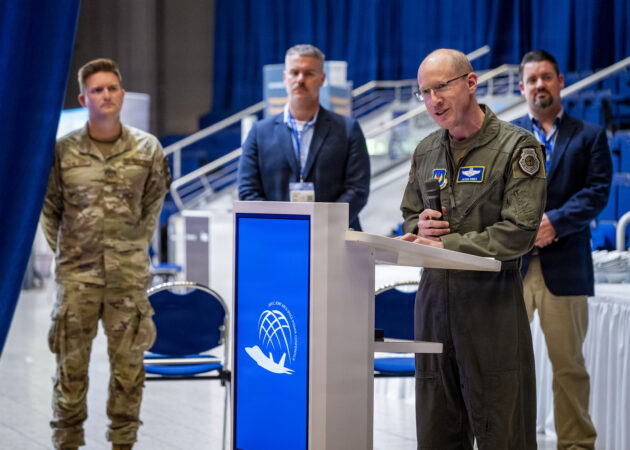
The seventh F-22 pilot received their DFC on September 22 from Lt. Gen. Jason T. Hinds, commander of U.S. Air Forces in Europe (USAFE). This award recognized the pilot’s leadership of a strike package during a mission in the Middle East conducted within contested airspace. U.S. officials have not yet confirmed whether this specific mission was part of Operation Epic Fury, Operation Midnight Hammer, or Operation Rough Rider, the 2025 campaign targeting Houthi forces in Yemen. This ambiguity suggests the existence of multiple ongoing or recent U.S. air operations in the region.
According to USAFE, this pilot navigated “challenging conditions including enemy threats” and “directed the aircraft formation, making critical decisions with limited time and little margin for error.” These descriptions emphasize the extreme pressure and skill required to operate in such environments.
Similar to ACC, USAFE chose to withhold the identity of this Airman, maintaining the commitment to operational security. Lt. Gen. Hinds commended the pilot’s actions, stating, “For more than an hour, [the pilot] remained focused on protecting teammates” and “acted decisively to protect the larger force, and ensured the formation could safely return. Their actions helped give the strike package the time and freedom needed to accomplish its mission.” This statement highlights the protective role and crucial decision-making executed by the pilot in a combat scenario.
Why This Matters
The awarding of Distinguished Flying Crosses to these F-22 pilots carries significant implications, underscoring several key aspects of U.S. military operations and global geopolitics.
Firstly, the recognition highlights individual acts of bravery and extraordinary achievement within the U.S. Air Force. Military decorations like the DFC serve not only to honor specific personnel but also to reinforce morale across the armed forces and inspire confidence in the capabilities of its members. The rarity of this award, as noted by General Spain, emphasizes the exceptional nature of these pilots’ contributions under high-risk conditions.
Secondly, these awards offer a glimpse into the advanced capabilities and strategic readiness of the U.S. military. The F-22 Raptor is a cornerstone of U.S. air superiority, designed for stealth and advanced air-to-air combat. Its role in escorting B-2 stealth bombers—which delivered precision, heavy-payload munitions—into heavily defended Iranian airspace demonstrates the U.S. ability to project significant power and execute complex, long-range strikes against well-protected targets. The involvement of 125 aircraft of various types further illustrates the extensive logistical and operational coordination required for modern air warfare and the interoperability of different air assets, from fighters to bombers to tanker support.
Thirdly, the context of these operations is deeply rooted in ongoing geopolitical tensions in the Middle East, particularly concerning Iran’s nuclear program and regional influence. The strikes during Operation Midnight Hammer directly targeted Iranian nuclear facilities, reflecting international concerns about nuclear proliferation and the potential for a nuclear-armed Iran. These military actions, following an Israeli air campaign, signal a determined effort by the U.S. and its allies to prevent Iran from developing nuclear weapons capabilities, or at least to degrade existing infrastructure. The broader Operation Epic Fury and Operation Rough Rider (against Houthis in Yemen) indicate a comprehensive U.S. engagement in managing and responding to various security threats across the region.
Furthermore, the details surrounding Iranian air capabilities and their limited, yet persistent, ability to retaliate (such as striking a U.S. base in Kuwait) underscore the volatile and unpredictable nature of the regional conflict. While Iran’s air force is described as largely degraded, it still poses a threat, necessitating the superior capabilities and tactical acumen displayed by the F-22 pilots. The emphasis on operational security and the withholding of specific mission details highlight the sensitive nature of these interventions and the ongoing need to protect intelligence and personnel in an active theater.
In essence, these awards are not just individual accolades; they are indicators of advanced military strategy, technological superiority, and the continuing, complex role of the United States in maintaining security and deterring perceived threats in a critical global region. They provide insight into the realities of modern air warfare, where highly trained personnel, cutting-edge technology, and coordinated logistical support are indispensable for achieving strategic objectives in contested environments.