
Updated 1 October 2026:This article has been amended after Counter Terrorism Policing issued a correction to the statement it put out earlier on Thursday. The man arrested is 25 rather than 27 as originally given, and the force has withdrawn its line that a second man aged 26 had been questioned under caution, confirming that no such interview took place. Counter Terrorism Policing apologised for the confusion, which it attributed to the pace of the investigation and its updates. Both points have been corrected in the text.
A 25-year-old dual British and Iranian national has been arrested in London on suspicion of preparing terrorist acts, in connection with activity observed near RAF Fairford at the weekend. The arrest was confirmed by Counter Terrorism Policing, which is leading the ongoing investigation into the incident.
The individual was detained on Thursday afternoon in the borough of Westminster. The arrest was made under Section 5 of the Terrorism Act 2006, which pertains to the preparation of terrorist acts. Following the arrest, two properties located within the same Westminster area have been subjected to searches by law enforcement officers as part of the extensive inquiry.
Vicki Evans, the Senior National Coordinator for Counter Terrorism Policing, provided an update on the complexity of the ongoing investigation. “The investigation into circumstances surrounding events in Gloucestershire is hugely complex, and our specialist teams are interrogating multiple lines of enquiry,” she stated. Emphasising the thoroughness of the process, Ms. Evans added, “As we’ve made clear, we’re looking at all possible angles, including possible foreign state involvement. I’d like to thank the public for their continued support and patience whilst we work through this investigation.”
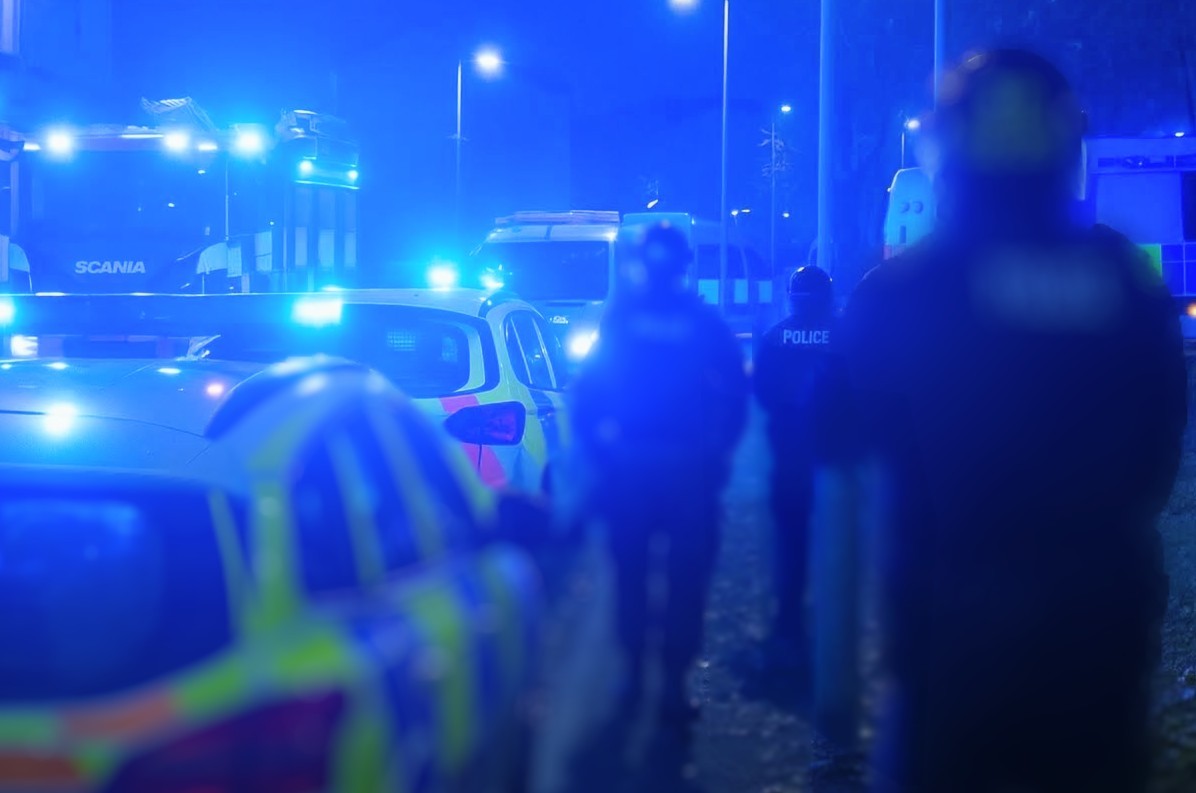
This latest development follows the initial arrests of five men in their twenties on Sunday. These individuals remain on police bail as the investigation progresses. The initial detentions occurred in the early hours of Sunday morning after Gloucestershire Constabulary received a report detailing suspicious vehicles observed near the airfield. Initially, the men were arrested on suspicion of offences under the Explosives Act. However, the scope of the inquiry quickly escalated, leading to their re-arrest on suspicion of preparation of a terrorist act. The seriousness of the situation prompted authorities to declare a major incident, resulting in the precautionary evacuation of properties in the nearby village of Whelford, situated adjacent to the base.
On Tuesday, Counter Terrorism Policing provided further details regarding the findings from the initial phase of the investigation. It was confirmed that no improvised explosive devices (IEDs) were discovered in the three vehicles that had been examined. However, a quantity of petrol was recovered from the scene. Searches of properties in London, conducted in connection with these five individuals, have now concluded. All five of the men arrested on Sunday are confirmed residents of London, with four residing in Westminster and one in Camden.
Assistant Commissioner Laurence Taylor, who leads National Counter Terrorism Policing, had previously indicated earlier in the week that officers were maintaining an open mind regarding any potential bearing the current international situation might have on the case. He highlighted that investigators were actively considering whether the activity could have been committed by proxies or by individuals knowingly or unknowingly working on behalf of a foreign state. Ms. Evans has since reiterated this critical line of inquiry, confirming that possible foreign state involvement remains a significant aspect of the investigation.
RAF Fairford, located in Gloucestershire, holds strategic importance. Despite its designation, it is not a flying station of the Royal Air Force but rather a United States Air Force (USAF) forward operating location. Its exceptionally long runway has established it as the standing European base for American strategic bombers, playing a crucial role in NATO operations and global power projection. At the time of the incident, B-1B Lancers, long-range supersonic heavy bombers, had been operating from the airfield. Prior to the arrests made on Sunday, the base had moved to its highest force protection condition, indicating a heightened state of alert due to perceived threats.
As of the current update, no individual has been formally charged in connection with this complex and multi-faceted investigation. Counter Terrorism Policing continues to appeal to the public for assistance and has urged anyone with information that might aid the inquiry to report it through official channels. Information can be submitted via the government’s dedicated counter-terrorism website, gov.uk/ACT, or by calling the confidential Anti-Terrorist Hotline on 0800 789 321. The authorities underscore the importance of public vigilance and cooperation in matters of national security.
Why This Matters
This ongoing investigation into suspicious activity near a critical military installation, culminating in terrorism-related arrests, carries significant implications for national security, international relations, and public safety. The involvement of a dual British and Iranian national, coupled with the explicit consideration of “possible foreign state involvement” by Counter Terrorism Policing, elevates the seriousness of the incident beyond typical domestic crime.
Firstly, the target itself – RAF Fairford – is not merely any military base. As a United States Air Force forward operating location and the European hub for strategic bombers like the B-1B Lancers, it represents a vital asset for both the United States and NATO. Any perceived threat to such an installation could have far-reaching consequences for international security cooperation and defence capabilities. The fact that the base was already at its highest force protection condition underscores the gravity of the intelligence that prompted these measures.
Secondly, the explicit mention of “foreign state involvement” and the possibility of individuals acting as “proxies” introduces a geopolitical dimension. If confirmed, such interference on British soil would represent a severe breach of sovereignty and could trigger significant diplomatic repercussions. It raises questions about the nature of hybrid threats, where state actors might employ non-state proxies to conduct disruptive or potentially hostile activities, making attribution and response inherently complex. This aspect directly impacts the UK’s foreign policy and its relationships with implicated nations.
Thirdly, the nature of the charges – preparation of terrorist acts under Section 5 of the Terrorism Act 2006 – highlights the potential for serious harm and disruption. While no improvised explosive devices were found, the recovery of petrol suggests potential intent for arson or other forms of attack. The scale of the police response, including multiple arrests, property evacuations, and extensive searches, indicates the authorities are treating this as a high-priority threat to public safety and national infrastructure.
Finally, the case underscores the continuous vigilance required from both law enforcement agencies and the public in counter-terrorism efforts. The complex and lengthy nature of the investigation, involving multiple lines of inquiry and coordination across different policing bodies, reflects the intricate challenges in identifying and neutralising potential threats. Public appeals for information serve as a reminder that community cooperation remains a cornerstone of national security, helping authorities piece together critical intelligence to prevent future incidents and uphold the rule of law.