
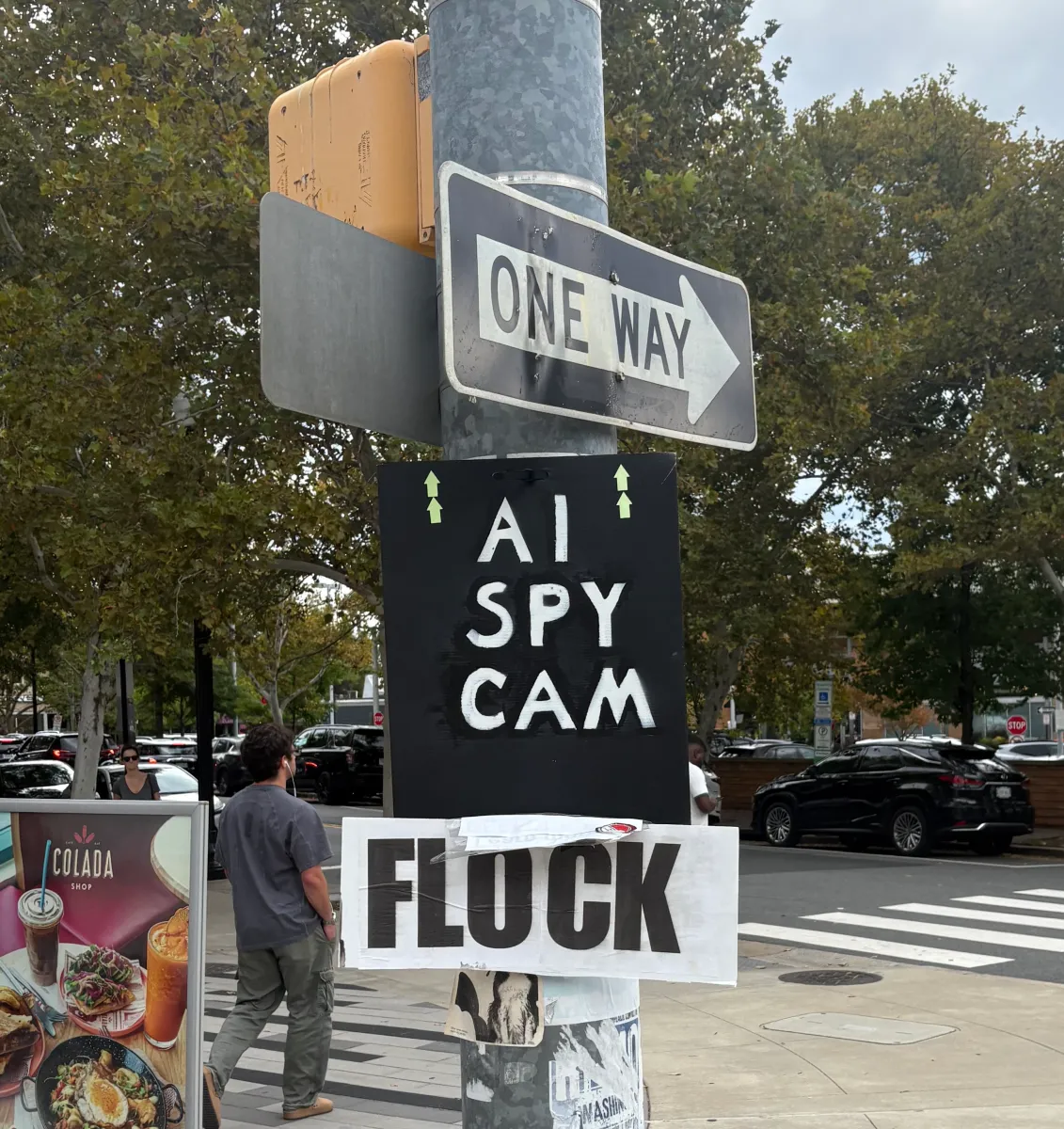
Flock, whose cameras scan license plates across the country, continues to draw public anger, and now Senator Bernie Sanders wants the federal government out of the business altogether.
Sanders (D-Vermont) on Friday introduced the Ban Flock Act, which would bar federal agencies from using automatic license plate readers (ALPRs) or tapping into data collected by readers run by local police and private companies. Despite its title, the bill doesn’t call out Flock in the text but rather covers any and all ALPR systems.
The bill allows exceptions only for toll collection and for uses that Congress approves in future legislation, which would have to limit data retention to 48 hours.
State and local governments would be dinged financially for not complying if the bill became law. (Like most bills, this one faces long odds.) Starting the first fiscal year after enactment, they would lose grants from five federal departments, including the Justice Department and the Department of Homeland Security, unless they ban the tech.
Americans could also sue the federal government over violations, and state attorneys general could enforce the law.
Flock is the largest ALPR vendor in the U.S., according to Sanders, with more than 120,000 cameras. In a blog post back in February, the company said its network processes more than 20 billion vehicle reads each month.
Under increasing pressure from communities that are protesting the product, suspending their use, and, at an escalating rate, canceling their contracts, Flock has tightened its rules. In August, CEO Garrett Langley, who’d previously said that how police use the cameras is up to local agencies, announced a new default data retention period of seven days, down from 30.
Customers must also now use an audit tool that locks officers out pending review when it flags unusual searches. In one of the highest-profile cases of an officer abusing Flock’s platform, a former Milwaukee officer pleaded guilty to misconduct after searching for his then-partner and her ex 179 times, listing the reason as “investigation.” (During a recent podcast interview, investor Jason Calacanis suggested a “double-key” system in which two people must approve a search, and Langley said the idea is “on the whiteboard.”)
Representative Alexandria Ocasio-Cortez (D-N.Y.) and Senator Jeff Merkley (D-Ore.) are co-sponsors.
We’ll be sitting down with Langley at our upcoming Disrupt event, October 13-15 in downtown San Francisco.
Key Takeaways
- Federal Intervention Proposed:Senator Bernie Sanders has introduced the “Ban Flock Act” to prohibit federal agencies from using or accessing data from automatic license plate readers (ALPRs), including those operated by local police and private companies like Flock Safety.
- Financial Disincentives for States:The bill aims to compel state and local governments to ban ALPRs by threatening the loss of critical federal grants from departments such as Justice and Homeland Security if they continue their use.
- Flock Under Scrutiny:As the dominant ALPR vendor, Flock Safety faces escalating public backlash over privacy concerns and platform abuse, leading the company to implement stricter data retention policies and audit tools, though critics argue these measures don’t go far enough.
Bernie Sanders Takes Aim at Mass Surveillance: The “Ban Flock Act” Challenges ALPR Dominance
In a bold move against the pervasive spread of surveillance technology, Senator Bernie Sanders (D-Vermont) has introduced legislation that could dramatically reshape the landscape of law enforcement data collection. Dubbed the “Ban Flock Act,” this bill directly confronts the burgeoning use of Automatic License Plate Readers (ALPRs), aiming to sever federal ties to these systems and, by extension, pressure state and local entities to follow suit. While not explicitly naming Flock Safety, the industry’s largest vendor, the bill’s implications are squarely targeted at the network that processes billions of vehicle reads monthly.
The Proposed Legislation: Sweeping Restrictions and Penalties
Introduced on Friday, Sanders’ “Ban Flock Act” is a comprehensive attempt to curtail what many civil liberties advocates see as unchecked mass surveillance. At its core, the bill would prohibit any federal agency from utilizing ALPR systems or accessing data collected by ALPRs operated by local police departments or private companies. This broad prohibition ensures that even if local agencies continue to use the technology, federal entities would be walled off from tapping into the vast reservoirs of collected data.
Crucially, the bill outlines only two narrow exceptions: toll collection, where data retention would be severely limited, and uses explicitly approved by future congressional legislation, which would also mandate a strict 48-hour data retention limit. This signals a strong push for transparency and minimal data persistence, a stark contrast to current practices that often see data stored for weeks or even months.
Beyond federal agencies, the legislation carries significant weight for state and local governments. Should the bill become law, non-compliant state and local entities would face severe financial repercussions. Starting in the first fiscal year post-enactment, they would risk losing grants from five pivotal federal departments, including the Justice Department and the Department of Homeland Security, unless they completely ban the use of ALPR technology. This financial leverage is designed to create a powerful incentive for a nationwide pivot away from these systems.
Moreover, the bill empowers both individual Americans and state attorneys general. Citizens would gain the right to sue the federal government over violations of the act, providing a direct avenue for accountability. State attorneys general would also be authorized to enforce the law, adding another layer of oversight and potential legal challenge.
The bill is not a solo endeavor; Representative Alexandria Ocasio-Cortez (D-N.Y.) and Senator Jeff Merkley (D-Ore.) have signed on as co-sponsors, lending significant progressive weight to the initiative.
Flock Safety: At the Epicenter of the Debate
Flock Safety stands as the primary target of this legislative push, despite not being named in the bill’s text. According to Senator Sanders, Flock is the largest ALPR vendor in the U.S., commanding a network of over 120,000 cameras. The sheer scale of its operations is staggering: in a February blog post, the company revealed its network processes more than 20 billion vehicle reads each month. This level of pervasive data collection has fueled widespread public anger and ignited a fierce debate over privacy, surveillance, and civil liberties.
Communities across the country have protested Flock’s product, leading to suspensions of use and, increasingly, outright cancellations of contracts. This mounting pressure has not gone unnoticed by the company. In August, CEO Garrett Langley, who previously maintained that the use of cameras was solely up to local agencies, announced significant policy changes. The default data retention period was dramatically reduced from 30 days to seven days. Additionally, Flock introduced a mandatory audit tool designed to flag unusual searches and lock officers out pending review, a direct response to documented cases of platform abuse.
One of the most high-profile examples of such abuse involved a former Milwaukee officer who pleaded guilty to misconduct after improperly searching for his then-partner and her ex 179 times, falsely citing “investigation” as the reason. Such incidents highlight the inherent risks when powerful surveillance tools are placed in the hands of individuals without sufficient oversight and accountability. The conversation around enhancing security measures continues, with ideas like a “double-key” system – requiring two approvals for a search – being discussed internally at Flock, as noted by Langley during a recent podcast interview.
The Broader Context: ALPRs, Privacy, and the Future of Surveillance
The “Ban Flock Act” arrives amidst a larger, intensifying debate about the role of surveillance technology in modern society. ALPRs are controversial precisely because they facilitate mass surveillance, collecting vast amounts of data on ordinary citizens’ movements regardless of any suspicion of wrongdoing. Critics argue that such systems create a digital dragnet, eroding privacy and enabling potential abuses, from tracking political dissidents to facilitating domestic disputes by law enforcement personnel. The retention of this data, even for a few days, raises concerns about its potential misuse, data breaches, and the chilling effect on civil liberties.
The tension between public safety and individual privacy is at the heart of this conflict. Proponents of ALPRs often cite their effectiveness in solving crimes, recovering stolen vehicles, and locating wanted individuals. However, opponents counter that the benefits do not outweigh the risks of creating a comprehensive, searchable database of everyone’s movements, essentially turning every road into a monitored pathway.
While the “Ban Flock Act” faces long odds of passage in the current political climate, its introduction by a prominent senator like Bernie Sanders signifies a growing federal acknowledgment of the profound privacy implications of ALPR technology. It serves as a powerful signal to both the tech industry and law enforcement agencies that the era of unfettered data collection may be drawing to a close, or at least will face much stricter scrutiny.
The ongoing dialogue, policy shifts, and public pressure indicate that the future of ALPRs will likely involve more stringent regulations, increased transparency, and perhaps a fundamental reevaluation of how these powerful tools are integrated into a democratic society. We look forward to delving deeper into these issues when we sit down with Flock Safety CEO Garrett Langley at our upcoming Disrupt event, October 13-15 in downtown San Francisco.
Bottom Line
Senator Sanders’ “Ban Flock Act” represents a significant federal challenge to the rapidly expanding world of automatic license plate readers, highlighting the intensifying national conversation around surveillance technology and individual privacy. While its legislative path is uncertain, the bill’s very introduction underscores a growing consensus that unchecked data collection by both public and private entities demands stronger oversight and accountability. The tech industry, law enforcement, and civil liberties advocates are now on a collision course, with the outcome poised to redefine the boundaries of digital surveillance in America.
When you purchase through links in our articles, we may earn a small commission. This doesn’t affect our editorial independence.
{content}
Source:{feed_title}