
U.S. Bombers Redeploy from UK Amid Iranian Threat Concerns
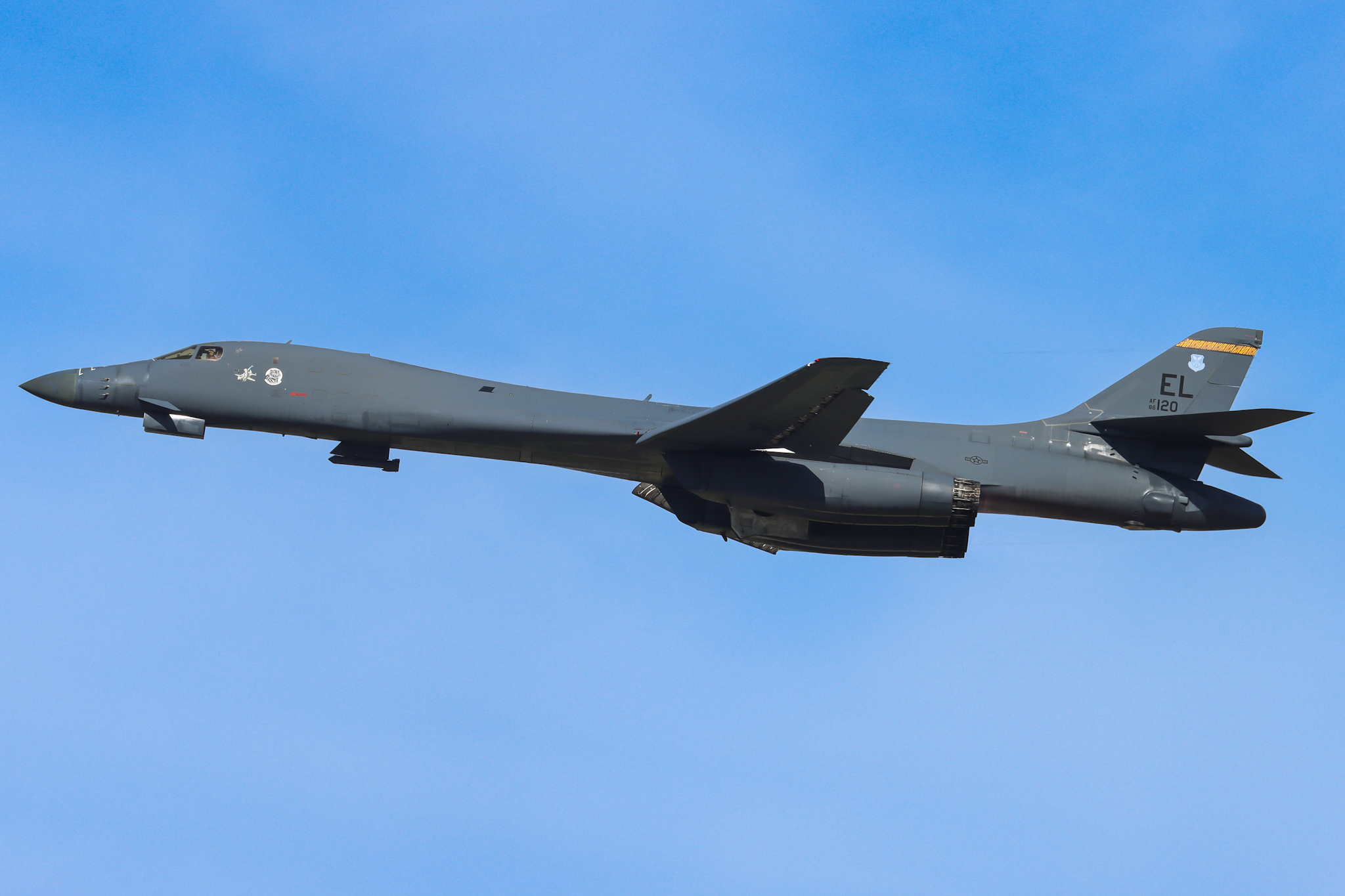
On October 4, all twelve American B-1B Lancer bomber aircraft previously deployed to the United Kingdom returned to their home stations in the United States. This redeployment followed escalating security concerns regarding a potential threat to their operational base, RAF Fairford, which U.K. authorities have indicated may be linked to Iran.
The B-1B Lancer bombers had been stationed at RAF Fairford, a Royal Air Force station in Gloucestershire, England, as part of U.S. force posture amid ongoing tensions with Iran. Local aviation enthusiasts observed the departure of the aircraft over the course of the day, a movement later confirmed by the U.S. military.
In official statements to *Air & Space Forces Magazine*, the Pentagon and U.S. European Command confirmed the withdrawal: “All U.S. bombers that were deployed to RAF Fairford have redeployed to their home stations in the United States.”
The U.S. military concurrently emphasized its enduring capability for global power projection, asserting that its strategic bombers retain the capacity to strike targets across the globe even when launching from the continental United States. This capability has been demonstrated previously by B-1B Lancer, B-2 Spirit, and B-52 Stratofortress bombers during periods of heightened operations, including those directed against Iran in the spring.
The statement further clarified: “The Airmen that operate America’s bomber force, including B-1s, B-2s, and B-52s, remain ready to deliver precision global strike capabilities—including through operations that launch and recover from the continental United States—anywhere, anytime.”
Historically, forward-deploying bombers to locations such as RAF Fairford significantly reduces the flight time required for U.S. aircraft to reach potential targets in the Middle East, including Iran. This strategic advantage allows for quicker response times and potentially greater operational flexibility. The open-source intelligence group Military Air Tracking Alliance documented the presence of 29 different bomber aircraft at RAF Fairford at various times during the period of heightened U.S.-Iran tensions.
The decision to redeploy the bombers comes approximately one week after arrests were made in connection with a suspected plot targeting the U.K. base. Six individuals have been apprehended in connection with the alleged scheme. U.K. Prime Minister Andy Burnham stated there were “strong indications” suggesting Iranian involvement in the threat.
Both Prime Minister Burnham and his predecessor, Keir Starmer, had authorized the U.S. to utilize RAF Fairford for what the U.K. government termed “self-defense strikes” against Iranian interests. In July, Iran’s Islamic Revolutionary Guard Corps (IRGC) publicly declared RAF Fairford a legitimate military target due to the presence of U.S. bombers used in regional operations.
At the apex of the deployment, referred to as Operation Epic Fury, the U.S. maintained approximately two dozen strategic bombers at RAF Fairford simultaneously, comprising around 18 B-1Bs and six B-52H Stratofortress bombers. Following a tentative ceasefire reached with Iran in April, the operational focus of the deployed bombers largely shifted to training missions, with the B-52s having departed several months prior. Notably, a B-1B that had arrived just the preceding week to replace another aircraft was also part of the October 4 redeployment.
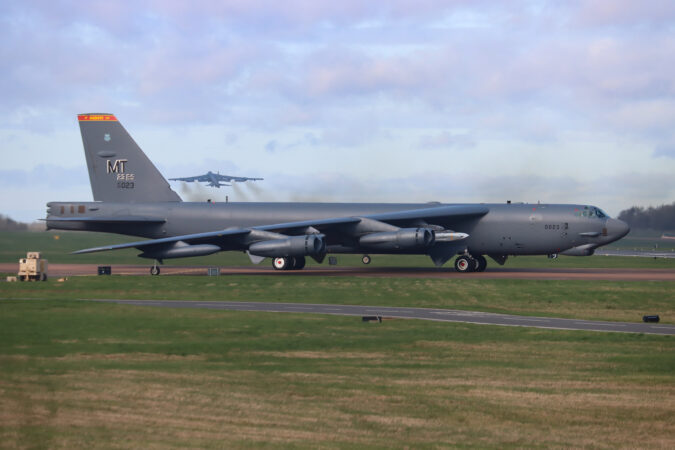
RAF Fairford does not house permanently assigned U.S. Air Force aircraft; however, it hosts a dedicated wing for supporting U.S. operations and is recognized as the primary U.S. bomber forward operating site in Europe, having regularly accommodated U.S. strategic aircraft for many years. This infrastructure provides essential logistical and operational support for rotational deployments.
Beyond Fairford, the U.S. Air Force maintains a significant presence in the U.K. at other bases. RAF Lakenheath permanently hosts F-35A Lightning II and F-15E Strike Eagle fighter aircraft, which have frequently deployed to the Middle East for operations against Iranian-backed groups. Lakenheath also functions as a crucial transit point for fighter aircraft moving between the U.S. and the Middle East. Nearby, RAF Mildenhall is home to the 100th Air Refueling Wing, operating KC-135 tankers vital for extending the range and endurance of U.S. and allied airpower.
In parallel, the U.S. has maintained a rotational deployment of fighter assets in the Middle East, with fresh F-16 Fighting Falcon and F-35 units, primarily drawn from the Air National Guard, cycling through the region to sustain readiness and presence.
Why This Matters
The redeployment of U.S. strategic bombers from the U.K. to the continental United States represents a significant adjustment in the U.S. military’s forward operating posture. This decision, prompted by credible security threats linked to Iran, underscores several critical geopolitical and strategic dynamics.
Firstly, it highlights the persistent and evolving nature of threats against U.S. and allied military assets, particularly from state-sponsored actors employing hybrid tactics. The alleged plot against RAF Fairford, and the direct attribution by U.K. authorities to Iranian involvement, demonstrates the readiness of certain adversaries to target key strategic infrastructure even in allied territory. This incident serves as a stark reminder of the security challenges associated with maintaining a robust global military footprint.
Secondly, the redeployment impacts the perception of U.S. deterrence and response capabilities in the Middle East and European theaters. While U.S. military statements emphasize that global strike capabilities remain intact from U.S. soil, the physical presence of bombers at a forward base like Fairford provides a tangible, rapid-response option that can influence adversary calculations. The absence of these assets from the U.K. might be interpreted by some as a de-escalatory step or a temporary reduction in immediate strike readiness, potentially altering the regional power balance, even if only symbolically.
Thirdly, this event carries implications for the U.S.-U.K. defense alliance. While the U.K.’s swift action in apprehending suspects demonstrates strong bilateral security cooperation, the necessity of withdrawing assets due to an external threat could prompt a reevaluation of security protocols and intelligence sharing for critical joint defense facilities. It also reinforces the U.K.’s role as a vital staging ground for U.S. operations, even as the specific force posture adapts.
Finally, the incident provides insight into Iran’s strategic messaging and actions. The IRGC’s prior declaration of RAF Fairford as a legitimate target and the suspected plot suggest a willingness to extend the scope of confrontation beyond the immediate Middle Eastern theater. This could signal a more assertive and expansive approach to targeting U.S. and allied interests, necessitating ongoing vigilance and adaptation in international security strategies.