
Pentagon Plans $150 Million Loan to Stoke Space to Boost U.S. Launch Capacity
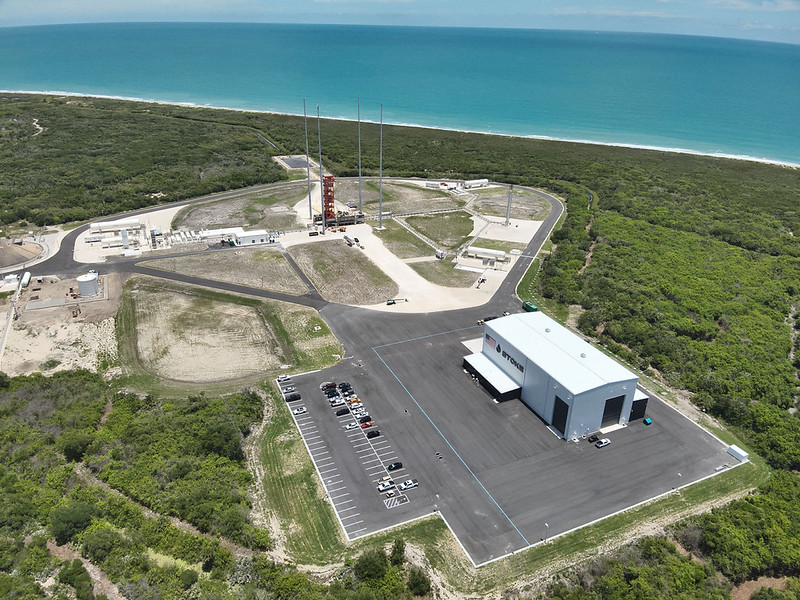
The United States Department of Defense (DOD) is moving forward with a plan to issue a conditional loan of $150 million to Stoke Space Technologies, an emerging aerospace company focused on space launch services. This financial commitment aims to facilitate Stoke Space’s expansion of its operational footprint at Cape Canaveral Space Force Base in Florida, a critical hub for American space launch activities.
The Pentagon formally announced its intention on October 26. This significant loan, which will be managed by the DOD’s Office of Strategic Capital (OSC), remains contingent upon Stoke Space Technologies successfully meeting a series of financial, legal, and technical prerequisites. Such conditions are standard for government-backed investments of this magnitude, ensuring due diligence and project viability.
In its official statement, the Pentagon elaborated on the strategic rationale behind the proposed loan. “The proposed loan from OSC, alongside private capital, would support the buildout of the company’s second launchpad at its existing launch complex at Cape Canaveral Space Force Station,” the statement clarified. It further emphasized the broader objective: “The OSC commitment to Stoke Space more broadly supports the expansion of U.S. launch capacity, which is required to meet the rising demand for commercial and national security space launch by the United States Space Force.” This underscores the DOD’s recognition of the increasing need for diverse and robust launch capabilities to serve both government and commercial space missions.
The Office of Strategic Capital (OSC) was established by the Pentagon in 2022 with a specific mandate: to act as a bridge between private capital markets and companies developing technologies deemed critical for national defense. Its mission is to accelerate the development and scaling of innovative technologies that might otherwise struggle to secure funding through traditional means or at the pace required by national security interests. The conditional loan agreement with Stoke Space is part of a series of similar deals announced by the OSC in recent months, illustrating its active role in bolstering the nation’s industrial and technological base.
For instance, earlier in October, on the 8th, the OSC unveiled a plan to provide a $1.5 billion loan to Wolfspeed, Inc., aimed at supporting the construction of facilities for advanced semiconductor components and materials. Just a week later, on October 17, the office formalized a conditional commitment with Antheia, Inc., to scale up its biomanufacturing capabilities. These initiatives collectively highlight the OSC’s multifaceted approach to strengthening key sectors of the U.S. economy and defense industrial base, ranging from microelectronics to biotechnology and, in the case of Stoke Space, advanced aerospace and launch services.
Stoke Space Technologies currently operates its first launch pad at the Cape’s Space Launch Complex-14. The company has publicly outlined its ambitious schedule, with the debut flight of its Nova rocket, designated as a “Pathfinder” vehicle, anticipated in “the first part of 2027.” This initial Nova iteration is designed to pave the way for a more advanced version, the Nova Block 2 rocket. The Block 2 variant is envisioned as a fully reusable launch vehicle, capable of delivering a substantial 15 metric tons of payload to low-Earth orbit (LEO), a capacity that would place it among the more capable rockets in the commercial market.
Following the Pathfinder’s debut, Stoke Space plans to conduct multiple Nova missions throughout 2027 and 2028. These flights are intended to gather crucial data, refine operations, and accelerate the development of the Block 2 version, which the company expects to see its first flight in 2029. Such a rapid iteration schedule is characteristic of many new space ventures aiming to quickly prove and scale their technology. In a testament to its progress and potential, Stoke Space announced in September that it had successfully raised $1 billion in private capital, a significant sum earmarked to expedite the development and deployment of its Nova rocket line.
While the specific timeline for breaking ground on the second launch facility, which the DOD loan would support, has not been publicly disclosed by Stoke Space, the company has indicated other ongoing construction efforts. In September, it confirmed that work had commenced on a new payload processing facility. This facility is designed to service both the initial Nova Pathfinder and the subsequent Block 2 versions of the rocket, indicating a forward-looking approach to infrastructure development. Concurrently, the company has also initiated work on the offshore platform that will be integral to the recovery of both rocket stages after launch, a key component of its fully reusable design philosophy.
Even though the Nova rocket has yet to achieve orbit, its potential has already garnered attention from key government agencies. In 2025, the Space Force selected Stoke Space to compete for missions under its National Security Space Launch (NSSL) Phase 3 Lane 1 contract. This particular contract lane is designed for flying smaller, less complex national security payloads that have less stringent requirements compared to the nation’s most critical assets. Eligibility for Lane 1 flights typically requires firms to have successfully flown their rockets at least once. At the time of its selection, Stoke Space had projected that its Nova rocket would launch by 2026, a forecast that has since been adjusted to early 2027.
Space Force officials have expressed a clear eagerness for new, innovative rockets to enter the market. This sentiment is driven by broader industry concerns regarding a potential “launch bottleneck” in the near future. This concern largely stems from SpaceX’s stated plans to potentially retire its highly successful Falcon 9 workhorse, with an increasing reliance on its Starship super heavy rocket. Starship is expected to primarily focus on internal missions, such as the deployment of its Starlink satellite constellation, which could reduce its availability for external commercial and government customers.
Addressing these concerns during an October 21 media briefing, Col. Eric Zarynisky, portfolio acquisition executive for space access, articulated the Space Force’s proactive engagement with the launch industry. He confirmed that the service maintains regular and ongoing conversations with both current and potential NSSL providers regarding their business plans and future capabilities. “I’m seeing a lot of growth in those new providers, and being able to use those to support the customers that we see coming on in the national security space launch side,” Col. Zarynisky stated, highlighting the strategic importance of nurturing a diverse and robust launch sector. He concluded, “We’re talking to all of the providers . . . about their future plans and then talking to them about where we see our manifest going. It is an ongoing conversation,” underscoring the dynamic nature of strategic planning in the rapidly evolving space domain.
Why This Matters
The Pentagon’s conditional $150 million loan to Stoke Space Technologies signifies a critical strategic investment with far-reaching implications for national security, economic growth, and the future of space exploration. This move is not merely about funding a single company; it reflects a deliberate government strategy to bolster and diversify the United States’ domestic space launch capabilities in an increasingly competitive and vital domain.
Enhancing National Security and Space Access:Reliable and resilient access to space is paramount for national security. The U.S. military relies heavily on satellites for communication, navigation (GPS), intelligence gathering, weather forecasting, and missile warning systems. A robust and diverse launch industry ensures that critical national security payloads can be deployed when and where needed, without excessive reliance on a single provider or facing potential bottlenecks. By supporting new entrants like Stoke Space, the Department of Defense aims to create a more resilient launch ecosystem, mitigating risks associated with potential launch vehicle failures, supply chain disruptions, or shifts in a single company’s business priorities, such as SpaceX’s evolving focus on Starship for internal missions. This loan directly supports the Space Force’s goal of expanding U.S. launch capacity to meet growing demand.
Fostering Innovation and Economic Competitiveness:Government investment in cutting-edge space companies stimulates innovation within the U.S. aerospace sector. Stoke Space’s development of a fully reusable Nova Block 2 rocket, capable of delivering 15 metric tons to low-Earth orbit, represents a significant technological advancement. Reusability promises to dramatically reduce the cost of space access, making frequent and affordable launches more attainable. This competitive edge is crucial for the U.S. to maintain its leadership in the global space economy, fostering job creation, attracting further private investment, and driving technological breakthroughs that can have spillover benefits for other industries. The Office of Strategic Capital’s mission is specifically designed to leverage private capital for defense-critical technologies, indicating a broader strategy to strengthen the nation’s industrial base and technological advantage.
Addressing the “Launch Bottleneck” and Market Diversification:The aerospace industry is experiencing unprecedented growth, with an increasing number of government, commercial, and scientific missions planned for low-Earth orbit and beyond. Concerns about a potential “launch bottleneck,” particularly as established providers like SpaceX evolve their service offerings, highlight the urgent need for more launch options. By supporting the construction of a second launchpad at Cape Canaveral and helping Stoke Space accelerate its Nova program, the Pentagon is actively working to diversify the pool of available launch providers. This strategic diversification ensures healthier competition, encourages efficiency, and provides greater flexibility for customers, including the U.S. Space Force, to select the most suitable and available launch services for their diverse payload requirements.
Strengthening Domestic Infrastructure:The expansion at Cape Canaveral Space Force Base underscores the importance of domestic launch infrastructure. Investing in physical assets like new launchpads and processing facilities enhances the nation’s capacity to build, launch, and recover spacecraft. This infrastructure is a fundamental component of America’s space strategy, ensuring that the country can operate independently in space and support both its defense needs and burgeoning commercial space industry. It reinforces the U.S. as a premier location for space operations, attracting talent and investment to its spaceports.
In essence, this conditional loan is a strategic maneuver by the Pentagon to proactively shape the future of U.S. space access. It is an investment in technological resilience, economic vitality, and national security, aiming to ensure that the United States remains at the forefront of space exploration and utilization for decades to come.