
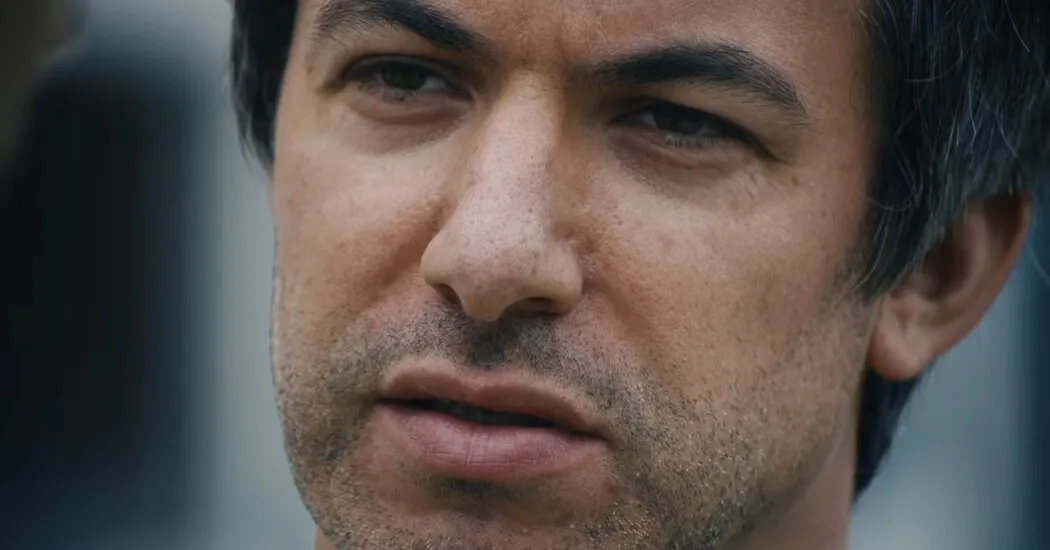
The documentary film “You Can See Everything,” co-directed by Nathan Fielder and Lance Oppenheim, has rapidly emerged as a significant cultural and cinematic talking point following its release. In its initial two weeks, the film has achieved a box office gross of $45 million, indicating substantial commercial appeal. Critically, it has garnered widespread acclaim, reflected in a near-perfect score from both critics and audiences on Rotten Tomatoes.
The film focuses on the controversial figure of Elizabeth Holmes, the founder of the now-defunct health technology company Theranos, who was convicted of defrauding investors. Its distinctive narrative approach and subject matter have generated considerable discussion, prompting speculation about its potential impact on the upcoming Academy Awards. The industry is now keenly observing whether this hybrid film can challenge traditional perceptions within the esteemed awards body.
While the film’s distributor, A24, has refrained from official comments regarding its Oscar campaign strategy, sources close to the production and with knowledge of the studio’s intentions anticipate a robust campaign. These sources indicate that A24 is expected to campaign for the film in several prominent categories, including the highly coveted Best Picture, Best Supporting Actress, and Best Documentary. Additional consideration may also be given to categories such as editing, cinematography, original score, and directing, underscoring the perceived comprehensive quality of the production.
A potential nomination for Amanda Seyfried, who portrays Elizabeth Holmes in the film’s recreated sequences, would represent a historic moment for the Academy Awards. Such a nomination in the Best Supporting Actress category for a role within a documentary would mark a significant precedent, as no actress has previously achieved this recognition. This possibility highlights the film’s genre-bending nature and its potential to redefine performance categories within documentary filmmaking.
Furthermore, “You Can See Everything” faces the ambitious prospect of securing a nomination for Best Picture, a feat no documentary has ever accomplished in the Academy’s history. Past documentaries, despite achieving considerable cultural resonance and commercial success, have consistently been overlooked for the top award. “Fahrenheit 9/11,” Michael Moore’s 2004 film, serves as a notable example. While it remains the highest-grossing non-concert documentary and profoundly influenced public discourse in its release year, it was ultimately excluded from the Best Picture category. More surprisingly, it was also omitted from the Best Documentary feature race, a fate that has, paradoxically, often befallen commercially successful documentaries.
Industry observers and those who closely monitor the Academy Awards race suggest that “You Can See Everything” might face a more favorable pathway to a Best Picture nomination from the broader Academy membership than from voters within the Academy’s dedicated documentary branch. This assessment stems from a perceived historical tendency within the documentary branch to overlook films that achieve significant commercial success, focus on celebrity figures, or adopt unconventional narrative structures. The film’s unique blend of investigative journalism, narrative recreation, and Fielder’s distinctive performance art style positions it at the forefront of this debate.
The film’s innovative format presents a direct challenge to established definitions of documentary filmmaking, prompting debate among leading documentarians. Davis Guggenheim, an Academy Award-winning director known for “An Inconvenient Truth” (2006), articulated this challenge, stating, “‘You Can See Everything’ is going to be a real test for the doc branch because it pushes the boundaries of what a documentary is and the branch in past years has disqualified very important films for this reason.” This statement highlights a recurring tension between artistic innovation and traditional categorizations within the Academy.
The 770-member documentary branch of the Academy of Motion Picture Arts and Sciences has undergone significant expansion and diversification over the past decade. This expansion has aimed to better reflect the broader Academy’s demographics, with a notable increase in international and younger members; currently, 30 percent of its members reside outside the United States. However, individuals familiar with the branch’s internal dynamics suggest that this growth has, in some respects, led to a more pronounced adherence to its specific priorities and, at times, a more stringent interpretation of documentary authenticity.
Critics of the documentary branch frequently point to what they describe as a bias against films that achieve substantial commercial success. They also highlight a perceived aversion to documentaries that feature celebrities or are directed by highly recognized filmmakers. Furthermore, there is a belief that the branch is less inclined to reward filmmakers who have previously won an Oscar in the documentary category, irrespective of the critical reception or quality of their subsequent work. These perceived biases could significantly impact “You Can See Everything’s” chances within the documentary category.
Joe Berlinger, an Oscar-nominated documentarian known for “Paradise Lost 3: Purgatory” (2011), commented on the potential challenges facing the film. While acknowledging he had not yet seen “You Can See Everything,” Berlinger noted, “Unfortunately, there is an anti-commercial-success bias among some of my peers in the branch, so I don’t think it will be a shoo-in.” He further added that the film’s “very unconventional in format” nature would “probably rattle some of my fellow branch members as well.” Despite these reservations, Berlinger expressed hope that the film’s “absolutely stunning” box-office performance might help overcome this “built-in resistance.”
The documentary branch has a documented history of overlooking critically acclaimed and culturally impactful films. A partial list of celebrated documentaries that were not nominated for the Best Documentary Oscar includes “Hoop Dreams” (1994), which received an editing Oscar nomination; “The Thin Blue Line” (1989); “Paris Is Burning” (1991); “Grizzly Man” (2005); and “Won’t You Be My Neighbor?” (2018), a popular film about Fred Rogers. This pattern suggests a consistent preference for certain types of documentaries over others, particularly those that challenge stylistic norms or achieve mainstream popularity.
Conversely, the broader Academy has, on several occasions, recognized documentaries that performed well at the box office. Examples include “March of the Penguins” (2005), “Amy” (2015), “Free Solo” (2018), and “Summer of Soul” (2021), all of which secured Oscar wins or nominations. This disparity between the documentary branch’s selections and the general Academy’s preferences underscores the unique challenge “You Can See Everything” faces.
The formation of the documentary branch itself was partly a response to perceived injustices. Joe Berlinger’s 1992 film “Brother’s Keeper,” co-directed with Bruce Sinofsky, about a man accused of a mercy killing, was notably ignored by the Academy. This omission prompted an editorial in The New York Times advocating for the establishment of a dedicated documentary branch, which was eventually formed in 2001, with the intention of fostering a more equitable nomination process. However, as some industry insiders suggest, concerns persist.
Five anonymous sources within the documentary industry expressed concern that the branch might be reluctant to nominate more popular documentaries. Their reasoning, shared on condition of anonymity to avoid repercussions within the branch, is rooted in the fear that such films would frequently win the category simply because the broader Academy membership, voting on the final slate, would likely favor the best-known contenders. This suggests a strategic rationale behind the branch’s choices, aiming to protect less commercially viable or niche documentaries from being overshadowed. The Academy itself declined to comment on these internal dynamics.
Beyond the politics of the documentary branch, there is a fundamental debate about whether “You Can See Everything” can even be accurately categorized as a documentary. Nathan Fielder’s directorial style is characterized by a distinctive blend of reality and performance art, delivered with a deadpan and often absurdist sensibility. This approach, combined with the film’s subject matter involving Elizabeth Holmes—a figure already known for manipulating perceptions—creates an atmosphere where the audience is frequently uncertain about the true nature of the interactions depicted, questioning who is influencing whom, or whether all participants are part of an elaborate meta-narrative.
Documentarian Marina Zenovich, director of “I’m Chevy Chase and You’re Not,” voiced this perspective, stating, “I so applaud the film, but it’s not a documentary.” She elaborated, “The subject and the director are trying to manipulate each other, outdo each other. It feels less organic as a result, but it’s still incredibly watchable. It seems to me that they’ve created a whole new genre.” This viewpoint suggests that “You Can See Everything” transcends traditional genre boundaries, potentially establishing a new form of cinematic expression that blends documentary techniques with elements of staged reality and dramatic performance, challenging both critical and academic definitions of film categories.
Why This Matters
The discussion surrounding “You Can See Everything” and its Oscar prospects extends far beyond mere awards speculation; it carries significant implications for the future of filmmaking, the definition of documentary, and the relevance of established awards bodies. Firstly, the film’s commercial and critical success, coupled with its unconventional format, challenges traditional perceptions of what constitutes a documentary. If “You Can See Everything” achieves nominations in major categories like Best Picture or Best Supporting Actress, it could redefine the boundaries of the documentary genre, encouraging more experimental and hybrid forms of storytelling. This could broaden artistic possibilities for filmmakers and diversify the types of stories audiences expect from “non-fiction” cinema.
Secondly, the ongoing debate within the Academy’s documentary branch regarding commercial success, celebrity involvement, and unconventional narratives highlights a deeper struggle within the film industry to adapt to evolving artistic expressions. Should the documentary branch continue to be perceived as resistant to popular or innovative films, it risks alienating audiences and creators, potentially diminishing its own influence and relevance in recognizing groundbreaking work. Conversely, if “You Can See Everything” forces a re-evaluation of these internal biases, it could lead to a more inclusive and forward-thinking awards process, better reflecting the dynamic landscape of contemporary cinema.
Finally, the film’s engagement with the Elizabeth Holmes/Theranos saga—a real-world event with profound ethical and financial implications—underscores the power of cinema to explore complex societal issues through diverse narrative lenses. By intertwining a high-profile case of fraud with experimental filmmaking, “You Can See Everything” not only entertains but also prompts critical reflection on truth, deception, and public perception. Its potential recognition by the Academy would not only be a triumph for an individual film but also a powerful statement about the evolving capacity of cinematic art to interpret and comment on the complexities of our world, shaping cultural conversations and influencing how stories, both factual and performed, are understood and valued.