
Key Takeaways:
- AI’s immense energy appetite is pushing America’s aging power grid to its limits, raising concerns about rising costs and potential outages.
- However, this demand is also a powerful catalyst, spurring innovation in both software (load orchestration by WeaveGrid) and hardware (superconductive power lines by Veir) to modernize and strengthen the grid.
- Industry leaders see this “improv era” as an opportunity for accelerated adoption of comprehensive energy solutions, moving beyond traditional infrastructure to embrace efficiency and distributed resources.
AI’s Power Problem: How the Data Center Boom is Forcing a Grid Revolution
The silicon foundations of artificial intelligence are hungry – ravenously so. As algorithms grow more complex and data centers multiply to fuel the AI boom, an unprecedented surge in electricity demand is sending ripples through America’s power infrastructure. Critics are sounding alarms, warning that this escalating need for power is subjecting the nation’s aging grid to an intense stress test, threatening everything from soaring utility bills in the short term to widespread outages and systemic failures in the long run. The AI boom has indeed led to a gargantuan surge in energy demand across the country, creating an upswell in connections that critics say is enacting a stress test on America’s aging grid infrastructure.
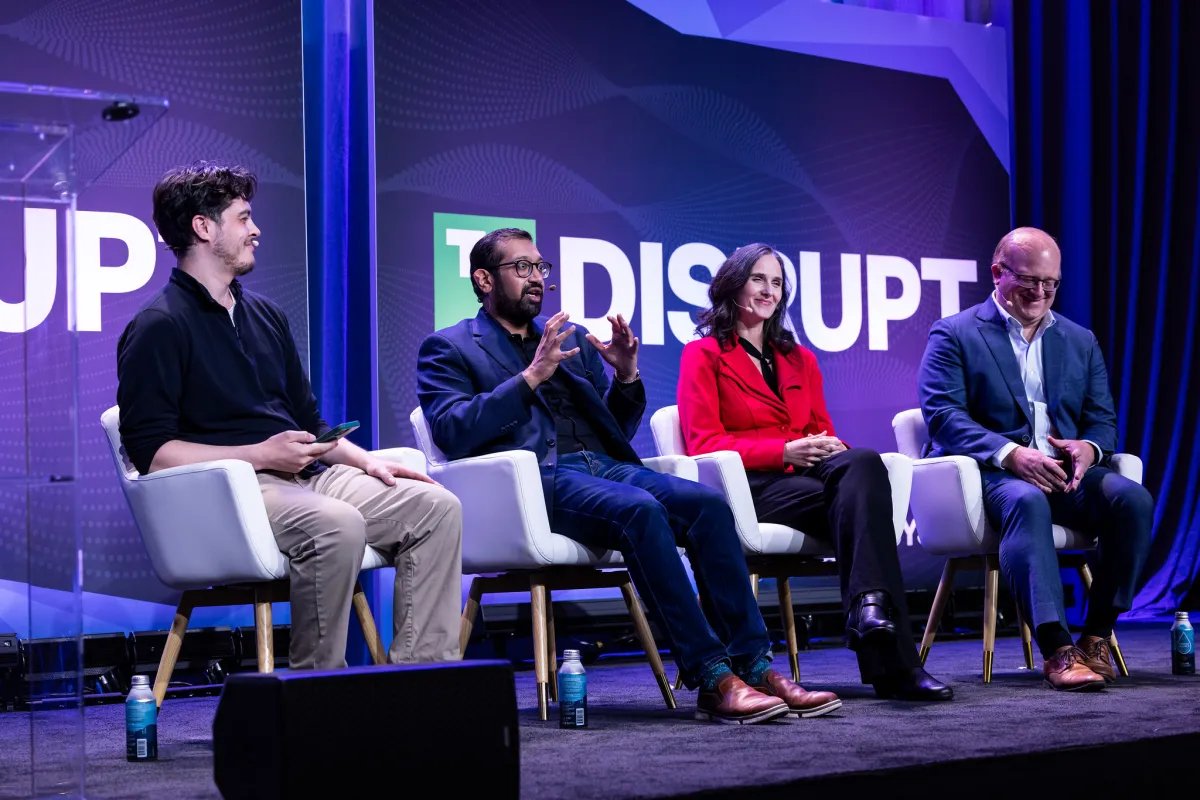
Yet, amidst these dire warnings, a different narrative emerged at TechCrunch Disrupt earlier this month. Industry insiders, far from being daunted, framed the AI energy crunch not merely as a looming crisis, but as a pivotal catalyst for long-overdue grid modernization. Apoorv Bhargava, founder and CEO of WeaveGrid, Tim Heidel, CEO of Veir, and Kristin Eberhard, VP of policy at Rewiring America, articulated a vision where new challenges birth new opportunities, pushing the boundaries of what our energy systems can achieve.
The Grid Under Pressure: A Deeper Dive into Modern Demands
The traditional electric grid, largely designed for a centralized, one-way flow of power from large fossil fuel plants to consumers, is ill-equipped for the multifarious demands of the 21st century. As Bhargava succinctly put it, “It’s a very different electric grid, right? We’re dealing with a ton of new variables, including renewable energy. We’re dealing with a ton of new load in the form of electric vehicles and data centers and heat pumps, and the ability to manage and orchestrate is fundamentally what utilities are now grappling with.” This isn’t just about demanding more power; it’s about a fundamentally different kind of power. Renewable sources like solar and wind are inherently intermittent, requiring sophisticated balancing acts to maintain grid stability. Electric vehicles represent a distributed, flexible load that can either strain or stabilize the grid depending on how it’s managed. Heat pumps introduce significant seasonal peaks in demand. And then there are data centers, operating 24/7, demanding immense, constant, and high-quality power – a relentless pull that conventional infrastructure struggles to meet efficiently without significant, costly upgrades.
Software Solutions: Intelligent Orchestration for a Complex Grid
This confluence of new variables makes intelligent load management paramount. While all of those new connections are driving an ever larger amount of stress to the grid, Bhargava’s company, WeaveGrid, is at the forefront of this digital revolution, offering software that acts as the grid’s dynamic nervous system. Their platform helps utilities not just react to demand but proactively orchestrate energy flow, optimizing connections to minimize waste and maximize the potential of existing infrastructure. By leveraging advanced data analytics and AI, WeaveGrid can predict demand fluctuations, seamlessly integrate distributed energy resources like rooftop solar and battery storage, and even manage EV charging to occur during off-peak hours, thereby smoothing out demand curves. This isn’t merely about preventing blackouts; it’s about making the grid smarter, more resilient, and ultimately, more cost-effective for utility payers by ensuring every watt is used efficiently and that utilities can maximize their current system’s potential.
Hardware Innovations: Building a Stronger, More Efficient Backbone
While software optimizes the existing pathways, hardware innovation is rebuilding the pathways themselves. Tim Heidel’s Veir is tackling the physical limitations of the grid with groundbreaking superconductive power lines. Traditional copper and aluminum cables lose significant energy as heat during transmission over long distances, and their bulk requires extensive rights-of-way, making expansion difficult and costly. Veir’s technology, however, promises a radical shift. These advanced cables can carry power five times farther than traditional ones with dramatically reduced energy loss, all while requiring 20 times less physical space, the company has said. This efficiency isn’t just an incremental improvement; it’s a game-changer for expanding transmission capacity, especially crucial for delivering clean energy from remote generation sites to dense urban and data center hubs where space is at a premium. The recent $110 million Series C funding round for Veir earlier this month underscores the industry’s belief in the transformative potential of such foundational technological advancements.
The “Improv Era”: A Mindset Shift Towards Holistic Energy Solutions
The scale of the investment in AI infrastructure, as Heidel noted, is “driving a tremendous amount of innovation.” He added, “There’s a ton of new technologies that are coming off the shelves and starting to get to scale that, pulled together, can actually really make sure that data centers are the best community neighbors and citizens be right.” This sentiment was echoed by Kristin Eberhard, whose organization advocates for household electrification. She framed the current moment as an “improv era,” recognizing that the urgency created by data center energy demand has fostered an unprecedented willingness across industries to embrace new solutions. “I feel like this era of AI and load growth is a very improv era,” Eberhard said. “There’s a lot of yes-and-ing going on. So yes, we need more transmission lines. Yes, we need more centralized power plants, and we also need to make sure that we’re taking advantage of all this other stuff that we had previously been leaving on the table when we didn’t have this urgency of the AI demand.” This ‘other stuff’ includes maximizing demand-side management, fostering local microgrids, integrating advanced battery storage, and leveraging smart appliances – a holistic approach that views every component of the energy ecosystem as a potential asset, rather than merely a consumer.
The Path Forward: Collaboration, Adoption, and a Smarter Grid
The vision emerging from these experts is clear: the energy challenges brought on by AI are not a death knell for progress, but a powerful call to action. It mandates a rapid acceleration in the adoption of next-generation technologies, from intelligent software to revolutionary hardware. “I think that we really need to look at ways that we can really adopt all of that as fast as possible to ease this next stage of growth,” Heidel emphasized. This requires not just technological leaps but also significant policy shifts, streamlined permitting processes, and substantial private and public investment. Critically, it also demands a reimagining of data centers themselves – from energy hogs to ‘best community neighbors and citizens,’ implying integration with local grids, potential for waste heat recovery, and active participation in demand-response programs. The AI revolution is undeniably reshaping our digital landscape, but its physical footprint, particularly in energy demand, is equally profound. What initially appears as a monumental challenge for our aging electrical grid is, in the eyes of many innovators, a unique opportunity. It’s a moment when necessity truly becomes the mother of invention, pushing us towards a more resilient, efficient, and intelligent energy future.
Bottom Line:
The future of AI is inextricably linked to the future of our power grid. To truly harness AI’s potential, we must embrace this ‘improv era’ with aggressive investment in smart software, advanced infrastructure, and holistic energy strategies, ensuring a sustainable and robust foundation for the next wave of technological progress.
When you purchase through links in our articles, we may earn a small commission. This doesn’t affect our editorial independence.
{content}
Source:{feed_title}