
Leonardo and Shield AI Partner to Advance Autonomous Capabilities for UK’s Proteus Uncrewed Rotorcraft
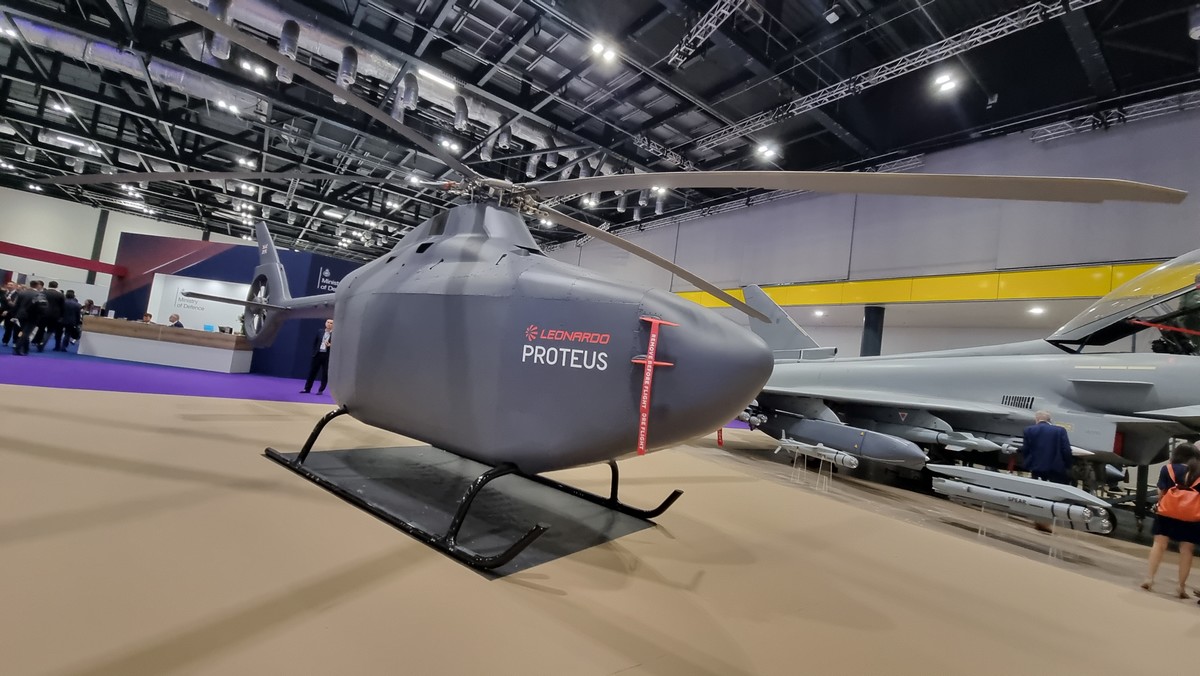
Leonardo, a leading global aerospace, defence, and security company, has entered into an agreement with Shield AI, a prominent artificial intelligence (AI) defence technology company, to integrate Shield AI’s Hivemind software development kit (SDK) into the development of autonomy for Proteus. Proteus is an uncrewed rotorcraft technology demonstrator built collaboratively by Leonardo with the Royal Navy and UK Defence Innovation. This partnership provides Leonardo’s engineers with the essential tools to design, develop, and tailor their own mission autonomy solutions for the advanced aerial platform.
Under the terms of the agreement, engineers from both companies will collaborate through the Hivemind SDK. This suite of software tools will enable Leonardo’s technical teams to build and refine new autonomy capabilities specifically for rotary-wing operations. These capabilities are intended to support a diverse range of critical military applications, including anti-submarine warfare (ASW), intelligence, surveillance, and reconnaissance (ISR) missions, and contested logistics helicopter operations, addressing the complex demands of modern defence scenarios.
Tom Schaefer, Vice President of Hivemind Engineering at Shield AI, emphasized the strategic importance of this collaboration. “Leonardo builds some of the most widely flown rotorcraft in the world, and Hivemind gives its engineers new tools to add autonomy to them,” Schaefer stated. He further underscored the dynamic nature of autonomy software, which necessitates continuous adaptation to evolving mission profiles, threat landscapes, and aircraft sensor configurations. This approach ensures that Leonardo’s engineers can precisely tailor the Hivemind software to their specific operational requirements, retaining expertise and control over the technology, and keeping the development work in-house.
Adam Wardrope, Vice President for Market Development in Helicopters at Leonardo in Britain, articulated the pressing demand for AI-powered autonomy in contemporary military and security contexts, both in peacetime and wartime. “As we look to the demands of our customers and the reality of military and security operations in both wartime and in peacetime, there is a need for autonomy powered by AI,” Wardrope commented. He stated that the capability to develop and integrate mission autonomy onto Proteus using Hivemind will be instrumental in deploying advanced autonomous features. Wardrope also highlighted the potential for extending this software’s application across other programs within Leonardo’s extensive rotary-wing portfolio, leveraging Shield AI’s software to complement Leonardo’s long-standing design, development, and manufacturing expertise in both crewed and uncrewed rotorcraft.
Proteus is a state-of-the-art vertical take-off and landing (VTOL) technology demonstrator. Developed collaboratively by Leonardo, the Royal Navy, and UK Defence Innovation under the Rotary Wing Uncrewed Air System (RWUAS) programme, Proteus is distinguished by its highly modular payload bay. This bay is designed to accommodate approximately one tonne of equipment or two standard NATO pallets, offering exceptional versatility. This modularity means the same airframe can be rapidly reconfigured to carry various mission-specific equipment, such as sonobuoys for ASW, advanced radar systems for surveillance, or stores for resupply operations, depending on the operational need. Proteus successfully made its inaugural flight earlier this year, following extensive demonstrations in simulated environments, notably already incorporating autonomy solutions designed by Leonardo.
This development is directly aligned with the Royal Navy’s overarching Maritime Aviation Transformation strategy, which charts the evolution of maritime aviation capabilities through 2040. Furthermore, it supports the UK’s Strategic Defence Review concept of a “hybrid navy,” a vision that increasingly relies on uncrewed aircraft to undertake tasks traditionally performed by crewed assets such as Merlin and Wildcat helicopters. A critical area of focus is anti-submarine warfare (ASW), where the pressure for enhanced capability is particularly acute. A recent report by the Defence Committee highlighted concerns regarding the operational frequency of British attack submarines and acknowledged a significant national ASW capability gap. Uncrewed systems like Proteus are seen as vital in mitigating such deficiencies, freeing up crewed assets for other missions and extending operational reach and endurance in contested environments.
Shield AI’s Hivemind is the foundational autonomy software employed in the company’s own V-BAT and X-BAT uncrewed aircraft. The current agreement, however, strategically provides an SDK rather than a complete, pre-configured product. This approach ensures that Leonardo retains full ownership and control over the autonomy solutions it develops, allowing for in-house sustainment and modification. For a British defence programme, maintaining such sovereign capability is paramount. The ability to adapt autonomy software rapidly without requiring external supplier intervention is crucial for meeting the dynamic demands of military operations and maintaining national security interests, ensuring that autonomy can be modified at the speed operations demand.
Leonardo maintains a substantial presence in the United Kingdom, employing approximately 8,000 individuals. Its helicopter division, a key component of this agreement, is headquartered in Yeovil, Somerset, where it provides essential support for the Royal Navy’s Merlin and Wildcat helicopter fleets.
Why This Matters
This strategic partnership between Leonardo and Shield AI carries significant implications for the future of defence technology, national security, and the broader landscape of autonomous systems.
Advancement in Autonomous Capabilities:The collaboration represents a substantial leap forward in the development and deployment of autonomous uncrewed rotorcraft. By empowering Leonardo engineers with the Hivemind SDK, the agreement fosters the creation of highly customized and sophisticated mission autonomy. This accelerates the integration of advanced AI into complex rotary-wing operations, positioning the UK and its partners at the forefront of autonomous system innovation. The ability to tailor autonomy for specific functions like anti-submarine warfare, intelligence gathering, and contested logistics is crucial for enhancing operational effectiveness in diverse and challenging environments, potentially influencing future global defence strategies for uncrewed platforms.
Enhancing UK Defence Modernization and Sovereign Capability:The Proteus programme is a cornerstone of the Royal Navy’s Maritime Aviation Transformation strategy and the broader “hybrid navy” concept, which aims to leverage uncrewed systems to augment traditional forces. The ability to deploy autonomous uncrewed systems for critical roles directly addresses identified capability gaps, particularly in areas like anti-submarine warfare, where the UK has acknowledged deficiencies. By allowing Leonardo to develop and sustain its own autonomy solutions, the partnership ensures sovereign control over vital defence technology. This in-house expertise enables rapid adaptation to evolving threats and mission requirements without reliance on external entities, which is indispensable for national security, guaranteeing resilience and responsiveness in critical military operations.
Strategic Collaboration and Industry Impact:The collaboration between a major European defence contractor like Leonardo and an innovative US-based AI company like Shield AI highlights a growing trend of international partnerships to accelerate technological advancements in defence. This model of shared expertise and tailored technology transfer could set a precedent for future collaborations aimed at integrating cutting-edge commercial AI into military applications. Such partnerships foster a robust ecosystem of innovation and specialization, allowing defence industries to leverage the best available commercial technologies while maintaining national security requirements.
Implications for Future Warfare and Operational Efficiency:Autonomous systems are poised to redefine the landscape of modern warfare. By enabling uncrewed rotorcraft like Proteus to conduct complex, dangerous, or repetitive missions autonomously, this partnership contributes to enhancing operational efficiency, reducing human risk in hazardous zones, and increasing the overall tempo and persistence of military operations. The flexibility offered by modular, AI-driven platforms could significantly alter tactical and strategic approaches in naval and joint operations globally, allowing crewed assets to focus on higher-level tasks and extending operational reach in previously inaccessible or highly contested areas.