
**Key Takeaways:**
- **Pedigreed Founders Meet Critical Need:** Mintive is led by AI pioneers—Coursera’s founding engineer and TensorFlow’s co-creator—tackling the complex challenge of enterprise AI agent management.
- **”Easy Button” for Enterprise AI Governance:** Despite a crowded market, Mintive differentiates with a platform designed for rapid, simple deployment, offering crucial control over AI agents’ access, actions, and costs.
- **Strategic, Sustainable Funding Approach:** Having secured $11 million, including a $7 million seed round, Mintive is lauded by investors like Cowboy Ventures for its pragmatic “brick by brick” growth strategy, avoiding the pitfalls of “vanity” valuations.
The New Frontier of AI Governance: Introducing Mintive
As enterprises increasingly integrate sophisticated AI agents into their operations, a critical new challenge has emerged: how to effectively manage, secure, and govern these autonomous digital workers. This burgeoning demand has ignited a fiercely competitive landscape, drawing in tech giants and countless startups alike. Amidst this flurry, one early-stage entrant, Mintive, is rapidly distinguishing itself, not just through its innovative solutions but also through the unparalleled pedigree of its founders and an impressive roster of high-profile investors.
Mintive has recently announced a significant $7 million seed round, spearheaded by Cowboy Ventures, bringing its total funding to $11 million. This capital infusion arrives at a pivotal moment, empowering the company to further refine its platform designed to bring order to the chaotic world of enterprise AI agents. Beyond Cowboy Ventures, the investment round saw participation from other notable firms like Coatue, Operator Collective, and Hustle Fund. The angel investor list reads like a who’s who of tech innovation, including Okta co-founder Frederic Kerrest, Discovery Loop co-founder and former Google Chief Scientist Jeff Dean, and OpenAI co-founder Andrej Karpathy, signaling profound confidence in Mintive’s vision and execution capabilities.
The Architects of AI Infrastructure
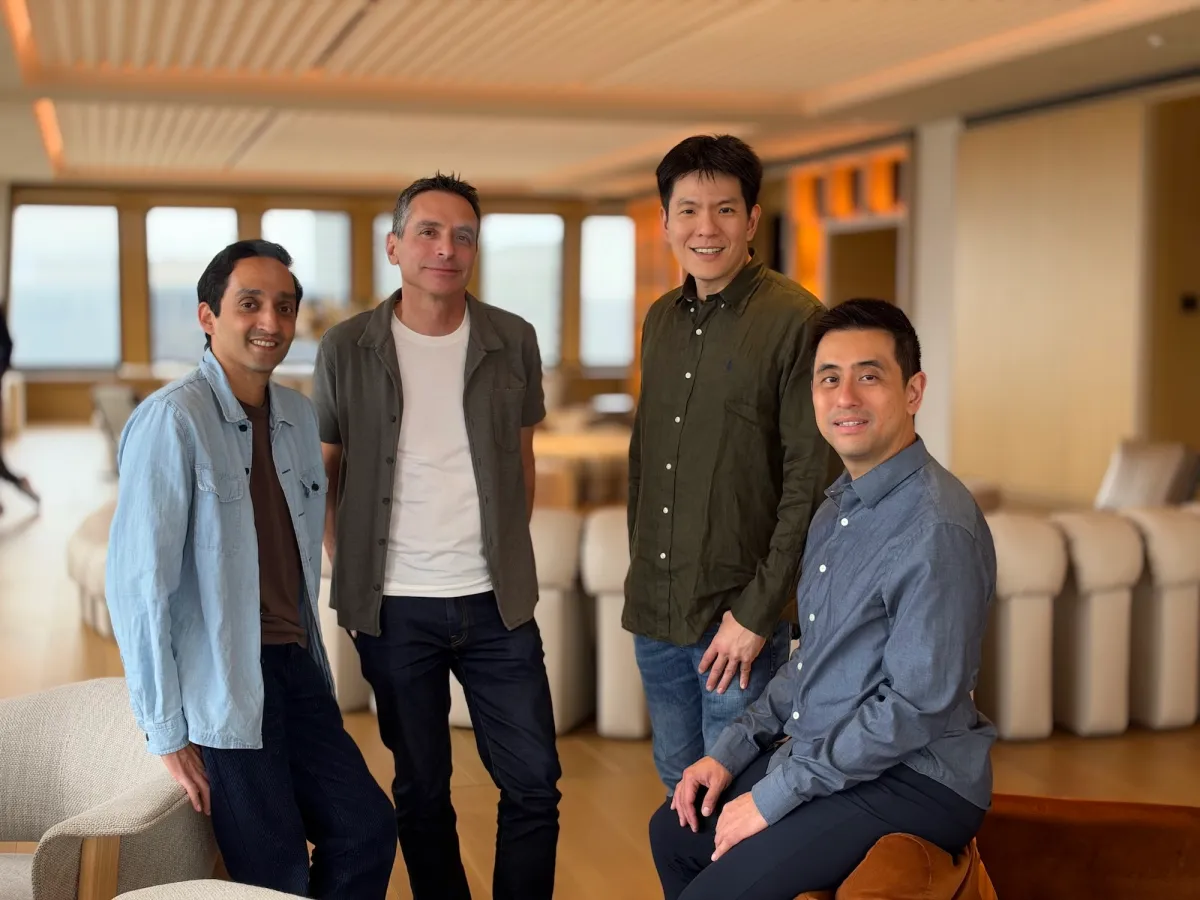
The formidable backing Mintive has garnered is no accident; it is a direct reflection of the extraordinary backgrounds of its co-founders: Jiquan Ngiam (CEO) and Vijay Vasudevan (CTO). These aren’t just seasoned tech veterans; they are architects of foundational AI technologies that have shaped the modern digital landscape. Ngiam was the founding engineer of Coursera, joining as employee number one, hired by AI luminary Andrew Ng. His foundational work there laid the groundwork for online education at scale. Later, at Google Brain, he delved into advanced neural networks, contributing to the very core of Google’s AI capabilities.
Vasudevan, Mintive’s CTO, boasts an equally impressive legacy. He is widely recognized as one of the co-creators of TensorFlow during his tenure at Google Brain. TensorFlow was the original, pioneering AI training platform that predated PyTorch, setting the standard for machine learning development globally. The combined experience of Ngiam and Vasudevan—spanning large-scale system architecture, deep neural network research, and the creation of industry-standard AI frameworks—provides Mintive with an intrinsic understanding of the complexities and requirements for building robust, scalable AI infrastructure for the enterprise. Their insights are not theoretical; they are born from years of hands-on development at the cutting edge of AI.
Demystifying Agent Management: Mintive’s Comprehensive Approach
Mintive is entering a market brimming with solutions promising to govern, provision, and offer identity management for enterprise AI agents. This crowded field includes offerings from hyperscalers like Amazon and Microsoft, specialized AI companies like OpenAI and Anthropic, and a vast ecosystem of point solutions from startups to established players like Langchain, New Relic, and Rippling. The sheer volume of competition, including over 40 startups from Y Combinator alone in this space, underscores both the critical need and the challenge of differentiation.
Mintive’s platform is meticulously engineered to address the multifaceted requirements of enterprise AI agent deployment and management. At its core is an **MCP (Multi-Cloud Proxy) gateway**, a crucial component that empowers IT professionals to precisely authorize what cloud services AI agents may access and what actions they are permitted to perform. This granular control is vital for security, compliance, and preventing unintended data breaches or operational disruptions. Complementing this is an **LLM gateway** that intelligently routes requests to different large language models (LLMs), allowing enterprises to optimize for performance, cost, or specific model capabilities, and crucially, to cap expenses associated with LLM usage.
Beyond access and routing, Mintive tackles the complex issue of **agent identities and authorizations**. Unlike human employees, AI agents often require distinct access permissions that may differ significantly from the human users they serve. Mintive manages these unique identities, ensuring that agents operate within their defined boundaries. Furthermore, an **agent monitor** provides comprehensive visibility, tracking all agents across the company, offering insights into their activity, performance, and resource consumption. The platform also enables enterprises to create **proactive agents** capable of performing long-running, autonomous tasks, further enhancing operational efficiency.
Beyond the Hype: The “Easy Button” Advantage
In a market saturated with complex solutions, Mintive’s “secret sauce” lies in its unwavering commitment to simplicity and ease of use. Leveraging their extensive experience in building enterprise AI for over two decades, the founders have engineered a system that stands apart for its rapid deployment and intuitive interface. Ngiam emphasizes that setting up Mintive’s platform is remarkably straightforward, often amounting to just “clicking a few buttons.”
“I think what our customers look at and they are a bit shocked at, is how quick it is and easy to deploy,” Ngiam tells TechCrunch. He elaborates on the depth of thought behind this simplicity: “We have really thought through all the ways this can be done, all the access control, permissioning layer, to make it so easy for them to deploy it, that all the complexities are hidden away. You don’t think about sandboxes, you don’t think about harnesses, you don’t think about memory because we manage that for you.” This “easy button” approach is a game-changer for enterprises struggling with the operational overhead of integrating and managing AI at scale. By abstracting away the underlying technical intricacies of sandboxing, resource management, and secure harnesses, Mintive allows companies to focus on leveraging AI for business value, rather than getting bogged down in infrastructure challenges.
Early Wins: Traction in a Crowded Field
This compelling pitch has rapidly translated into significant market traction. Since launching its product in February, Mintive proudly reports attracting over 50 enterprise customers. This impressive list spans various sectors, including healthcare with Ro, fintech with Modern Treasury, education with the University of Michigan and Coursera (a full-circle moment for Ngiam), investment management with Apax, and even cutting-edge AI development with Stability AI. These early wins demonstrate a clear market need for Mintive’s solution and validate its ease-of-use promise in diverse, demanding enterprise environments.
The founders’ industry experience was also a decisive factor for investors like Cowboy Ventures managing partner Aileen Lee. “AI is going to be able to power incredible things, but we need more infrastructure that’s going to give us governance and visibility and control,” Lee told TechCrunch, highlighting the crucial role Mintive plays in enabling safe and scalable AI adoption.
Investor Confidence: Aileen Lee’s Strategic Perspective
Aileen Lee’s endorsement of Mintive extends beyond its product capabilities; she also deeply respects Ngiam’s prudent approach to fundraising. In an era where many AI agent-building startups are chasing enormous “vanity” rounds at unicorn valuations – with examples like Prime Intellect raising $130 million for its Series A at a $1 billion valuation – Mintive’s $11 million raise is a testament to strategic, sustainable growth. Lee praises Ngiam as a “grown-up” who isn’t chasing inflated valuations.
“I feel really lucky to have won the chance to work with him,” said Lee. “He is a grown-up and so he was not a person chasing a ‘vanity’ round.” She further emphasized the dangers of overcapitalization in early stages: “I think a lot of companies are being set up for failure by chasing round size, rather than, ‘how much do I need to actually really move the needle for the company?’ And so, yes, in a time when people are raising unprecedented amounts of money, we’re just kind of doing it the brick by brick, old-fashioned way.” This philosophy underscores a focus on product development, customer value, and sustainable business building over speculative growth, which can often lead to unsustainable burn rates and unrealistic expectations.
Bottom Line
Mintive enters the hyper-competitive arena of AI agent management with a potent combination: founders with unparalleled AI infrastructure expertise, a platform engineered for enterprise-grade simplicity and control, and a strategic, grounded approach to growth. While the market is undeniably crowded with both tech behemoths and nimble startups, Mintive’s focus on abstracting complexity and providing critical governance for AI agents positions it as a vital enabler for companies looking to responsibly scale their AI initiatives. The early customer adoption and investor confidence, particularly in a climate often swayed by hype, suggest Mintive is well-equipped to carve out a significant niche, offering a pragmatic path for enterprises to harness the transformative power of AI agents without succumbing to their inherent operational challenges.
When you purchase through links in our articles, we may earn a small commission. This doesn’t affect our editorial independence.
{content}
Source:{feed_title}