
**Key Takeaways:**
1. **Heightened Regulatory Risk Premium:** Calls for nationalization and increased scrutiny on companies like SpaceX introduce a significant regulatory risk premium for private enterprises, particularly those operating in strategic sectors with substantial government contracts, potentially deterring future investment.
2. **Erosion of Investor Confidence:** Such political rhetoric, even if aspirational, can erode investor confidence in the stability of property rights and the sanctity of private enterprise, creating uncertainty around capital allocation in high-growth, innovation-driven industries.
3. **Shifting Public-Private Dynamics:** The debate underscores a growing tension between leveraging private sector innovation through public funds and concerns over the concentration of economic and political power, signaling a potential re-evaluation of public-private partnerships and the regulatory framework governing them.
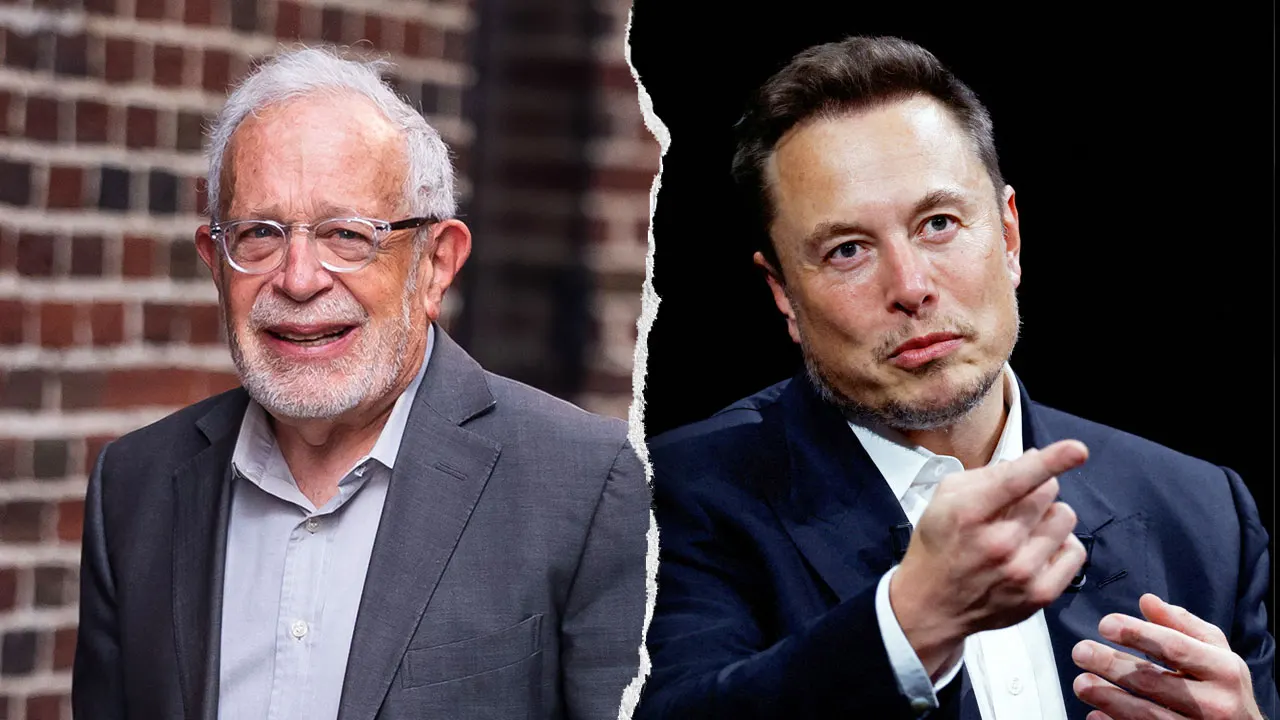
Reich urged Democrats to lay the groundwork for government control of Musk’s companies during an appearance on the Coffee Klatch podcast, accusing the billionaire of wielding too much political power (Credit: Youtube/Robert Reich).
Former Clinton Labor Secretary Robert Reich’s recent call for Democrats to target billionaire Elon Musk, investigate his ventures, and even lay the groundwork for nationalizing his companies, introduces a layer of significant market context and regulatory uncertainty into the financial landscape. While originating from a political podcast, these remarks resonate beyond partisan divides, touching upon critical themes of corporate power, government intervention, and the stability of private investment in key strategic sectors.
During an Oct. 24 episode of his podcast, “The Coffee Klatch with Robert Reich,” the former labor secretary argued that Musk holds an unprecedented degree of political and economic power, urging aggressive action. From a market perspective, such statements, particularly from a figure with past governmental influence, inject a “political risk” premium into the valuation models of companies like SpaceX and, by extension, other high-profile, privately held technology firms that rely heavily on government contracts or operate in areas deemed of national interest.
“When I say defund Musk, you know, 75% of his wealth is dependent on taxpayers who are buying Starlink systems for the Department of Defense,” he said. This assertion, while lacking immediate independent verification regarding the precise percentage, highlights a core economic debate: the extent to which private sector innovation, particularly in capital-intensive fields like space exploration and satellite internet, is fueled by public expenditure. For investors, this raises questions about the long-term sustainability and implicit public ownership of such enterprises, even when they are legally private. Any perception of over-reliance on government funding can be framed as a vulnerability, making these companies susceptible to shifts in political will or budget allocations.
ELON MUSK SAYS HE WILL RETALIATE AGAINST DEMOCRATS WHO INVESTIGATE HIM
Former Labor Secretary Robert Reich called for Democrats to target Elon Musk and consider nationalizing SpaceX and Starlink during an episode of his podcast.(TheStewartofNY/GC Images)
Reich did not provide evidence supporting his assertion that 75% of Musk’s wealth depends on taxpayers. SpaceX has secured billions of dollars in federal contracts, including agreements with NASA and the Pentagon. These contracts, crucial for the company’s growth and technological development, position SpaceX as a de facto strategic national asset. The specter of nationalization, therefore, is not merely a political talking point but a direct threat to the established framework of public-private partnerships that have driven innovation in the aerospace sector for decades. For potential investors eyeing the burgeoning space economy, such rhetoric creates a chilling effect, raising concerns about the security of private capital in ventures deemed “too important” or “too powerful.”
The former labor secretary also urged Democrats to prepare for a government takeover of SpaceX and its satellite internet business, Starlink, if the party wins back the White House.
“If we have a Democratic administration — and the Democrats ought to be starting this not just with oversight hearings, but also starting laying the groundwork for nationalizing Starlink and SpaceX,” he continued. “It should be a public corporation. We should not ever have that kind of power in one person’s hands.” The economic implications of nationalization are profound. Historically, nationalization has occurred in sectors deemed critical infrastructure (e.g., utilities, railways) or during times of severe economic crisis (e.g., banking bailouts). Applying this to a high-growth, innovative technology company like SpaceX would set a contentious precedent, potentially signaling to entrepreneurs and venture capitalists that successful private ventures, particularly those with strategic government ties, could be subject to expropriation. This would undoubtedly dampen entrepreneurial spirit and divert investment capital away from sectors perceived as vulnerable to government takeover, impacting overall economic dynamism and competitive advantage.
Musk fired back at Reich on X on Oct. 25, responding to a video of the former labor secretary’s remarks shared by conservative commentator Collin Rugg.
TRUMP PRAISES ELON MUSK AS A ‘GENIUS’ WHILE DEFENDING HIM AGAINST POTENTIAL DEMOCRATIC PROBES
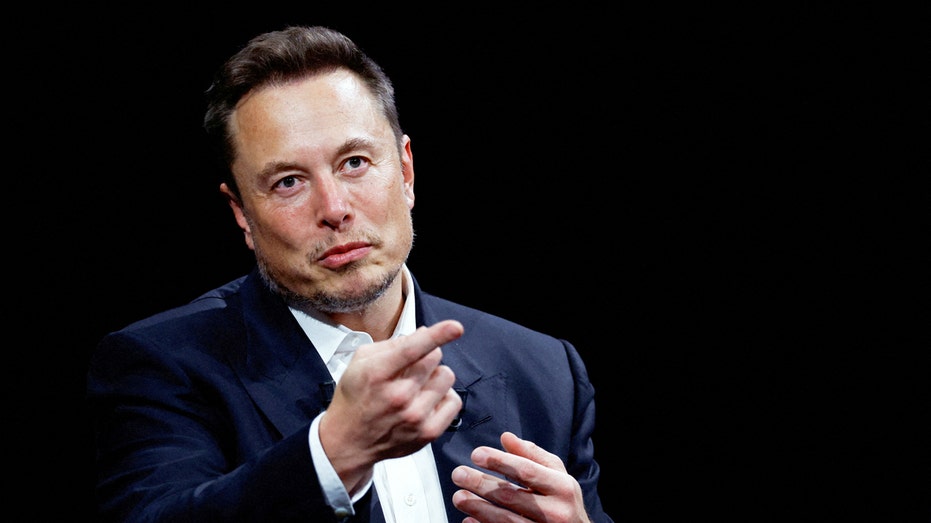
Elon Musk said Tuesday that a potential merger between Tesla and SpaceX would be “a good idea,” revealing that both companies have formed special committees to explore a possible deal.(Reuters/Gonzalo Fuentes)
“Stealing companies is a serious crime. Prison for Reich,” he wrote. Musk’s aggressive response underscores the fundamental clash between property rights, free market principles, and calls for greater government control. From a market perspective, strong defenses of private ownership are crucial for maintaining investor confidence and ensuring a predictable environment for capital formation and wealth creation. Any perceived threat to these foundational principles can trigger market volatility and a re-evaluation of investment strategies.
Reich also predicted that Musk would face increased congressional scrutiny if Democrats win control of the House and potentially the Senate.
“He knows that if the Democrats take over the House and possibly the Senate, one of the things they are going to be doing is focusing on Elon Musk. I mean, he’s really going to be targeted, and he knows it, and he’s going to be using his 360 million followers or 260 million followers on X to give him a buttress against that.” Increased congressional scrutiny, while not as extreme as nationalization, still represents a significant regulatory risk. Investigations can lead to costly legal battles, diversion of management resources, delays in product development, and potential legislative changes that could impact business models or profitability. For a company like SpaceX, which operates in a highly regulated environment with critical national security implications, such scrutiny could translate into slower contract approvals, stricter compliance requirements, and a general increase in operational friction. Investors typically price in such regulatory headwinds, potentially leading to lower valuations or a higher required rate of return for capital deployed in these ventures.
| Ticker | Security | Last | Change | Change % |
|---|---|---|---|---|
| SPCX | NO DATA AVAILABLE | – | – | – |
SpaceX, being a private company, does not have a publicly traded ticker. However, its immense valuation and strategic importance mean that threats against it have ripple effects across the private equity and venture capital markets, as well as publicly traded companies that are partners or competitors in the aerospace sector.
GET FOX BUSINESS ON THE GO BY CLICKING HERE
Reich’s remarks come as Democrats seek to regain control of Congress in the November midterm elections, potentially giving the party greater authority to investigate Musk’s business dealings with the federal government. This political backdrop is critical for market participants, as shifts in legislative power can directly translate into changes in regulatory enforcement, antitrust priorities, and industrial policy. The prospect of a more aggressive regulatory stance towards large tech and aerospace firms introduces an element of unpredictability that financial markets inherently dislike, often leading to increased risk aversion and a preference for more stable, less politically exposed assets.
While Reich called for Democrats to begin laying the groundwork for nationalizing SpaceX and Starlink, he acknowledged that such a move would depend on the party returning to the White House. This caveat does not entirely alleviate market concerns but frames the threat as a longer-term policy aspiration rather than an immediate danger. Nevertheless, the mere discussion of such radical measures serves as a bellwether for potential future policy directions, compelling investors and corporate strategists to consider a broader spectrum of political and regulatory risks in their long-range planning.
Market Impact:The discussion surrounding potential nationalization and increased scrutiny of Elon Musk’s companies injects significant uncertainty into the capital markets, particularly for high-growth, innovation-driven sectors reliant on government contracts. Investors may begin to price in a higher “political risk premium” for companies operating in strategic industries like space technology and advanced infrastructure, potentially leading to a re-evaluation of valuations and a dampening of venture capital flows into these areas. Furthermore, the debate challenges the fundamental principles of private property rights and free-market enterprise, raising concerns about the sanctity of private investment and the potential for government intervention in successful private ventures. This could lead to a shift in investor sentiment towards more politically insulated assets and a cautious approach to public-private partnerships, ultimately impacting the broader economic landscape by potentially slowing innovation and investment in frontier technologies.