
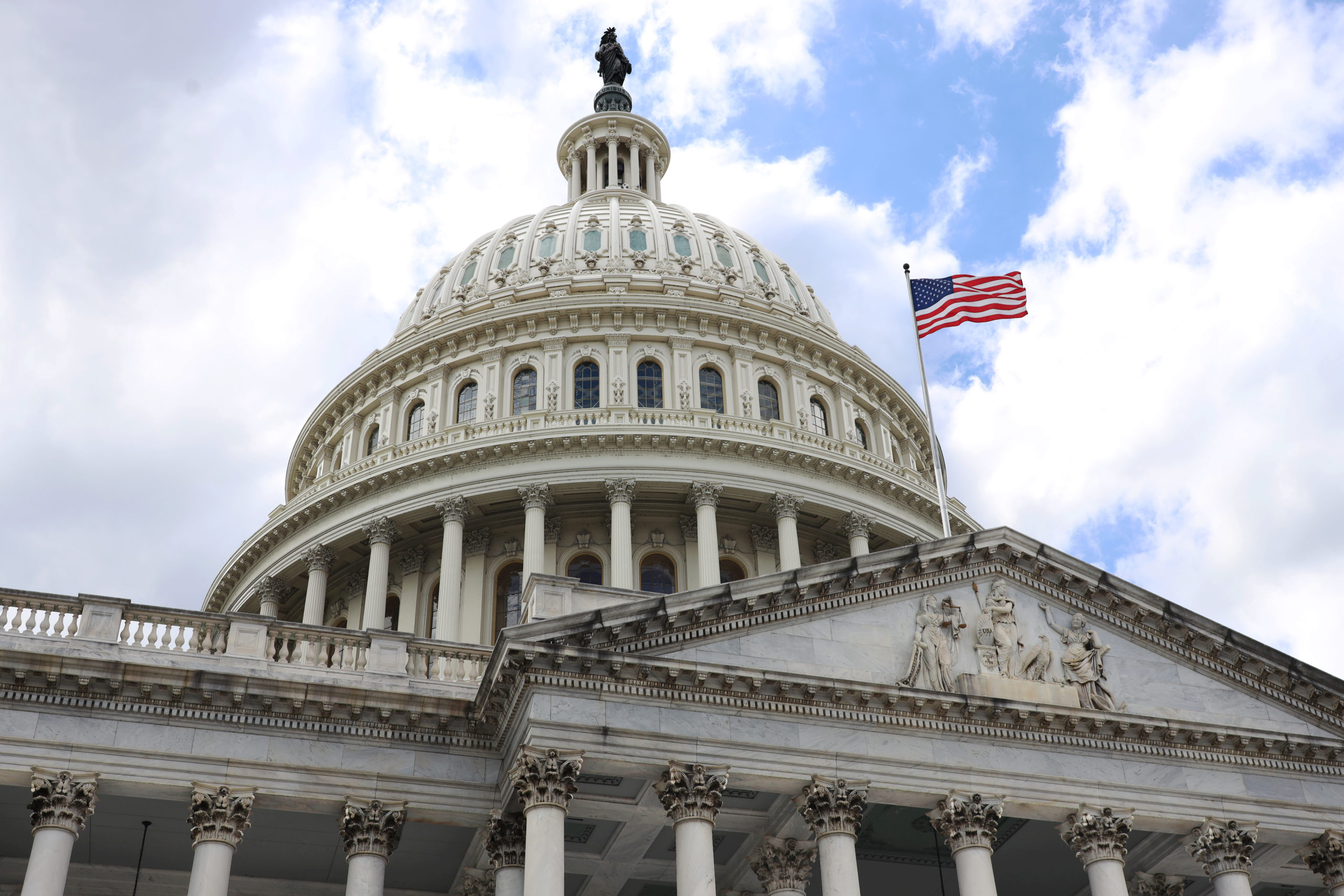
As Election Day on November 3 approaches, the 2026 midterm elections are poised to significantly reshape the legislative landscape, with potential far-reaching implications for U.S. national defense, particularly for the Air Force and Space Force. While dozens of former Airmen are seeking congressional seats, the broader impact on these military branches will extend beyond the number of former service members on Capitol Hill, focusing instead on the composition and leadership of key defense and appropriations committees.
The outcome of these elections will determine who holds critical oversight and funding authority, directly influencing defense policy, strategic initiatives, and resource allocation for the nation’s air and space capabilities for years to come. The shifting dynamics within the House of Representatives and the Senate, particularly concerning the Armed Services and Appropriations Committees, warrant close attention.
House of Representatives: Shaping Defense Policy and Funding
In the House of Representatives, the balance of power on committees responsible for defense policy and funding is highly contested. The House Armed Services Committee (HASC) plays a pivotal role in authorizing defense spending and setting strategic guidelines. Its leadership and composition are crucial for the Air Force and Space Force.
Rep.Rob Wittman(R-Va.), currently the Vice Chair of the House Armed Services Committee and Chair of its Tactical Air and Land Forces Subcommittee, is engaged in a tight re-election battle against Democratic challenger Shannon Taylor. With polls indicating a narrow margin, this race is rated a toss-up by election handicappers. Wittman’s position on the subcommittee has granted him significant influence over Air Force policy, notably his advocacy for multiyear procurement deals for F-35 and F-15EX fighters, and continued support for the E-7 Wedgetail early warning and battle management aircraft in the 2027 defense policy bill deliberations.
Should Wittman secure re-election, he would be a strong contender to succeed Rep.Mike Rogers(R-Ala.) as HASC Chair, assuming Republicans retain their majority. Rogers is term-limited from the chair position by Republican conference rules, though he has expressed a desire to seek a waiver to retain his leadership post. Other potential Republican candidates for the chair include Rep.Ronny Jackson(R-Texas) and Rep.Trent Kelly(R-Miss.). Conversely, if Democrats gain control of the House, Rep.Adam Smith(D-Wash.), currently the ranking Democrat, would likely return to the chairmanship, a position he held in previous congressional sessions.
Several other competitive races involving HASC members could alter the committee’s dynamics:
- Rep.Michael Turner(R-Ohio), who previously chaired the Tactical Air and Land Forces Subcommittee and represents a district encompassing Wright-Patterson Air Force Base, is facing Air Force veteran, former Maj.Kristina Knickerbocker. While Turner is currently favored, recent polling suggests the race is tightening.
- Rep.Jeff Crank(R-Colo.), whose district is strategically important as it includes the U.S. Air Force Academy, Peterson Space Force Base, and Schriever Space Force Base, is in an extremely close contest against U.S. Army veteran Jessica Killin. Experts have rated this race as a “toss-up.”
- Rep.Don Davis(D-N.C.), one of only four U.S. Air Force Academy graduates ever elected to Congress and a former captain, is in the nation’s most expensive House race against retired Army Col. Laurie Buckhout. Polls for this contest are highly varied. The winner will represent Seymour-Johnson Air Force Base, a crucial hub for Air Force F-15 training.
Beyond policy, funding is determined by the House Appropriations Committee and its defense subcommittee. Rep.Ken Calvert(R-Calif.), the current chair of this influential defense subcommittee, is involved in an unusual election battle due to California’s redistricting, which pits him against another Republican incumbent, Rep. Young Kim. While the seat is guaranteed to remain Republican, a loss for Calvert would significantly disrupt the leadership of the defense appropriations subcommittee, impacting the allocation of funds to the Air Force, Space Force, and the broader Pentagon. Other members of the House Appropriations defense subcommittee in competitive races include Reps. David Valadao (D-Calif.), Marcy Kaptur (D-Ohio), and Henry Cuellar (D-Texas).
Senate: Strategic Oversight and Budgetary Authority
The Senate also holds substantial sway over defense matters through its Appropriations and Armed Services Committees. Sen.Susan Collins(R-Maine), who chairs the full Senate Appropriations Committee and is a member of its defense subcommittee, is in a closely contested race with challenger Troy Jackson. Collins’s role makes her a key figure in shaping the Pentagon’s budget. Sen.Cindy Hyde-Smith(R-Miss.), also on the defense subcommittee, is facing a closer-than-expected challenge from Scott Colom, though she remains favored.
A significant change on the Senate Appropriations defense subcommittee will result from the retirement of Sen.Mitch McConnell(R-Ky.), the current chair. His replacement is uncertain if Republicans maintain control of the Senate, but should Democrats flip the chamber, Sen.Christopher Coons(D-Del.) is the likely successor to the chairmanship.
The Senate Armed Services Committee (SASC), responsible for authorizing defense policy, reviewing nominations, and overseeing military affairs, also faces considerable turnover. More than a fifth of the committee’s 27 members are either not seeking re-election or are in highly competitive races. Four members—Sens. Gary Peters (D-Mich.), Joni Ernst (R-Iowa), Jeanne Shaheen (D-N.H.), and Tommy Tuberville (R-Ala.)—are not running. Additionally, Sens.Dan Sullivan(R-Alaska) andAshley Moody(R-Fla.) are facing significant re-election challenges.
Local Races with National Military Impact
Elections in districts that host military installations are particularly impactful. Legislators from these areas often advocate for resources to their local bases, including funding for new construction, units, or equipment. The outcomes of these races directly affect the quality of life for service members and their families, as well as the operational capabilities of the bases.
Several key Senate battleground states contain major Air Force and Space Force bases. Alaska, for instance, is home to crucial Space Force radar facilities and Air Force fifth-generation fighter assets. Texas houses the services’ Basic Military Training and Air Education and Training Command. Florida features the rapidly expanding eastern range for space launches, alongside significant Air Force bases supporting testing, F-35 operations, tanker fleets, and special operations. These state-level elections can influence broad defense investment strategies and infrastructure development.
On a more granular level, several House districts with significant military installations feature competitive races:
- MacDill Air Force Base, Fla.: Incumbent Rep. Kathy Castor (D) is in a tight contest with Mike Beltran (R).
- Joint Base Lindsey Graham, S.C.: This seat is open following the departure of Rep. Nancy Mace, with retired Navy Vice Adm. Nancy Lacore (D) challenging Jenny Costa Honeycutt (R).
- Davis-Monthan Air Force Base, Ariz.: Incumbent Rep. Juan Ciscomani (R) is considered a slight underdog against JoAnna Mendoza.
- Joint Base San Antonio-Randolph, Texas: Due to redistricting, JBSA-Randolph is now part of an open seat race, with Air Force veteran Carlos De La Cruz as the Republican nominee.
The cumulative effect of these elections will determine the legislative environment in which the Air Force and Space Force operate, impacting everything from strategic planning to daily operations.
Why This Matters
The 2026 midterm elections hold profound significance for the United States Air Force and Space Force, directly influencing their strategic direction, operational capabilities, and the well-being of their personnel. The composition of Congress, particularly leadership roles on key defense and appropriations committees, dictates the legislative framework within which these branches operate.
Firstly, **Strategic Direction and Modernization** are heavily reliant on the House and Senate Armed Services Committees. These committees authorize defense policy, set priorities for weapon system development, and oversee the strategic posture of the military. New leadership or shifts in committee majorities could lead to changes in emphasis for future aircraft acquisitions (e.g., Next Generation Air Dominance, B-21 Raider), space-based capabilities (e.g., satellite resilience, missile warning systems), or even adjustments to the overall force structure. Continuity in leadership often means consistency in long-term programs, while new leadership might push for different technological investments or strategic realignments, directly impacting the Air Force’s ability to maintain air superiority and the Space Force’s capacity to dominate the space domain.
Secondly, **Budget and Resources** are controlled by the Appropriations Committees. These committees determine the funding levels for all defense programs, from research and development to procurement and personnel. The outcomes of these elections will directly affect the budget available for critical programs like F-35 production, E-7 Wedgetail procurement, Space Force infrastructure, and cyber warfare capabilities. Insufficient funding or significant shifts in budgetary priorities could delay modernization efforts, impact readiness, or strain resources for training and maintenance. Conversely, strong congressional support can ensure consistent investment in cutting-edge technologies and robust operational funding, essential for maintaining a competitive advantage against global adversaries.
Thirdly, **Oversight and Accountability** are vital functions of Congress. A knowledgeable and engaged congressional body provides crucial oversight, ensuring efficiency, transparency, and responsible use of taxpayer dollars within the Air Force and Space Force. Changes in committee membership can alter the intensity and focus of this oversight, affecting everything from acquisition program management to military justice and environmental compliance at bases. Robust oversight helps to hold military leadership accountable and ensures that defense resources are effectively deployed.
Finally, **Personnel and Readiness** are also deeply affected. Congressional decisions on military pay raises, healthcare benefits, housing allowances, and support for military families directly impact recruitment, retention, and the overall morale of Airmen and Guardians. Furthermore, the allocation of funds for training, equipment maintenance, and base infrastructure directly influences the readiness of units to respond to global contingencies. Local congressional races are particularly important here, as representatives can advocate for specific base needs, contributing to the quality of life for service members and the operational effectiveness of their installations. The choices made by voters in these midterms will thus have a tangible impact on the individuals who serve and the overall strength of America’s air and space power.