
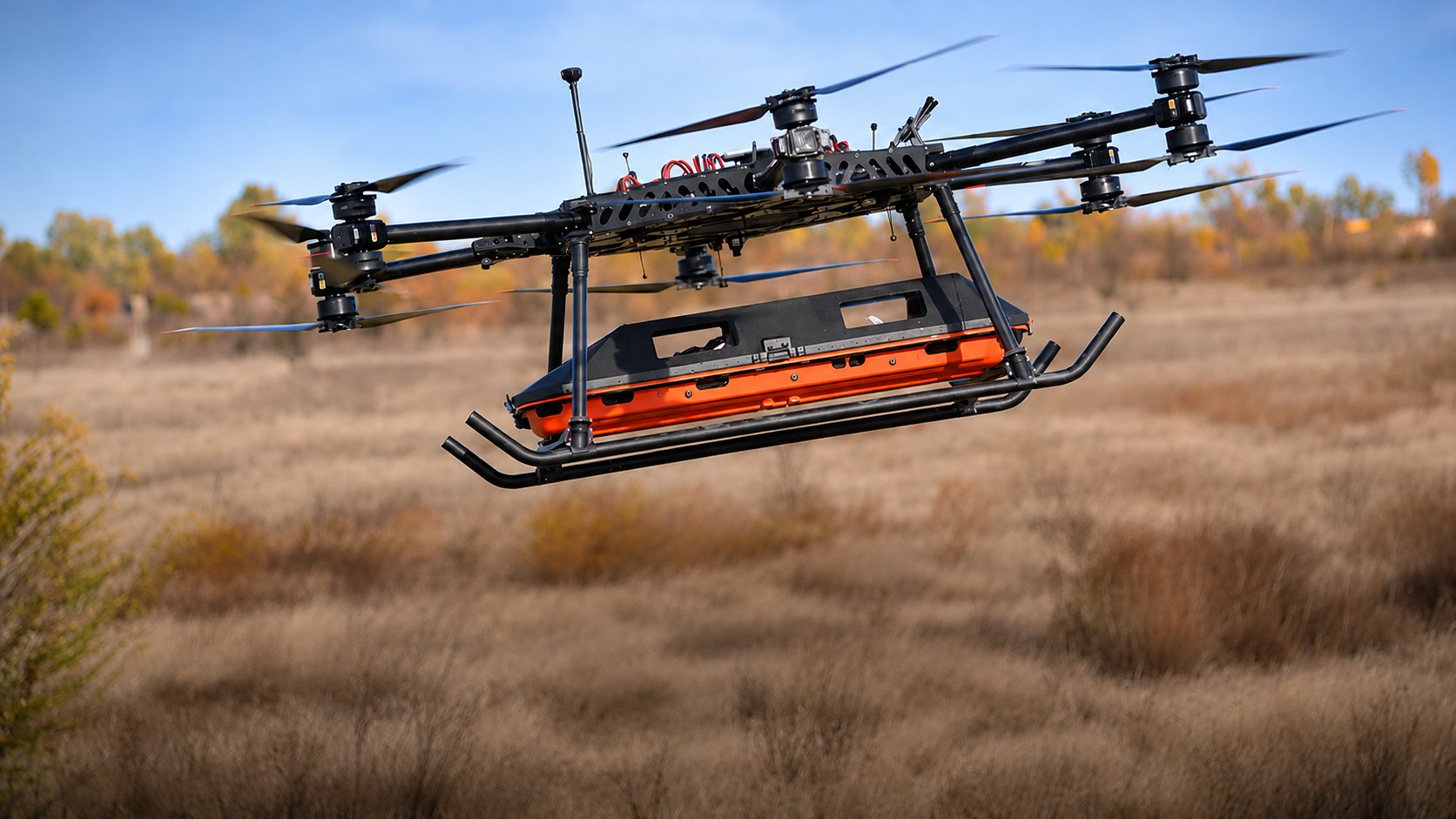
Ukraine Pioneers Drone-Based Medical Evacuations Amidst Intense Battlefield Conditions
Ukraine has initiated the world’s first documented medical evacuations using heavy uncrewed aerial vehicles (UAVs), successfully extracting wounded soldiers from frontline positions deemed inaccessible by conventional ground transport. This development marks a significant advancement in battlefield medical logistics, with the Ukrainian Ministry of Defence affirming its commitment to integrate dedicated evacuation drones as a core military capability.
The impetus for this innovation emerged early in 2024, driven by Brave1, Ukraine’s defence innovation cluster, in collaboration with military units. Faced with evolving combat realities, a specific set of requirements was formulated for these new aerial platforms. Criteria circulated to the defence technology sector mandated aircraft capable of reliably transporting a payload of 130 kilograms over a minimum distance of fifteen kilometres. Crucially, these systems had to feature an integrated communication suite with at least three alternative types of channels to ensure operational resilience in sophisticated electronic warfare environments. Optional, yet highly desirable, capabilities included lidar, optical stabilisation, and navigation systems capable of functioning independently of satellite signals, reflecting the need for robust performance in contested airspace.
The first confirmed evacuation mission utilizing this technology took place in October. An infantryman from the 30th Separate Mechanised Brigade was airlifted from a position that had been effectively cut off by enemy forces. The mission was executed by a “Heavy Shot Ayudag-6” hexacopter, developed by a Brave1 participant. This aircraft, weighing 98 kilograms, boasts a payload capacity of 130 kilograms and demonstrated its capabilities by covering more than fifteen kilometres on its outbound journey to the casualty. The successful execution of this mission underscored the immediate potential of drone technology to bridge critical gaps in battlefield evacuation.
Months of rigorous preparation preceded this inaugural flight, drawing upon the operational experience of the uncrewed ground vehicle company of the 92nd Separate Assault Brigade. The logistical challenges were considerable: necessary equipment was deployed to the wounded soldier in advance, requiring the individual to independently secure themselves to the drone’s winch system. Simultaneously, adjacent military units launched bomber drones, strategically diverting enemy interceptors and creating a clear corridor for the rescue aircraft. This complex, multi-layered coordination highlights the sophisticated planning and inter-unit cooperation essential for such pioneering operations.
Building on these initial successes, a second, purpose-built system named “Stargate” was developed specifically at the request of assault troops. This advanced platform is designed for rapid deployment, becoming operational within ten minutes. It is capable of carrying a 150-kilogram payload at speeds reaching up to 105 kilometres per hour and incorporates a dedicated medical module equipped with a stretcher. A key feature of the Stargate system is its sophisticated software, which can autonomously plot a return route to a safe area even if its navigation systems are completely jammed, relying on artificial intelligence for guidance. This resilience is paramount in areas subject to intense electronic countermeasures.
The practical utility of the Stargate system was demonstrated in a single week when assault troops from the CODE 9.2 regiment deployed it twice. On both occasions, severely wounded soldiers were extracted from the “grey zone,” an area approximately five kilometres from the Russian border. This contested territory is characterized by challenging terrain, numerous water obstacles, and pervasive surveillance by first-person view (FPV) drones, rendering any conventional ground-based rescue operation virtually impossible. The Stargate aircraft successfully traversed nearly thirty kilometres each way, returning with casualties aboard, all while operating under active electronic attack. Its navigation, solely dependent on artificial intelligence in these conditions, was crucial. Heavy strike drones provided suppressive fire on enemy positions, creating a protective cover for the evacuation flights, further emphasizing the integrated nature of these drone operations.
The increasing density of drone coverage across much of the front line has severely hampered conventional casualty evacuation methods. Any vehicle movement on the battlefield now risks becoming an immediate target, turning traditional medical evacuation into a perilous undertaking. While uncrewed ground vehicles (UGVs) have assumed a portion of this critical work, their inherent limitations in speed present a significant challenge. The survival rate for individuals suffering serious trauma is heavily contingent on receiving rapid surgical care. A crawling robot navigating a potentially mined route can take many hours to cover distances that a helicopter, or now a heavy-lift drone, could traverse in mere minutes. This disparity underscores the life-saving urgency addressed by these new aerial evacuation systems.
Reflecting this strategic shift towards advanced uncrewed systems, Ukraine’s Defence Procurement Agency has significantly ramped up its acquisitions. The agency reported contracting three times as many uncrewed systems of all types this year compared to the previous year, highlighting a comprehensive pivot towards autonomous solutions across various military applications.
Why This Matters
The successful implementation of drone-based medical evacuations by Ukraine represents a pivotal moment in modern military logistics and humanitarian aid. Firstly, and most critically, it directly addresses a profound challenge on contemporary battlefields: the ability to safely and swiftly extract wounded personnel from high-threat, inaccessible zones. In conflicts where traditional ground and air assets are frequently targeted, these UAVs offer a lifeline, potentially saving countless lives by drastically reducing the time between injury and advanced medical care – a period often referred to as the “golden hour” in trauma medicine. This innovation directly improves soldier survival rates and boosts troop morale by demonstrating a cutting-edge commitment to their well-being.
Secondly, this development showcases Ukraine’s remarkable adaptability and innovation in response to the specific demands of its conflict. Faced with an adversary employing extensive electronic warfare and drone surveillance, Ukraine is not merely adopting existing technologies but actively shaping new doctrines and systems. By setting stringent operational requirements and fostering rapid development through initiatives like Brave1, Ukraine is positioning itself as a leader in military technological advancement, particularly in autonomous systems. This pioneering approach could serve as a blueprint for other nations confronting similar challenges in contested environments.
Finally, the capabilities demonstrated – heavy-lift capacity, long-range autonomous navigation under electronic attack, rapid deployment, and integrated medical modules – push the boundaries of drone technology. These advancements have implications far beyond military applications. The ability to autonomously deliver and retrieve payloads in hazardous or inaccessible terrain could revolutionize disaster relief efforts, emergency medical services in remote areas, and even logistics in challenging industrial environments. This Ukrainian innovation underscores a broader global trend towards leveraging autonomous systems for complex, high-stakes tasks, signalling a significant shift in how critical logistical and humanitarian operations might be conducted in the future.