
Royal Navy Details Extensive Operations Monitoring Russian Naval Activity Near UK Waters
The Royal Navy has provided details of a series of focused operations conducted over several weeks in late September and early October, involving warships and aircraft dispatched to monitor Russian naval movements in strategically sensitive areas around the United Kingdom. These operations included tracking an intelligence-gathering vessel observing NATO exercises, and shadowing frigates and landing ships escorting cargo vessels through the English Channel.
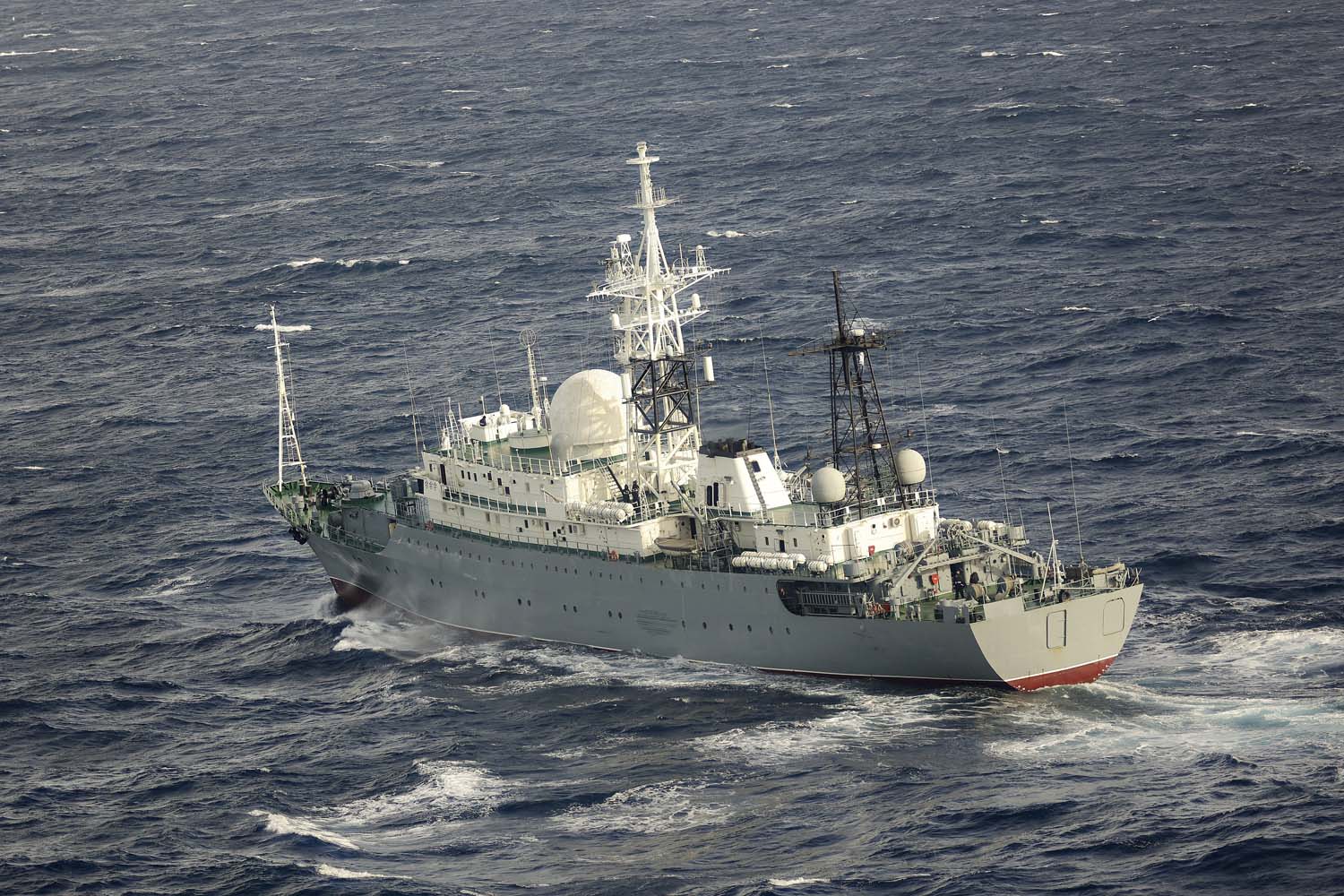
From September 29 to October 8, Royal Navy Merlin helicopters, deployed at short notice from Royal Naval Air Station (RNAS) Culdrose in Cornwall to Glasgow Prestwick Airport, tracked the Russian intelligence-gathering ship *Viktor Leonov* off the Outer Hebrides. The *Vishnya*-class vessel was observed by the Merlins as it monitored NATO warships participating in Exercise Strike Warrior. This multi-national exercise, conducted off the coast of Scotland, involved over 2,000 personnel from six nations, demonstrating alliance capabilities and interoperability. The Royal Navy stated that the Russian ship was “closely monitoring NATO warships” during the exercise.
This tracking operation was part of a broader initiative known as Operation Iceblast, a series of deployments designed to test the Merlin Helicopter Force’s ability to operate effectively and deploy rapidly away from its home base. Captain James Hall, commanding officer of RNAS Culdrose, highlighted the importance of this readiness. “I am immensely proud of the efforts of our people, who have once again demonstrated that the UK is prepared to respond to immediate operational requirements,” Captain Hall stated. He added, “This operation has been a critical means for demonstrating to ourselves, our adversaries and the nation that we are willing and capable of securing the homeland 24/7. The Merlin Helicopter Force stands ready to answer the call at a moment’s notice.”
Concurrent with these helicopter operations, Royal Navy surface vessels were also engaged in monitoring Russian activity. Between October 1 and 14, the Type 45 destroyer HMS *Dauntless* and patrol ship HMS *Tyne* were tasked to report on the movements of the Russian frigate *RFN Neustrashimy*. This frigate was observed escorting cargo ships, which the Royal Navy described as “sanctioned cargo ships,” through the English Channel. The Royal Navy asserted that Russian forces have been “forced to deploy the warship over the last three months to protect their illegal shipments.” The UK has previously announced sanctions against over 500 vessels identified as part of a “shadow fleet” involved in circumventing international sanctions, and notably seized the tanker *Smyrtos* in June.
Commander Neil Skinner, commanding officer of HMS *Dauntless*, underscored the criticality of these monitoring efforts. “The Royal Navy’s ability to monitor and respond to activity around the United Kingdom is fundamental to our role in protecting the nation’s interests at sea,” Commander Skinner said. He continued, “HMS *Dauntless* maintained the close and proficient monitoring of the Russian warship *Neustrashimy* during her operations within the English Channel, providing reassurance to the UK and our allies whilst contributing to a comprehensive understanding of the maritime environment that surrounds us. I am immensely proud of the professionalism, dedication and operational readiness displayed by every member of HMS *Dauntless* throughout this tasking.”
Following its engagement with *Neustrashimy*, HMS *Tyne* was promptly reassigned. From October 11 to 14, it intercepted the Russian Ropucha-class landing ship *RFN Aleksandr Shabalin*, which was escorting the cargo ship MV *Energy-2* and accompanied by the tugboat *Proton*. HMS *Tyne* was activated from North Shields to observe this group as it transited through the English Channel en route to the Baltic region. A Wildcat helicopter from 815 Naval Air Squadron provided aerial support during this operation.
Lieutenant Commander Sam Fields, commanding officer of HMS *Tyne*, commented on his ship’s adaptability. “Operating from the North East to the English Channel in quick succession, HMS *Tyne’s* recent activations demonstrate the flexibility and enduring utility of our patrol ships,” Lieutenant Commander Fields stated. “Maintaining a persistent presence around the UK and beyond, we stand ready to respond at a moment’s notice to protect our nation’s interests. I am proud of my ship’s company for their unwavering professionalism and adaptability.”
These recent operations align with the Royal Navy’s broader strategic objectives, as outlined by the Ministry of Defence. The UK government maintains its commitment to working with international partners to target revenues that fund Russia’s ongoing conflict in Ukraine, while simultaneously aiming to diminish Moscow’s capacity to threaten European and global security. The Royal Navy also highlighted a previous encounter in July, when HMS *Tyne* closed to within five nautical miles of *Neustrashimy* as the frigate conducted gunnery firings outside UK and French territorial waters.
According to the Royal Navy, activations to monitor Russian activity in UK waters increased by 25 percent across the first eight months of the year compared to the equivalent period in the previous year (the original text’s reference to “2025” is understood to be a typographical error, likely referring to 2023). Adding a new dimension to these surveillance efforts, the Royal Air Force’s Protector RG1 remotely piloted aircraft system conducted its first operational sorties in UK airspace, flying over 10 hours of surveillance in support of national maritime tasking. Defence Secretary Wes Streeting commented on this development on October 31: “For the first time, Protector has joined Royal Navy warships and helicopters monitoring activity around our shores, demonstrating how we are constantly innovating to monitor and deter threats and irresponsible provocation.”
Why This Matters
The detailed disclosure of these Royal Navy and Royal Air Force operations underscores the persistent and heightened state of vigilance maintained by the United Kingdom and its NATO allies regarding Russian military activities. These incidents are not isolated occurrences but rather symptomatic of the broader geopolitical tensions that have intensified significantly since Russia’s full-scale invasion of Ukraine.
Firstly, the monitoring of the *Viktor Leonov*—a known intelligence-gathering ship—near NATO’s Exercise Strike Warrior highlights the ongoing intelligence competition between Russia and Western powers. Such observation allows Russia to gather critical data on NATO’s military capabilities, tactics, and coordination, which is invaluable for its strategic planning. The Royal Navy’s robust response demonstrates its commitment to protecting sensitive information and deterring potential espionage, while also showcasing its ability to rapidly deploy assets to counter such activities.
Secondly, the focus on “sanctioned cargo ships” and the “shadow fleet” in the English Channel speaks to the economic dimension of the conflict. The UK, along with international partners, has imposed extensive sanctions on Russia to cripple its war economy. The Royal Navy’s interdiction and monitoring of vessels allegedly involved in circumventing these sanctions are crucial for enforcing economic pressure and restricting Russia’s ability to fund its military operations. The English Channel, as one of the world’s busiest shipping lanes, represents a critical choke point for such activities, making consistent naval presence vital.
Thirdly, these operations serve as a clear demonstration of military readiness and deterrence. The rapid deployment of Merlin helicopters from Cornwall to Scotland, and the quick reassignment of patrol ships like HMS *Tyne*, signal the Royal Navy’s capacity to respond to immediate and varied threats across its areas of responsibility. This capability is essential for reassuring allies, demonstrating resolve to potential adversaries, and safeguarding national security interests. The integration of advanced assets like the RAF’s Protector RG1 also illustrates an evolving, multi-domain approach to surveillance and maritime security, enhancing the UK’s ability to monitor vast maritime areas effectively.
Finally, the reported 25 percent increase in activations to monitor Russian activity points to a sustained pattern of Russian probing and presence near UK waters. While international maritime law permits innocent passage, the nature and frequency of these movements, particularly by military vessels and those associated with sanctioned trade, necessitate constant vigilance. These ongoing operations by the Royal Navy and Royal Air Force are therefore fundamental to maintaining situational awareness, upholding international law, and contributing to the collective security framework of NATO in an increasingly unpredictable global environment.