
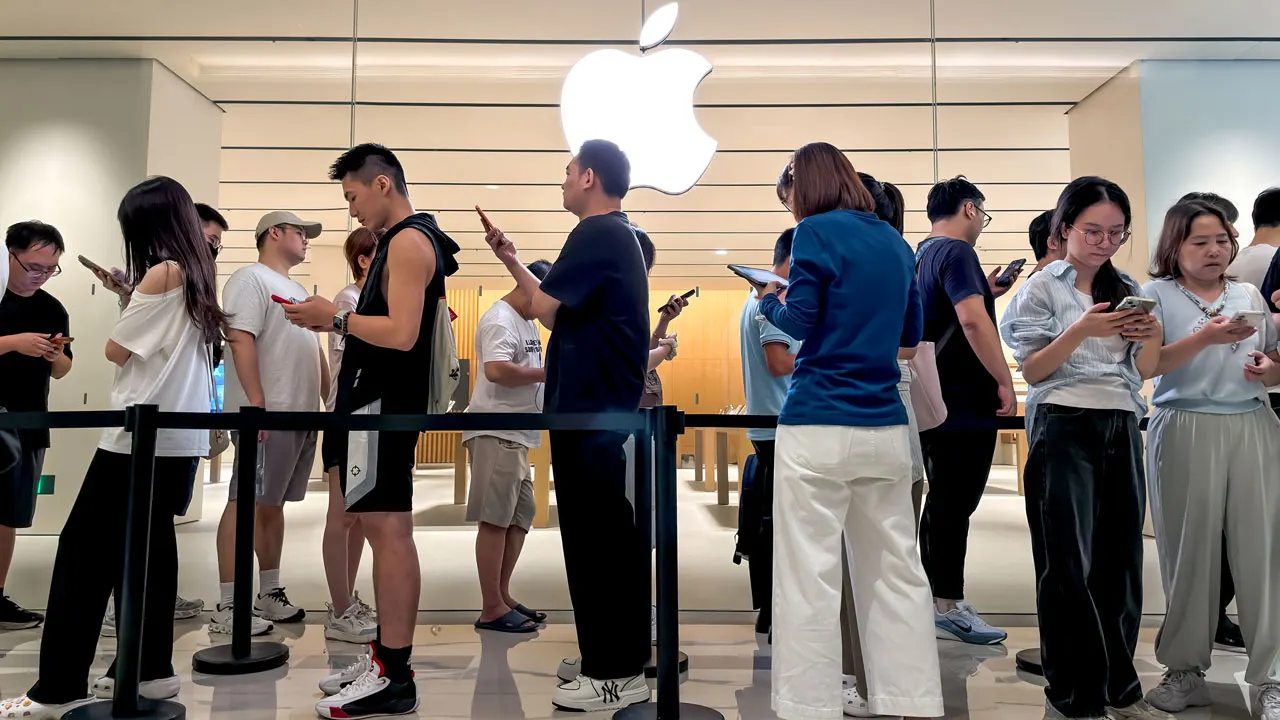
UBS managing director and senior portfolio manager Jason Katz joins ‘Varney & Co.’ to break down the market reaction to the midterm elections and what the selloff last week means for the AI trade.
Key Takeaways:
- Resilient Growth Amid Macroeconomic Headwinds:Apple demonstrated robust financial performance, exceeding revenue and EPS expectations despite significant macro challenges like surging memory chip prices, widespread supply chain constraints, and adverse foreign exchange rates. Strategic product pricing adjustments and efficient inventory management were critical in navigating these pressures and maintaining healthy gross margins.
- Strategic AI Integration Driving Hardware Demand:While eschewing the massive AI infrastructure investments favored by some rivals, Apple successfully leveraged the AI boom to drive record Mac sales, positioning its hardware as an optimal and efficient platform for on-device AI. The revamped, AI-powered Siri also signals a clear commitment to enhancing user experience through intelligent features, appealing to a broad consumer base.
- New CEO’s Strong Debut & Bolstered Market Confidence:John Ternus’s inaugural earnings report as CEO showcased strong operational execution and a brisk pace of innovation, highlighted by the successful launch of the iPhone 18 Pro lineup and the highly anticipated, albeit supply-constrained, foldable iPhone Duo. This smooth leadership transition and sustained product momentum appear to have reinforced investor confidence, contributing to Apple’s outperformance within the “Magnificent Seven” and its re-ascension to the world’s most valuable company title.
CUPERTINO, Calif. – In a pivotal moment for the Cupertino tech giant, Apple Inc. (NASDAQ: AAPL) defied a challenging macroeconomic landscape, reporting record September-quarter revenue and earnings per share on Monday. The stellar performance, delivered under the purview of newly appointed CEO John Ternus in his inaugural earnings call, underscored Apple’s formidable pricing power and robust consumer demand, particularly for its flagship iPhone and burgeoning Mac lineup, even as broader market concerns about tech spending persist.
The financial figures comfortably surpassed Wall Street’s elevated expectations, signaling strong operational execution. Revenue surged an impressive 12% year-over-year to $114.5 billion, eclipsing consensus estimates. Concurrently, diluted earnings per share (EPS) climbed 14% to $2.10, also beating projections. These robust results culminated in Apple’s most successful fiscal year to date, with total annual revenue growing 15% to a formidable $478.8 billion. This consistent financial health provides a reassuring signal to investors, especially given the company’s historically high valuation and its pivotal role within the “Magnificent Seven” cohort of dominant tech stocks.
The three months ended in September included just eight days of sales for the new iPhone 18 Pro lineup. CEO John Ternus expressed that Apple was “thrilled with the customer response” to the latest iteration, a critical sentiment given the heightened scrutiny from analysts. Firms like JPMorgan, Wedbush, and Evercore had previously flagged the iPhone 17’s exceptionally strong upgrade cycle, setting a difficult and potentially challenging comparison for this year’s models. Despite these concerns, iPhone revenue defied expectations, growing a healthy 17% to $57.6 billion in the September quarter, demonstrating the enduring strength of Apple’s flagship product and its ability to maintain upgrade momentum.
APPLE BREAKS WITH LONGTIME MACBOOK POLICY, INTRODUCES TOUCHSCREEN LAPTOPS AT HIGHER PRICES
Apple CEO John Ternus holds an iPhone 18 Pro at the Apple Fifth Avenue flagship store during the launch of the Apple iPhone 18 Pro and iPhone 18 Pro Max in New York City on Sept. 18, 2026. (Jeenah Moon/Reuters)
Meanwhile, Apple’s much-anticipated entry into the nascent foldable market, the iPhone Duo, remains in acutely short supply. Delivery estimates for some pre-orders are stretching into 2027, and customers are reporting significant difficulty finding the innovative device in retail stores. This scarcity, while frustrating for consumers, ironically serves as a powerful indicator of overwhelming demand, signaling strong market interest in Apple’s pioneering approach to this new form factor. “The Duo is constrained as of today,” Ternus affirmed in an interview, acknowledging the challenge. “The ramp is going well, and we’re working really hard to get it into customers’ hands as quickly as possible.” He noted that Apple could not yet predict when supply would finally catch up with the extraordinary demand, suggesting that the Duo could be a significant, albeit currently limited, revenue driver in future quarters.
Ternus, who officially succeeded long-time CEO Tim Cook on September 1, highlighted that the stronger-than-expected September-quarter results were achieved despite formidable “supply constraints and FX headwinds.” This period marked his first official earnings report at the helm of the world’s most valuable company, a debut that appears to have instilled confidence among investors regarding the company’s leadership transition and strategic direction.

The iPhone Duo, Apple’s first-ever foldable smartphone.(Apple Inc.)
One of the most pressing challenges impacting the entire tech sector is the surging cost of memory chips, driven in part by the insatiable demand from the global AI buildout. Some flash-memory prices have reportedly climbed more than 500% from 2023 levels, according to a Wall Street Journal report, a disruption Ternus described as “absolutely unprecedented.” Despite these intense inflationary pressures on critical components, Apple’s gross margin, a closely watched measure of profitability, came in broadly in line with expectations at a robust 47.9%, demonstrating exceptional cost management and pricing power.
“As we said earlier in the September quarter, we did see higher memory costs compared to the June quarter,” Ternus explained. He elaborated that a combination of carry-in inventory from previous periods and lower prices for certain non-memory components provided some crucial relief. “We changed the price on many of our products, including Mac and iPad at the end of June and iPhone in September,” he stated, adding that these strategic price increases, while potentially impacting short-term unit demand for some competitors, proved instrumental in offsetting the escalating input costs for Apple.
INSIDE JOHN TERNUS’ FIRST APPLE LAUNCH EVENT AS CEO: FOLDABLE IPHONE DUO, AI AND MORE
However, the AI boom is not solely increasing Apple’s costs; it is also fueling new demand. Ternus directly attributed the stronger-than-expected demand for Mac computers to what he termed the Mac’s “AI moment.” Mac revenue surged an impressive 24% to $10.8 billion in the September quarter, a testament to the popularity of models like the MacBook Neo and MacBook Pro, even amidst significant supply constraints. This robust performance in the PC market, which has seen softness in other segments, highlights Apple’s successful positioning of its hardware for computationally intensive AI workloads.
“We have never sold more Macs in a fiscal year than we did in fiscal ’26,” Ternus proudly declared, marking an all-time record for annual unit sales. This achievement underscores Apple’s ability to innovate and capture market share in a mature hardware segment by strategically aligning its products with emerging technological trends like on-device AI.
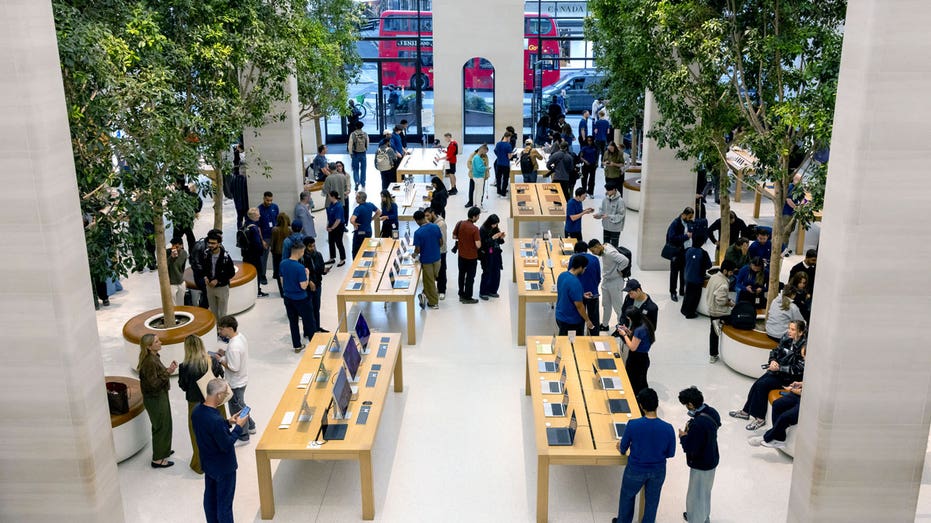
Customers inside the Apple Inc. store on Regent Street during the sales launch of their latest products in London on Sept. 18, 2026.(Betty Laura Zapata/Bloomberg via Getty Images)
In parallel with its new iPhone 18 Pro lineup, Apple has also launched a revamped, AI-powered Siri, signaling its commitment to enhancing user experience through intelligent features. “We’re super happy with the initial reviews, but we’re also seeing a lot of exciting advancements more broadly in the space,” Ternus commented on the AI landscape. “And we think our products are the best platform for AI.” He emphasized the scale of Apple’s AI integration, noting that its users make more than 2.5 billion Siri requests a day, highlighting the widespread adoption and potential for further AI-driven innovation within its ecosystem.
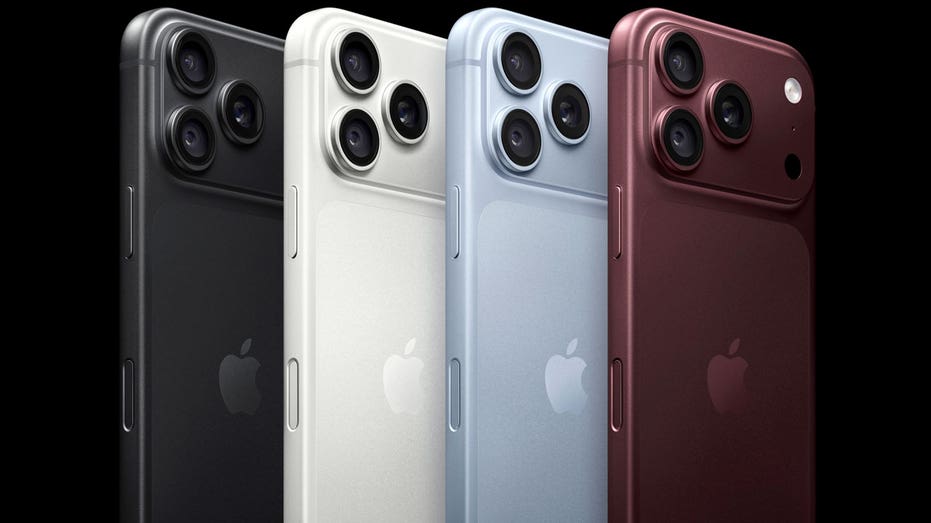
Different color phones in Apple’s iPhone 18 Pro lineup.(Apple Inc.)
Apple has notably outperformed other members of the “Magnificent Seven” this year, including titans like Microsoft and Nvidia, adding more than $1 trillion in market value since July. Investors have largely embraced Apple’s relatively restrained and focused approach to AI spending. Unlike some Silicon Valley rivals, Apple has strategically avoided pouring hundreds of billions of dollars into building massive AI data centers, instead focusing on integrating AI capabilities directly into its devices and services for enhanced user experiences. This approach, prioritizing efficiency and user-centric AI, appears to be resonating positively with the market, even as the stock trades at a historically elevated valuation of around 35 times expected earnings.
Further bolstering its financial results, Apple also benefited from tariff refunds, which provided a welcome boost to gross margin by approximately one percentage point and added about 5 cents to quarterly earnings per share, illustrating the impact of global trade policies on corporate profitability.
APPLE SETTLEMENT COULD MEAN A PAYOUT FOR SOME IPHONE OWNERS
Since taking over the helm, CEO Ternus has presided over an unusually busy period of product introductions, signaling a potential acceleration in innovation. This includes Apple’s strategic push into smart-home products and accessories, such as connected locks and doorbells, as well as the notable introduction of its first touch-enabled MacBook Pro, a significant departure from long-standing design principles.
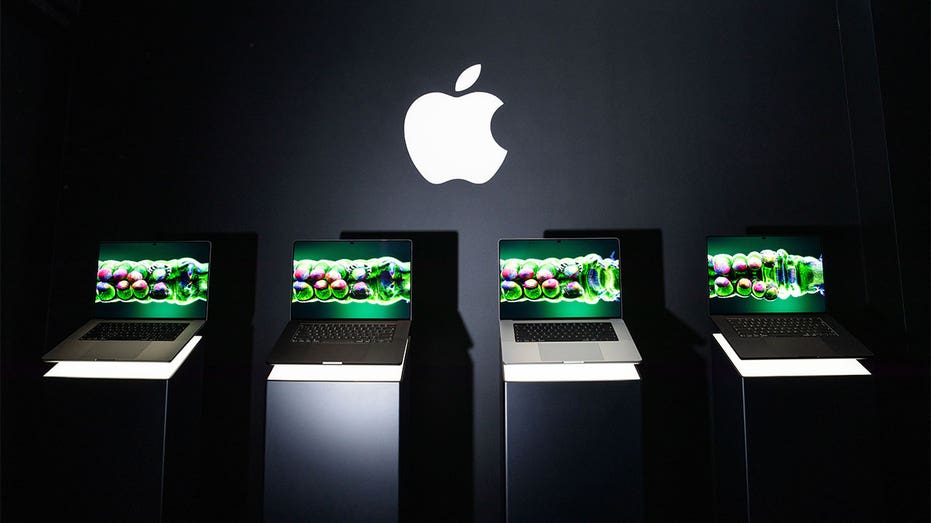
Four Apple MacBook Pro laptops sit on display beneath the company’s logo during a product presentation.(Kyle Grillot/Bloomberg via Getty Images)
Greater China revenue also posted strong growth, rising 21% to more than $17.5 billion, marking a September-quarter record for the region. However, these robust sales figures still fell slightly short of some analysts’ more aggressive estimates, highlighting the intensely competitive and strategically vital nature of the Chinese market. Ternus emphasized that iPhone revenue in Greater China also reached a September-quarter record, with Mac sales in the region posting strong double-digit growth, underscoring Apple’s continued appeal in a key global growth engine despite economic fluctuations and local competition.
CLICK HERE TO DOWNLOAD THE FOX NEWS APP
Before becoming CEO, Ternus led Apple’s highly successful hardware engineering group. He joined the company in 2001 and has spent more than two decades shaping its product development, bringing deep institutional knowledge and a proven track record to his new role.
Apple first closed above $5 trillion in market capitalization on October 14, becoming only the second company in history to reach this monumental milestone after Nvidia. It briefly overtook Nvidia again at the end of last week to reclaim the coveted title of the world’s most valuable publicly traded company, a clear testament to investor confidence in its strategic direction, financial resilience, and innovation pipeline.
Market Impact:
Apple’s stellar September-quarter results and CEO John Ternus’s confident debut are set to reinforce investor sentiment in the company’s resilience and strategic prowess amidst broader market volatility. The strong performance, particularly in iPhone and Mac sales despite significant macroeconomic headwinds, suggests Apple’s premium pricing power and robust ecosystem continue to drive demand. Its distinct, more restrained approach to AI spending compared to other tech giants, focusing on user-centric device integration rather than massive data center buildouts, appears to be viewed favorably by investors, contributing to its outperformance within the “Magnificent Seven” and justifying its historically elevated valuation. The strong demand for the iPhone Duo, despite supply constraints, positions Apple favorably in the nascent foldable market for future growth. Furthermore, the record Mac sales driven by the “AI moment” could signal a broader trend of consumers and professionals investing in hardware optimized for on-device AI, potentially influencing the PC market positively. Overall, these results will likely cement Apple’s position as a stable, growth-oriented investment, drawing further capital and potentially setting a positive tone for the broader consumer technology sector, while also spotlighting the critical importance of supply chain management and strategic pricing in a high-cost environment.