
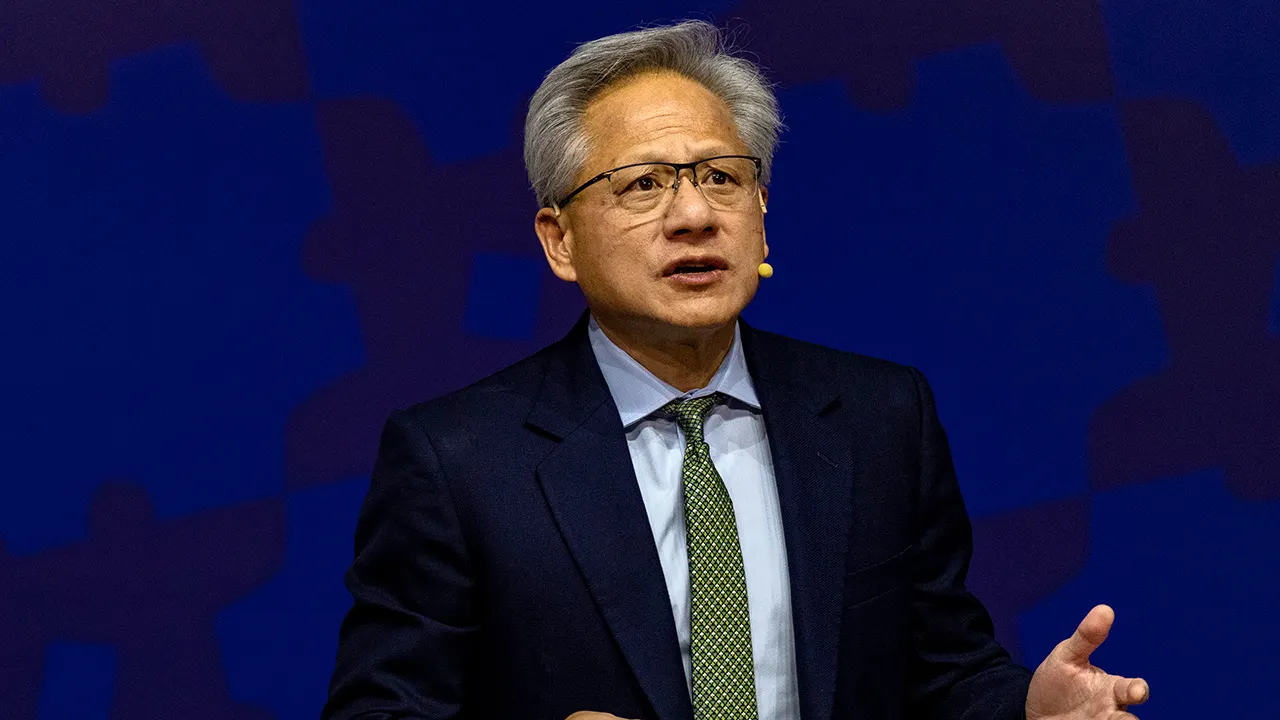
‘The Big Money Show’ panel discusses China’s espionage threat targeting tech companies amid a report of a spy plot targeting Nvidia CEO Jensen Huang and the nation’s struggling economy.
**Key Takeaways:**
1. **Escalating Geopolitical Risk for Tech Giants:** Nvidia, a linchpin in the global AI revolution, is now at the center of a deepening U.S.-China geopolitical storm. Allegations linking CEO Jensen Huang to a suspected Chinese intelligence asset underscore the severe national security risks associated with advanced technology transfer and could significantly heighten regulatory scrutiny on tech companies operating across borders.
2. **Threat to U.S. Export Control Efficacy:** The reported intelligence breach directly challenges the effectiveness of existing U.S. export controls aimed at curbing China’s access to critical semiconductor technology. This development could galvanize lawmakers to push for even stricter enforcement and broader restrictions, potentially forcing an acceleration of supply chain decoupling and impacting future revenue streams for companies reliant on the Chinese market.
3. **Uncertainty Ahead of Nvidia Earnings:** Coming just days before its crucial third-quarter earnings report, these revelations introduce a new dimension of risk for Nvidia. Investors will be scrutinizing the company’s response, potential commentary on its China strategy, and any indications of regulatory or revenue headwinds, which could trigger significant volatility for NVDA stock and influence sentiment across the broader semiconductor sector.
House Republicans are demanding immediate answers from Nvidia CEO Jensen Huang regarding his reported relationship with a suspected Chinese intelligence asset, ratcheting up political pressure and escalating scrutiny over whether Beijing has gained unauthorized access to sensitive U.S. technology through the chip giant’s extensive business ties. This development, surfacing at a critical juncture for U.S.-China tech competition, casts a shadow of uncertainty over one of the market’s most valuable companies and the broader semiconductor industry.
The congressional inquiry follows a bombshell New York Times report alleging that Alice Huang, a Chinese citizen and executive at the technology firm Megaspeed, had been actively gathering intelligence for Beijing and cultivated a close relationship with Jensen Huang. The report further complicated the narrative by stating that President Donald Trump was reportedly briefed on these intelligence findings approximately a year ago but ultimately chose not to take action, raising questions about the prior administration’s response to perceived national security threats involving critical U.S. technology and intellectual property.
SUSPECTED CHINESE INTELLIGENCE ASSET GAINED ACCESS TO NVIDIA CEO JENSEN HUANG: REPORT
Jensen Huang, President and CEO of NVIDIA, delivers a speech to business leaders during the APEC CEO summit on Oct. 31, 2025 in Gyeongju, South Korea.(Ezra Acayan/Getty Images / Getty Images)
The bipartisan letter, dated Wednesday and publicly released Thursday, explicitly states that recent reports surrounding Jensen Huang and Nvidia raise profound national security concerns regarding China’s potential access to highly sensitive U.S. technology and proprietary information. For market participants, this translates into increased geopolitical risk premiums for companies with significant exposure to the U.S.-China tech rivalry, particularly those at the forefront of AI and advanced computing. The alleged espionage, if confirmed, could prompt a re-evaluation of security protocols across the entire U.S. tech landscape, impacting investor confidence and operational frameworks.
Lawmakers are specifically seeking detailed information about Jensen Huang’s interactions with Alice Huang, alongside a comprehensive overview of Nvidia’s internal security protocols designed to prevent and mitigate foreign espionage. The letter was jointly signed by influential figures including House Foreign Affairs Committee Chairman Brian Mast, R-Fla.; Select Committee on China Chairman John Moolenaar, R-Mich.; and House Intelligence Committee Chairman Rick Crawford, R-Ark. The timing is particularly noteworthy: they have invited Huang to an in-person joint briefing on November 18, a mere day after Nvidia is slated to report its highly anticipated third-quarter earnings. This strategic scheduling ensures maximum pressure and places the issue squarely in the spotlight for investors and analysts alike, who will be keenly awaiting any commentary from the company or its CEO.
“China’s access to that sensitive U.S. tech is core to the investigative work of our three committees this Congress,” the lawmakers asserted, emphasizing that Congress must unequivocally determine whether U.S. national security interests have been compromised. The core of this concern lies in Nvidia’s dominance in the development and production of artificial intelligence (AI) chips – the foundational technology for next-generation computing, military applications, and economic leadership. Any perceived leakage of this technology to a strategic rival like China is seen as directly undermining America’s competitive edge and could have long-term implications for global technological leadership and national defense.
HOW US CEOS QUIETLY TEAMED UP WITH TRUMP TO GAIN LEVERAGE OVER CHINA
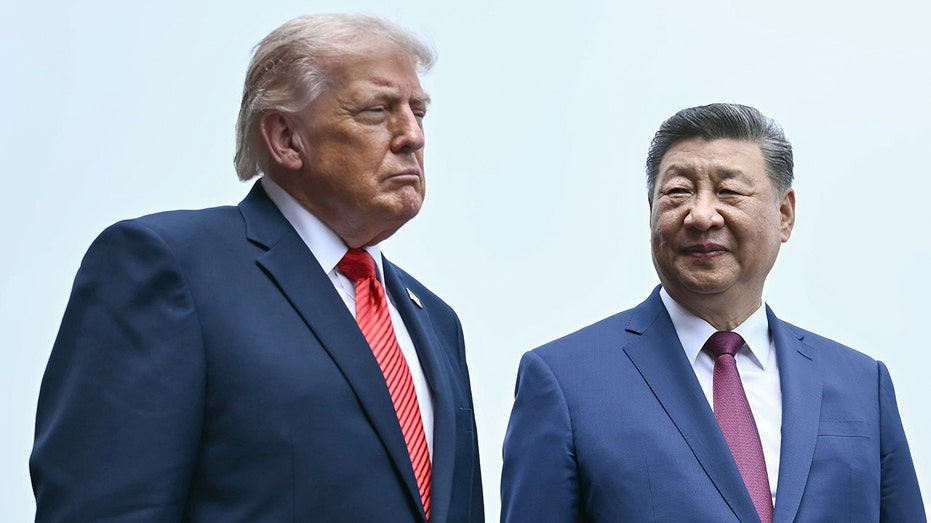
China’s President Xi Jinping (R) and US President Donald Trump visit the Temple of Heaven on May 14, 2026 in Beijing, China. (Brendan Smialowski – Pool/Getty Images / Getty Images)
It remains uncertain whether Huang will accept the invitation to brief the congressional committees, and Nvidia has yet to issue an official response to FOX Business’ request for comment. This silence, while perhaps strategic, adds another layer of speculation for investors attempting to gauge the potential severity and fallout of these allegations. The absence of a swift corporate defense could be interpreted in various ways by the market, from careful legal deliberation to a lack of immediate clarity on the situation, all of which contribute to investor uncertainty.
The New York Times report indicated that U.S. officials initially believed Jensen Huang was unaware of Alice Huang’s alleged intelligence-gathering activities for China. Whether that assessment has evolved remains unclear, and Huang has reportedly not received a defensive briefing from the government. This lack of clarity leaves a significant perception gap, potentially affecting public and investor trust in Nvidia’s internal security and its ability to navigate the treacherous geopolitical landscape of global tech. It also highlights the intricate challenges U.S. intelligence agencies face in addressing such threats without disrupting critical business relationships.
This escalating scrutiny emerges against a backdrop of Jensen Huang’s proactive lobbying efforts with the Trump administration to ease restrictions on Nvidia chip sales to China. Nvidia, like many U.S. tech firms, views the vast Chinese market as crucial for revenue growth and market share, despite increasing geopolitical headwinds. The company has previously adapted its chip designs to comply with U.S. export controls, but continued access to China remains a key strategic imperative, balancing compliance with commercial interests.
Earlier this year, Huang notably joined a high-profile U.S. business delegation accompanying President Trump to meet with Chinese President Xi Jinping. His reported last-minute addition to the trip and securing a seat on Air Force One underscored Nvidia’s critical role in the complex tapestry of U.S.-China trade and technology negotiations. This indicates the intense pressure exerted by leading tech executives to safeguard their market access and supply chains in China, even amidst escalating bilateral tensions and the U.S. government’s push for technological decoupling.
The delegation represented a formidable convergence of executive power, bringing together leaders from major U.S. corporations with deep, intricate ties to China. Among them were Apple CEO Tim Cook, Tesla and SpaceX CEO Elon Musk, Micron CEO Sanjay Mehrotra, and Meta’s Dina Powell McCormick. Financial titans such as Stephen Schwarzman of Blackstone, Larry Fink of BlackRock, Jane Fraser of Citigroup, and David Solomon of Goldman Sachs also participated. Their collective presence highlights the delicate balancing act these global enterprises perform, navigating both lucrative market opportunities and burgeoning geopolitical risks, a challenge amplified by the current allegations.
CHINA ‘THROWING GASOLINE ON THE FIRE’ IN AI DATA CENTERS RACE, SAY LAWMAKERS

Graphic labels key CEOs in attendance at a high-profile meeting with President Donald Trump and Chinese officials. (Official White House Photo by Daniel Torok/Fox News)
Many of these executives rank among the world’s wealthiest business leaders, with Musk leading as the richest person globally according to the Bloomberg Billionaires Index, and both Schwarzman and Huang possessing fortunes in the tens of billions. Collectively, their companies command trillions of dollars in market capitalization and remain heavily reliant on Chinese consumers, manufacturing capabilities, and intricate supply chains. This reliance persists even as Washington and Beijing are locked in an increasingly contentious struggle over trade policies, technological supremacy, and national security – a dynamic that presents significant operational and financial risks for these multinational corporations, forcing them to adapt to an ever-changing geopolitical landscape.
U.S. officials now suspect that some of the advanced chips acquired by Megaspeed, the company tied to Alice Huang, may have been illicitly smuggled into China, circumventing U.S. export controls. Such a breach, if confirmed, would not only represent a significant intelligence failure but also a serious blow to the Biden administration’s strategy of denying China critical technologies essential for its military modernization and AI ambitions. For investors, this raises the specter of potentially tighter regulations, increased compliance costs, and a more challenging operating environment for all semiconductor companies with China exposure, necessitating a re-evaluation of market access strategies and geopolitical risk mitigation.
**Market Impact:**
The unfolding allegations against Nvidia and CEO Jensen Huang introduce substantial market volatility and systemic risk, particularly for the semiconductor sector and companies deeply intertwined with U.S.-China trade. Nvidia’s stock (NVDA) is likely to face immediate downward pressure as investors price in increased regulatory uncertainty, potential reputational damage, and the risk of further restrictions on its lucrative China market – a critical growth engine. Any perceived compromise of intellectual property or national security could trigger broader investor unease in the tech sector, prompting a re-evaluation of companies’ geopolitical risk exposure and supply chain resilience. Should these allegations lead to more stringent U.S. export controls or retaliatory measures from China, it could disrupt global technology supply chains, impact revenue forecasts for key players like Micron and Apple, and potentially slow the advancement of AI development worldwide. The timing, just ahead of Nvidia’s earnings, amplifies the immediate impact, with investors closely watching for any corporate statements that could either mitigate or exacerbate concerns about the company’s operational stability and future growth trajectory in the critical Chinese market. The broader implication is a likely acceleration of the trend towards de-risking supply chains and a heightened focus on geopolitical due diligence for all multinational corporations.