
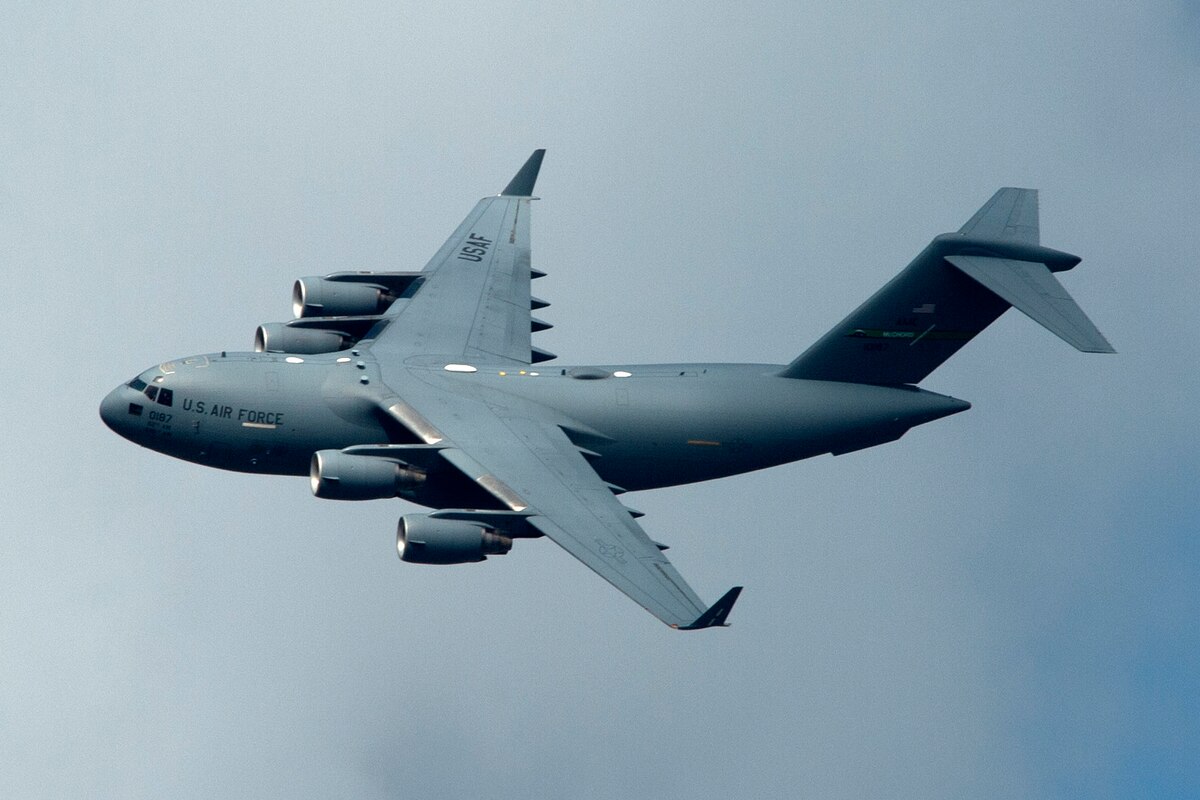
KISSIMMEE, Fla.—The United States Air Force is nearing the operational deployment of a novel combat capability: launching cruise missiles from its fleet of C-17 and other cargo aircraft via airdrop. This development, which follows years of intensive experimentation and testing, is being presented by senior Air Force leaders as a significant strategic shift, intended to substantially bolster the nation’s combat fleet and redefine the roles of its mobility forces.
At the core of this initiative is the Air Force’s substantial investment in its Family of Affordable Mass Missiles (FAMM) program. This program aims to expand the U.S. munitions stockpile with a new generation of air-to-ground missiles characterized by their affordability and less “exquisite” design compared to traditional, high-cost weaponry. In July, the Pentagon solidified its commitment to this vision by announcing framework agreements for multiyear deals with three defense contractors. These agreements are focused on the production and further development of two distinct versions of FAMM weapons: FAMM-Lugged, designed for deployment from fighter aircraft, and FAMM-Palletized, specifically engineered for launch from airlifters.
During the Airlift/Tanker Association’s 2026 Symposium on November 6, Air Force Chief of Staff Gen. Kenneth S. Wilsbach expressed considerable enthusiasm for the prospect of arming the mobility fleet with the FAMM-P weapon. However, he underscored the intricate nature of the concept, stating that it is “more complex than just rolling dumb munitions off the back of an airplane.” His remarks highlight that this is not merely a logistical exercise but a sophisticated integration of technology and operational doctrine.
The operational concept for palletized munitions involves integrating a specialized container, loaded with multiple cruise missiles, onto a standard airdrop platform. Once deployed from the cargo aircraft, this container is released in a manner similar to any other airdropped cargo. Upon release, it deploys a parachute, stabilizing its descent. Subsequently, the contained weapons are autonomously deployed, ignite their engines, execute a precise pull-up maneuver, and then proceed toward their pre-programmed targets. This modular and intelligent system incorporates networked weapons, allowing for coordinated strikes and adaptability in dynamic combat environments.
General Wilsbach emphasized the strategic implications of this new capability, telling Airmen at the symposium, “This system is modular and smart; the weapons are networked and affordable.” He further articulated the profound impact on Air Force doctrine: “As you might gather, capabilities like FAMM-P blur the distinction between our [combat air forces] and [mobility air forces] mission sets. That’s a cultural shift we need to be prepared for, and I need every mobility Airman in the room to embrace that change.” This statement signals a potential re-evaluation of traditional mission boundaries within the Air Force, empowering mobility assets with offensive strike capabilities typically reserved for fighter and bomber fleets.
Echoing General Wilsbach’s sentiment, Air Mobility Command Boss Lt. Gen. Dan Tulley also addressed the conference, highlighting how C-130s and C-17s, traditionally used for transport and humanitarian missions, could soon deliver “mass fires on the adversary” through the implementation of FAMM-P. This transformation underscores a broader strategic shift towards leveraging existing platforms for expanded roles.
The current FAMM program is the culmination of a progressive evolution from earlier Air Force research efforts. It originated from an initiative to develop affordable cruise missiles capable of being dropped from cargo planes via pallets, a concept first explored in Air Force Research Laboratory experiments known as “Rapid Dragon,” which commenced in 2019. This effort was initially known as “Franklin,” with an ambitious objective to produce cruise missiles at a cost of approximately $100,000 per round. This target stands in stark contrast to more sophisticated, “exquisite” weapons like the Joint Air-to-Surface Standoff Missile (JASSM), which can cost between $1.5 million and $2.6 million per unit.
In April, the Air Force Life Cycle Management Center formally designated the effort as “Dragon Cart” and elevated it to an official program of record, signifying its maturity and strategic importance. The financial commitment to this program is substantial. According to budget documents, the Air Force’s 2027 budget request includes $355 million specifically for the procurement of 1,000 FAMM weapons. Looking further ahead, budget projections outline plans to acquire an estimated 28,000 FAMM missiles over the next five years, representing a projected investment of $12.6 billion.
General Wilsbach emphasized the economic efficiency of the FAMM-P system, stating that each unit “costs about a tenth” of a single JASSM. Furthermore, he highlighted a critical advantage in production timelines, noting that the lead time for FAMM-P is measured in “months, not years.” This accelerated production capability directly addresses concerns regarding the replenishment of munitions stockpiles during prolonged conflicts.
The necessity for such affordable, rapidly producible munitions is underscored by recent operational experiences. A report published in April by the Center for Strategic and International Studies (CSIS) indicated that U.S. strike aircraft utilized approximately 1,100 JASSMs during Operation Epic Fury. This usage represented a significant portion of the estimated 4,400 JASSMs in the inventory prior to the conflict. The report also pointed out a critical vulnerability: JASSMs typically require a two-year lead time from order to delivery, highlighting a potential bottleneck in sustaining high-intensity operations over extended periods.
Why This Matters
The U.S. Air Force’s impending ability to launch cruise missiles from cargo aircraft represents a significant strategic pivot with profound implications for military doctrine, global power projection, and defense economics. This development is not merely an incremental technological upgrade but a fundamental re-imagining of how air power can be generated and sustained.
Firstly, it dramatically enhances the **strategic deterrence and combat resilience** of the United States. By converting readily available cargo aircraft into potential strike platforms, the Air Force significantly expands its pool of assets capable of delivering offensive fire. This provides greater flexibility and redundancy, making it harder for adversaries to neutralize U.S. strike capabilities through attacks on traditional bomber or fighter bases. The ability to deploy “mass fires” from a broader array of aircraft can overwhelm enemy defenses and sustain operations over longer periods, addressing concerns about depleting expensive, long-lead-time munitions in a major conflict.
Secondly, this initiative signals a shift towards **cost-effective and distributed lethality**. The FAMM program prioritizes affordability and rapid production, acknowledging that a balance between highly sophisticated, expensive weapons and a large inventory of more accessible munitions is crucial for peer-to-peer competition. This approach allows the Air Force to scale its combat power at a fraction of the cost and time associated with more “exquisite” systems. It also fosters greater operational flexibility, enabling strikes from unexpected locations and potentially complicating adversary targeting efforts.
Finally, this change necessitates a **cultural and doctrinal transformation** within the Air Force. The blurring of lines between “combat air forces” (CAF) and “mobility air forces” (MAF) means that personnel in Air Mobility Command, traditionally focused on transport and logistics, will now play a direct role in offensive operations. This requires new training, operational concepts, and a revised understanding of mission sets across the force. For the broader defense industry, it signals a potential shift in procurement priorities, favoring designs that emphasize modularity, affordability, and rapid manufacturing to meet the demands of future conflicts.