
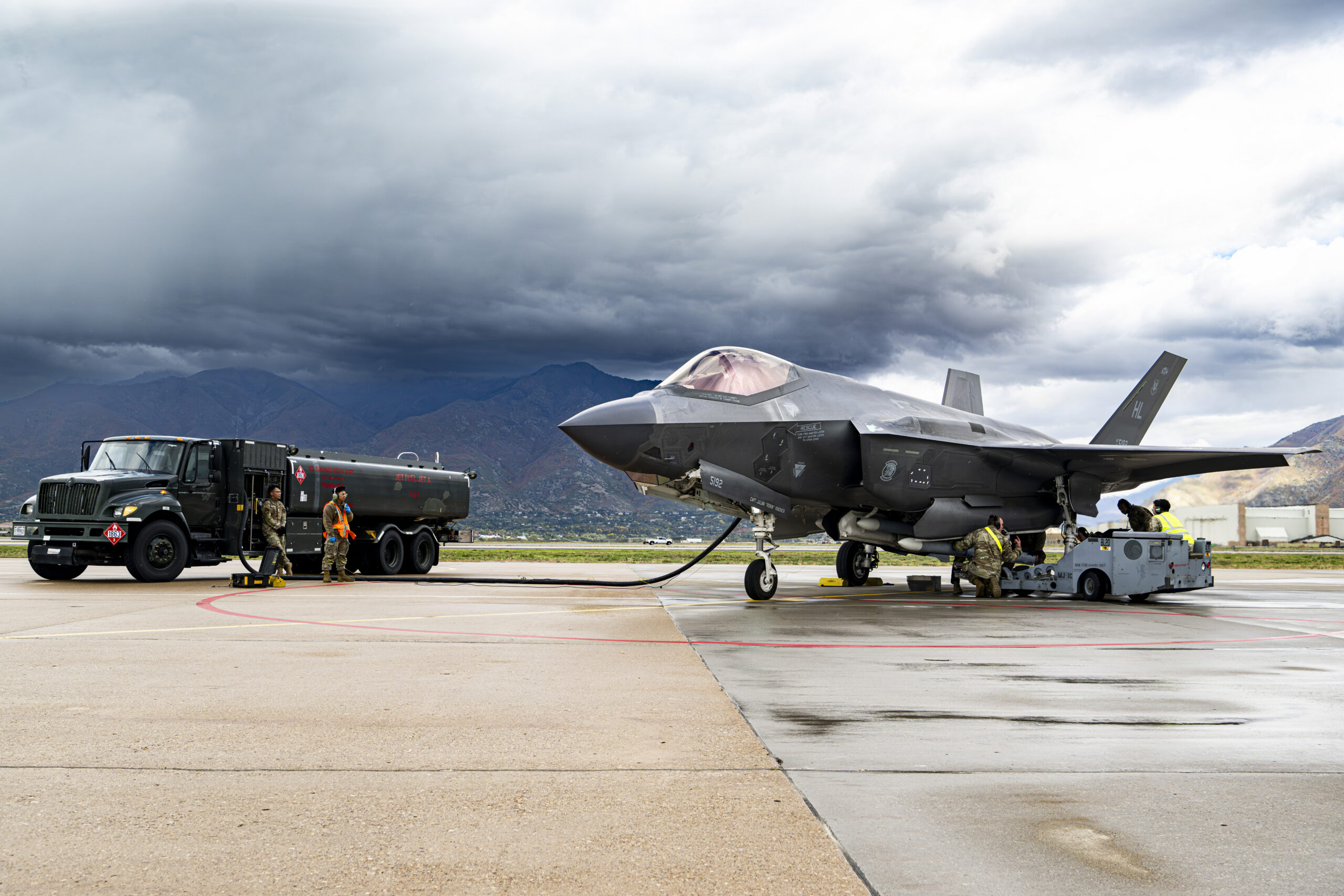
F-35 Program Grapples With Billions in Untracked Spare Parts, $85 Million Still Missing
The F-35 Joint Program Office (JPO) is facing significant challenges in managing its vast global inventory of spare parts for the advanced fifth-generation fighter jet, according to a recent report from the Government Accountability Office (GAO). The congressional watchdog revealed that the Pentagon’s records for approximately 26 million F-35 spare parts, collectively valued at an estimated $31 billion, are incomplete, inaccurate, and fail to provide real-time tracking information. This ongoing issue includes the persistent inability to locate $85 million worth of parts that have been missing for several years.
The GAO’s report, released on November 9, highlights a systemic problem within the F-35 program’s logistics. It found that the F-35 JPO has not established adequate procedures to monitor reports of lost parts, nor has it provided the necessary training or clear guidelines for Accountable Property Officers (APOs) responsible for managing these critical assets. These officers are vital for ensuring the proper handling, tracking, and accountability of all F-35 components.
“Unless it implements procedures for monitoring losses, F-35 JPO will not know the full extent of losses of F-35 parts, and its ability to mitigate losses in the future will be decreased, reducing its ability to detect fraud, waste, or theft,” the GAO report explicitly stated, underscoring the serious implications of these deficiencies.
This is not a new issue for the F-35 program. A previous GAO report in May 2023 had already criticized the JPO’s supply tracking, noting that more than 1 million spare parts, with an estimated value of $85 million, had gone missing over the preceding five years. The latest report confirms that as of March 2026, these parts remain unaccounted for, highlighting a persistent and unresolved problem.
The F-35 program’s unique structure, designed for efficiency and interoperability, involves a common pool of spare parts shared among all participants. This includes the U.S. Air Force, Navy, and Marine Corps, as well as multiple international partners and foreign military sales customers. This shared inventory comprises a vast array of components, from high-value items like engines and advanced avionics to more common supplies such as tires, support equipment, bolts, and screws.
Paradoxically, program officials informed GAO auditors that the estimated $31 billion valuation for the global spares pool is likely an undercount. This is due to the sheer volume of F-35 parts that are either excluded from official tallies or simply cannot be located, suggesting the true financial scale of the untracked inventory could be even larger.
The F-35 program’s persistent struggles with parts tracking have broader consequences, contributing directly to the Department of Defense’s (DoD) ongoing inability to pass its own financial audits. The GAO report suggests that meaningful progress on DoD financial accountability is unlikely until the F-35 program addresses these fundamental inventory management shortcomings.
In response to its findings, the GAO has issued several recommendations. It urged the Pentagon to establish clear procedures for tracking reports of lost F-35 parts, develop comprehensive training and detailed procedures for property officers, and clearly define the F-35’s APO program, including specifying the number of officers needed, their deployment locations, and performance expectations. The report also acknowledged that the department is taking steps to include F-35 parts on its financial statements, including setting up procedures to determine the value of lost parts where cost information is currently absent.
A spokesperson for the F-35 Joint Program Office confirmed that the office concurred with the GAO’s recommendations, indicating an acknowledgment of the problems and a commitment to addressing them.
However, the challenge extends beyond the JPO’s immediate purview. Lockheed Martin, the primary manufacturer of the F-35, and Pratt & Whitney, which produces the jet’s engines, operate expansive and complex global supply chains. A key issue identified by the GAO is the lack of direct, real-time integration between these contractors’ property management systems and the government’s enterprise logistics management system. This technological gap forces the JPO to upload data from various equipment tracking sources, leading to delays and inaccuracies.
Because some of these contractor sources are updated only quarterly, data on spare parts can be up to three months old. This latency prevents the JPO from having a real-time view of when a part is moved, used, or otherwise accounted for, significantly hindering effective inventory control.
Furthermore, the JPO’s efforts at physical inventorying of F-35 parts have proven unreliable. Since fiscal year 2020, the JPO has spent at least $17 million on in-person tallies at both contractor- and government-managed facilities. Despite this investment, the inventories have fallen short because the underlying records are unreliable, parts in transit are often not counted, and the military and its prime contractors often lack visibility into where sub-subcontractors are holding certain components.
The JPO spokesperson elaborated on actions being taken: “To enhance accountability and mitigate the loss of F-35 parts, the department is implementing targeted actions to monitor and analyze loss trends. The JPO is actively developing program-specific procedures and tailored training for Accountable Property Officers, alongside a detailed plan to define and structure the APO program. The JPO is modernizing its property management infrastructure by establishing direct, real-time data interfaces between government and prime contractor systems. This integration directly addresses previous system gaps to ensure seamless accountability of F-35 spare parts.”
The issue of missing F-35 parts gained public attention in September when reports emerged about a highly sensitive incident earlier this year. A package of F-35 parts, reportedly containing stealth technology components, was being shipped from Australia to the United States for repairs but was unexpectedly diverted to Hong Kong and subsequently went missing. This incident underscores not only the financial and logistical challenges but also potential national security implications of inadequate inventory control for such advanced military assets.
Why This Matters
The F-35 program’s persistent inability to accurately track billions of dollars in spare parts is far more than an administrative oversight; it presents significant challenges across financial, operational, and national security domains.
Firstly, from a **financial perspective**, the loss and untracked status of F-35 parts represent a substantial waste of taxpayer money. With an estimated $31 billion global inventory, and at least $85 million in parts already confirmed missing, these inefficiencies directly impact defense budgets and divert funds that could otherwise be allocated to other critical military needs or public services. Moreover, the problem contributes to the Department of Defense’s consistent failure to pass its financial audits, undermining public trust and accountability in the management of vast government expenditures.
Secondly, the issue directly impacts **operational readiness and national security**. The F-35 Joint Strike Fighter is a cornerstone of U.S. air power and a critical asset for numerous allied nations. An inability to quickly locate and deliver necessary spare parts can ground these advanced aircraft, hindering their maintenance and reducing their availability for training, defense, and combat operations. In a rapidly evolving global security landscape, delays in getting F-35s combat-ready due to missing components could have severe strategic consequences, potentially compromising the ability of the U.S. and its allies to respond to threats effectively.
Thirdly, the **security implications** of untracked parts, especially sensitive components, are profound. The incident involving F-35 parts reportedly containing stealth technology being diverted to Hong Kong highlights the potential for espionage, technology theft, or compromise. The F-35 incorporates some of the most advanced military technology in the world, and any loss or compromise of its components could provide adversaries with critical intelligence, undermining the aircraft’s technological advantage and potentially endangering pilots and missions.
Finally, this situation raises serious questions about **program management and accountability** within one of the most expensive and complex defense acquisition programs in history. The recurring nature of these problems, despite repeated warnings from the GAO, suggests deep-seated systemic issues that require robust, long-term solutions. Effective inventory management is fundamental to any large-scale logistics operation, and its failure in a program of the F-35’s magnitude indicates a need for stronger oversight, improved technological integration between government and contractors, and enhanced training for personnel responsible for these critical assets.