
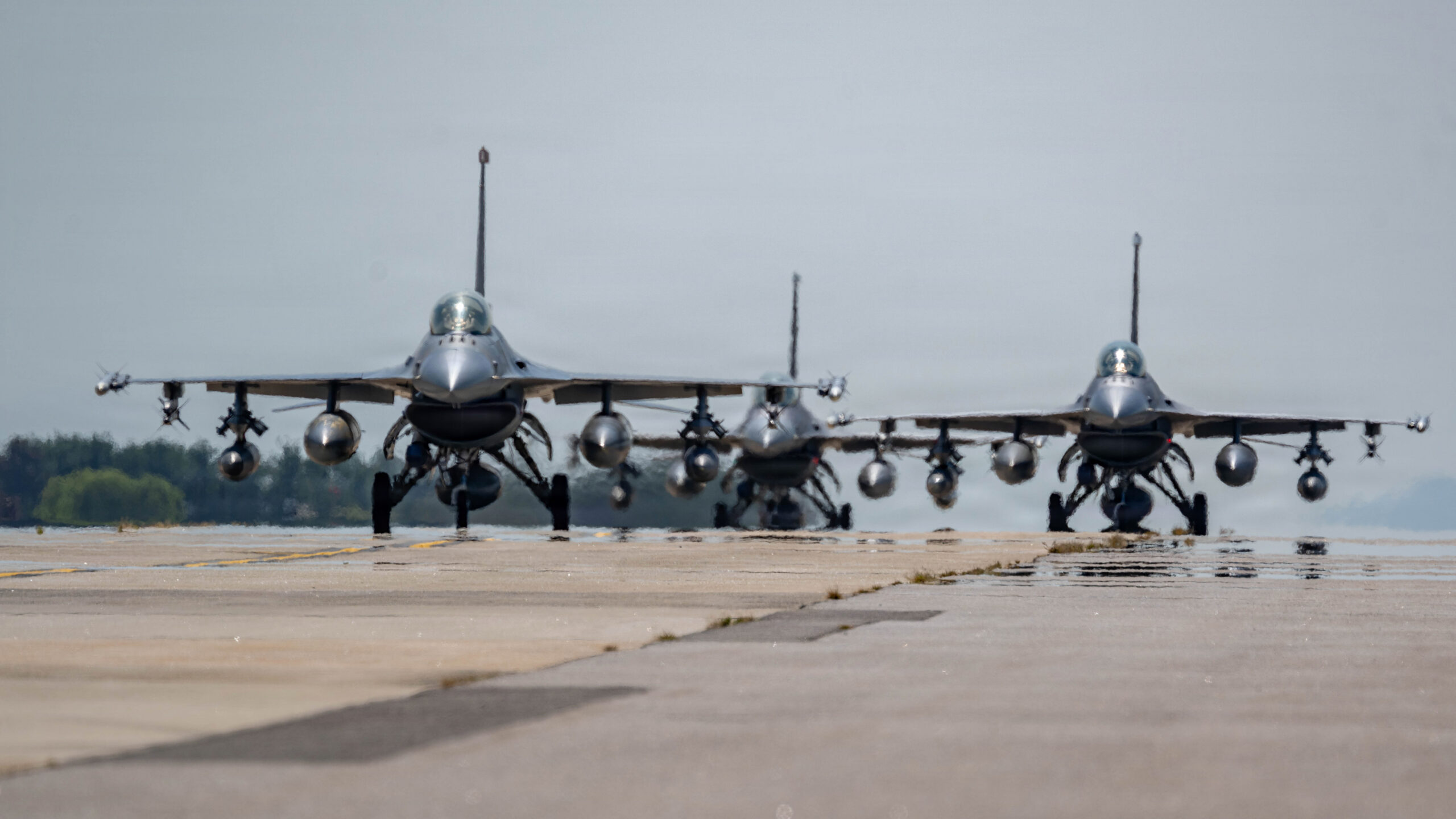
Washington, D.C. –The United States Air Force announced on November 10 the completion of its latest comprehensive Force Design plan, a strategic blueprint intended to outline how the service will adapt its combat power to confront future conflicts against technologically advanced adversaries. This initiative, known as Force Design 2026, represents a critical evolution in the Air Force’s approach to national defense amidst a rapidly changing global security landscape.
General Kenneth Wilsbach, Chief of Staff of the Air Force, underscored the significance of the new plan. “Our Force Design is about the capabilities we will field that are necessary to fight and win in the future,” General Wilsbach stated, emphasizing the proactive nature of the strategy in anticipating and countering emerging threats.
However, details of Force Design 2026 remain highly guarded. An Air Force spokesperson confirmed to media outlets that the entire document is classified, and no unclassified version will be released to the public. This decision marks a notable divergence from some previous defense strategy disclosures, limiting public and even broad congressional access to the specifics of the Air Force’s future operational vision.
This new plan supersedes and builds upon the “One Force Design 2024,” which was developed under General Wilsbach’s predecessor, Gen. David W. Allvin. While the 2024 plan was also classified, the Air Force did release an unclassified overview that provided a conceptual framework. That earlier summary highlighted the “changed character of war” and outlined three broad “mission areas capabilities,” ranging from highly survivable systems operating in contested airspace to long-range platforms capable of launching standoff weapons from safer distances. Force Design 2026 is understood to deepen these considerations, focusing intensely on the strategic implications of rapid technological advancements.
According to the Air Force spokesperson, Force Design 2026 is specifically tailored to address how the service must transform to meet future operational challenges, particularly in high-intensity, technology-driven conflicts against peer or near-peer competitors. A central focus of the new design revolves around “technology, autonomy and integration,” signaling a strategic shift towards leveraging these domains extensively.
A public release from the Air Force elaborated on the driving forces behind this strategic pivot. It noted that a “slew of rapid technological advances,” encompassing fields such as advanced sensing, sophisticated networking, artificial intelligence (AI), autonomy, unmanned systems, long-range precision weapons, and electronic warfare capabilities, are fundamentally altering the “speed, scale and complexity of warfare.” These advancements, the release indicates, necessitate a complete re-evaluation of how the Air Force generates and employs its airpower effectively.
The explicit mention of “autonomy” in the Air Force’s description of Force Design 2026 is a significant development compared to the publicly available summary of the 2024 plan. This emphasis likely reflects the service’s ambitious and expanding plans to integrate hundreds, if not thousands, of autonomous drones and unmanned aerial systems (UAS) into its operational force over the coming years. These systems are envisioned to operate both independently and in conjunction with crewed aircraft, enhancing reach, persistence, and reducing risk to human pilots.
General Wilsbach characterized the new Force Design plan as “a fundamental shift” in the Air Force’s approach to future challenges. He articulated that the plan aims to provide Airmen with a clear understanding of “how we plan to deliver combat power in the years to come,” fostering a unified vision for future operations and force development.
The Air Force’s official statement also urged Airmen to adopt a mindset that moves beyond focusing solely on individual platforms or discrete capabilities – such as a specific type of aircraft, sensor, weapon system, or command and control unit. Instead, the emphasis is now on understanding and optimizing the interconnected “systems” that link these individual components, fostering a more integrated and adaptable fighting force. This shift represents a move towards what is often referred to as “Joint All-Domain Command and Control” (JADC2), where all military assets are networked to provide a comprehensive and responsive operational picture.
Lt. Gen. Chris Niemi, the Air Force’s chief modernization officer, reinforced the urgency of this transformation. “We must evolve if we are to remain the world’s best Air Force,” Lt. Gen. Niemi stated. He acknowledged that while new technologies offer “fantastic capabilities that were unimaginable just a few years ago,” these very same technologies “threaten some of the ways we have historically generated airpower.” This sentiment underscores the dual challenge of harnessing innovation while simultaneously adapting to its disruptive potential on traditional military doctrines and operational methods. The imperative is not merely to acquire new technologies but to fundamentally rethink how airpower is conceived, organized, and projected in an era of rapid technological change and heightened geopolitical competition.
Why This Matters
The United States Air Force’s Force Design 2026, despite its classified nature, holds significant implications for global security, technological development, and international relations. This strategic blueprint reflects a profound shift in how the world’s most powerful air force intends to operate in an increasingly complex and contested environment, predominantly shaped by the rise of peer competitors like China and Russia.
Global Security and Deterrence:The plan’s focus on “future war against capable adversaries” directly addresses the geopolitical reality of great power competition. By outlining how the Air Force will field capabilities necessary to “fight and win,” it aims to bolster deterrence and reassure allies. A more integrated, technology-driven Air Force could potentially redefine the balance of power, influencing regional stability in hotspots from the Indo-Pacific to Eastern Europe. Its success or failure will directly impact the credibility of U.S. defense commitments worldwide.
The Future of Warfare and Technology:The emphasis on artificial intelligence, autonomy, and unmanned systems signals an acceleration in the integration of these technologies into military operations. This move has far-reaching implications, not only for the U.S. military but for global defense industries and research. It indicates a future where human-machine teaming becomes commonplace, and the “speed, scale, and complexity” of conflict are dramatically amplified. This will inevitably fuel a global technological arms race, pushing other nations to invest heavily in similar capabilities to maintain competitive parity or develop asymmetric countermeasures. Ethical and legal debates surrounding autonomous weapon systems will intensify as these plans materialize.
Defense Spending and Industrial Base:Implementing a “fundamental shift” away from individual platforms towards interconnected systems will necessitate massive investments in research, development, and acquisition. This will dictate defense budgets for years to come, influencing which defense contractors thrive and which technologies receive priority funding. The shift also implies a move towards more agile procurement processes, fostering innovation within the defense industrial base and potentially drawing in non-traditional tech companies.
Alliances and Interoperability:As the U.S. Air Force evolves its operational doctrine, it will invariably impact its allies. Interoperability with partner nations becomes even more critical when moving towards highly integrated, networked systems. Allies will need to adapt their own forces and procurement strategies to remain compatible with U.S. capabilities, potentially leading to shared technological development or, conversely, creating capability gaps if alignment is not achieved.
Transparency vs. Secrecy:The decision to classify the entire Force Design 2026 highlights the ongoing tension between operational security and public transparency. While classification is deemed necessary to protect sensitive strategies from adversaries, it also limits public discourse, congressional oversight, and industry planning. This lack of a publicly releasable overview, unlike its predecessor, raises questions about the scope of the strategic changes and the implications for broader public understanding of defense priorities.
In essence, Force Design 2026 is not merely an internal U.S. Air Force document; it is a declaration of intent for how the United States envisions and prepares for future conflict. Its implementation will shape international security dynamics, accelerate technological military innovation, and influence global defense expenditures for the foreseeable future.