

Auto expert Mike Caudill joins ‘Cavuto: Coast to Coast’ to discuss the likelihood of a merger between Honda and Nissan and how it could impact the brands.
Key Takeaways:
- Honda’s extensive recall of over 635,000 vehicles highlights the increasing complexities and potential liabilities arising from advanced vehicle software, impacting its crucial SUV and luxury sedan segments.
- The immediate market reaction, with Honda’s stock (HMC) experiencing a notable decline, underscores investor concerns regarding recall costs, potential brand erosion, and the broader implications for vehicle reliability and safety perception.
- This incident puts a spotlight on automotive supply chain integrity and the critical role of software quality control, intensifying competitive pressures and demanding stricter vendor oversight in the global automotive sector.
Tokyo & New York– Honda Motor Co. (HMC) is confronting a significant market and reputational challenge with the announcement of a recall affecting more than 635,000 vehicles in the U.S. The Japanese automaker’s shares reacted swiftly, registering a 2.73% decline as investors digested the potential financial and brand implications of a software defect that could cause drivers to lose power steering assistance.
This widespread recall, encompassing popular models like certain Honda Pilot SUVs (2023-2025 model years), Acura MDX SUVs (2022-2024), and Acura TLX sedans (2021-2025), is not merely a logistical hurdle but a potent signal to the market about the growing complexities of modern automotive technology and the rigorous demands placed on quality control, particularly in software integration.
The core of the problem lies within improperly configured electronic power steering (EPS) software. According to a report filed with the National Highway Traffic Safety Administration (NHTSA), this defect can force the EPS system into a failsafe mode under specific driving conditions. When this occurs, power steering assistance is abruptly cut off, activating warning indicators on the vehicle’s instrument cluster. While drivers retain the ability to steer, the increased effort required significantly compromises vehicle control, elevating the risk of a crash.
Honda has acknowledged one injury and 146 warranty claims directly linked to this issue as of October 22. Crucially, the automaker has reported no fatalities, a factor that often heavily influences regulatory scrutiny and public perception. However, the sheer volume of affected vehicles – over 635,000 units across key segments that drive Honda’s profitability and market share – means the financial and reputational stakes are considerable.
Some Honda Pilot sport utility vehicles from the model years 2023-2025 are subject to the recall.(Honda)
The defect’s origin traces back to software developed by automotive supplier Robert Bosch Automotive Steering LLC. Honda’s filing details an error in a calculation associated with the vehicle’s Driver Attention Monitor system. This intricate algorithmic flaw, under certain operational conditions, can mistakenly trigger a response that disables power steering assistance – a critical safety feature.
The timeline of discovery highlights the challenging nature of identifying complex software glitches. Honda first received a report of the issue in November 2021, initiating an investigation that spanned nearly two years. The supplier, Bosch, eventually identified the specific failure in August 2023, with Honda successfully reproducing the problem in December of that year. By February 2024, Honda confirmed the issue’s specific occurrence only under certain straight-driving conditions. The determination that this defect posed a significant motor vehicle safety risk was made on October 22, leading to the immediate recall decision.
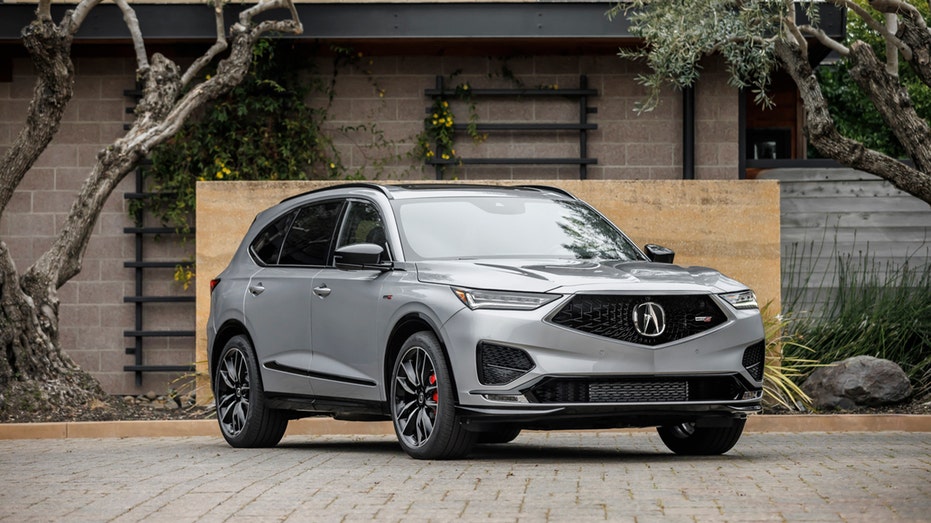
A 2022 Acura MDX is shown in an undated photo. The SUV is among the models affected by Honda’s recall of more than 635,000 vehicles.(Honda)
For Honda, a company long synonymous with reliability and engineering excellence, this recall presents a significant challenge to its brand equity. In a fiercely competitive automotive market, where rivals like Toyota, Hyundai, Kia, and various European luxury brands are constantly vying for market share, even a single high-profile safety recall can erode consumer trust and shift purchasing decisions. The affected models – the Pilot, MDX, and TLX – are vital contributors to Honda’s sales volume and profit margins, particularly in the lucrative SUV and premium sedan segments.
The financial implications for Honda (HMC) extend beyond the immediate stock price dip. Recalls incur substantial direct costs, including parts, labor for reprogramming, logistics, and administrative expenses. Given the scale, these costs could easily run into tens or even hundreds of millions of dollars. Furthermore, there’s the potential for future warranty claims, legal liabilities from affected owners, and potentially civil penalties from NHTSA if the agency finds any negligence in the discovery or reporting process. This will necessitate careful management of warranty reserves and could impact future earnings guidance.
The involvement of Robert Bosch Automotive Steering LLC also underscores the critical importance of supply chain management and vendor oversight in the modern auto industry. Automakers are increasingly reliant on a complex web of suppliers for advanced components and software. This incident prompts questions about the robustness of Honda’s vetting processes for third-party software and its ongoing quality assurance protocols for integrated systems. Such events often lead to a tightening of contractual agreements and increased scrutiny of supplier performance across the entire sector.
This recall also fits into a broader industry trend where software-related defects are becoming a more frequent cause of recalls. As vehicles evolve into sophisticated, connected “computers on wheels,” the complexity of their embedded software systems grows exponentially, making debugging and long-term reliability a major challenge for all manufacturers. This trend was evident in previous high-profile software issues affecting other major automakers, signaling a paradigm shift in automotive quality control from mechanical integrity to digital precision.
To address the issue, affected vehicle owners will be instructed to bring their cars to an authorized Honda or Acura dealership. Technicians will then reprogram the electronic power steering control unit with updated software, a relatively straightforward fix compared to mechanical replacements, but one that requires significant logistical coordination. Honda plans to commence mailing owner notification letters on December 14, providing a clear pathway for resolution. Owners are advised to check their vehicle identification number (VIN) at NHTSA.gov/recalls to confirm their vehicle’s status.
| Ticker | Security | Last | Change | Change % |
|---|---|---|---|---|
| HMC | HONDA MOTOR CO. LTD. | 34.87 | -0.98 | -2.73% |
GET FOX BUSINESS ON THE GO BY CLICKING HERE
Market Impact:
The Honda recall represents more than just a logistical exercise; it’s a significant market event with multi-faceted implications for the automaker and the broader industry. The immediate 2.73% drop in Honda’s stock (HMC) reflects investor concern over direct recall costs, potential erosion of brand equity, and the associated long-term impact on sales volume and profit margins in competitive segments. Analysts will be closely watching Honda’s Q4 and fiscal year earnings reports for revised guidance on warranty provisions and any commentary on potential sales slowdowns. Furthermore, this incident will likely intensify scrutiny on automotive suppliers, especially those providing critical software components, potentially leading to more stringent quality checks and increased liability clauses across the sector. For consumers, the recall may momentarily dampen confidence, giving rivals an opportunity to gain market share, particularly in the highly contested SUV and luxury sedan categories. Ultimately, Honda’s response, transparency, and efficiency in resolving the defect will be crucial in mitigating long-term reputational damage and stabilizing investor confidence, underscoring the direct link between product quality, safety, and shareholder value in today’s technologically advanced automotive landscape.