
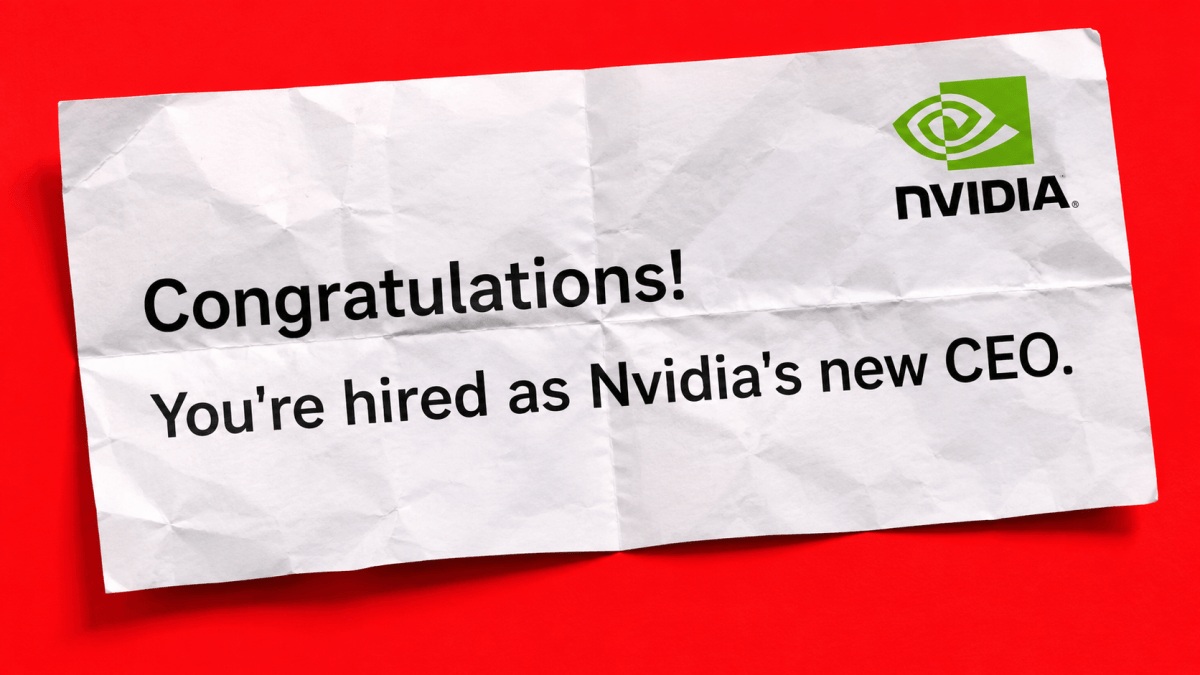
Key Takeaways:
- Nvidia CEO Jensen Huang faces unprecedented pressure and low odds of retaining his position amidst allegations of extramarital affairs, threatening the stability of one of the world’s most valuable tech companies.
- The absence of a clear succession plan at Nvidia creates a leadership vacuum, prompting widespread speculation across Silicon Valley and Wall Street regarding potential internal and external candidates.
- Beyond the scandal, the next CEO must navigate Nvidia’s crucial role in the AI boom, maintain its technological dominance (especially CUDA), and reassure investors during a period of intense scrutiny.
It’s a storyline ripped straight from a corporate thriller: the rock star CEO, architect of a multi-trillion-dollar empire, on the precipice of an unceremonious exit. Yet, this isn’t fiction. At Nvidia, the company Jensen Huang built into an AI superpower, the air is thick with anticipation and dread. Market analysts at Kalshi currently place Huang’s odds of surviving the week as CEO at a sobering 30%. This dramatic turn of events, sparked by Huang’s confession to an extramarital affair, has sent shockwaves through the tech world, not least because the identity of the paramour remains shrouded in conflicting reports – whether Alice Huang, a Chinese executive suspected of espionage, or Kimberly Powell, a high-ranking Nvidia executive. The implications for Nvidia, a company at the very vanguard of the artificial intelligence revolution, are immense.
Huang’s downfall, if it comes to pass, is particularly stunning given his almost mythical status. He transformed Nvidia from a niche graphics card maker into the indispensable engine of modern AI, creating an ecosystem (CUDA) that has become the industry standard. His departure would mark a seismic shift, raising existential questions for a company whose identity is so inextricably linked to its founder’s vision. While the board, many of whom Huang has made extraordinarily wealthy, may seek to retain him in a non-executive capacity, perhaps as chairman – a role Nvidia doesn’t currently have – the immediate and pressing challenge remains: who steps into the CEO hot seat?
The absence of an apparent succession plan has left a gaping void, inviting a flurry of speculation from industry observers, investors, and even the company’s 60 direct reports. This isn’t just a parlor game; it’s a critical assessment of who possesses the unique blend of technical acumen, leadership gravitas, and political savvy required to steer Nvidia through this unprecedented storm. As we await an official announcement, the candidates being whispered about range from obvious titans to surprising wildcards, each bringing a distinct set of strengths and potential challenges to the table.
The External Heavyweights: Industry Rivals & Seasoned Commanders
Lisa Su. The CEO of AMD, Nvidia’s most credible rival, and a distant cousin to Huang, Su’s name surfaced this week, floated by The Information. She has masterfully revived AMD, turning it into a formidable competitor in both CPUs and GPUs. Her technical depth and strategic prowess are undeniable. However, the question remains: why would she abandon her thriving empire for Nvidia’s current turmoil? AMD stands to gain immensely from every day Nvidia spends embroiled in internal investigations, congressional briefings, and the inevitable cascade of mini-dramas. Her most strategic move might indeed be to simply observe from her increasingly dominant corner office.
Eric Schmidt.Jeffrey Sonnenfeld, senior associate dean for leadership studies at the Yale School of Management, champions Schmidt as a potential “parachute in tomorrow” solution. Schmidt’s resume is certainly impressive: he led Google from 2001 to 2011, chaired the National Security Commission on AI, and now heads Relativity Space. His experience spans chips, software, government, and advanced technology – an ideal blend for Nvidia’s multifaceted challenges. Yet, Schmidt brings his own considerable baggage regarding past extramarital dalliances, which might make clearing a board already reeling from similar allegations an insurmountable hurdle. The optics alone could be too damaging.
Lip-Bu Tan. The CEO of Intel, Tan possesses deep knowledge of the semiconductor industry. For Intel, a company currently navigating a challenging market environment marked by a memory-chip shortage impacting PC sales, a move to Nvidia could represent an incredible escape hatch. Intel’s recent third-quarter revenue, while up 21% to $16.5 billion, was followed by a warning of lower-than-forecast fourth-quarter results, sending its stock plummeting. Tan’s experience with large-scale chip manufacturing and strategic partnerships could be valuable, but his association with Intel’s recent struggles might give some board members pause.
The Silicon Valley Sages: Crisis Managers & AI Visionaries
Bret Taylor.Few individuals embody the modern Silicon Valley success story quite like Bret Taylor. The former Salesforce co-CEO and OpenAI board chair now leads the AI startup Sierra. His career highlights include co-creating Google Maps, serving as Facebook’s CTO, and famously chairing Twitter’s board during its tumultuous sale to Elon Musk. Most recently, he took the reins as OpenAI’s board chair following the “Blip” – Sam Altman’s dramatic firing and rapid return. When companies need an unflappable, likable adult to navigate a crisis, they call Taylor. His deep network and understanding of the AI customer landscape make him an exceptionally strong, if perhaps reluctant, candidate.
The Internal Architects: Builders & Legacy Keepers
Ian Buck.If the board prioritizes continuity and a “builder” mentality, Ian Buck, an Nvidia VP instrumental in developing CUDA – the software platform central to Nvidia’s AI dominance – emerges as a strong contender. Floated by analysts and former employees, and given middling odds by Kalshi traders, Buck is a Stanford PhD with an intimate understanding of Nvidia’s core technology. He’s not a household name, but his viability significantly increases if Huang transitions to a chairman role, allowing for a collaborative succession that maintains the company’s technical trajectory.
Andrew Bell.Nvidia’s senior vice president of hardware engineering, Bell has been on a steady upward trajectory since joining the company 25 years ago as a fresh Cornell graduate. He reports directly to Huang, placing him among the dozens of internal executives under intense scrutiny. While Nvidia CFO Colette Kress is often named as an insider, analysts suggest she might not be the natural successor given the need for an innovator and visionary. Bell, with his deep chip pedigree and long tenure, could offer a blend of institutional knowledge and technical leadership.
The Wildcard: A Surprising Twist
Lori Huang. This name has yet to surface in public speculation, but consider the compelling logic. Jensen met his wife, Lori, as lab partners at Oregon State. She has been an integral part of his journey since before Nvidia’s inception, even working as a microchip engineer at Silicon Graphics (reportedly earning more than her husband in those early days). After scaling back to raise their family, she now co-leads the family trusts. If the board’s paramount concern is continuity, and they seek a leader who deeply understands Jensen’s vision but brings a humbler, perhaps more stable, presence, Lori could be a shockingly effective choice. There’s a reason the adage “behind every great man is a great woman” often holds true; in this case, it might literally mean the preservation of an empire.
Whatever the outcome, the next few days promise to be among the most pivotal in Nvidia’s history. The resolution of this leadership crisis will not only determine the future direction of one of the world’s most valuable companies but will also send ripples across the entire technology landscape, particularly as the AI race intensifies.
Bottom Line:Jensen Huang’s future at Nvidia hangs by a thread, triggering an urgent and unprecedented search for a successor who can both navigate the current scandal and safeguard the company’s AI dominance amidst intense internal and external pressures. The stakes could not be higher for Nvidia, its investors, and the global tech industry.
When you purchase through links in our articles, we may earn a small commission. This doesn’t affect our editorial independence.
{content}
Source:{feed_title}