
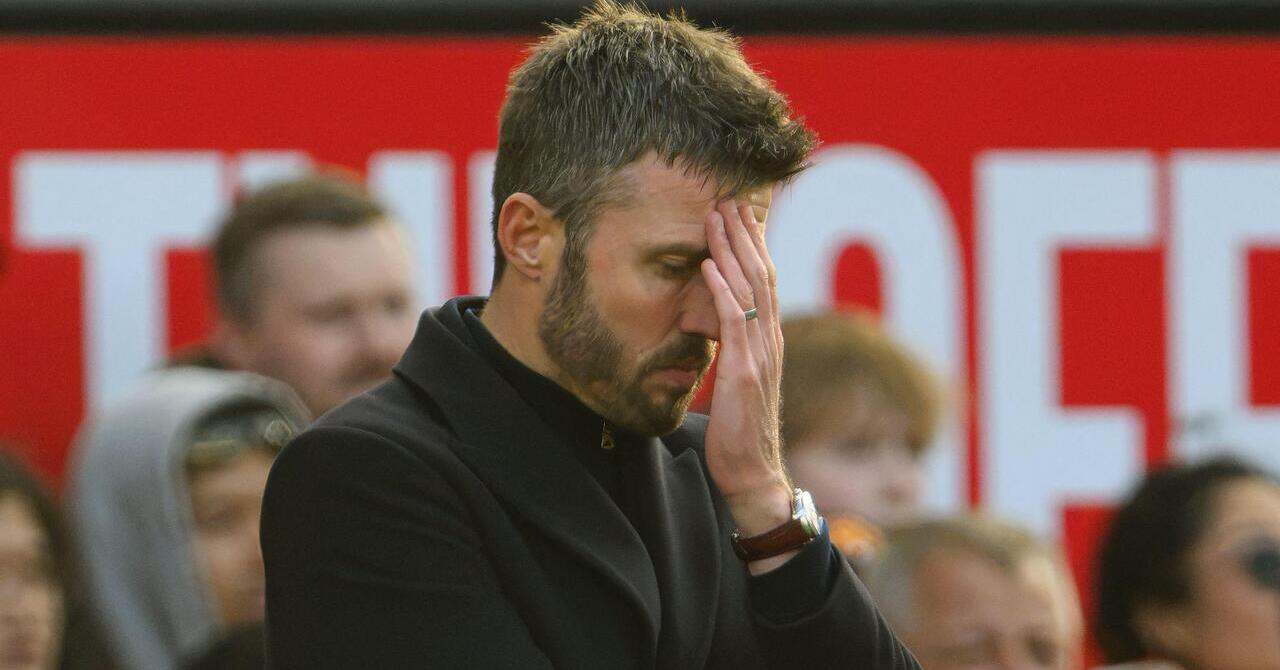
**THE AXE HAS FALLEN!** In a move that sent seismic shockwaves through the footballing world, Michael Carrick has been unceremoniously sacked as Manchester United head coach. The club confirmed the dismissal today, drawing a dramatic curtain on a tenure that promised so much, only to unravel into a desperate struggle for survival. The whispers grew louder with each passing defeat, the pressure on the young manager becoming unbearable, and the inevitable arrived with brutal efficiency.
The announcement, though stark, was far from unexpected. The signs were etched in the dire results and the increasingly palpable tension around Old Trafford. United co-owner Sir Jim Ratcliffe, a man synonymous with decisive action, met with CEO Omar Berrada and director of football Jason Wilcox in Monaco on Wednesday. One can only imagine the gravity of that discussion, a summit of power brokers concluding that the club’s trajectory under Carrick was simply untenable. The writing was on the wall, painted in bold, unforgiving strokes of red.
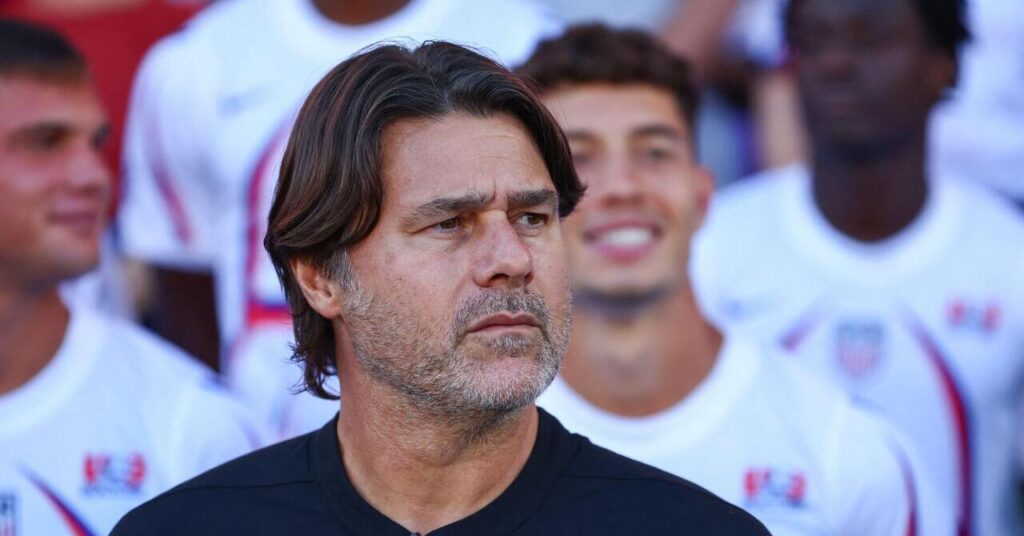
Carrick himself, a United legend as a player, arrived at the Carrington training ground at his usual 8 am this morning, perhaps clinging to a thread of hope. Two-and-a-half hours later, he departed, his dream job snatched away. Reports suggest it was Berrada who delivered the crushing news, a stark reminder of the cut-throat nature of elite football. The expectation now is that United States boss Mauricio Pochettino, a manager long linked with the Old Trafford hot seat, will finally take the reins, tasked with reviving a fallen giant.
United Ditch Carrick Amidst Relegation Zone Nightmare
Cast your mind back just a few months. Michael Carrick, initially an interim appointment in January following Ruben Amorim’s departure, was hailed as the saviour. He orchestrated a miraculous turnaround, transforming a rudderless ship into a Champions League contender. A dramatic uptick in performances, a newfound defensive solidity, and a surprising third-placed finish earned him a richly deserved two-year deal. The future, it seemed, was bright. Carrick had restored belief, rekindled hope, and set the Red Devils back on the right path. But football, as we are so often reminded, is a fickle beast.
This season has been nothing short of a catastrophe. United languish in a horrifying 17th place in the Premier League table, having secured a solitary victory in their opening 10 games. It’s not just bad; it’s historically bad. This is their worst start since the infamous 1986/87 season, a period United fans would rather erase from collective memory. The club finds itself flirting with the unthinkable – the relegation zone – a predicament that would have been unimaginable just months ago. The once-unbreakable spirit of Old Trafford has been replaced by a gnawing anxiety, a fear that the club has lost its identity.
Many point the finger squarely at the summer recruitment, or lack thereof. While director of football Jason Wilcox bolstered the midfield with promising, albeit raw, talents like Youri Tielemans, Carlos Baleba, and Andrey Santos, the squad was left glaringly short in critical areas. The gaping void at left-back, a chronic weakness, remained unaddressed. More critically, the attack, often toothless and reliant on individual moments of magic, received no significant upgrades. A midfield glut, commendable in its intent for future growth, failed to provide the immediate impact and balanced structure desperately needed for a top-tier Premier League campaign. Carrick was left with a squad that felt incomplete, imbalanced, and ill-equipped for the rigours of modern football.
Even the Champions League, often a welcome distraction, offered little solace. While United secured two wins, against Sabah and Roma, these were interspersed with demoralising defeats to European heavyweights Atletico Madrid and a humiliating thrashing by Como. The European adventure, rather than offering a reprieve, often merely exposed the deep-seated issues plaguing Carrick’s side, highlighting their tactical naivety and fragile confidence on the grandest stage.
Adding insult to injury, Carrick also had to contend with open dissent from within his senior ranks. The normally stoic Argentina defender Lisandro Martinez publicly criticised the club hierarchy following the humbling defeat at Atletico, a damning indictment of the perceived disarray. Even more damaging was captain Bruno Fernandes, whose leadership has come under intense scrutiny this season, questioning Carrick’s tactics after the devastating 4-1 thrashing in Como. These public statements laid bare the cracks in the dressing room, signalling a loss of control and a collapse of morale that no manager, however respected, could hope to overcome.
Game Highlights: A Season of Peaks and Precipices
While the league form painted a bleak picture, United’s Champions League campaign offered a brief, albeit ultimately fleeting, glimpse of what might have been. Here’s a look at some defining moments:
- **Matchday 1: Manchester United 2-1 Sabah (Champions League)**
A scrappy opening victory, but one that left more questions than answers. Marcus Rashford’s late, deflected winner spared United’s blushes after Sabah had sensationally equalised. The performance was disjointed, reliant on individual brilliance rather than cohesive team play, a harbinger of the struggles to come. Fans left Old Trafford with relief, but also a nagging sense of unease. - **Matchday 2: Roma 0-1 Manchester United (Champions League)**
A hard-fought away win in Italy, secured by a moment of magic from Bruno Fernandes, who curled in a magnificent free-kick. Defensively, United showed grit, grinding out a result against a Roma side themselves struggling for form. It was a performance that hinted at Carrick’s earlier tactical prowess, but against stronger opposition, the vulnerabilities would soon be exposed. - **Matchday 3: Atletico Madrid 3-0 Manchester United (Champions League)**
A brutal reality check. Diego Simeone’s Atletico delivered a masterclass in tactical discipline and ruthless efficiency, completely suffocating United. Goals from Griezmann, Morata, and a late strike from Felix exposed United’s lack of creativity and defensive frailties. Martinez’s post-match comments, hinting at frustration with the club’s direction, emerged from the wreckage of this humbling defeat. United were outfought, outthought, and utterly outclassed. - **Matchday 4: Como 4-1 Manchester United (Champions League)**
The nadir of Carrick’s tenure. A truly humiliating thrashing by a vibrant Como side that tore through United’s defence with alarming ease. Defensive errors were rife, midfield control non-existent, and the attack looked utterly toothless. Rasmus Hojlund’s consolation goal was a mere footnote to a comprehensive humiliation. It was after this game that captain Bruno Fernandes publicly questioned Carrick’s tactics, a clear indication that the dressing room had lost faith. The pressure on Carrick became insurmountable following this catastrophic performance.
Pochettino: The Next Man to Try to Revive Ailing United
All eyes now turn to Mauricio Pochettino. The former Argentina defender, a manager with a proven track record in the Premier League and Europe, is the overwhelming favourite to step into the Old Trafford hot seat. Despite signing a new, four-year deal with the United States Soccer Federation in August, the allure of the Premier League, where he previously managed Southampton, Tottenham, and Chelsea, proved too strong to resist. Pochettino has reportedly made it clear to United officials that he wanted to return to club management at the highest level, and Manchester United represents one of the biggest challenges in world football.
Pochettino’s recent success with the USA national team at the World Cup over the summer showcased his ability to mould an exciting, young, dynamic team. His philosophy revolves around an aggressive, high-pressing style, demanding relentless energy and tactical intelligence from his players. He transformed the USA into a formidable unit, leading them to the last 16 and earning widespread plaudits for their fearless approach. This blueprint of high-octane, front-foot football is precisely what Manchester United have lacked for years.
However, the transition from the relatively blank canvas of a national team to the complex, expectation-laden environment of Old Trafford will be monumental. Pochettino may find that instilling his dynamic, aggressive style is far more difficult with a Manchester United team often accused of lacking dynamism, intensity, and a collective hunger. The current squad, a mishmash of expensive acquisitions and academy graduates, often appears to lack the athleticism and tactical discipline required to execute a high press effectively for 90 minutes. He will face immediate challenges in rebuilding confidence, instilling a winning mentality, and, crucially, making tough decisions about the existing personnel.
His experience with Espanyol and Paris Saint-Germain also adds to his pedigree, but the Premier League is where his reputation was truly forged. He took Tottenham to a Champions League final and built an exciting, competitive side at Southampton. Now, he faces his biggest test yet: resurrecting a club that feels perpetually stuck in a post-Ferguson malaise, a club desperate for a clear identity and a consistent philosophy.
Prediction: A Long Road Ahead, But Hope Returns
Mauricio Pochettino’s arrival will undoubtedly inject a much-needed jolt of energy and a clear tactical philosophy into Manchester United. He is a manager who demands high standards, fosters strong team spirit, and has a proven track record of developing young talent. However, expecting an immediate, miraculous turnaround would be naive. The problems at Old Trafford run deep, from an unbalanced squad to a fragile collective mentality.
Pochettino will bring his signature high-press, aggressive style, but the current squad lacks the athleticism and tactical cohesion to implement it seamlessly. There will be initial struggles as players adapt to his demanding methods and as he identifies who fits his vision and who doesn’t. January will be crucial for shrewd recruitment, particularly in addressing the defensive woes and the lack of a consistent goal threat. Expect United’s performances to become more organised and energetic, but results will still be inconsistent in the short term. The immediate goal will be to climb out of the relegation mire and stabilise the ship.
By the end of the season, if Pochettino is given the necessary backing and time, we can expect to see glimmers of his philosophy taking hold. A mid-table finish, perhaps pushing for a Europa Conference League spot, would be a realistic, albeit modest, achievement given the current predicament. The true transformation will be a marathon, not a sprint, but with Pochettino at the helm, Manchester United finally have a manager who brings a clear, exciting vision and the pedigree to rebuild. The immediate future promises turbulence, but for the first time in a long while, there’s a tangible sense of hope radiating from the Theatre of Dreams. The Red Devils might just be on their way back, one arduous step at a time.