
Germany Outlines Ambitious Plan for Rapid Allied Troop Movement Across Its Territory
Dr. Martin Schäfer, Defence Policy Director at Germany’s defence ministry, has articulated a critical strategic objective for Germany within NATO: the capacity to facilitate the movement of 800,000 allied soldiers from its western to its eastern borders within a stringent thirty-day timeframe. This statement, delivered at the Atlantic Future Forum in Oslo aboard HMS Prince of Wales, underscores Germany’s evolving and increasingly crucial role in European collective defence.
Speaking on a panel dedicated to total defence, Schäfer drew a clear distinction between Germany’s historical Cold War posture and its present strategic position. During the Cold War, Germany served as a frontline state, directly confronting the potential for a large-scale Red Army advance. This scenario carried the inherent risk of widespread destruction across its territory, a reality that profoundly shaped its defence planning and civil preparedness at the time.
Today, Schäfer noted, Germany no longer occupies a direct frontline position; that burden has shifted to other nations, particularly those bordering Russia and Belarus in Eastern Europe. Consequently, Germany’s responsibilities within the North Atlantic Treaty Organization (NATO) are undergoing “profound changes.” Its primary strategic function is now increasingly centered on acting as a vital logistical and transit hub, essential for projecting allied power and reinforcing eastern flank states. This new role demands significant adjustments from both its military and civil government structures to effectively support efforts to contain potential Russian aggression, a task which he explicitly described as falling within Germany’s NATO remit.
The core task, as highlighted by Schäfer, is the unprecedented logistical feat of moving 800,000 allied soldiers and their associated equipment, supplies, and support personnel across Germany in just thirty days. This operation necessitates extensive involvement from various civil departments, whose current “levels of threat perception” may not always align with the immediate and urgent demands of defence planning. Such a large-scale movement would impact civilian infrastructure, including roads, railways, and bridges, as well as transportation networks, communication systems, and potentially even public services. Effective execution will require seamless inter-agency coordination, meticulous pre-planning, and robust public-private partnerships.
Schäfer acknowledged the challenge posed by differing perspectives between defence planners, who operate with a high level of urgency regarding potential threats, and civilian government entities, which often manage a broader array of societal concerns and resource allocation priorities. He expressed an assumption that other allied governments might face similar internal coordination issues. To bridge this gap, Germany’s defence ministry is actively engaged in collaborative efforts with its civilian counterparts across various government departments and within civil society, aiming to foster a unified understanding and execute the necessary preparations for this ambitious undertaking.
To enhance its comprehensive defence capabilities, Germany is actively looking to the Nordic countries, which have long championed a “total defence” model. Schäfer indicated that Germany needs to “catch up” in this area but is making demonstrable progress, with numerous German government delegations having travelled through Scandinavia to study their integrated approaches. The “total defence” concept involves mobilizing all national resources – military, civilian government, industry, and civil society – to ensure resilience and preparedness in times of crisis or conflict. Schäfer emphasized that this learning process is about taking “inspiration” rather than direct “copycatting,” recognizing that each nation’s public opinion and societal structures are unique, necessitating tailored adaptations rather than wholesale replication.
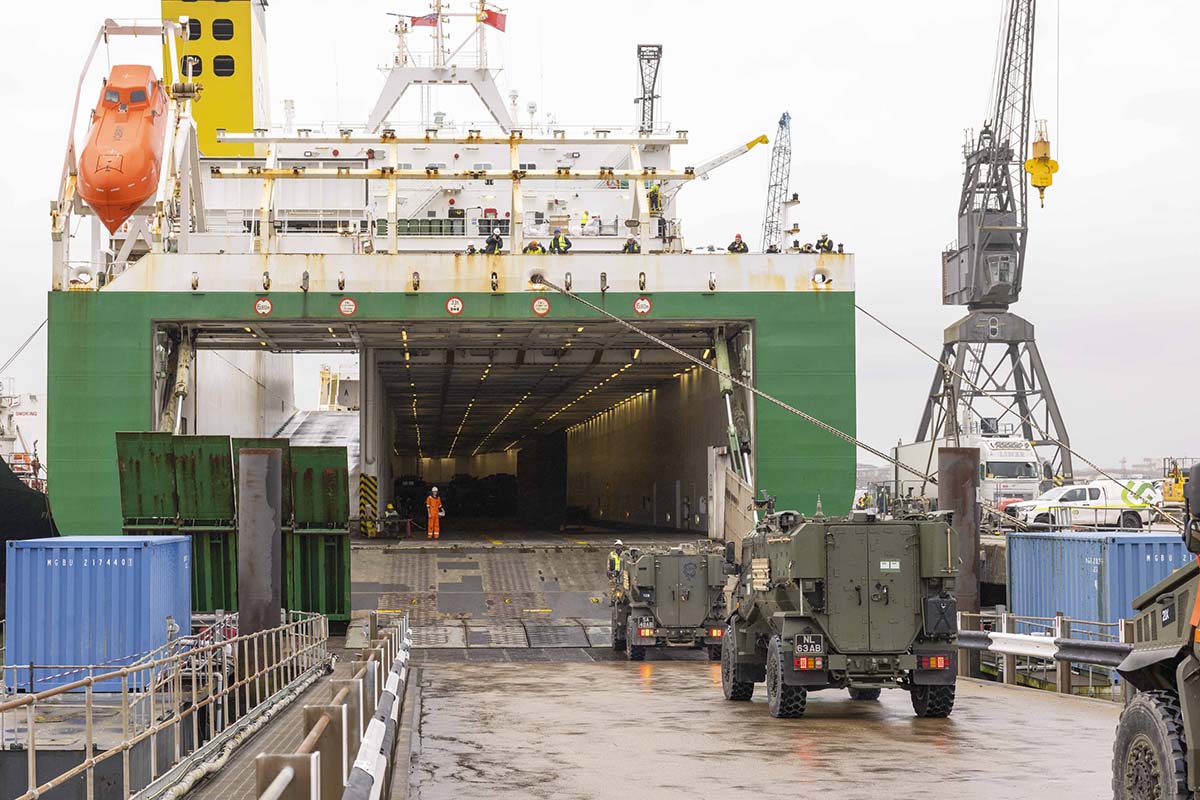
This strategic shift within Germany aligns with broader NATO efforts to bolster its collective defence posture in response to the evolving security landscape in Europe, particularly following recent geopolitical events. The alliance has been conducting major exercises and deployments, with significant build-ups of forces and equipment, including nearly a thousand British vehicles recently landed in Europe, all aimed at deterring potential adversaries and demonstrating readiness. General Eirik Kristoffersen, Norway’s Chief of Defence, speaking on the same panel, reinforced the notion that the successful reception of allied reinforcements is fundamentally dependent on a society that is fully aware of, and prepared to meet, the military’s requirements. This holistic approach underscores the increasing recognition that modern defence is a whole-of-society endeavor, demanding integrated planning and shared responsibility.
Why This Matters
Geopolitical Centrality:Germany’s geographical position at the heart of Europe makes it an indispensable transit hub for NATO forces. The ability to rapidly move 800,000 troops across its territory is not merely a logistical challenge but a fundamental requirement for effective collective defence, particularly for reinforcing NATO’s eastern flank nations. Without Germany’s robust and efficient support as a rear area and transit corridor, NATO’s ability to deter and, if necessary, defend against aggression in Eastern Europe would be severely compromised, impacting the security of the entire continent.
NATO’s Reinvigorated Collective Defence:This objective signifies a major strategic shift for NATO, moving from decades of focus on expeditionary operations outside its borders to a renewed emphasis on Article 5 collective defence within its own territory. Russia’s full-scale invasion of Ukraine in 2022 fundamentally reshaped the European security environment, prompting the alliance to re-evaluate and significantly strengthen its readiness. Germany’s commitment to this ambitious logistical target directly supports NATO’s new regional defence plans, ensuring the alliance can rapidly deploy and sustain large forces where they are most needed.
The “Whole of Society” Imperative:The remarks highlight the critical need for a “total defence” approach, where military and civilian spheres are deeply integrated. The challenge of moving such a vast number of personnel and equipment cannot be met by the military alone; it requires active participation and coordination from civilian infrastructure, emergency services, transportation networks, vital industries, and even the general public. Bridging the “different levels of threat perception” between defence planners and civil departments is crucial for building national resilience and ensuring a cohesive, effective response to potential crises. This comprehensive integration is a cornerstone of modern deterrence and national security.
Logistical Backbone of European Security:Successfully achieving this capability requires substantial, sustained investment in Germany’s infrastructure, including roads, railways, bridges, airfields, and port facilities, as well as robust digital communication systems. It also demands streamlined administrative processes, including border crossings, customs procedures, and regulatory frameworks, to facilitate rapid movement of personnel and materiel across national and internal European borders. Germany’s ability to act as the logistical backbone for NATO’s European operations will directly influence the speed and effectiveness with which the alliance can respond to a major contingency, thereby bolstering the credibility of its deterrence posture against potential adversaries.
Deterrence and Readiness:Publicly articulating such an ambitious defence objective sends a clear signal to potential adversaries about NATO’s resolve and capacity for large-scale, rapid response. It underscores the alliance’s commitment to defending every inch of its territory and its intention to ensure that no single member state is left to face aggression alone. Furthermore, the extensive planning, coordination, and preparation involved in meeting this target contribute significantly to overall military and civil readiness, ensuring that theoretical defence plans can be translated into practical, executable operations when required, thereby enhancing overall security.
Economic and Social Integration:Implementing a total defence strategy implies a degree of disruption and adaptation for civilian life. The rapid movement of hundreds of thousands of troops, convoys, and equipment would inevitably impact daily routines, requiring public understanding, cooperation, and resilience. The economic implications include not only direct defence spending but also potential investments in dual-use infrastructure that benefits both military mobility and civilian commerce. This objective thus represents a national undertaking that extends far beyond the military, intertwining defence preparedness with broader societal resilience, economic planning, and the collective well-being of the German population and its European allies.