
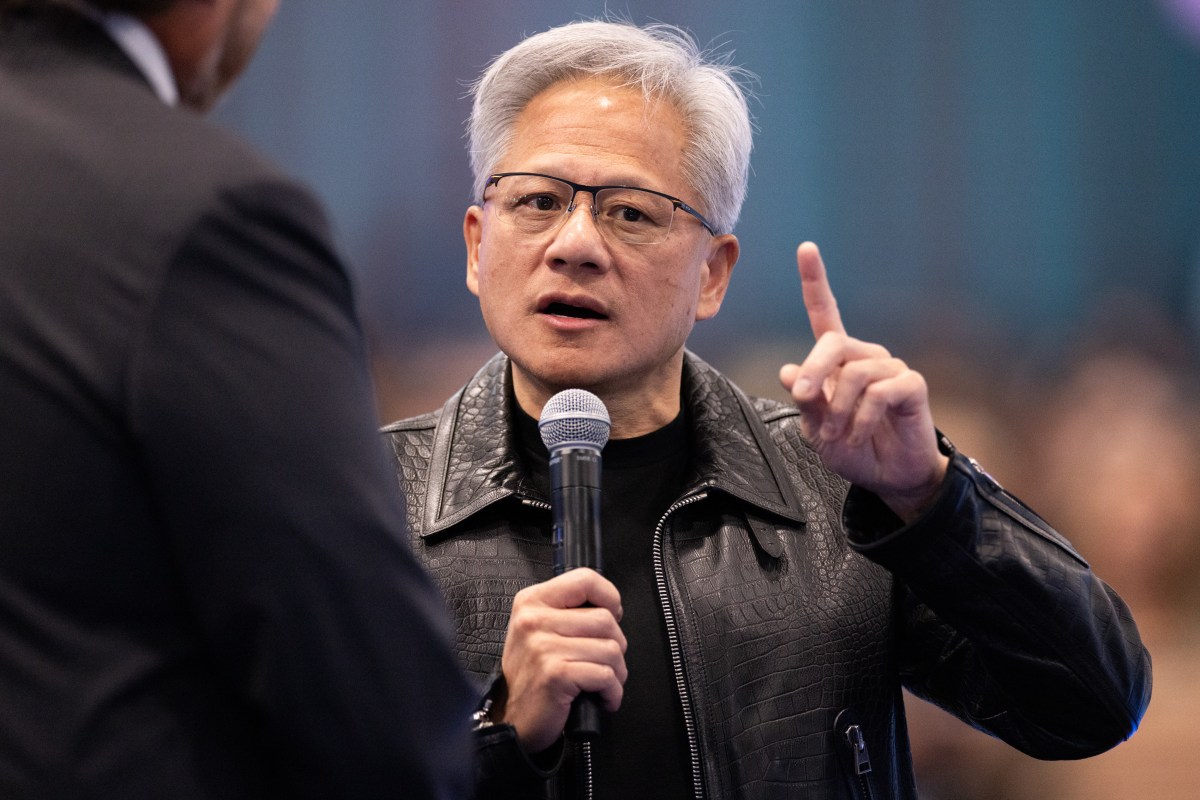
Nvidia CEO Jensen Huang is already under investigation after having admitted to having an affair with a woman accused of being a Chinese spy. Now the New York Times is reporting that Huang is also suspected of having another extramarital affair, with a direct report of his at the company — Kimberly Powell, Nvidia’s vice president of healthcare. Powell, like Huang, is married, the outlet says.
The Times says it was told of the alleged affair by five employees at the company. The sources said that Huang and Powell were captured on video “being affectionate at a San Jose, Calif., hotel” during a conference earlier this year.
Like many companies, Nvidia has rules discouraging superiors from having relationships with employees in subordinate roles, the Times notes. TechCrunch reached out to Nvidia for comment.
The company’s board has initiated an investigation into Huang’s publicly admitted affair. Additionally, two House Republicans said Wednesday that Congress is gearing up to subpoena Huang over the spy allegations if he doesn’t voluntarily respond to their summons to a closed-door briefing. Late Wednesday, after the reports of the second affair were published, the Wall Street Journal reported that the Nvidia board was preparing to oust Huang, who co-founded the company in 1993.
Key Takeaways
- Nvidia CEO Jensen Huang faces a deepening crisis, with new allegations of an extramarital affair with a direct subordinate, Kimberly Powell, compounding an existing investigation into an affair with a suspected Chinese spy.
- The escalating scandal has triggered a rapid response from Nvidia’s board, which is now reportedly preparing to oust Huang, the company’s co-founder and long-serving leader, signaling a dramatic shift in leadership.
- Beyond corporate governance issues, Huang is under intense congressional scrutiny, with House Republicans threatening a subpoena over the national security implications of the alleged spy affair, adding a federal dimension to the unfolding drama.
Nvidia CEO Jensen Huang Embroiled in Dual Affair Allegations, Board Reportedly Prepares Ouster
A corporate storm is rapidly engulfing Nvidia, one of the world’s most valuable and influential technology companies, as its enigmatic co-founder and CEO, Jensen Huang, finds himself at the center of a deepening scandal. Already under investigation for an admitted affair with a woman accused of being a Chinese spy, Huang is now facing new, equally explosive allegations: a second extramarital affair, this time with a direct report within Nvidia, Kimberly Powell, the company’s vice president of healthcare. This one-two punch of revelations has sent shockwaves through the tech industry, triggering swift action from Nvidia’s board, which is reportedly preparing for Huang’s ouster.
The latest accusations, first reported by The New York Times, paint a picture of significant corporate governance challenges. According to five unnamed Nvidia employees who spoke to the Times, Huang and Powell—both of whom are married—were observed “being affectionate” on video during a conference held in San Jose, California, earlier this year. This alleged relationship with a subordinate raises immediate red flags concerning company policies, which, like those at many major corporations, typically discourage or outright prohibit superiors from engaging in romantic relationships with employees under their direct management. Such rules are designed to prevent conflicts of interest, favoritism, and potential allegations of harassment or abuse of power, safeguarding both the employee and the company’s integrity.
These new allegations land on top of an already precarious situation. Huang’s earlier admission of an affair with an individual suspected of being a Chinese intelligence operative had already prompted an internal investigation by Nvidia’s board. The national security implications of this initial revelation have drawn the attention of Washington, with two House Republicans publicly stating their intent to subpoena Huang if he fails to voluntarily comply with a summons for a closed-door briefing on the matter. The specter of a CEO of a critical technology company being entangled with foreign intelligence, however indirectly, is a grave concern for lawmakers and intelligence agencies alike, particularly given Nvidia’s pivotal role in artificial intelligence and advanced computing crucial for national defense.
A Crisis of Leadership and Corporate Governance
The compounding nature of these revelations has pushed Nvidia into an unprecedented leadership crisis. The Wall Street Journal reported late Wednesday, shortly after the details of the second alleged affair surfaced, that Nvidia’s board was actively preparing to remove Huang from his position. Such a move would mark an seismic shift for the company, which Huang co-founded in 1993 and has led for over three decades, transforming it from a niche graphics card manufacturer into a trillion-dollar AI powerhouse.
Huang’s tenure at Nvidia has been synonymous with innovation, strategic vision, and aggressive market expansion. Under his leadership, Nvidia’s GPUs became the backbone of modern AI, gaming, and professional visualization, propelling the company to the forefront of the global tech landscape. His personal brand, characterized by leather jackets and a charismatic presence, has been tightly interwoven with Nvidia’s identity. The prospect of his sudden departure, particularly under such controversial circumstances, raises profound questions about the company’s immediate future trajectory, its stock performance, and the morale of its vast employee base.
The board’s reported decision to move towards Huang’s ouster underscores the severity of the ethical and legal challenges at hand. While individual conduct outside of work hours might typically be considered private, the intertwining of these alleged affairs with corporate policy, potential conflicts of interest, and national security concerns elevates them to matters of critical business impact. For a publicly traded company, maintaining shareholder trust, upholding ethical standards, and ensuring robust corporate governance are paramount. The potential for reputational damage, legal liabilities, and operational disruptions stemming from the CEO’s personal conduct demands decisive action from the board.
The Broader Implications for Tech and Beyond
This unfolding drama at Nvidia serves as a stark reminder of the increasing scrutiny faced by tech titans and the growing demands for accountability from their leadership. In an era where corporate culture and executive conduct are under constant public and internal examination, the boundaries between personal and professional life for CEOs of global enterprises are ever-blurring. The implications extend beyond Nvidia, sending a clear message across Silicon Valley and the broader business world about the zero-tolerance approach to breaches of ethical conduct, particularly when they involve power dynamics within the workplace or potential national security risks.
As Nvidia grapples with this internal upheaval, it must also navigate intense external pressures. The company is at the vanguard of the AI revolution, with its chips being critical components for data centers, autonomous vehicles, and advanced research worldwide. Any disruption at the top could have ripple effects across the entire technology ecosystem, impacting supply chains, strategic partnerships, and investor confidence. The challenge for Nvidia’s board and its eventual new leadership will be to stabilize the company, reassure stakeholders, and maintain its technological momentum amidst an unprecedented crisis.
Source:{feed_title}
Bottom Line
The allegations surrounding Jensen Huang represent a multifaceted crisis for Nvidia, encompassing corporate ethics, national security, and a potentially dramatic leadership transition. As the board reportedly prepares for Huang’s departure, the company faces the daunting task of navigating immense scrutiny, restoring stakeholder confidence, and ensuring its continued dominance in the fiercely competitive tech landscape, all while grappling with the fallout from an unprecedented confluence of personal and professional controversies.