
Nvidia CEO Jensen Huang resigns amid an investigation into alleged Chinese intelligence ties. CFO Colette Kress will serve as interim CEO.
Key Takeaways:
- Nvidia founder and visionary CEO Jensen Huang’s unexpected resignation, linked to alleged Chinese intelligence ties, injects significant leadership uncertainty into a company pivotal to the global AI boom, potentially triggering short-term market volatility.
- The leadership transition to interim CEO Colette Kress and new Board Chairman Harvey Jones signals a focus on operational continuity and enhanced governance, but the search for a permanent successor will be critical for investor confidence in Nvidia’s long-term strategic direction.
- The geopolitical dimension of the allegations underscores escalating U.S.-China tech tensions, posing potential risks to Nvidia’s extensive global supply chain and market access, even as the company maintains its dominant 80%+ share in the high-demand AI chip market.
Nvidia CEO Jensen Huang, a foundational figure in the semiconductor industry and the driving force behind the company’s meteoric rise, resigned Thursday, sending ripples through the global tech market. The sudden departure comes amidst an internal investigation into his relationship with an alleged Chinese spy, a development that not only questions corporate governance but also highlights the intensifying geopolitical currents impacting critical technology sectors.
Chief Financial Officer Colette Kress, a seasoned executive with a deep understanding of Nvidia’s financial operations and strategic planning, will serve as interim CEO. This appointment aims to provide a sense of stability and continuity during a period of leadership transition. Nvidia also moved to bolster its board oversight, naming former Synopsys CEO and board member Harvey Jones as its first-ever board chairman. Huang will also step down from the company’s board, effectively severing his formal ties with the firm he co-founded and led for over three decades.
The probe, initiated following a media report, has been overseen by outside independent counsel and a committee of independent directors. It delved into Huang’s close relationship with a Chinese businesswoman who allegedly passed sensitive information to Beijing. While details of the information, if any, remain undisclosed, the nature of the allegations immediately raised concerns about national security and corporate espionage, especially given Nvidia’s strategic importance to the U.S. technology ecosystem.
Huang, in a statement on Nov. 8, offered a personal apology, admitting to being unfaithful to his wife. He did not elaborate on the specific nature of the relationship or the allegations of information transfer, maintaining a focus on the personal impact of his actions.
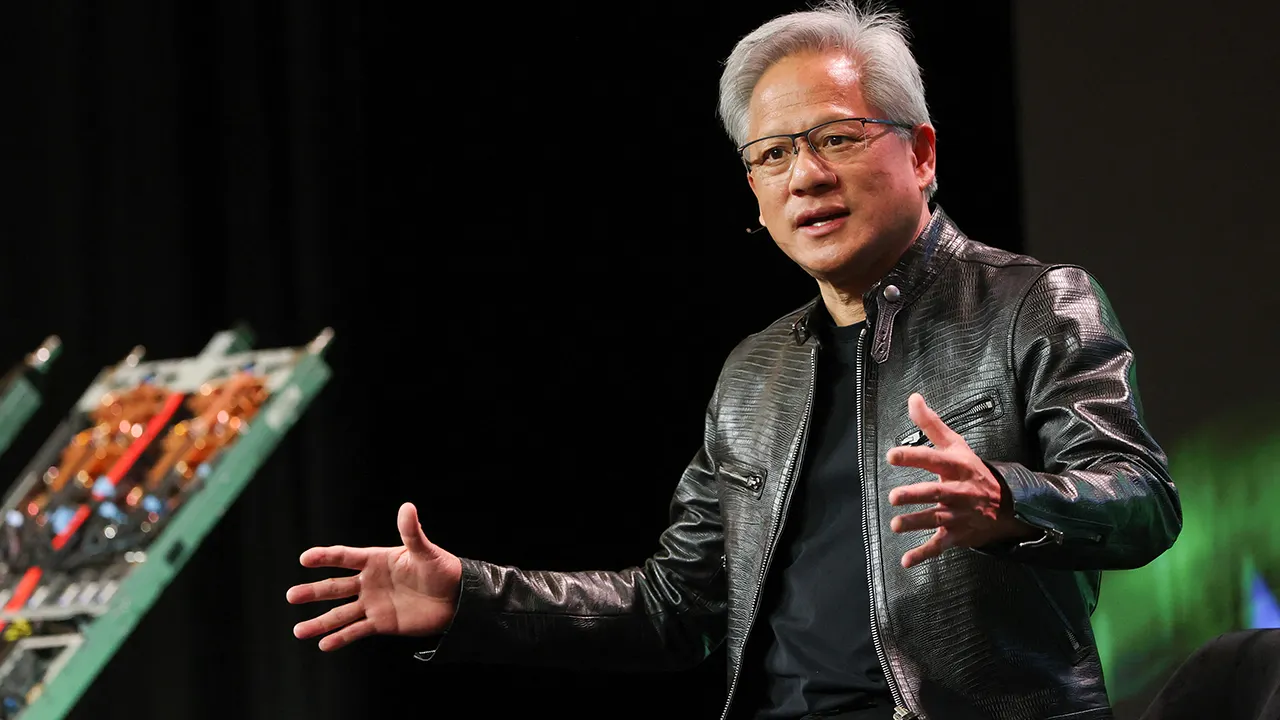
Nvidia founder and CEO Jensen Huang speaks at the annual Consumer Electronics Show on Jan. 6, 2026.(Patrick T. Fallon/AFP via Getty Images)
NVIDIA CEO JENSEN HUANG APOLOGIZES AS FIRM PROBES AFFAIR WITH ALLEGED SPY
“My actions hurt her and our children,” he said. “There is no excuse for what I did. I am deeply sorry.” This personal acknowledgment, while separating the personal from the corporate, did little to quell market anxiety over the underlying allegations and their potential ramifications for Nvidia’s operational integrity and geopolitical standing.
Notably, China has vehemently rejected the allegations of a spying operation targeting the Nvidia CEO, dismissing reports of a suspected Chinese intelligence plot as a smear campaign against Beijing. This denial, however, does little to diffuse the geopolitical tensions that have increasingly become a significant factor in the valuation and operational strategies of major U.S. tech companies, particularly those involved in advanced semiconductors.
CHINA DENIES SPY PLOT TARGETING NVIDIA CEO JENSEN HUANG, CALLS ALLEGATIONS ‘SMEAR’
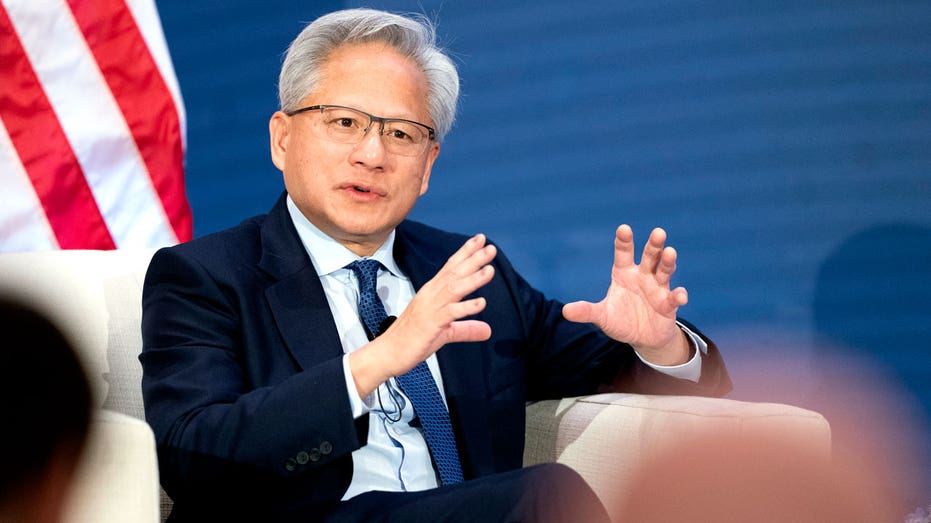
Nvidia CEO Jensen Huang speaks during the G20 Innovation Ministerial on Sept. 2, 2026, in Chapel Hill, North Carolina.(Sean Rayford/Getty Images)
Nvidia has, in recent years, ascended to become the second-largest publicly traded U.S. company by market cap, a testament to its unparalleled dominance in the burgeoning artificial intelligence (AI) chip market. This market capitalization reflects not just its current financial performance but also the immense investor confidence in its future growth trajectory, fueled by the insatiable demand for high-performance semiconductors essential for training and deploying complex AI models. Estimates consistently place Nvidia’s market share in these highly sought-after AI chips at a staggering 80% or more, essentially making it the gatekeeper of the AI revolution.
The company’s journey began in 1993, founded by a visionary trio of electrical engineers – Huang, Chris Malachowsky, and Curtis Priem – who famously conceived their groundbreaking plan at a Denny’s restaurant in California’s Bay Area. Their initial focus was on making 3D graphics accessible for video games and multimedia, a strategic entry point that allowed them to tackle challenging computational problems while generating significant revenue. This early emphasis on high-performance computing laid the groundwork for its eventual pivot and dominance in the AI sector.
WHAT IS ARTIFICIAL INTELLIGENCE (AI)?

Nvidia CEO Jensen Huang addresses participants at the keynote of CES 2025 in Las Vegas, Nevada, on Jan. 6, 2025.(Artur Widak/NurPhoto via Getty Images)
Huang’s leadership has been central to Nvidia’s narrative, overseeing its remarkable transformation from a niche graphics chipmaker into the preeminent supplier of processors powering the artificial intelligence boom. His departure, therefore, leaves a significant void, not just in executive leadership but also in the visionary foresight that has characterized Nvidia’s strategic moves. Investors will be keenly watching how the interim leadership navigates this period, particularly regarding ongoing innovation, competitive pressures from rivals like AMD and Intel, and the delicate balance of managing global supply chains amidst rising geopolitical complexities. The search for a permanent successor will be scrutinized for someone who can not only maintain operational excellence but also embody the strategic vision required to sustain Nvidia’s market leadership in an ever-evolving technological landscape.
CLICK HERE TO DOWNLOAD THE FOX NEWS APP
Market Impact
Jensen Huang’s resignation introduces a new layer of uncertainty for Nvidia’s stock (NVDA), which has enjoyed an extraordinary run fueled by the AI surge. In the immediate term, investors may react with increased volatility, potentially leading to a short-term dip as the market digests the leadership change and the implications of the underlying allegations. The geopolitical aspect of an alleged Chinese spy involvement could lead investors to apply a higher “risk premium” to Nvidia’s valuation, especially given its significant global operations and China’s role in the tech supply chain. While Nvidia’s core business fundamentals remain robust due to its dominant market share in AI chips, the absence of its visionary founder and CEO creates a leadership vacuum that will need to be convincingly filled to maintain long-term investor confidence. The broader semiconductor and AI sectors might also see some ripple effects, with increased scrutiny on other U.S. tech companies with deep ties or extensive operations in China, potentially prompting a re-evaluation of geopolitical risk across the industry.