
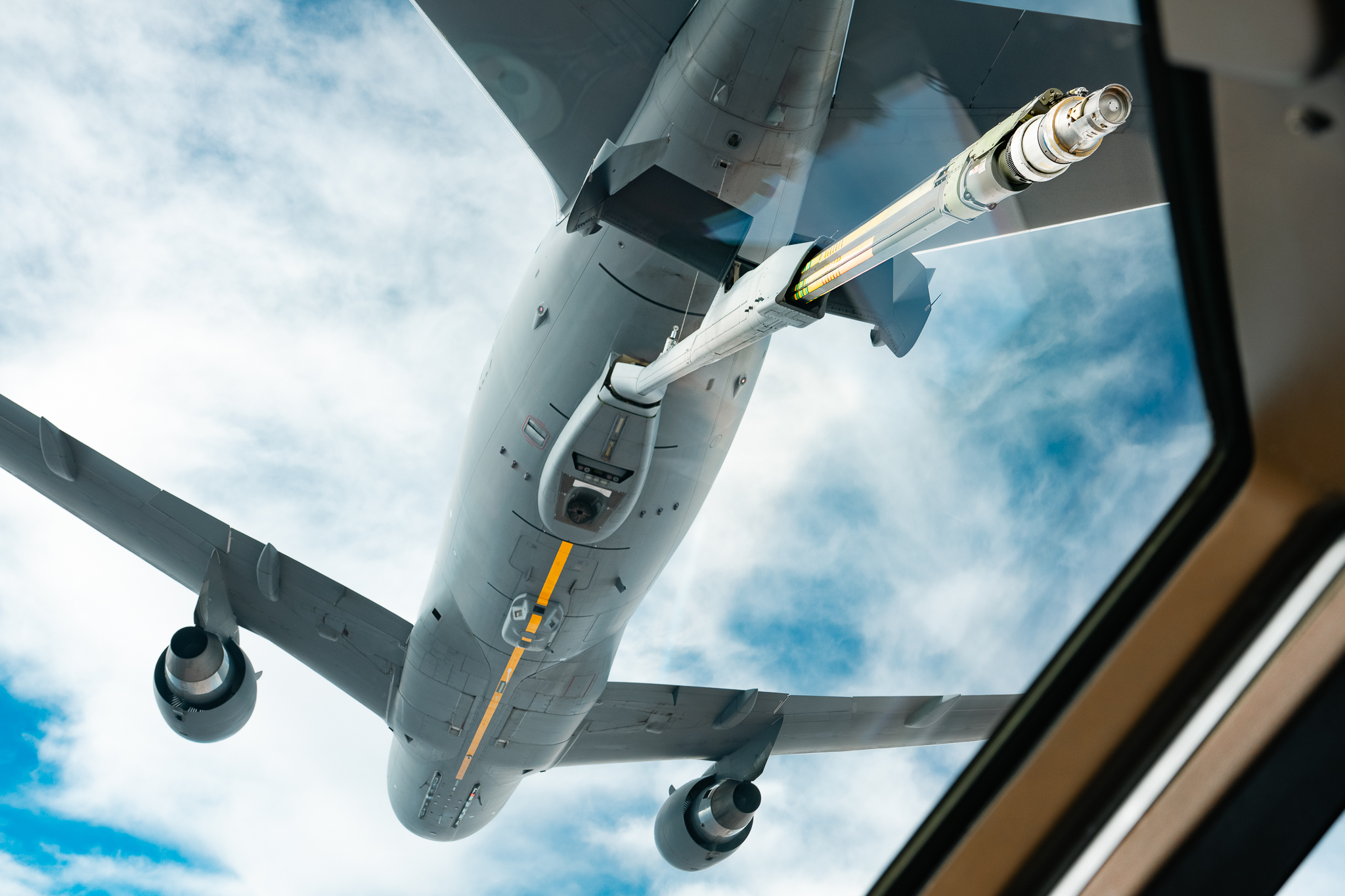
The U.S. Air Force Life Cycle Management Center (AFLCMC) is initiating efforts to establish a comprehensive software sustainment strategy for its growing fleet of KC-46 Pegasus aerial refueling tankers. The move signals a proactive approach to managing the increasing complexity of modern military aircraft software systems as the KC-46 fleet expands and undergoes continuous upgrades.
In late October, AFLCMC issued a Request for Information (RFI) to industry stakeholders, with a submission deadline of December 11. The RFI seeks proposals for a contractor to serve as the primary integrator for all software sustainment activities related to current and future upgrades of the KC-46 Pegasus fleet. This initiative aims to streamline the management, testing, and modernization of the tanker’s diverse software components, some of which are still under active development.
This strategic shift comes as the Air Force’s inventory of KC-46s has surpassed 100 aircraft, with long-term plans calling for the acquisition of up to 263 airframes. The increasing size and operational maturity of the fleet necessitate a consolidated and efficient approach to software management to ensure operational readiness, cybersecurity, and timely capability enhancements.
The proposed single integrator role is intended to address potential sustainment gaps in software lifecycle management. The selected entity would operate out of the Depot System Integration Electronics/Software Laboratory (SIL) at Tinker Air Force Base in Oklahoma. This centralized approach is designed to consolidate previously disparate software workstreams, synchronize multiple software certification cycles, and rigorously maintain cybersecurity protocols across all aircraft systems.
The KC-46 Pegasus itself is a highly modified variant of the Boeing 767-200ER commercial airliner, engineered for aerial refueling using both probe-and-drogue and boom systems. The prototype first flew in 2014, and the primary contract for its development and production was awarded to Boeing in 2016. Its role is critical for extending the global reach and endurance of military aircraft, enabling strategic power projection and tactical operations worldwide.
An AFLCMC spokesman highlighted that the initiative, formally dubbed the KC-46 Software Integration, Sustainment, and Support (K-SWISS) initiative, aims to establish a comprehensive, long-term enterprise software strategy as the fleet matures and its software capabilities expand. The core objectives of K-SWISS include efficiently resolving software deficiency reports, ensuring strict adherence to the Department of the Air Force’s Risk Management Framework (RMF) for cybersecurity, and maintaining continuous Authority to Operate (ATO) status across the entire fleet. ATO is a critical certification that indicates a system is secure and authorized for operational use, requiring ongoing vigilance and updates.
The spokesman confirmed that the existing SIL at Tinker Air Force Base is already adequately scaled and postured to support current fleet operations, manage upcoming aircraft deliveries, and facilitate future capability expansions. To facilitate a seamless transition and continuous ATO status, the RFI explicitly requires any industry proposals to include a comprehensive intellectual property and data rights framework. This ensures the Air Force retains necessary control and flexibility over the aircraft’s critical software components.
It was also emphasized that there has been no operational lapse in the KC-46’s software sustainment. Since the conclusion of interim contracted support in June 2022, all KC-46A software requirements have been continuously met through dedicated modernization and sustainment efforts. This new initiative seeks to build upon that foundation by consolidating and optimizing these efforts for long-term efficiency and resilience.
Beyond software sustainment, the KC-46 fleet is undergoing several significant modifications and upgrades. A key enhancement is the development of the Remote Vision System 2.0 (RVS 2.0). This major overhaul of the aircraft’s electronic visual system is designed to rectify issues present in the legacy RVS 1.0, which was plagued by poor lighting performance, depth perception challenges, and image washout. Boeing anticipates beginning the retrofit of RVS 2.0 onto existing aircraft in 2028. The upgraded system will incorporate 4K Ultra HD cameras and a 3D display, providing boom operators with a distortion-free, high-definition view in various lighting conditions, allowing them to precisely align the refueling boom with receiving aircraft from the cockpit.
Additional planned upgrades include various capability packages, further software enhancements, and a redesign of the boom telescope actuator, all aimed at improving the tanker’s operational effectiveness and reliability. These ongoing hardware and software improvements underscore the Air Force’s commitment to continuously modernizing the KC-46 to meet evolving operational demands.
However, the KC-46 program has faced challenges. A June report by the Government Accountability Office (GAO) noted that the tanker did not meet its mission-capable rate goals from fiscal years 2019 to 2025, recording a 62 percent rate in 2024. This figure falls below the desired operational readiness benchmarks, highlighting the importance of robust sustainment strategies—including comprehensive software management—to enhance fleet reliability and availability.
Why This Matters
The U.S. Air Force’s initiative to consolidate and optimize software sustainment for the KC-46 Pegasus fleet carries significant implications for national security, fiscal responsibility, and the future of military aviation. As the backbone of American airpower projection, the KC-46 provides critical aerial refueling capabilities, enabling fighter jets, bombers, and transport aircraft to extend their range and loiter time globally. The reliability and functionality of these tankers directly impact the Air Force’s ability to conduct missions across vast distances, support allies, and deter adversaries.
Modern military aircraft are increasingly “flying computers,” with complex software systems managing everything from flight controls and navigation to mission-specific sensors, communications, and defensive measures. Ensuring these intricate software components are continuously updated, secure, and fully operational is paramount. A fragmented approach to software management can lead to delays in deploying new capabilities, increased cybersecurity vulnerabilities, higher maintenance costs, and ultimately, reduced mission readiness. By establishing a single integrator through the K-SWISS initiative, the Air Force aims to mitigate these risks, ensuring rapid deployment of fixes, synchronized upgrades, and consistent adherence to stringent cybersecurity standards.
Furthermore, this proactive strategy addresses persistent challenges identified in the KC-46 program, such as the mission-capable rate shortfalls noted by the GAO. Efficient software sustainment is a key factor in improving aircraft availability and reducing downtime for repairs and upgrades. The successful implementation of K-SWISS, alongside hardware improvements like the RVS 2.0, will be crucial in maximizing the operational potential of the multi-billion-dollar KC-46 investment and ensuring it meets its intended role as a generational tanker.
Economically, a streamlined software sustainment process can lead to significant cost savings over the lifespan of the fleet by reducing redundancy, optimizing resource allocation, and preventing costly operational disruptions. For the defense industry, this RFI represents a substantial opportunity for contractors to secure a long-term role in supporting a vital military asset, potentially influencing future software sustainment models for other complex platforms. Ultimately, this initiative underscores the Air Force’s commitment to maintaining a technologically superior, operationally ready, and cost-effective air fleet for decades to come.