
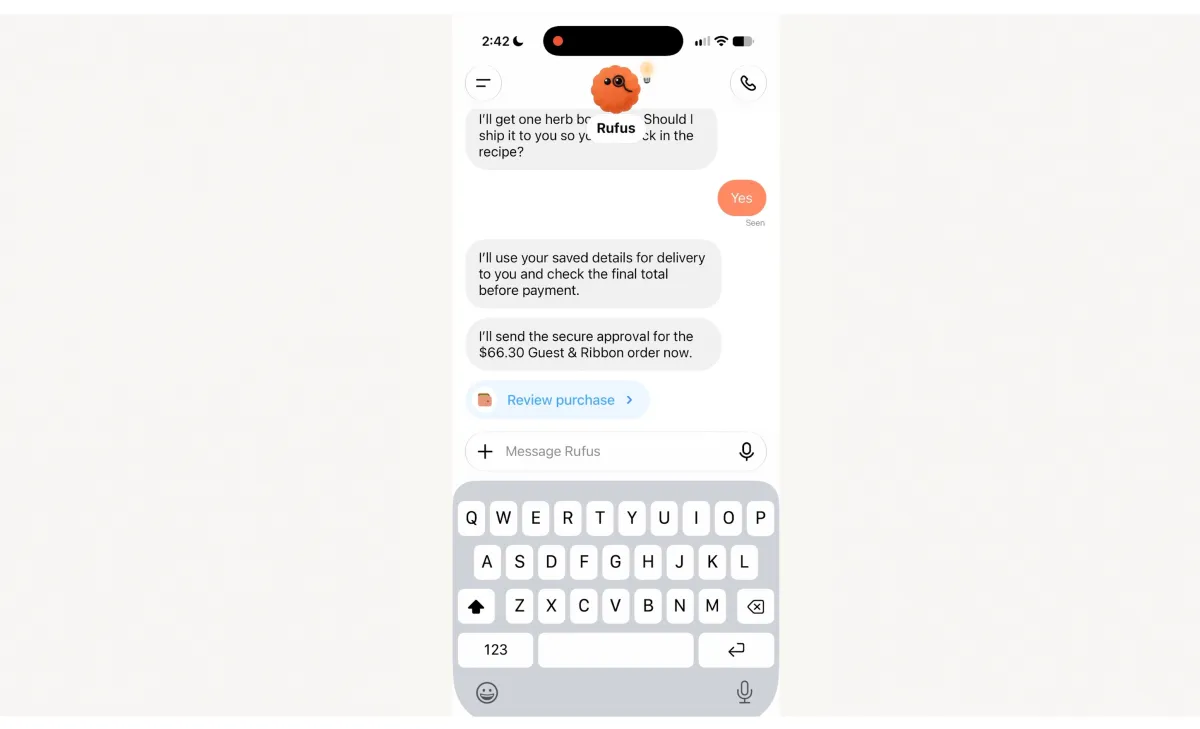
ChatGPT can now shop for you. On Friday, OpenAI launched a new wallet feature that lets its agents, called dots, help you decide what to buy and then complete the purchase on your behalf. The option will initially be available to a limited number of U.S. ChatGPT Pro subscribers, ages 18 and up, with a U.S.-issued Visa, Mastercard, or American Express.
OpenAI says that users are fully in control of the purchases, as they’re able to review the items, the total, and the payment card that will be used to complete the transaction before the checkout occurs. In addition, users will approve the purchases directly with a security check like Face ID or a fingerprint, which creates a record of their transaction.
—
**Key Takeaways:**
* **Agentic Commerce Arrives:** OpenAI has integrated a new “Wallet” feature into ChatGPT, enabling its AI agents (dots) to not only recommend products but also complete purchases directly on behalf of users, marking a significant step into agentic commerce.
* **Prioritizing User Control & Security:** The system is designed with explicit user consent, requiring review of items and costs, selection of payment methods, and biometric approval (Face ID/fingerprint) for every transaction, while utilizing payment tokens for enhanced security.
* **A Strategic Play in the AI Race:** This move positions ChatGPT as a more comprehensive personal assistant, addressing the burgeoning demand for AI-assisted shopping and intensifying competition with other tech giants like Meta and Amazon in the quest for product-market fit in consumer AI.
—
### ChatGPT Gets a Wallet: Your AI Agent Is Now Your Personal Shopper
The future of digital assistance just got a whole lot more transactional. OpenAI, the trailblazing force behind ChatGPT, has officially rolled out a new “Wallet” feature, empowering its conversational AI agents — affectionately known as “dots” — to transcend mere recommendations and directly execute purchases for users. This pivotal development, initially available to a select group of U.S. ChatGPT Pro subscribers, ages 18 and up, with eligible U.S.-issued payment cards, signals a bold leap into the realm of agentic commerce. It transforms ChatGPT from a powerful information processor into a proactive personal assistant capable of navigating the complex world of online shopping, from discovery to checkout.
This isn’t just about convenience; it’s about redefining the interaction between humans and AI. Users are granted full transparency and control throughout the process, able to meticulously review items, final totals, and selected payment methods before any transaction is finalized. A critical security layer is embedded, requiring direct user approval via biometric checks like Face ID or a fingerprint, ensuring that every purchase is a conscious and secure decision, leaving a clear digital trail.
### The Dawn of Agentic Commerce: What It Means for You
Imagine articulating a need — perhaps for a specific type of noise-cancelling headphone or a sustainably sourced coffee maker — and having your AI companion not only identify the best options but also seamlessly complete the purchase without you ever leaving the chat interface. This is the promise of ChatGPT’s new Wallet. To get started, eligible subscribers simply link their Visa, Mastercard, or American Express to the ChatGPT Wallet in a one-time setup. Once configured, a user’s “dot” can then assist with shopping requests.
When a purchase is initiated, ChatGPT’s Wallet springs into action, charging the selected card through a sophisticated payment token system. This crucial security measure means that your actual card details are never directly shared with the AI agent itself or the merchant. Instead, a unique, encrypted token acts as a substitute, protecting sensitive financial information from potential breaches. The merchant, in turn, receives all necessary fulfillment details, such as shipping address and contact information, directly from the dot, streamlining the entire process. Furthermore, OpenAI assures users that they will continue to accrue credit card rewards and benefit from existing card protections, including the ability to dispute transactions, ensuring a familiar and secure financial experience even through an AI intermediary.
### Why Now? The Quest for Product-Market Fit in Consumer AI
OpenAI’s foray into agentic shopping isn’t happening in a vacuum; it’s a strategic move within a broader industry-wide effort to cement the utility of consumer-facing AI tools. The quest for “product-market fit” — identifying how AI can genuinely enhance daily life — has seen varied success. While some initial attempts at AI-driven ordering, like those reported by DoorDash and Uber, have shown modest adoption, other platforms are witnessing burgeoning interest. Meta’s Muse, for instance, with its impressive user base exceeding 10 million, has observed AI-assisted shopping emerge as a leading activity, indicating a strong consumer appetite for such capabilities. Similarly, other independent personal AI agents, such as Instinct, have already embraced the ability to make purchases on behalf of their users.
This diverse landscape underscores a clear trend: consumers are increasingly open to delegating tasks to AI, especially when it comes to time-consuming activities like research and purchasing. For OpenAI, entering this space with a robust, secure, and user-controlled shopping feature is not just a natural evolution of ChatGPT’s capabilities but a critical step in solidifying its role as an indispensable everyday assistant. By offering a concrete, value-driven application, OpenAI aims to move beyond novelty and demonstrate tangible efficiency gains for its users, further embedding its technology into the fabric of daily digital life.
### The Road Ahead: Challenges, Opportunities, and a Shifting Landscape
While the initial launch is strategically limited, allowing OpenAI to meticulously test and refine the feature, the company has ambitious plans for its expansion. Future iterations aim to provide users with even greater control, enabling them to set custom spending limits, define specific purchase categories, or even establish time-based parameters for more autonomous agent behavior. This level of granular control is vital for building trust and ensuring that AI assistance remains firmly within user-defined boundaries.
However, the path to widespread agentic commerce is not without its hurdles. A significant challenge lies in securing broader retailer adoption. While OpenAI is proactively engaging with the ecosystem, even publishing a “Commerce Partner Playbook” to guide sites on supporting AI agents, some major players remain hesitant. Amazon, for example, a colossal force in online retail, has notably blocked third-party AI agents from its platform, preferring to steer users towards its own established AI assistant, Alexa. This competitive dynamic highlights the battle for control over the future of digital commerce, where tech giants vie to become the primary interface between consumers and products.
The implications for the broader retail landscape are profound. Agentic shopping could revolutionize how brands reach consumers, potentially shifting loyalty from specific websites to the AI agent itself. It could also spur innovations in product discovery, personalization, and supply chain logistics. As AI agents become more sophisticated, they could even negotiate prices, manage subscriptions, and optimize spending across various categories, transforming personal finance in unforeseen ways.
### Bottom Line
OpenAI’s introduction of the ChatGPT Wallet and its agentic shopping capabilities represents more than just a new feature; it’s a pivotal moment in the evolution of artificial intelligence. By empowering AI agents to complete purchases securely and under explicit user control, OpenAI is not only enhancing the practical utility of ChatGPT but also staking a significant claim in the rapidly expanding market for AI-driven consumer services. While challenges remain in securing widespread merchant adoption and navigating the competitive landscape, this move clearly signals a future where AI is not just assisting our decisions but actively executing our intentions, fundamentally reshaping how we interact with the digital economy and our personal finances. The age of the proactive, purchasing AI agent has truly begun.
{content}
Source:{feed_title}