
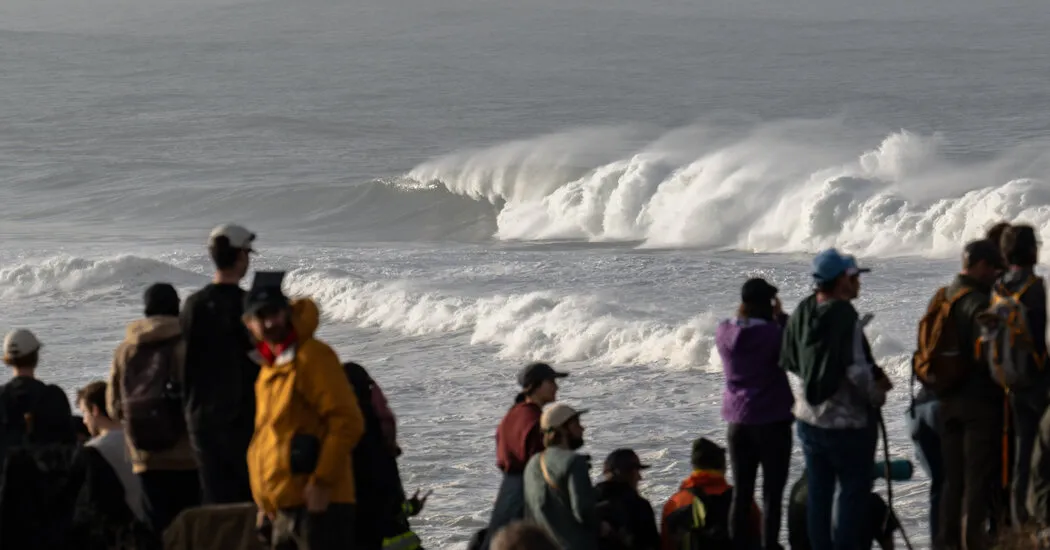
California’s coastline experienced its most significant swell in nearly two years on Saturday, as a powerful Pacific storm generated massive waves that impacted beaches, threatened coastal infrastructure, and prompted widespread safety advisories. Authorities issued high surf and coastal flood warnings, urging residents and visitors to avoid shorelines due to the extreme hazards presented by the surging ocean.
The extraordinary surf conditions originated from an intense low-pressure system situated thousands of miles off the California coast in the Pacific Ocean. Strong winds associated with this distant storm generated a formidable swell that propagated across the Pacific basin, steadily accumulating energy before arriving at the Californian shoreline. This phenomenon led to a rapid escalation in wave heights, beginning Friday night amidst a concurrent rainstorm and intensifying throughout Saturday morning.
The National Weather Service (NWS) issued urgent high surf warnings and coastal flood advisories for much of the state’s coastline, emphasizing the severe danger posed by the monumental waves. Public safety announcements strongly advised individuals to remain clear of the ocean and coastal areas. NWS meteorologist Roger Gass, stationed in Monterey, California, highlighted the potentially fatal consequences of approaching the surf, stating that no photograph was worth risking one’s life. The warnings underscored the potential for significant coastal erosion, dangerous rip currents, and the likelihood of sneaker waves capable of pulling individuals into the turbulent ocean without warning.
Northern California bore the brunt of the largest waves, with heights reported to exceed 40 feet at fully exposed beaches. The legendary big-wave surf break, Mavericks, located approximately 20 miles south of San Francisco near Half Moon Bay, witnessed truly colossal waves, estimated to reach more than 50 feet, potentially nearing 60 feet, according to expert Mark Sponsler of Stormsurf. Despite the spectacular nature of these waves, the vast majority of beaches were deemed too perilous for any recreational activity due to the chaotic and intense conditions.
In San Francisco, Ocean Beach experienced substantial wave action, with waves surging onto the sand and saturating the beach much farther inland than typically observed. While the beach remained largely deserted, observers noted the unprecedented wetness and numerous large standing pools of water on the shore, draining back to the ocean.
Further south, in Santa Cruz County, the severity of the conditions led to the closure of all city beaches through Sunday. Approximately 270 homes within the county were placed under evacuation warnings as a precautionary measure against potential flooding. The municipal wharf, a key piece of local infrastructure that had been damaged by similar surf in December 2024, was also closed to the public. Santa Cruz County spokesman Jason Hoppin reported minor flooding and several road closures by Saturday noon, but indicated that the region’s infrastructure was, at that point, largely withstanding the onslaught, and no mandatory evacuation orders had been issued. Mr. Hoppin observed the unusual absence of surfers even at typically crowded breaks like “the Hook,” underscoring the extreme and chaotic nature of the surf.
While the general consensus was that the waves were too dangerous for most surfers, the extraordinary conditions at Mavericks attracted a select group of elite big-wave surfers. Bianca Valenti, a 41-year-old big-wave surfer from San Francisco, described the Mavericks waves as immense but also “very precarious and bouncy” due to accompanying winds. She witnessed both successful rides and significant wipeouts, highlighting the fine line between triumph and peril in such environments.
Even in San Francisco, at Fort Point where the Pacific transitions into the bay, a few experienced surfers, like 43-year-old big-wave surfer Keith Hatcher, ventured out. Hatcher, nursing an injury and seeking to avoid the intense crowds at Mavericks, acknowledged the inherent dangers of Fort Point, noting the long paddle out, strong currents, and potential for debris like trees and logs in the water following the preceding rainstorm. These accounts underscore the calculated risks taken by professional big-wave surfers in specific, extreme conditions, while simultaneously reinforcing the profound danger for the general public.
Why This Matters
This significant high surf event along the California coast transcends a mere meteorological phenomenon; it carries substantial implications for public safety, coastal economies, and environmental resilience.
**Public Safety and Preparedness:** The widespread advisories and warnings highlight the critical importance of heeding official directives during extreme weather events. The potential for sneaker waves, powerful rip currents, and coastal flooding poses direct threats to human life, emphasizing the need for public awareness and cautious behavior near the ocean. Such events serve as vital reminders for communities and individuals to review and enhance their emergency preparedness plans, ensuring they are equipped to respond effectively to natural hazards.
**Infrastructure Vulnerability and Economic Impact:** The closure of beaches, piers, and roads, alongside evacuation warnings, underscores the vulnerability of coastal infrastructure to powerful natural forces. While initial reports indicated resilience, sustained or more frequent events can lead to significant structural damage, requiring costly repairs and potentially disrupting local economies reliant on tourism and coastal activities. The previous damage to the Santa Cruz municipal wharf in December 2024 serves as a stark precedent for the potential economic toll and the ongoing challenge of maintaining resilient coastal infrastructure.
**Coastal Erosion and Environmental Concerns:** Extreme wave action contributes significantly to coastal erosion, a long-term challenge for many parts of California’s dynamic coastline. These events can reshape shorelines, impact sensitive coastal ecosystems, and threaten properties situated near the ocean. The saturation of beaches and unusual water intrusion demonstrate the ocean’s immense power to alter landscapes in short periods, raising concerns about long-term coastal management and environmental protection.
**Climate Change Context:** While individual weather events cannot definitively be attributed solely to climate change, scientific projections suggest that a warming climate could influence the frequency and intensity of extreme weather phenomena, including powerful storms and associated swells. Such events increasingly serve as tangible demonstrations of the challenges coastal communities face in adapting to a potentially more volatile climate, necessitating ongoing investment in resilient infrastructure and adaptive management strategies for their future viability and safety.