
U.S. Air Force Academy Debuts New T-19A Kestrel Aircraft to Enhance Pilot Training and Airmanship Programs
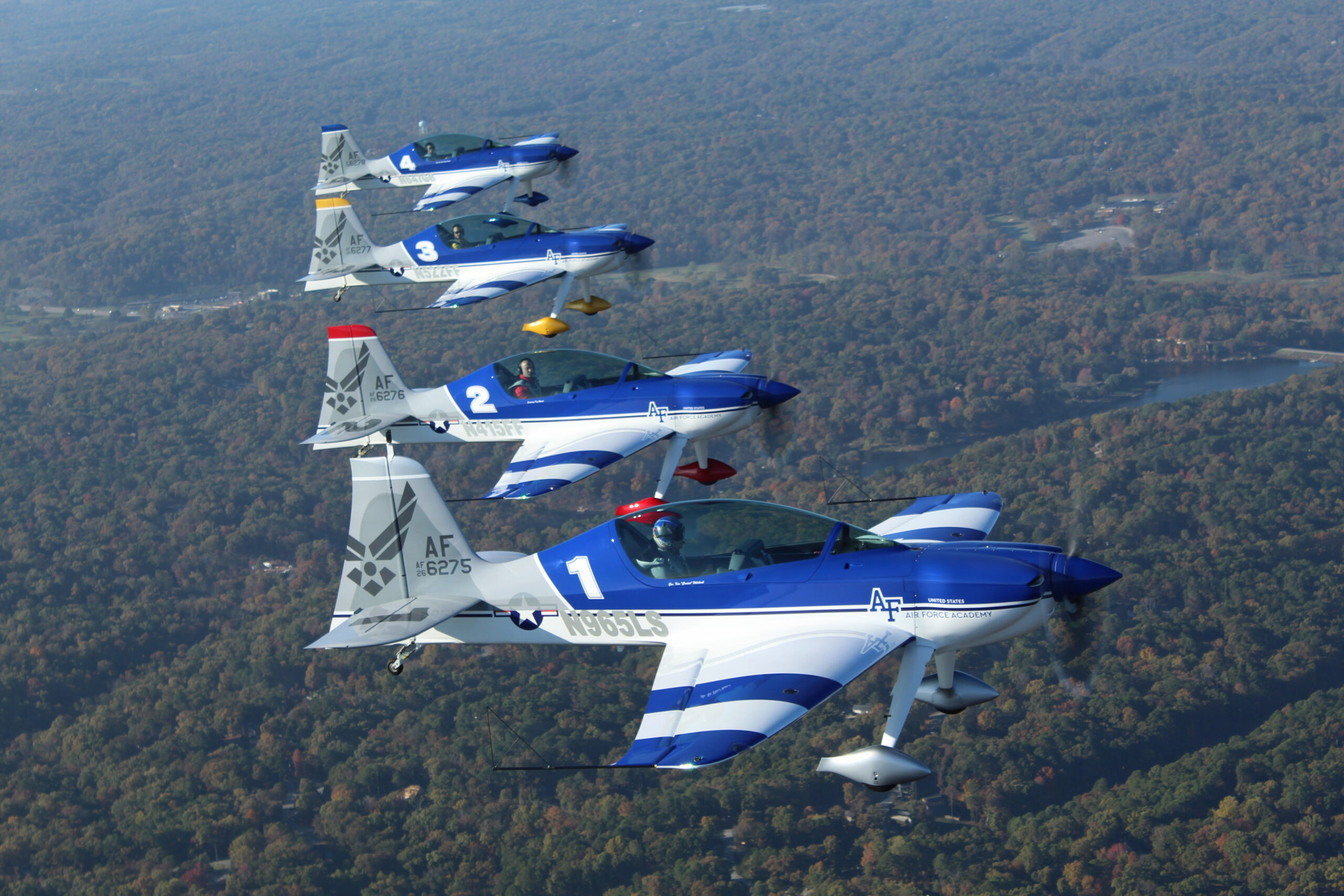
COLORADO SPRINGS, CO – The United States Air Force Academy (USAFA) officially unveiled its newest aircraft, the T-19A Kestrel, on November 12. This introduction marks a significant enhancement to the Academy’s advanced airmanship and pilot development programs, aiming to provide cadets with expanded flying opportunities and to establish a competitive powered aerobatics team. These initiatives are designed to strengthen the talent pipeline for future Air Force aviators.
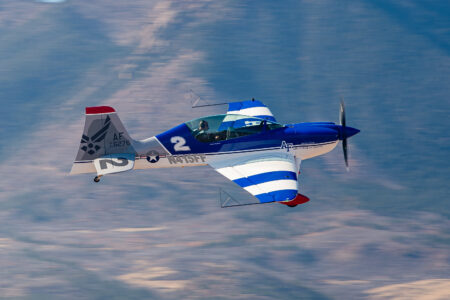
The T-19A Kestrel is based on the GB1 Gamebird, a civilian aerial performance plane recognized for its agility and robust design. Its integration into the Academy’s curriculum is a strategic move intended to deepen cadets’ understanding of advanced flight dynamics, cultivate superior piloting skills, and instill the confidence required for complex aerial maneuvers. The goal is to provide a more comprehensive and challenging flight experience for cadets.
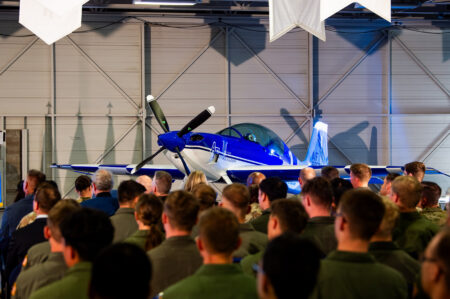
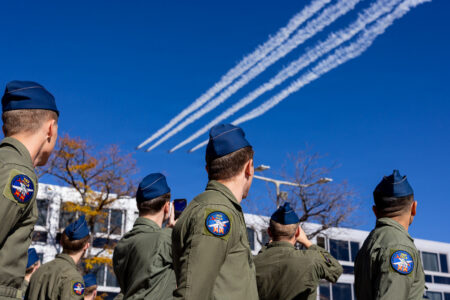
The Kestrel, whose distinctive nickname was selected by a group of cadets, made its public debut with a ceremonial flyover. Four of the new aircraft performed an aerial display above the Academy’s noon meal formation. The pilots included prominent Air Force leaders: Chief of Staff Gen. Kenneth S. Wilsbach, USAFA Superintendent Lt. Gen. Paul D. Moga, Provost Brig. Gen. James Valpiani, and Lt. Col. Evan Backes. Lt. Col. Backes is a member of the initial cadre of instructors drawn from the Academy staff and the 306th Flying Training Group, who are tasked with developing the Kestrel’s training curriculum.
Following the flyover, the four pilots landed and participated in a symbolic handover ceremony. They presented ceremonial keys to four cadets, each representing one of the Academy’s classes. This gesture served to symbolize the direct impact these new aircraft are expected to have on the cadets’ educational and training experiences, signifying the transfer of opportunity to the next generation of Air Force leaders.
Gen. Wilsbach articulated the broader vision for the T-19A’s introduction, stating, “These aircraft will give cadets an opportunity to further develop their airmanship and will ultimately establish a competitive flying team to inspire future Airmen.” His comments highlighted the dual objectives of enhancing individual flight skills and fostering a spirit of competition that can motivate and attract new talent to the Air Force.
A notable aspect of this acquisition was its rapid execution and funding method: officials confirmed the four T-19A aircraft were donated to USAFA. The entire process, from initial concept to delivery and operational readiness, was completed within an accelerated timeframe of just ten months. This swift implementation underscores an agile approach to addressing critical training needs. In a statement, Air Force Secretary Troy Meink praised the T-19A’s potential to significantly improve the preparation of Academy cadets for subsequent pilot training. This enhancement is particularly relevant given that less than half of the most recent graduating class at USAFA were selected to attend pilot training after graduation, indicating a need for more robust early-stage aviation exposure.
The Academy currently operates two primary airmanship programs designed to immerse cadets in aviation. The soaring program enables cadets to learn and instruct each other in glider flight, fostering fundamental aerodynamic understanding and leadership skills. In parallel, the powered flight program utilizes the T-53A Kadet II aircraft, where cadets fly alongside a rated officer and, for some, have the opportunity for solo flights. Both programs historically include competitive teams. However, prior to the arrival of the T-19A Kestrel, USAFA’s aerobatics team had exclusively performed with gliders, marking a significant shift in capability with the new powered aircraft.
The T-19A Kestrel has successfully completed all necessary military certification flights and has been officially cleared for operations at USAFA. Lt. Gen. Moga, who assumed the role of Superintendent in August, outlined the immediate operational plan. He stated that the initial cadre of pilots, including Lt. Col. Backes, will serve as the primary demonstration pilots. Concurrently, this experienced group will be responsible for developing and implementing a comprehensive aerobatic training curriculum. The overarching, long-term objective is to establish a fully-fledged, competitive powered aerobatics team, offering cadets an unparalleled opportunity to hone their skills at an elite level.
“This aircraft will provide an opportunity to train our cadets in ways that were previously not possible,” Lt. Gen. Moga emphasized. “We will strengthen their aviation skills and develop the confidence, discipline, and leadership required of future Air Force officers.” His comments highlight the multifaceted benefits of the T-19A, indicating its role extends beyond mere flight proficiency to encompass broader character and leadership development essential for military command.
The integration of the T-19A Kestrel represents a forward-looking investment in the capabilities of the U.S. Air Force, aiming to ensure that its future leaders and aviators are equipped with advanced training from the outset of their careers.
Why This Matters
The introduction of the T-19A Kestrel at the U.S. Air Force Academy is more than just an upgrade to a flight program; it represents a strategic investment in the future of U.S. airpower and national security. Its significance can be understood through several critical lenses:
Addressing the Pilot Shortage and Enhancing Readiness:The U.S. Air Force has faced persistent challenges in maintaining a sufficient number of qualified pilots, a situation that impacts both operational readiness and long-term strategic capabilities. By providing cadets with early and advanced exposure to powered aerobatic flight, the T-19A program aims to identify and cultivate aviation talent more effectively. This earlier, more intensive training can better prepare cadets for subsequent, more rigorous pilot training programs, potentially reducing attrition rates and accelerating their development into combat-ready aviators. Increasing the proportion of USAFA graduates who successfully enter pilot training directly strengthens the Air Force’s ability to man its cockpits, thereby directly contributing to the nation’s air superiority and global defense posture.
Developing Comprehensive Airmanship and Leadership:While gliders offer foundational airmanship skills, powered aerobatics in an aircraft like the T-19A introduces cadets to a higher echelon of flight control, spatial awareness, G-force management, and decision-making under stress. These experiences are invaluable for developing the confidence, discipline, and precise technical skills required of modern military pilots operating advanced aircraft. Beyond mere flight proficiency, the challenges inherent in aerobatic flying foster resilience, adaptability, problem-solving abilities, and an understanding of aircraft limitations – all critical attributes for future Air Force officers and leaders, whether they ultimately become pilots or not. The program also supports the development of a competitive team, instilling values of teamwork, precision, and a relentless pursuit of excellence that are transferable to any military role.
Agile Innovation and Modernization of Training:The rapid acquisition of the T-19A Kestrels, from concept to delivery in just ten months and achieved through donation, exemplifies an agile and responsive approach to military procurement and training modernization. In an era of evolving global threats and rapid technological advancements, the ability to quickly identify, acquire, and integrate new, effective training platforms is crucial for maintaining a competitive edge. This initiative demonstrates a proactive effort by the Air Force to adapt its foundational training methods to meet the dynamic demands of a complex operational environment, ensuring that the Academy’s curriculum keeps pace with the capabilities of its advanced operational aircraft and the challenges faced by its personnel.
Inspiring the Next Generation of Airmen:The visible presence of these high-performance aircraft and the establishment of a competitive aerobatics team can serve as powerful tools for recruitment and retention within the Air Force. For aspiring cadets and future generations considering military service, the opportunity to engage in cutting-edge flight training, including powered aerobatics, makes the Air Force Academy an even more attractive and compelling institution. It showcases the Air Force’s commitment to providing dynamic, challenging, and rewarding career paths, potentially drawing in top talent vital for maintaining a qualitative edge over peer adversaries. The excitement generated by these aircraft helps to “inspire future Airmen,” as noted by General Wilsbach, which is essential for ensuring the long-term health and strength of the force.
Strategic Implications for National Security:Ultimately, the T-19A Kestrel program contributes significantly to the broader objective of maintaining U.S. air superiority globally. By producing highly skilled, confident, and innovative aviators and officers, the Academy directly supports the Air Force’s ability to execute its diverse missions across the spectrum of conflict, from humanitarian aid and disaster relief to high-intensity combat operations. The investment in foundational, advanced training today translates directly into enhanced operational capability, strategic deterrence, and a more robust national defense tomorrow, directly impacting the nation’s security interests and its ability to project power and influence worldwide.