
Chase, Wells Fargo, Bank of America and U.S. Bank are reportedly among the major banks experiencing widespread online outages.
**Key Takeaways:**
1. **Widespread Digital Disruption:** Multiple major U.S. financial institutions, including Chase, Bank of America, and Wells Fargo, experienced significant online service outages, impacting millions of customers and business operations.
2. **Operational Resilience Concerns:** While attributed to a “technical bug” rather than a cyberattack, the incident underscores the critical need for robust IT infrastructure and raises questions about the operational resilience of the nation’s largest banks in an increasingly digital financial ecosystem.
3. **Erosion of Trust & Regulatory Scrutiny:** Such widespread disruptions, even if brief, can erode consumer and business confidence in digital banking services and are likely to attract heightened scrutiny from financial regulators regarding system stability and disaster recovery protocols.
Customers at major banks including Chase, Bank of America, Capitol One, U.S. Bank and Wells Fargo have reported problems accessing online services on Monday, according to Downdetector.com. The widespread nature of these disruptions across several systemically important financial institutions immediately triggered concerns among consumers, businesses, and market observers alike, highlighting the inherent vulnerabilities of an increasingly digital banking landscape.
Chase, one of the nation’s largest banks by assets, was quick to acknowledge the situation, initially via its Chase Support X (formerly Twitter) account. “We saw your post and want to reach out. I do apologize, it appears that we are currently working to resolve an issue with online banking,” Chase Support said in a public response. “Please try again at a later time. We’re sorry for any inconvenience, and appreciate your patience.” This initial response, while apologetic, offered little in the way of immediate resolution or detailed explanation for the millions affected by the inability to manage their finances, execute transactions, or access critical account information.
Further clarity, albeit limited, was provided by Chase in a statement to FOX Business. “Due to a technical issue, some transactions are taking longer than usual to complete but customers still have access to their accounts and funds,” Chase stated. “We are working to resolve this as quickly as possible.” The crucial distinction made by a source, clarifying the disruption as “a technical bug, not a cyber issue,” offered a degree of reassurance against the more sinister implications of a potential cyberattack on the nation’s financial infrastructure. However, the impact on daily financial activities remained substantial.
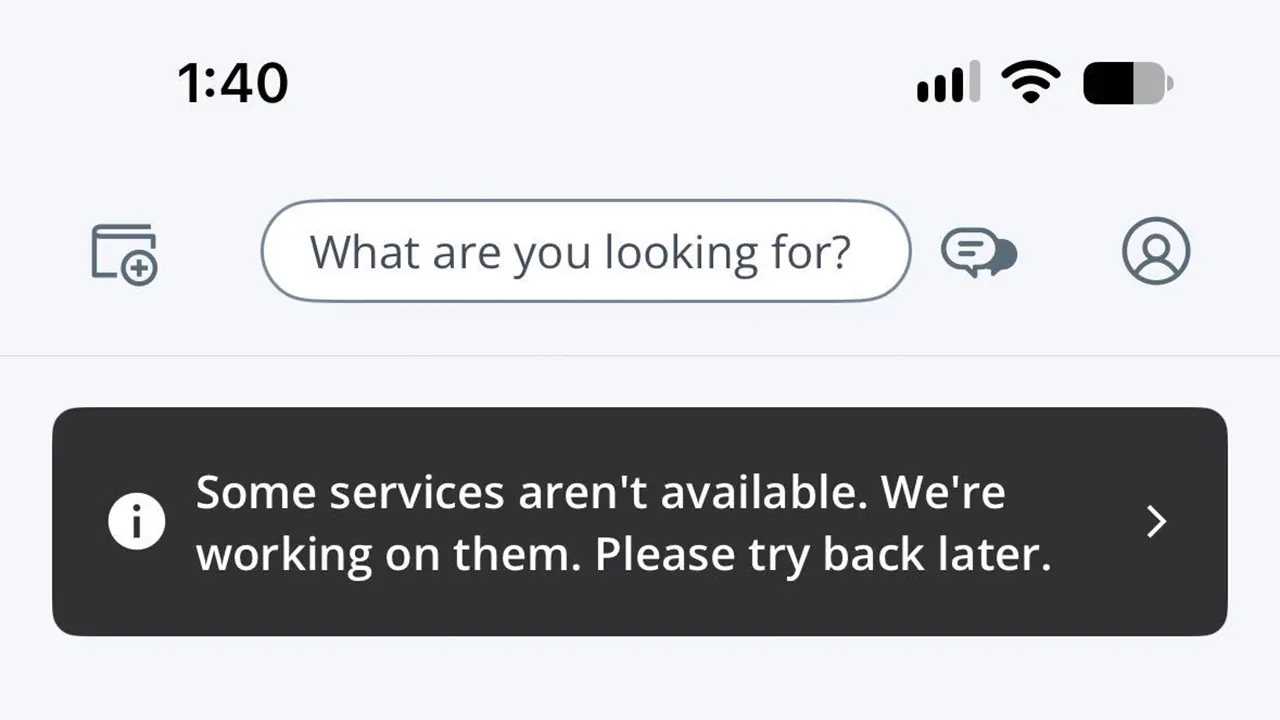
After logging into the Chase app on November 19, during an online banking outage, one user reported seeing this error message.| Fox News
For consumers, these outages meant an inability to pay bills, transfer funds, check balances, or execute time-sensitive transactions. Small businesses, heavily reliant on digital platforms for payroll, vendor payments, and customer transactions, faced immediate operational hurdles, potentially leading to delayed payments, disrupted supply chains, and frustrated clients. In an economy increasingly driven by instantaneous digital commerce, even a few hours of downtime can translate into tangible economic losses and significant reputational damage for the affected financial institutions.
The incident comes at a sensitive time, following a series of high-profile infrastructure disruptions across various sectors. Just a week prior, an historic FAA ground stop of air travel nationwide Friday caused widespread flight delays and cancellations, impacting travel and commerce. A Microsoft Outlook email disruption earlier on Thursday also affected millions of users globally. While these events are unrelated in their root causes, their proximity creates a narrative of heightened vulnerability across critical digital infrastructures, raising questions about the overall resilience of foundational systems that underpin modern life and commerce.
From a market context, such widespread banking outages, even if quickly resolved and attributed to technical glitches rather than malicious intent, inevitably cast a shadow over the operational integrity of major financial players. Investors closely monitor the technological capabilities and resilience of banks, as these directly impact efficiency, customer retention, and compliance with increasingly stringent regulatory standards. The sheer scale of investment these banks have poured into their digital transformation initiatives means that any significant disruption undermines the narrative of seamless, always-on banking services. This can lead to a dip in investor confidence, particularly in the short term, as analysts assess the potential for future occurrences and the adequacy of disaster recovery protocols.
Moreover, the incident is likely to draw the attention of financial regulators, including the Office of the Comptroller of the Currency (OCC), the Federal Reserve, and the Consumer Financial Protection Bureau (CFPB). These bodies are tasked with ensuring the stability and soundness of the banking system and protecting consumers. Widespread service disruptions, even if not systemic threats, can trigger investigations into the root causes, the effectiveness of banks’ IT governance, and their ability to maintain critical services. This could potentially lead to increased compliance costs for banks as they are pressured to further fortify their digital infrastructures and enhance their incident response frameworks.
The event also highlights the ongoing competitive landscape within the financial sector. While traditional banks invest billions in technology, challenger banks and FinTech companies often tout their agile, cloud-native infrastructures as inherently more resilient. Such outages, even if temporary, provide ammunition for these newer players to highlight potential weaknesses in the legacy systems of established institutions, potentially influencing customer migration over the long term, especially among digitally-native younger generations and tech-savvy businesses. In an environment where customer experience is paramount, reliability is a non-negotiable expectation.
Ultimately, while the immediate crisis of accessing funds was mitigated as services gradually came back online, the broader implications for trust, operational resilience, and regulatory oversight will linger. The “technical bug” explanation, while relieving concerns about a cyberattack, simultaneously underscores the complex and often fragile nature of the sophisticated systems that manage our global financial flows. Banks are expected not only to innovate but also to ensure the foundational stability of their services, irrespective of the underlying cause of disruption.
GET FOX BUSINESS ON THE GO BY CLICKING HERE
This is a developing story. Check back for updates.
Market Impact:
The widespread outages at major U.S. banks, while attributed to a technical glitch and not a cyberattack, sent ripples of concern through financial markets. While immediate stock price declines for the affected banks were contained, the incident will likely prompt closer scrutiny from institutional investors regarding operational risk management and IT infrastructure resilience. Over the short term, this could translate into a slight dampening of investor sentiment towards the broader banking sector, particularly concerning its ability to deliver seamless digital services amidst intense competition. Long-term, the event reinforces the expectation for increased regulatory oversight and potentially higher compliance costs for banks as they are compelled to invest further in system redundancy and advanced cybersecurity measures, impacting their profitability margins and competitive positioning against nimbler FinTech competitors.