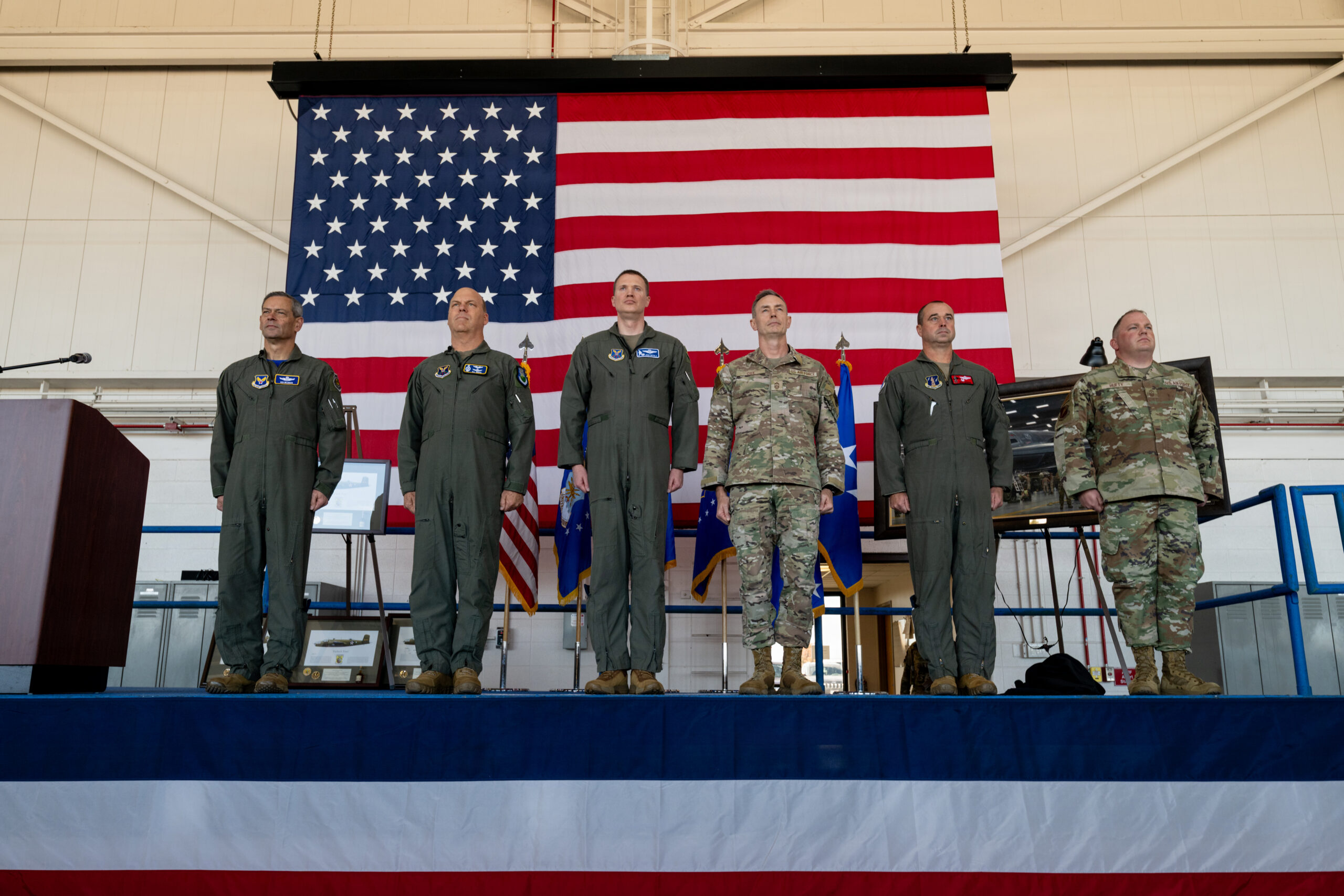
U.S. Air Force Gen. Kenneth Wilsbach, Chief of Staff of the Air Force, presents Col. Joshua Wiitala, commander of the 509th Bomb Wing, with the Presidential Unit Citation during a ceremony at Whiteman Air Force Base, Missouri, on November 20, 2026. The 509th and 131st Bomb Wings received the award for their performance during Operation Midnight Hammer, which involved B-2 Spirit stealth bombers and GBU-57 Massive Ordnance Penetrator munitions striking Iranian nuclear sites at Fordow and Natanz. (U.S. Air Force photo by Airman 1st Class Nicole Carrell)
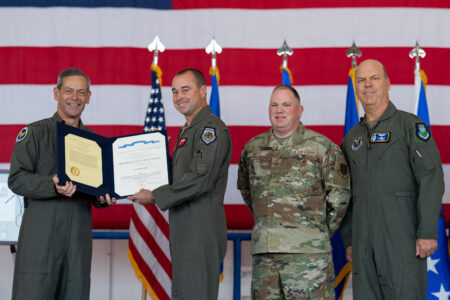
U.S. Air Force Gen. Kenneth Wilsbach, Chief of Staff of the Air Force, presents the Presidential Unit Citation to Col. Matthew Howard, commander of the 131st Bomb Wing, at Whiteman Air Force Base, Missouri, on November 20, 2026. Both the 509th and 131st Bomb Wings received the unit award for their actions during Operation Midnight Hammer, a Total Force Integration mission involving B-2 Spirit aircraft targeting Iranian nuclear sites. (U.S. Air Force photo by Staff Sgt. Joshua Hastings)
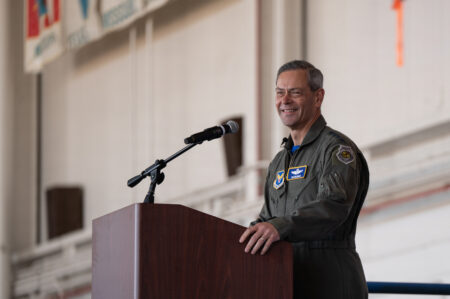
U.S. Air Force Gen. Kenneth Wilsbach, Chief of Staff of the Air Force, delivers remarks during the Presidential Unit Citation ceremony at Whiteman Air Force Base, Missouri, on November 20, 2026. The ceremony honored the 509th and 131st Bomb Wings for their involvement in Operation Midnight Hammer, a mission to strike Iranian nuclear sites at Fordow and Natanz. (U.S. Air Force photo by Senior Airman Sterling Sutton)
**Why This Matters**
The recognition of U.S. Air Force units for “Operation Midnight Hammer” in June 2025 carries significant implications for international security, geopolitics, and military doctrine. These strikes on Iran’s deeply buried nuclear facilities represent a direct and forceful intervention by the United States against a nation widely perceived to be pursuing nuclear weapons capabilities, raising questions about diplomatic alternatives and the thresholds for military action.
Firstly, the operation underscores the ongoing international concern regarding Iran’s nuclear program. Despite years of sanctions and diplomatic efforts, the decision to undertake military strikes suggests a perception within U.S. leadership that Iran’s nuclear ambitions posed an imminent and unacceptable threat. The targeting of fortified, underground facilities like Fordow and Natanz indicates a determination to neutralize key components of the enrichment infrastructure, potentially setting back any weaponization efforts by a significant margin. This also highlights the advanced capabilities required to successfully attack such hardened targets, specifically the B-2 stealth bomber and the GBU-57 Massive Ordnance Penetrator, a highly specialized bunker-buster munition.
Secondly, the context of the strikes, occurring after Israel reportedly initiated a 12-day conflict with Iran, suggests a complex and rapidly escalating regional security environment. The U.S. intervention could be interpreted as a move to support allies, deter further regional destabilization, or prevent a wider conflict from spiraling out of control. It also demonstrates the U.S. capacity to project power and conduct long-range precision strikes even in a highly contested airspace, a capability that sends a clear message to other potential adversaries.
Thirdly, the extensive coordination and “Total Force Integration” highlighted by military leaders, involving both active-duty and Air National Guard personnel, alongside a massive supporting air armada, showcases the readiness and interoperability of U.S. air power. This integrated approach, involving a wide array of aircraft for escort, refueling, and defense suppression, is a testament to the logistical and operational sophistication required for such a high-stakes mission. It reinforces the U.S. military’s commitment to maintaining global reach and rapid response capabilities, potentially influencing the strategic calculus of both allies and rivals worldwide.
Lastly, while the immediate objective of disrupting Iran’s nuclear program may have been achieved, the long-term consequences remain uncertain. Such actions can lead to retaliation, increased regional tensions, or a renewed drive by Iran to rebuild its nuclear infrastructure, potentially with greater secrecy. The award ceremony, held over a year after the strikes, serves as a public acknowledgment of the military’s role in a significant geopolitical event. It solidifies the narrative of a successful military operation while drawing renewed attention to the volatile security landscape in the Middle East and the challenges of nuclear non-proliferation. The event reinforces the debate around the efficacy of military force versus diplomatic engagement in managing proliferation risks, and its repercussions are likely to shape international relations for years to come.
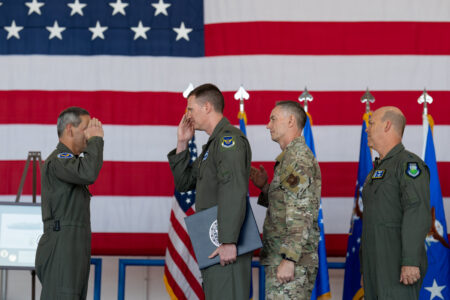
U.S. Air Force Gen. Ken Wilsbach, Chief of Staff of the Air Force, presents Col. Joshua Wiitala, 509th Bomb Wing commander, with the Presidential Unit Citation (PUC) during a ceremony at Whiteman Air Force Base, Missouri, Nov. 20, 2026. Wilsbach presented the PUC, the U.S. Department of War’s highest unit-level decoration, to the 509th and 131st Bomb Wings for their successful execution of Operation Midnight Hammer. (U.S. Air Force photo by Staff Sgt. Joshua Hastings)
Whiteman Air Force Base, Missouri – On November 20, 2026, the U.S. Air Force’s 509th Bomb Wing and its Air National Guard associate, the 131st Bomb Wing, were jointly awarded the Presidential Unit Citation (PUC) for their successful execution of “Operation Midnight Hammer.” The prestigious honor was presented by Gen. Ken Wilsbach, Chief of Staff of the Air Force, during a ceremony held at Whiteman Air Force Base.
The Presidential Unit Citation, established during World War II, stands as the highest unit-level decoration awarded by the U.S. Department of War (now the Department of Defense). It recognizes units that have displayed extraordinary heroism in action against an armed enemy. The award to the 509th and 131st Bomb Wings marks a significant historical moment, as it is the first time a bomber unit has received this level of recognition since the Vietnam War era.
Operation Midnight Hammer, the mission for which the wings were recognized, involved a complex and highly secretive global strike operation. While specific details of the mission remain classified, officials described it as a critical endeavor requiring immense coordination and specialized expertise. Col. Joshua Wiitala, commander of the 509th Bomb Wing, highlighted the extensive collaboration required for the operation’s success. “This mission was made possible by over 4,000 Total Force Airmen from hundreds of specialties working together in total secrecy to make this global mission happen,” stated Col. Wiitala. He further emphasized the profound impact of the mission on his unit’s legacy, adding, “This historic raid represents one of the most consequential chapters in the history of the 509th and I could not be prouder of how the team stepped up when called upon.”
The “Total Force” concept, integrating active-duty personnel with Air National Guard members, was central to Operation Midnight Hammer. The 131st Bomb Wing, part of the Missouri Air National Guard, played a crucial role alongside its active-duty counterparts. This contribution included providing approximately half of the pilots who participated in the mission, as well as essential support personnel critical to the highly specialized and demanding nature of stealth bomber operations. The integration of National Guard expertise and continuity proved vital for the mission’s execution.
Col. Matthew Howard, who commands the 131st Bomb Wing, expressed profound pride in his unit’s achievement. “The recognition of our Airmen’s dedication, knowledge, continuity, and tactical expertise through the award of the Presidential Unit Citation is truly awesome and inspiring,” Col. Howard remarked during the ceremony. His comments underscored the invaluable experience and unwavering commitment that Guard units bring to strategic military operations, often drawing on years of specialized training and accumulated knowledge.
The unique capabilities of the U.S. Air Force’s bomber fleet, particularly its stealth assets, were instrumental in the success of Operation Midnight Hammer. These platforms are designed to penetrate sophisticated enemy air defenses and deliver precision strikes anywhere in the world, often undetected. The meticulous planning, rigorous training, and flawless execution by the combined forces of the 509th and 131st Bomb Wings demonstrated the continued relevance and effectiveness of these strategic assets in modern warfare.
The decision to award the Presidential Unit Citation to a bomber unit after such a long interval underscores the perceived significance and impact of Operation Midnight Hammer. It serves as a strong affirmation of the U.S. Air Force’s capacity to project power globally and deter potential adversaries. Officials present at the ceremony reiterated the strategic message conveyed by the mission’s success. “This team prepared and executed one of the most consequential military actions in the modern era, and the results sent a clear message: the U.S. Air Force is trained and ready to deliver global strike capabilities anytime, anywhere,” a representative stated during the proceedings.
The ceremony not only honored the courage and skill of the Airmen involved but also highlighted the intricate logistics and extensive support network necessary for such an undertaking. From intelligence gathering and mission planning to maintenance, logistics, and in-flight refueling, thousands of individuals across various specialties contributed to the operational readiness and execution of Operation Midnight Hammer. This collective effort, conducted under strict secrecy, ultimately led to the successful completion of a mission deemed historically significant by military leadership. The recognition of the 509th and 131st Bomb Wings with the Presidential Unit Citation solidifies their place in military history and reaffirms the critical role of strategic air power in global security.
Why This Matters
The awarding of the Presidential Unit Citation to the 509th and 131st Bomb Wings for “Operation Midnight Hammer” carries significant implications across several domains:
- Geopolitical Signaling:This high-level recognition for a “global strike” mission sends a clear message about the United States’ military capabilities and resolve. It demonstrates the capacity to project power and conduct complex operations anywhere in the world, serving as both a deterrent to potential adversaries and an assurance to allies. The successful execution of a highly secretive mission further underscores the sophistication of U.S. intelligence and operational planning.
- Military Doctrine and Readiness:The award reinforces the “Total Force” concept, highlighting the critical integration of active-duty and Air National Guard components. The fact that a significant portion of the personnel, including pilots, came from the National Guard, showcases the depth of expertise and readiness within the reserve forces. It also reaffirms the enduring strategic importance of manned bombers and stealth technology in the U.S. defense posture, demonstrating their continued relevance in an era of evolving warfare.
- Historical Significance:Being the first bomber unit to receive the Presidential Unit Citation since the Vietnam War elevates Operation Midnight Hammer to a rare status in military history. This distinguishes the operation as exceptionally challenging and impactful, marking a pivotal moment for the U.S. Air Force and its strategic bomber community. It sets a new benchmark for unit achievement in modern air warfare.
- Personnel Morale and Recognition:For the thousands of Airmen across hundreds of specialties involved, this award is a profound recognition of their dedication, skill, and sacrifice. Such an honor boosts morale, validates years of rigorous training, and instills a sense of pride and accomplishment across the entire Air Force, particularly within the bomber community. It underscores the value placed on collective heroism and operational effectiveness.
- Future Deterrence and Capabilities:The success of Operation Midnight Hammer and its subsequent recognition imply a proven capability that could be leveraged in future contingencies. It solidifies the perception of the U.S. Air Force’s global strike capabilities as a credible and formidable tool in international relations, influencing strategic calculations by both friendly and adversarial nations.
Audio of this article is brought to you by the Air & Space Forces Association, honoring and supporting our Airmen, Guardians, and their families. Find out more at afa.org