
Stay informed with free updates
Simply sign up to the Chinese politics & policy myFT Digest — delivered directly to your inbox.
Key Takeaways
1. **Escalating Political Risk:** The investigation into Shanghai’s Party Secretary, Chen Jining, signals a broadening and intensifying political purge by President Xi Jinping, introducing significant uncertainty into China’s top leadership ranks and raising concerns about governance stability.
2. **Impact on Strategic Sectors & FDI:** Chen’s focus on attracting investment into critical industries like semiconductors, AI, and batteries means his removal could disrupt policy continuity and investor confidence in Shanghai, a key financial hub and gateway for foreign direct investment into these strategic sectors.
3. **Reinforced Centralization of Power:** This high-profile investigation reinforces Xi Jinping’s absolute authority ahead of an anticipated fourth term, potentially leading to more centralized control over economic policy but also heightening concerns among international investors regarding transparency, rule of law, and predictable leadership transitions.
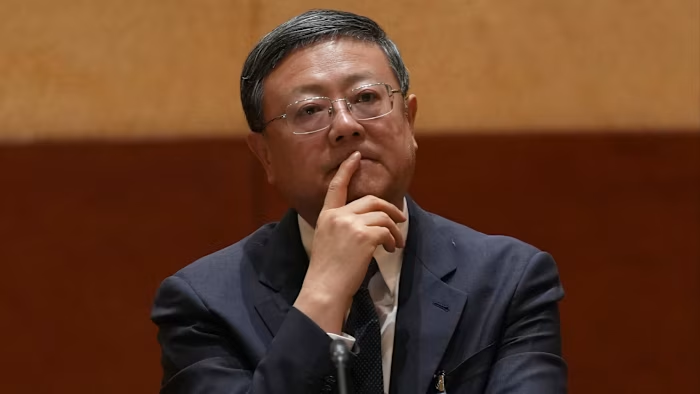
The financial markets are closely watching developments out of China’s economic heartland, Shanghai, following reports that Chen Jining, the city’s powerful Communist Party boss, is now under investigation. This development signals a significant escalation in President Xi Jinping’s ongoing, deep-seated purge of the senior leadership, casting a pall of uncertainty over China’s political and economic trajectory.
State news agency Xinhua reported late on Tuesday that the Shanghai party secretary was “under disciplinary and supervisory investigation.” This makes Chen the fourth cadre from the party’s elite Politburo to face such charges since the current body’s 24 members were announced in 2022. For investors, this move underscores the unpredictable nature of China’s political landscape and raises pertinent questions about governance risk, policy consistency, and the stability of the business environment.
Chen, a figure widely regarded as a technocrat with a PhD from London’s Imperial College, was previously seen as a potential candidate for a more senior role in Beijing. His profile, blending academic rigor with extensive administrative experience, often positioned him as a more outwardly-facing and market-friendly official. The abruptness of his investigation by the party’s feared Central Commission for Discipline Inspection and the National Supervisory Commission, under suspicion of “severe violations of discipline and laws” – a euphemism for corruption allegations – sends a chilling message across the country’s elite, and by extension, to foreign businesses operating within China.
This latest round of investigations and dismissals is unfolding as President Xi Jinping consolidates power in preparation for an expected fourth five-year term as party leader at a quinquennial party congress next year. The scale of this purge, the largest since Mao Zedong’s 1966-76 Cultural Revolution, is unprecedented in recent decades, targeting not only the civilian leadership but also the highest echelons of the military. Other recently purged members of the Politburo include former senior vice-chair of the Central Military Commission, General Zhang Youxia, former CMC vice-chair He Weidong, and former party secretary of the western region of Xinjiang, Ma Xingrui. Such high-level instability often translates into market jitters, as investors grapple with potential shifts in policy priorities and leadership continuity.
Chen Jining’s career trajectory is particularly noteworthy from an economic perspective. With a PhD in environmental systems analysis, he ascended through academia, becoming president of Tsinghua University in January 2012, an institution where Xi Jinping himself studied. His subsequent roles as minister of environmental protection in 2015 and Beijing mayor in 2018 saw him at the forefront of critical national initiatives, from tackling China’s notorious air pollution to overseeing Beijing’s Covid-19 pandemic response and the 2022 Winter Olympics. His background in technology and sciences had positioned him, in the eyes of many foreign China watchers, as a strong contender for a vice-premier role and a key figure in supporting Xi’s strategic goal of upgrading Chinese industry through innovation and technological self-sufficiency.
The investigation of Shanghai’s party chief resonates with a historical precedent from September 2006, when Chen Liangyu, the city’s then party secretary, was toppled due to alleged corruption and later sentenced to 18 years in prison. This past event served as a stark reminder of the political risks inherent in China’s top echelons and led to significant introspection among investors regarding the stability of local governance. Shanghai has traditionally served as an important springboard for up-and-coming leaders, including Xi himself, who was made party secretary of the city in 2007, and Li Qiang, the current premier and Xi’s number two, who ran the city until 2022. The city’s status as a financial and economic powerhouse means that changes in its leadership are closely scrutinized for signals about the broader national direction and investor sentiment.
In his recent role as Shanghai party boss, Chen Jining had been instrumental in leading the city’s aggressive efforts to attract domestic and foreign investment into key strategic industries such as semiconductors, batteries, and artificial intelligence. These sectors are at the core of China’s ambition to achieve technological independence and dominate future global industries. His removal could therefore introduce a degree of uncertainty regarding the continuity of these investment drives and the consistency of local policy support, potentially impacting both domestic enterprises and international firms looking to deepen their footprint in these critical areas.
The lack of transparency surrounding these investigations, with charges typically announced in broad terms without immediate detailed evidence, creates an environment of elevated political risk. For multinational corporations and global portfolio managers, this opacity complicates risk assessments, particularly concerning succession planning, policy implementation, and the overall stability of the regulatory and operational environment in China. The perceived arbitrary nature of these actions can deter foreign direct investment and encourage a reassessment of China risk premiums.
Market Impact
The investigation into Chen Jining is expected to heighten investor anxiety regarding political stability and governance in China. While an immediate, sharp market reaction might be contained due to the controlled nature of Chinese financial markets, the underlying sentiment could weaken. Sectors heavily promoted by Chen in Shanghai – particularly semiconductors, AI, and new energy – may experience short-term uncertainty as investors gauge potential policy shifts or leadership continuity. More broadly, the purge reinforces concerns about the predictability of China’s regulatory environment and the rule of law, potentially leading to increased risk premiums for Chinese assets. Foreign direct investment (FDI) inflows, already under pressure from geopolitical tensions and economic slowdowns, could see further caution as companies reassess the operational risks associated with sudden political changes. Ultimately, this event underscores Xi Jinping’s solidified control, which some investors might view as stability, but many others as increased authoritarian risk, leading to a more cautious long-term outlook for capital allocation in the region.