
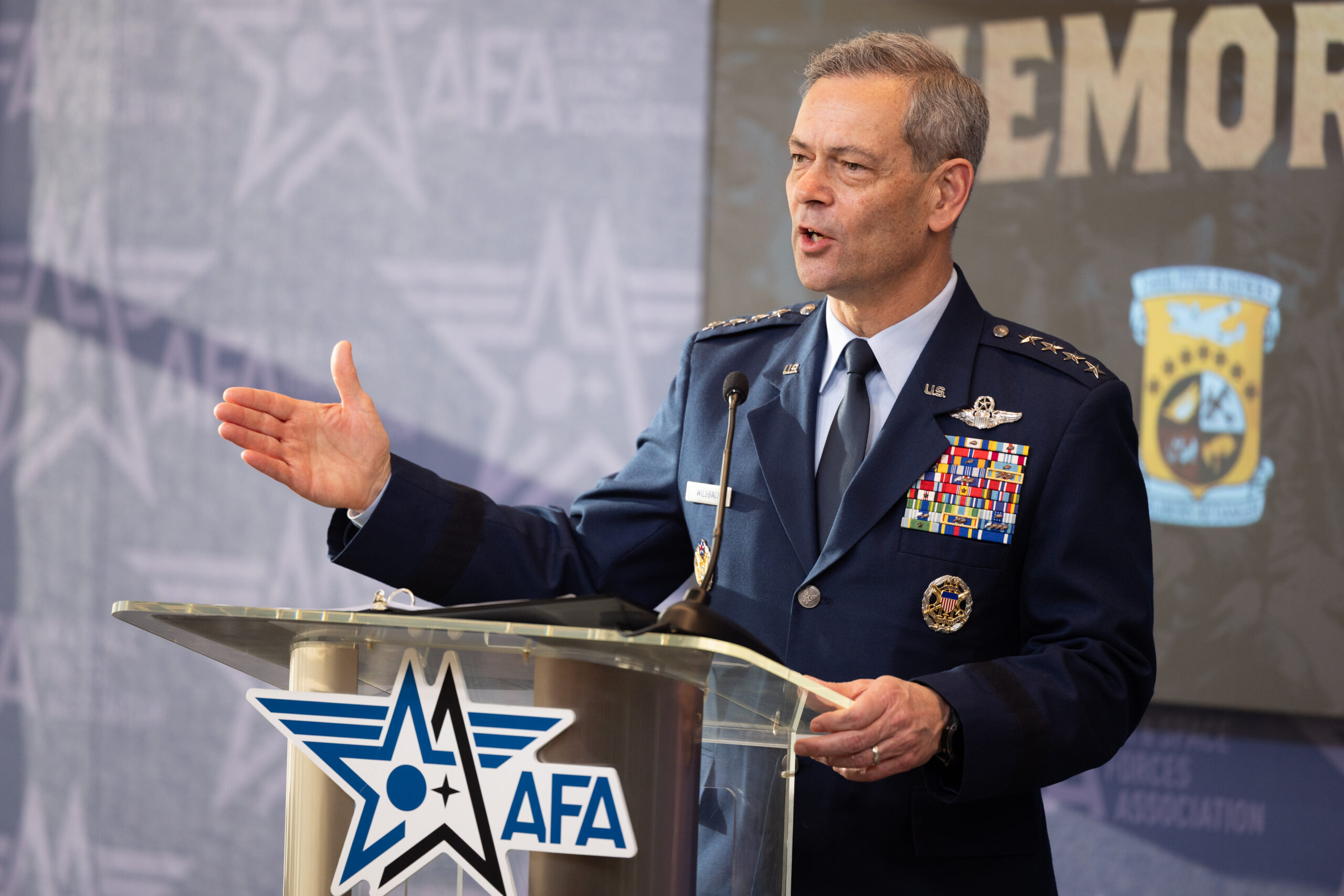
WASHINGTON D.C.– General Kenneth S. Wilsbach, Chief of Staff of the U.S. Air Force, has outlined the service’s strategic priorities for the coming year, emphasizing a continued focus on readiness, modernization, and upholding rigorous standards. In a letter to Airmen released on November 24, following his first year in the top leadership position since November 4, 2025, Gen. Wilsbach underscored the challenging operational environment facing the force.
The Air Force has been engaged in extensive combat operations in Venezuela and Iran over the past year, leading to a high operational tempo that has significantly tested personnel and resources. This demanding period forms the backdrop for Gen. Wilsbach’s directives, which aim to adapt the service to an increasingly complex global security landscape.
“You have shown the grit that makes our Air Force the most capable in the world,” Gen. Wilsbach stated in his letter. “From Operations Absolute Resolve and Epic Fury to high-impact rescue and humanitarian missions around the world, I am proud to lead and serve alongside our dedicated Airmen.” These operations highlight the diverse range of missions the Air Force has undertaken, from direct combat engagements to critical support roles.
Gen. Wilsbach acknowledged the continuous advancements made by nation-state adversaries, noting that “our operating environment is becoming more demanding.” In response, he called for urgent action: “We must continue moving with urgency, removing obstacles, and aligning our resources to meet the demands of today’s environment while preparing for the challenges ahead. In doing so, our priorities remain unchanged, but how we execute them must evolve.” This statement signals an imperative for adaptive strategies and streamlined processes to maintain a decisive edge.
A central theme of Gen. Wilsbach’s tenure, reaffirmed in his letter, is the critical importance of generating robust airpower and other capabilities essential for achieving victory in conflict. He articulated that every role within the Air Force contributes to this objective, stating, “Whether you fly, fix, support, or defend, you are part of the fight. Every mission matters and each Airman has a role in delivering the advantage our Nation expects.” This holistic view stresses the interconnectedness of various functions in achieving strategic goals.
The past year’s combat operations, coupled with ongoing training for future conflicts, have demonstrated the Air Force’s current capabilities. However, Gen. Wilsbach warned that a “high-end fight against a capable adversary will demand speed, adaptability, and the ability to generate combat power under fire.” He identified internal impediments to this agility, asserting that “Bureaucracy, unnecessary processes, and a culture of risk aversion have no place in that fight.” This indicates a strategic push towards greater organizational flexibility and risk tolerance where appropriate.
To achieve this, the Air Force will empower unit-level commanders to make rapid decisions, enabling responses “at the speed of combat.” This decentralization of authority aims to enhance operational responsiveness in dynamic battlefield conditions. Broader organizational reforms include the ongoing transfer of combat formal training units to Air Combat Command, an initiative launched in early 2026 to streamline training pipelines for fighter and drone operators. Further efforts will focus on improving the absorption of new pilots, restructuring maintenance operations for greater efficiency, and the deployment of the new Air Expeditionary Wing 2.0 structure, designed to optimize the deployment of Airmen and units globally.
Modernization remains a cornerstone of Air Force strategy. Gen. Wilsbach highlighted several milestones achieved this year, including the successful teaming of an F-22 Raptor with the service’s new Collaborative Combat Aircraft (CCA) drone – a significant step towards autonomous combat integration. Progress continues on the construction of infrastructure for the new Sentinel intercontinental ballistic missile (ICBM), a vital component of strategic deterrence. Development is also advancing on the F-47 sixth-generation fighter, the B-21 Raider stealth bomber, and the VC-25B, which will serve as the next generation of Air Force One presidential transport planes.
A notable shift in strategic focus, prompted by a “changing threat environment,” is the elevated emphasis on point defense – the protection of air bases against various attacks. This renewed focus is a direct consequence of recent developments, including Iran’s targeting of U.S. forces’ bases this year, which resulted in significant damage or destruction of multiple aircraft. Furthermore, Ukraine’s effective use of drones against Russian forces during 2025’s Operation Spider Web underscored the growing threat posed by low-cost, mass drone attacks and the need for robust base defense capabilities. The Air Force must also adapt to a future battlefield increasingly shaped by advanced computing, autonomous technology, and the proliferation of low-cost mass systems. “We cannot ask tomorrow’s Airmen to fight with yesterday’s equipment, organizations, or procedures,” Gen. Wilsbach stressed, emphasizing the imperative to pursue and integrate these emerging technologies.
Gen. Wilsbach also reinforced the necessity of adhering to a “warrior culture” characterized by high standards, accountability, and lethality. This involves Airmen meeting rigorous physical fitness requirements, mastering complex weapons systems, holding themselves and their peers accountable, refining tactical expertise, and developing the critical judgment needed for difficult combat decisions. “Standards matter because lives and mission success depend on them,” he stated, linking discipline directly to operational effectiveness.
Beyond combat readiness, the Chief of Staff affirmed the commitment to Airmen and their families’ well-being. Improving quality of life initiatives includes enhancing reintegration programs for Airmen returning from deployments, addressing persistent medical care shortages, and upgrading housing and childcare services at remote and high-tempo installations. These measures are seen as crucial for maintaining morale, retention, and overall force readiness.
Concluding his letter, Gen. Wilsbach urged Airmen to “Keep pushing and demanding excellence. Cut through the bureaucracy, master your craft, take care of your teammates, and stay focused on what matters most: delivering combat power and winning our nation’s wars. Stay ready to win.”
Why This Matters
General Wilsbach’s first-year review and strategic directives are significant for several reasons, impacting global security, U.S. foreign policy, and the future of military aviation. Firstly, the explicit mention of “large-scale combat operations in Venezuela and Iran” highlights ongoing or recent conflicts that carry substantial geopolitical weight. These operations underscore the immediate demands on the U.S. military and signal potential instability in critical regions, affecting global energy markets, international alliances, and regional power dynamics. The high operational tempo indicates that the U.S. Air Force is actively engaged in confronting complex threats, thereby shaping the international security environment.
Secondly, the emphasis on modernization and technological superiority is crucial in an era of renewed great power competition. The progress on systems like the F-47 sixth-generation fighter, B-21 Raider, Sentinel ICBM, and the integration of Collaborative Combat Aircraft (CCA) drones signifies a strategic investment in maintaining a qualitative edge against advanced adversaries. This technological race has implications for deterrence, as superior capabilities aim to dissuade potential aggressors, but also for regional arms races if other nations seek to match these advancements. The successful teaming of manned and unmanned aircraft (F-22 with CCA) represents a paradigm shift in air combat, potentially altering tactics, reducing risk to human pilots, and increasing operational flexibility.
Thirdly, the Air Force’s renewed focus on “point defense” is a direct response to evolving asymmetric threats, particularly from drones. The examples of Iranian attacks on U.S. bases and Ukraine’s effective drone warfare in 2025 demonstrate that even low-cost, mass-produced systems can pose significant challenges to traditional military infrastructure. This shift in doctrine and investment reflects a broader recognition across global militaries that airbase security and dispersed operations are paramount in future conflicts. How the U.S. Air Force develops and deploys these defensive capabilities will likely influence military strategies worldwide.
Finally, Gen. Wilsbach’s calls for organizational agility, reduced bureaucracy, and a “warrior culture” alongside improved quality of life for Airmen address the critical human element of military power. The ability to make rapid decisions at the unit level, streamline training, and ensure the well-being of personnel directly impacts readiness, morale, and retention. In a highly demanding and technologically advanced force, attracting and retaining top talent is paramount. These internal reforms are not merely administrative; they are strategic imperatives designed to ensure the U.S. Air Force remains an effective and sustainable fighting force, capable of projecting power and protecting national interests in a rapidly changing world.