
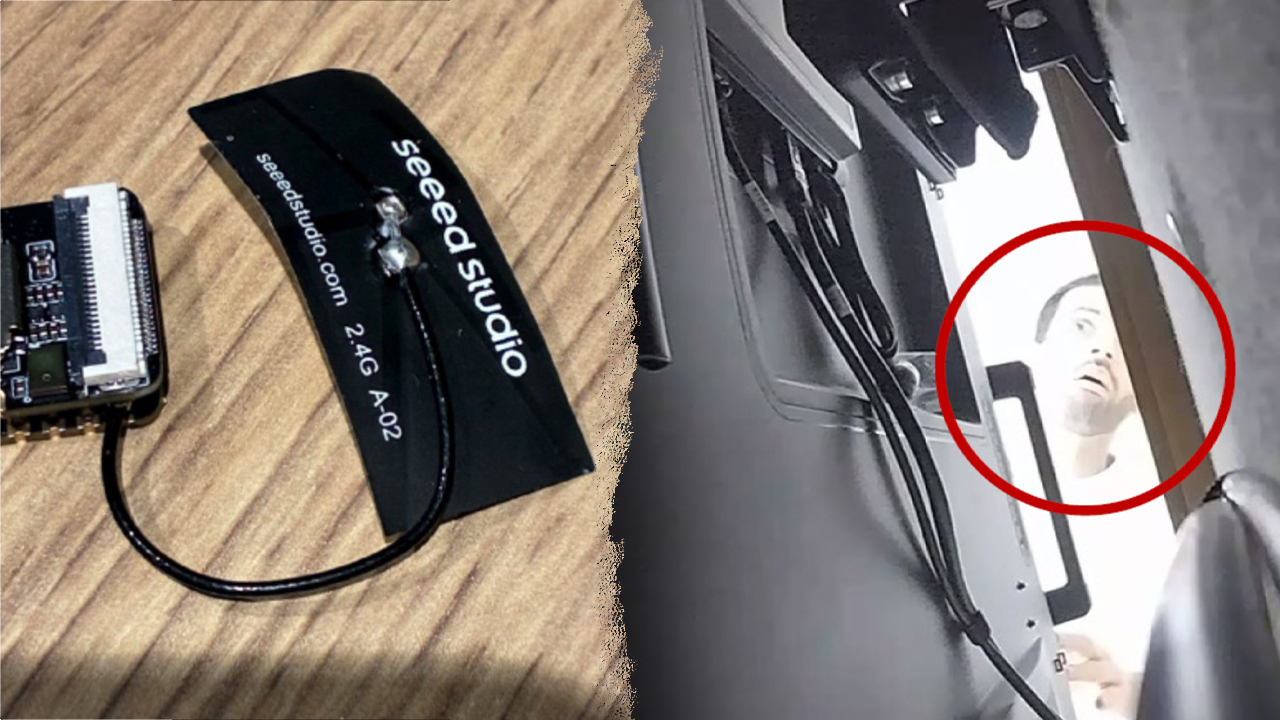
The FBI arrests a Saudi OpenAI employee for allegedly bugging an executive conference room. Lauren Simonetti reports on the surveillance device found stashed behind a television during Stuart Varney’s broadcast.
Key Takeaways:
- Intellectual Property Risk Escalation:The alleged corporate espionage at OpenAI underscores the acute and growing risk to proprietary AI algorithms, data, and strategic discussions, potentially impacting valuations and investor confidence in a hyper-competitive sector.
- Geopolitical Scrutiny and AI Security:The international dimension of the case, involving a Saudi national and links to foreign officials, highlights increasing geopolitical interest in cutting-edge AI, raising concerns about national security, data sovereignty, and the need for robust corporate-level safeguards against state-sponsored or commercially motivated intelligence gathering.
- Corporate Governance and Due Diligence:This incident prompts deeper scrutiny into the internal security protocols and vetting processes of rapidly scaling tech unicorns like OpenAI, potentially leading to enhanced regulatory oversight and more stringent due diligence requirements for partnerships, funding rounds, and prospective IPOs across the AI industry.
In a development sending ripples through the high-stakes artificial intelligence sector, a Saudi national and former OpenAI engineer accused of planting a secret recording device inside the tech giant’s headquarters was reportedly ordered released from jail on a $1 million bond. This decision comes despite vehement warnings from federal prosecutors who cited a significant flight risk to the Middle East, a region without a U.S. extradition treaty. The incident, involving a company at the vanguard of AI innovation and valued in the tens of billions, immediately raises critical questions about intellectual property protection, corporate espionage, and national security in an era of intense technological competition.
Abdulrahman Alfozan, 35, was granted release Tuesday by U.S. Magistrate Judge Alex G. Tse, who deemed he did not present an immediate threat to flee the country ahead of his January trial, The Wall Street Journal reported. Alfozan, who pleaded not guilty earlier this month to illegally recording oral communications, is scheduled for release from the Santa Clara jail Wednesday morning. Under the terms of his release, he must wear an ankle monitor, be confined to home detention in Millbrae, California, and will be barred from leaving Northern California. While the legal process unfolds, the market is keenly watching how this alleged breach of trust and security impacts OpenAI’s strategic trajectory and the broader perception of AI industry vulnerabilities.
OPENAI FIRES 3 SAFETY RESEARCHERS ACCUSED OF SHARING CONFIDENTIAL COMPANY INFORMATION: REPORT

Abdulrahman Alfozan, 35, was ordered released Tuesday by U.S. Magistrate Judge Alex G. Tse.(Department of Justice)
The ruling comes just days after prosecutors revealed new, unsettling details from their investigation. Agents recovered hundreds of audio files from Alfozan’s personal computer — including dozens of secret recordings allegedly captured inside an OpenAI executive conference room between Sept. 9 and Sept. 28. The nature of these recordings is particularly alarming for investors and competitors alike. According to court filings obtained by FOX Business, the illicitly obtained audio captured customer meetings involving potential trade secrets, attorney-client privileged conversations, and at least one bilateral briefing with foreign government officials. Furthermore, investigators found AI-generated transcripts meticulously labeled by date and topic, suggesting a deliberate and systematic effort to extract commercially sensitive information.
In the cutthroat world of AI development, where first-mover advantage and proprietary algorithms dictate market leadership, such information is invaluable. Customer meetings often involve discussions of future product roadmaps, pricing strategies, and tailored solutions that could give competitors an unfair edge. Attorney-client privileged conversations might reveal legal strategies, potential liabilities, or regulatory compliance insights, all critical for a company operating at the frontier of technology and facing increasing regulatory scrutiny. Most critically, bilateral briefings with foreign government officials could expose strategic alliances, international expansion plans, or even sensitive national security discussions, elevating the incident beyond mere corporate espionage to a matter of geopolitical concern.
RETAIL CHIEF CALLS AI ‘MAGIC’ AS SHOPPERS TURN TO CHATBOTS FOR HOLIDAY BARGAINS

Alfozan, who pleaded not guilty earlier this month to illegally recording oral communications, is scheduled to be released from the Santa Clara jail Wednesday morning.(Department of Justice)
OpenAI first discovered an encrypted device on Sept. 30, wrapped in toilet paper and plugged into a USB port behind a conference room television. In an ironic twist, the company reportedly used its own sophisticated AI models to trace the device back to Alfozan, who joined the company in July 2025 (likely a typo, should be 2023 or similar, assuming the article context of recent arrest), prosecutors previously said. Days later, on Oct. 5, security cameras allegedly caught Alfozan re-entering the conference room and checking behind the TV. That same day, OpenAI security found a second similar recorder inside an unattended bag containing Alfozan’s wallet and ID. He was subsequently arrested on Oct. 9.
The fact that OpenAI leveraged its own AI capabilities to detect and trace the breach offers a paradoxical narrative: while it highlights a security vulnerability, it also demonstrates the advanced defensive potential of AI in safeguarding critical assets. However, the sheer audacity and duration of the alleged surveillance raise questions about the adequacy of physical and digital security protocols at a company housing some of the world’s most advanced and sensitive technology. For investors eyeing OpenAI’s potential IPO or future funding rounds, the ability to protect intellectual property and maintain operational integrity is paramount.
Prosecutors have strongly argued Alfozan poses a major flight risk to Saudi Arabia — which has no U.S. extradition treaty — citing his WhatsApp chats with a Saudi royal and tech ministry officials and a one-way ticket to Riyadh. This detail amplifies the geopolitical dimension, suggesting potential links between the alleged espionage and foreign state interests, rather than purely individual motives. In an era where technological supremacy is increasingly intertwined with national power, the alleged involvement of foreign officials in targeting a leading U.S. AI firm is likely to invite greater scrutiny from government agencies and cybersecurity watchdogs.
META’S MUSE CAN NOW SHOP FOR GROCERIES THROUGH GOPUFF AND DELIVER THEM IN MINUTES

OpenAI first found an encrypted device on Sept. 30 wrapped in toilet paper and plugged into a USB port behind a conference room television.(Omar Marques/SOPA Images/LightRocket via Getty Images)
Meanwhile, defense attorney David W. Rizk has argued that the government’s espionage narrative has collapsed, stating, “We are simply grateful that the Court made the right decision to release Mr. Alfozan and we look forward to defending the case.” Regardless of the trial’s outcome, the incident has undoubtedly spotlighted the intense pressures and inherent risks within the AI industry, where human capital, proprietary knowledge, and strategic partnerships are constantly under threat.
GET FOX BUSINESS ON THE GO BY CLICKING HERE
FOX Business has reached out to OpenAI and the U.S. Attorney’s Office for the Northern District of California for comment.
Market Impact:
This high-profile alleged espionage incident at OpenAI is poised to have significant repercussions across the technology and investment landscape. For OpenAI, a company reportedly seeking a valuation exceeding $80 billion, the immediate impact could manifest as increased investor caution, potentially affecting the terms and timing of future funding rounds or an eventual IPO. The incident underscores the fragility of intellectual property in the digital age, compelling all tech firms, especially those in the AI space, to re-evaluate and fortify their internal security protocols, employee vetting processes, and overall corporate governance frameworks. Expect heightened scrutiny from venture capitalists and institutional investors regarding a company’s ability to protect its core assets, leading to more stringent due diligence requirements. Furthermore, the geopolitical undertones involving a foreign national and alleged ties to state officials could trigger greater regulatory oversight from U.S. government bodies concerning AI technology export controls and national security implications, potentially introducing new compliance burdens and slowing the pace of international collaborations. This event serves as a stark reminder that in the race for AI supremacy, the battle extends beyond innovation to the critical realm of security and corporate integrity.