
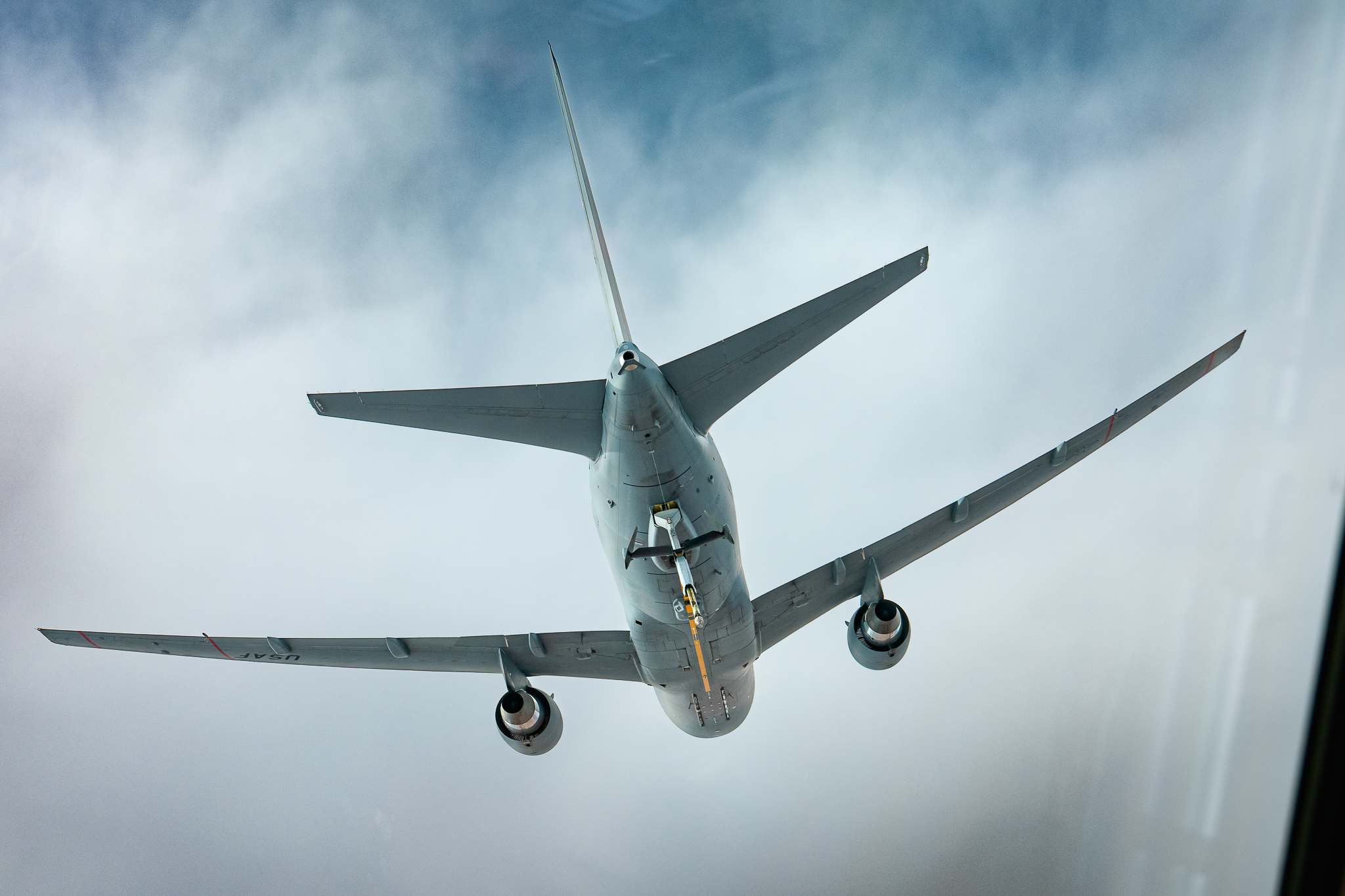
U.S. Air Force Awards Boeing $2.82 Billion Contract for Additional KC-46A Tankers Amid Rising Costs
The U.S. Air Force has finalized a significant contract modification with Boeing, valued at $2.82 billion, for the acquisition of 15 additional KC-46A Pegasus aerial refueling tankers. This agreement marks the 13th production lot for the tanker program and represents a notable increase in cost compared to previous orders.
Announced by the Pentagon on November 24, the contract covers the procurement of the aircraft themselves, along with essential components such as maintenance data collection and management systems, subscriptions, and licenses. When spread across the 15 airframes, the average cost per KC-46A in this lot stands at nearly $188 million per aircraft. This figure indicates a price escalation of more than 14 percent compared to Lot 12, which was awarded in 2025.
These 15 tankers are slated to complete the Air Force’s original program of record for the KC-46A, which initially aimed for a total of 184 aircraft. However, the service has since expanded its ambitions, announcing plans to extend production by an additional 75 aircraft beyond this initial target.
Boeing confirmed on November 24 that this latest deal brings the total number of KC-46s either on contract or already in service with the U.S. and its international partners to 203. The aerospace manufacturer reported delivering 116 KC-46s to the U.S. Air Force since the first delivery in 2019. Additionally, six units have been delivered to the Japan Air Self-Defense Force and two to the Israeli Air Force, underscoring the aircraft’s growing international presence.
Jake Kwasnik, Boeing’s KC-46 program vice president, expressed gratitude for the ongoing partnership. In a company statement, Kwasnik remarked, “We’re grateful for the trust the U.S. Air Force continues to place in our team. The KC-46 plays an important role in enabling military operations around the world, and we look forward to building on that partnership while staying focused on delivering on our commitments to support the warfighter.”
The cost trajectory for KC-46 production lots has shown a significant upward trend. Over the past two years, the price for a KC-46 lot has climbed by nearly one-fifth, and by almost a third since the first 15-aircraft lot was awarded in 2021. This consistent increase is attributed to a combination of macroeconomic factors that have impacted numerous defense programs globally. These include persistent disruptions in global supply chains, inflationary pressures affecting raw materials and labor costs, and the imposition of tariffs.
Despite inquiries from Air & Space Forces Magazine regarding the specific drivers behind the latest price increase, Boeing declined to offer detailed comments. Similarly, the Air Force did not provide an immediate response to queries on the matter, leaving the precise reasons for the substantial 14 percent jump largely unexplained publicly.
KC-46 Production Lot Prices: A Detailed Trend
The following table illustrates the contract value per production lot for the KC-46A, highlighting the percentage change from the previous lot.
| Lot | Value | Change from previous lot |
|---|---|---|
| Lot 7 | $2.125 billion | — |
| Lot 8 | $2.215 billion | +4.2% |
| Lot 9 | $2.256 billion | +1.9% |
| Lot 10 | $2.325 billion | +3.1% |
| Lot 11 | $2.389 billion | +2.7% |
| Lot 12 | $2.469 billion | +3.4% |
| Lot 13 | $2.819 billion | +14.2% |
The KC-46 program has encountered significant challenges throughout its development and initial production phases, most notably concerning its original Remote Vision System (RVS). This system, crucial for safe aerial refueling, was plagued by issues such as distorted images and insufficient responsiveness to varying lighting conditions, hindering its operational effectiveness. Following a prolonged and complex rectification process, which included several setbacks, both Air Force and Boeing officials have recently expressed renewed confidence in the program’s progress. Air Force officials indicated in July that the replacement vision system, RVS 2.0, is advancing well and is projected to begin deployment to existing KC-46s in late 2027 and early 2028.
Boeing manufactures the KC-46s at its facility in Seattle. The contract notice for Lot 13 specifies that these 15 aircraft are expected to be completed by the end of June 2030, marking a long-term commitment to the production schedule.
Looking ahead, the Air Force made a strategic decision in 2024 to forgo a “bridge tanker” competition and instead opted to purchase an additional 75 KC-46s through what it terms the Tanker Production Extension program. This expansion will boost the Air Force’s projected KC-46 fleet to over 260 aircraft, ensuring the plane remains in production at least into the mid-2030s.
However, the Vice Chief of Staff, Gen. John D. Lamontagne, has stipulated a condition for this expanded acquisition. He stated that the Air Force will not finalize a new deal with Boeing for these additional 75 tankers until certain critical deficiencies with the refueler are satisfactorily resolved. This condition underscores the Air Force’s commitment to ensuring the aircraft meets all operational requirements before further large-scale investments.
Why This Matters
The U.S. Air Force’s $2.82 billion contract for 15 additional KC-46A Pegasus tankers carries significant implications for national security, defense spending, and the future of military aviation. Aerial refueling is a cornerstone of modern military operations, providing the critical capability to extend the range, endurance, and global reach of fighter jets, bombers, and transport aircraft. Without reliable tankers, the U.S. military’s ability to project power, respond to crises anywhere in the world, and sustain complex operations in distant theaters would be severely hampered.
The substantial price increase of over 14 percent for this latest lot, and nearly a third over the last few years, highlights broader trends in defense procurement. Rising costs for complex military hardware directly impact taxpayer dollars and defense budgets. These increases can necessitate trade-offs, potentially diverting funds from other critical defense programs, research and development, or personnel readiness. The lack of detailed public explanation from Boeing or the Air Force regarding the specific reasons for this significant price jump also raises questions about transparency and accountability in large-scale government contracts. It underscores the ongoing challenge of managing costs in a complex industrial environment marked by supply chain volatility and inflation.
Furthermore, the contract’s dual purpose—completing the original program of record while also signaling an intent for an additional 75 aircraft—demonstrates the Air Force’s long-term commitment to the KC-46 as a foundational asset, despite its past struggles. The persistent issues with the Remote Vision System (RVS), which took years to address, exemplify the inherent challenges in developing cutting-edge military technology. The successful resolution and eventual rollout of RVS 2.0 are crucial for the KC-46 to fully achieve its operational potential and regain full confidence from aircrews. The Vice Chief of Staff’s condition that further large-scale purchases depend on resolving these deficiencies emphasizes the importance of performance over sheer quantity.
Finally, the international deliveries to Japan and Israel underscore the KC-46’s role in strengthening U.S. alliances and enhancing interoperability with key strategic partners. These tankers enable allied air forces to extend their operational reach, contributing to regional stability and collective defense. The continued production of the KC-46 into the mid-2030s ensures the longevity of this vital capability, but ongoing scrutiny will remain on its performance, cost-effectiveness, and timely delivery to meet the evolving demands of global power projection.