
Key Takeaways:
- The iPhone Duo redefines “premium” by prioritizing a transformative dual-screen experience over traditional high-end specifications, proving that sacrifices like a telephoto lens or Face ID are negligible for many users in daily operation.
- Its intuitive multitasking capabilities fundamentally alter everyday digital habits, making side-by-side app usage a natural and highly productive feature, from enhanced news consumption to a novel “Duo screen viewing” entertainment approach.
- The Duo effectively offers two distinct phone personalities – a compact, pocketable “mini” for efficient on-the-go interactions and an expansive tablet-like display for immersive media and detailed tasks – fostering a healthier, more intentional balance with screen time.
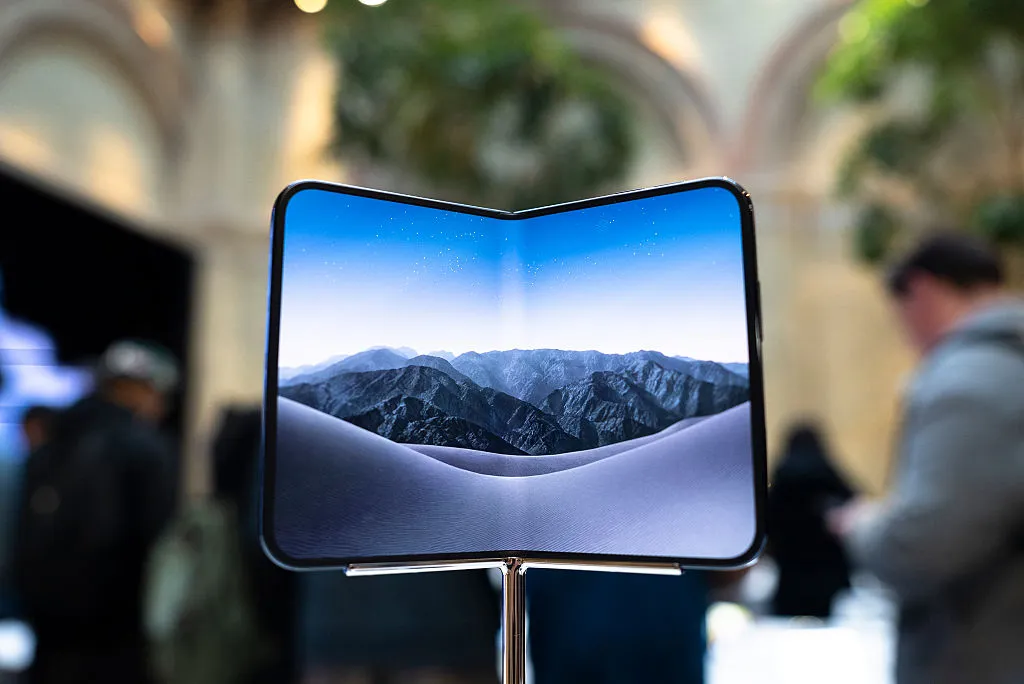
For years, the definition of a premium smartphone has been dictated by a familiar checklist: its camera prowess, raw processing power, and ergonomic lightness. The Apple iPhone Duo, however, boldly challenges this established paradigm, asking consumers to invest in a fundamentally different smartphone experience – one that, at first glance, might seem to sacrifice what we’ve long considered high-end features. Yet, after a comprehensive month with the Duo as my primary device, my initial skepticism has dissolved, replaced by a profound appreciation for how its unique foldable form factor has not just integrated into my life, but actively reshaped my digital habits and expectations.
My journey with the Duo began with a mental list of potential compromises: lingering concerns about app optimization, the re-acquaintance with Touch ID in an era of Face ID, and the absence of the highly coveted Pro Max camera. Surprisingly, these concerns, once prominent, have largely faded into irrelevance. The ecosystem has matured rapidly; most popular apps are now seamlessly optimized for the Duo’s dual-screen interface. Touch ID has proven to be a reliable and efficient authentication method, prompting a quick re-acquaintance with muscle memory. And perhaps most astonishingly, the Pro Max camera isn’t missed on most days. This isn’t to declare the Duo flawless; a dedicated telephoto lens would still be a welcome addition, and while Apple’s recent face unlock update is a commendable step, the effortless security of Face ID remains a subtle yearning. However, these minor trade-offs have proven to have a far lesser impact on my day-to-day experience compared with the innovative benefits introduced by the Duo’s groundbreaking design.
A New Dimension of Multitasking: Intuitive and Integrated
One of the most striking and unexpected shifts in my smartphone interaction has been my enthusiastic embrace of the Duo’s multitasking capabilities. Initially, I harbored doubts about regularly leveraging the side-by-side app view, imagining the unfolded screen space would still feel too cramped compared to a dedicated tablet. I was thoroughly mistaken. I’ve found myself seamlessly snapping apps to both halves of the display with an astonishing frequency, transforming what was once a somewhat clunky, deliberate action on standard smartphones into an intuitive, second-nature gesture. It’s a testament to how intelligent hardware design can fundamentally alter user behavior.
Apple’s implementation of this split-screen functionality is remarkably user-friendly and fluid. A simple drag-and-drop motion effortlessly guides an app into a clearly indicated target box on either side of the display. This elegant interaction significantly lowers the barrier to entry for advanced multitasking, encouraging experimentation and, ultimately, deep integration into daily workflows and leisure activities. It’s a prime example of thoughtful UI design elevating a complex feature into an accessible and indispensable tool, making multitasking feel less like a chore and more like an organic extension of thought.
I’ve leveraged this feature in countless, diverse scenarios. During my morning routine, I often keep a news article open on one side, while monitoring real-time reactions, discussions, and trending topics on X (formerly Twitter) on the other. This allows for a richer, more contextual, and immediate understanding of current events, transforming passive reading into an interactive information gathering experience. Throughout my workday, having email or Slack perpetually open on one half of the screen ensures I don’t miss critical communications, yet without the constant disruption of full-screen notifications pulling me away from a primary, focused task, such as drafting an article or managing a project. This subtle shift significantly boosts productivity and helps maintain a state of focused work.
Beyond productivity, the Duo’s multitasking has also profoundly redefined my entertainment consumption. In a world increasingly saturated with concurrent digital experiences, the Duo offers a novel and integrated approach. I’ve found myself, much like the digitally native Gen Z (though I confess, I fall comfortably outside that demographic), indulging in what used to be called “second-screen” viewing, now paradoxically contained within a single device. A prime example: passively enjoying Netflix’s “Love is Blind” reunion while simultaneously scrolling through the flurry of gossipy tweets and Reddit threads dissecting the drama. This isn’t just watching TV; it’s an immersive, multi-layered engagement. This phenomenon, which I’ve begun to term “Duo screen viewing,” makes me genuinely excited for future interactive media experiences where content and commentary are dynamically woven together within a single, adaptable interface, pushing the boundaries of what passive entertainment can be.
Two Phones, One Device: Adapting to Dual Personalities
Perhaps the most profound behavioral shift I’ve observed since adopting the Duo is the pervasive feeling of having two distinct phones encapsulated within a single device. This inherent duality profoundly influences how I interact with the world, both digitally and physically, offering a remarkable blend of portability and expansive utility.
The Compact Companion: On-the-Go Efficiency
When I’m out and about, the Duo, in its folded state, transforms into what feels remarkably like a modern iPhone mini – albeit with a pleasing, reassuring heft that speaks to its premium construction. For those who lament the disappearance of smaller, more pocketable iPhones, the Duo presents an elegant and highly functional solution. Despite its inherent weight, the device *feels* incredibly small and manageable in hand. It fits comfortably, allowing for effortless one-handed thumb-typing, easy reach to all corners of the screen, and, crucially, slips effortlessly into front and back pockets without creating an unsightly bulge or feeling cumbersome. This starkly contrasts with the gargantuan Pro Max models, which now feel unwieldy and almost comical in comparison – I often find myself wondering how I ever navigated daily life wrestling such a large, inflexible rectangle.
The Duo’s smaller, external screen excels for quick, utilitarian interactions. Responding to a rapid-fire text, checking directions on the fly, or quickly glancing at notifications are seamless and efficient, requiring minimal fuss. Crucially, this compact form factor subtly discourages the kind of mindless, prolonged scrolling that often characterizes smartphone usage. It fosters a more intentional engagement; instead of reflexively opening apps to fill every fleeting moment of boredom or unease, I find myself more present, more inclined to observe my surroundings, or simply pause. It’s a welcome, almost therapeutic, byproduct of the design, encouraging a healthier and more mindful balance with digital consumption by making casual, extended browsing less appealing on the small screen.

The Expansive Canvas: Immersive Engagement
Conversely, when I’m in a more relaxed environment – at home, during a commute with ample time to spare, or simply settling down for some focused digital interaction – the Duo’s internal screen comes into its own. Unfolding the device instantly transforms it into a mini-tablet, perfect for genuinely immersive app experiences. This larger, expansive display is my undisputed go-to for video consumption, making Netflix, YouTube, and other streaming services genuinely enjoyable. It’s also my preferred mode for online shopping, providing ample screen real estate to scrutinize product details, zoom into images, and complete checkout forms without the frustration of squinting or excessive scrolling.
Generally, any activity requiring sustained attention or detailed interaction with an app – from reading long-form articles and e-books to light photo editing or managing complex spreadsheets – instinctively prompts me to unfold the Duo. This intelligent segmentation of use has also led me to completely rethink my Home Screen organization and personalization strategy. With the Duo closed, the external screen is optimized purely for glanceable information: a clean array of widgets displaying essential data like weather, time, battery life, and upcoming appointments. Meanwhile, the internal, unfolded Home Screen is where my most frequently used and content-rich apps reside, organized for quick access and leveraging the expansive canvas. This dynamic personalization, adapting fluidly to the phone’s physical state, ensures I always have the right interface for the task at hand, making the Duo truly feel like the best of both worlds – a compact phone and a powerful mini-tablet, all in one.
Beyond the Hype: Fading Concerns and Enduring Benefits
The initial weeks with any radically new device are often fraught with adaptation challenges and lingering doubts. For the iPhone Duo, many of my preliminary concerns, highlighted in the introductory phase, have either been entirely alleviated or have receded so significantly that their perceived impact on my daily life is negligible. The early anxieties about app optimization, for instance, have largely proven unfounded. The developer community has rapidly adapted their applications to natively support the Duo’s dual-screen architecture, making the transition seamless for most popular services and tools. Similarly, the re-acquaintance with Touch ID, initially seen as a step back from Face ID’s pervasive convenience, has quickly become a comfortable and reliable part of my routine, proving that muscle memory for efficient authentication is a powerful and resilient tool.
Even the formidable camera of the Pro Max, a benchmark for smartphone photography, is only occasionally missed. While I sometimes long for that telephoto lens to capture distant details or achieve truly professional-grade portraits, the Duo’s camera array is more than capable for the vast majority of my casual photography needs. Its performance in standard situations is excellent, and the sheer convenience and versatility of its form factor often outweigh the desire for that extra zoom capability in everyday use. The minor compromises, such as the occasional yearning for Face ID – despite Apple’s commendable efforts with a recent face unlock feature that adds convenience – truly pale in comparison to the profound and overwhelmingly positive shifts in usability, interaction, and even digital well-being that the Duo has introduced. This device doesn’t just fold; it unfolds new possibilities for how we interact with technology and the world around us.
The Bottom Line
The Apple iPhone Duo represents a pivotal moment in smartphone evolution, daring to redefine the premium experience through innovative design rather than strict adherence to conventional benchmarks. After a month of intensive use, it’s unequivocally clear that the Duo’s unique foldable form factor, with its intuitive multitasking and ingeniously integrated dual-personality usage modes, delivers a genuinely transformative user experience that far outweighs its minor, fading compromises. It’s not merely a new phone; it’s a new, more versatile, and surprisingly indispensable way to interact with your digital world, fostering unparalleled adaptability and a healthier, more intentional approach to mobile computing. For tech enthusiasts and everyday users ready to embrace the future, the Duo is a compelling and surprisingly essential leap forward.
The Apple iPhone Duo: From Fledgling to Formidable? App Ecosystem Reaches Maturity
The journey of any new device form factor is fraught with challenges, none more critical than developer support. For the nascent foldable smartphone market, this has been particularly true. Early adopters of the Apple iPhone Duo faced a landscape of apps ill-equipped for its innovative design, often resulting in clunky experiences that undermined the very promise of a dual-screen device. However, a significant shift has occurred in recent weeks, transforming the Duo’s app ecosystem from a frustrating bottleneck into a compelling showcase of adaptive design.
Key Takeaways
- Massive App Optimization:The Apple iPhone Duo now boasts over 200,000 optimized apps, effectively eliminating early “black band” issues and delivering a more seamless user experience across a wide range of popular applications.
- Diverse Developer Interpretations:Developers are leveraging the Duo’s unique form factor in creative ways, from whimsical novelty apps that reimagine classic devices to practical enhancements that make everyday productivity and media consumption more intuitive.
- Adaptive Design Emerges:Leading apps are demonstrating sophisticated adaptive layouts that fluidly transition between the Duo’s closed and unfolded states, proving that true foldable optimization goes beyond simple resizing to rethinking user interaction and information display.
The App Ecosystem Comes of Age: A Maturing Experience
When the Apple iPhone Duo first launched, its revolutionary foldable design was often overshadowed by a common, yet frustrating, problem: a lack of app optimization. Many popular applications struggled to adapt to the Duo’s unique screen configurations, leaving unsightly black bands on the side of the display or forcing users into awkward, cramped interfaces. This initial friction was a significant hurdle for early adopters, tempering excitement for what was otherwise a groundbreaking device.
Fast forward a few weeks, and the landscape has dramatically shifted. Apple proudly announced in mid-November that the number of Duo-ready apps had surged past 200,000. In practice, this statistic isn’t just a number; it represents a tangible improvement in daily usage. The vast majority of my go-to “daily driver” applications—from social media to productivity suites—have now shed those unsightly black bands, embracing the Duo’s foldable form factor with grace. This newfound compatibility means apps now intelligently utilize the available screen real estate, whether you’re interacting with the device’s compact front display or basking in the expansive canvas of its unfolded, larger screen.
While the progress is undeniable, one glaring omission remains: key Google applications like Gmail and Drive continue to present a frustratingly unoptimized experience. This absence creates a noticeable fissure in the ecosystem, compelling users to seek workarounds or tolerate substandard interfaces for some of the most fundamental online services. It’s a reminder that even with widespread developer adoption, specific high-profile holdouts can still impact the overall user perception of a device’s readiness.
Beyond the Black Bar: Developers Explore the Foldable Frontier
The beauty of this new wave of Duo optimization lies not just in basic compatibility, but in the diverse and imaginative ways developers have interpreted the foldable paradigm. It’s clear that many have seen the Duo not merely as a bigger screen, but as an opportunity to rethink how users interact with their digital world.
Whimsical Innovations: Novelty Meets Nostalgia
Some developers have leaned into the novelty of the foldable form factor, creating experiences that are as much about delight as they are about utility. We’re seeing apps that transform the Duo into charming, retro devices: a note-taking app that folds and unfolds like a physical notebook, complete with pages you can scribble on with your Apple Pencil; a music player reminiscent of an old Walkman; a miniature typewriter for focused prose; and even a whimsical game where closing the phone literally makes a grilled cheese sandwich. These applications, while perhaps not daily essentials, serve a crucial role. They showcase the Duo’s versatility, push the boundaries of user interface design, and offer delightful, unique interactions that are simply not possible on traditional single-screen devices. They are proof that innovation in mobile apps isn’t just about efficiency, but also about imagination.

Enhancing Everyday Functionality: The Practical Perks
Beyond the playful, the true power of Duo optimization lies in how it enhances the utility of our most used apps. For instance, Spotify, a staple for millions, feels significantly less cluttered and more intuitive when spread across the Duo’s unfolded screen. Album art, playback controls, and discovery features all find ample space, transforming the experience from a functional necessity into a more immersive journey. Similarly, note-taking, list-making, and calendar applications all benefit profoundly from the increased screen real estate, allowing for more comprehensive overviews, easier navigation, and more productive input without constant scrolling or toggling between views. The ability to see more information at a glance, or to have dedicated areas for input and display, makes these apps feel inherently more powerful and user-friendly on the Duo.
The Netflix app stands out as a prime example of thoughtful multi-mode optimization. It intelligently adapts to several orientations: you can play video on the closed outer display for quick glances, enjoy a “laptop” orientation with the screen propped up and large, easily accessible player controls on the bottom half, or utilize the “tent” mode for hands-free viewing. This flexibility transforms how and where one can consume media, making the Duo an exceptionally versatile entertainment hub.

The Gold Standard: Adaptive Design in Action
For me, the Sofa app perfectly encapsulates what true Duo optimization should feel like. Sofa, a brilliant utility for curating your lists of books, movies, TV shows, podcasts, albums, and games, demonstrates a seamless, intelligent adaptation. When the Duo is in its closed, more compact state, Sofa’s navigation elements are neatly tucked away in a vertical bar on the right, keeping the main screen focused on your saved items. However, the magic happens when you unfold the Duo. The app doesn’t just stretch; it intelligently reconfigures. The number of items displayed expands into a two-column layout, showcasing more of your saved content, while your various lists gain prominence on the left side of the screen. This isn’t merely a responsive design; it’s an adaptive one. It doesn’t feel like you’re using two different versions of the app, but rather like the app itself is intuitively “opening up” and revealing more of its potential, mirroring the physical action of unfolding the device. This kind of thoughtful, contextual design is what truly unlocks the potential of the Apple iPhone Duo.
The Road Ahead: Solid Foundation, Lingering Questions
The rapid evolution of the Apple iPhone Duo’s app ecosystem is undoubtedly a massive victory, signaling a significant step towards mainstream viability for foldable devices. The sheer volume of optimized apps, combined with the creativity and thoughtful design evident in many, demonstrates that developers are not only willing but eager to innovate on this new form factor. This widespread support helps to validate the concept of a foldable iPhone, reassuring potential buyers that their investment won’t be hampered by a fractured app experience.
However, the elephant in the room — the persistent lack of optimization for core Google services — remains a notable challenge. While not a dealbreaker for everyone, it creates friction for users deeply embedded in the Google ecosystem and raises questions about cross-platform cooperation. Moving forward, the Apple iPhone Duo’s success will likely hinge on continued refinement of existing apps, deeper integration of multi-app functionalities that leverage both screens simultaneously, and, crucially, addressing any remaining high-profile app gaps. The journey to a truly ubiquitous foldable experience is ongoing, but the foundation laid by these 200,000+ apps is robust.
Bottom Line
The Apple iPhone Duo has traversed a critical path in a remarkably short time. What began as a promising hardware concept hobbled by software limitations has blossomed into a device where the app experience largely lives up to its innovative design. With a vast and growing library of intelligently optimized applications, the Duo is no longer just a novelty; it’s evolving into a genuinely compelling mobile device that offers unique advantages for productivity, entertainment, and creative expression. While minor challenges persist, particularly concerning a few key ecosystem players, the current state of its app support makes a strong case that the iPhone Duo is finally ready for prime time, offering a glimpse into the future of personal computing.

## The Duo Paradox: How a Dual-Screen Device Unexpectedly Reshaped My Digital Life
For years, the promise of dual-screen devices felt like a niche dream, a bold experiment rather than a mainstream necessity. Yet, after spending significant time with the Duo, I’ve had to fundamentally re-evaluate my relationship with my digital world. What started as curiosity evolved into a genuine transformation of how I consume content and manage my attention. This isn’t just about a new form factor; it’s about a new philosophy of interaction.
### Key Takeaways
* **Elevated Social Consumption:** The Duo’s dual-screen design, especially when unfolded, transforms casual social media scrolling into a surprisingly immersive and comfortable experience, effectively eliminating common visual distractions.
* **A New Digital Library:** Counterintuitively, the Duo has become my preferred e-reader, replacing my dedicated Kindle thanks to its unique display characteristics, ergonomic comfort, and features that encourage focused reading.
* **Intentional Engagement:** Beyond specific app enhancements, the Duo’s physical design inherently fosters a more deliberate and mindful approach to digital interaction, reducing passive consumption and increasing focused activity.
—
### The Social Canvas: Redefining My Scroll
My daily social media ritual used to be a frantic thumb-swipe on a single, glossy slab. With the Duo, that has fundamentally changed. Apps like TikTok and Instagram, once constrained by traditional smartphone layouts, have been significantly optimized to leverage the dual-screen architecture. The days of awkward black bars or squished interfaces are largely gone. When the Duo is folded, TikTok now intelligently stretches video content to fill the entire screen, delivering a vastly improved viewing experience compared to its predecessors. This might seem like a small detail, but the absence of that distracting black strip drastically enhances immersion.
However, the real revelation comes when the Duo is unfolded. Holding it open, like a slightly smaller iPad mini, has become my absolute preferred way to engage with short-form video content. The expansive canvas it provides means videos are larger, more vibrant, and easier to focus on. It’s not just about size; it’s about comfort. The device’s balance, when held open, distributes weight more evenly across both hands, reducing the typical thumb strain associated with extended single-screen phone use. Scrolling through an endless feed feels less like a chore and more like an enjoyable, almost cinematic experience on this mini-tablet-like form factor. This dual-screen setup encourages a more relaxed posture, often leading to longer, yet paradoxically, more mindful viewing sessions. Instead of quick, fragmented glances, I find myself settling in, genuinely engaging with the content rather than just passively flicking through.

From Pixels to Pages: The Duo as My Digital Library
Here’s another surprise that caught me completely off guard: I’ve significantly reduced my time with my dedicated Kindle, instead gravitating towards reading books directly on my Duo. Unfolded, the Duo proves to be a surprisingly capable replacement for an e-book reader. While it’s true that it’s not an e-ink device and thus can be a bit more “stimulating” than a dedicated e-reader, the unique properties of its matte inner screen make a significant difference. It’s noticeably less bright and distracting than your typical glossy OLED display found on most smartphones and tablets. There’s less glare, softer reflections, and a tactile quality that just *feels* calmer, almost paper-like. This subtle yet profound difference allows for a deeper, more sustained engagement with the book’s text, reducing digital eye strain and promoting focus.
Held vertically and unfolded, reading on the Duo replicates the comfortable hand-feel of a standard Kindle, making it familiar and intuitive. The weight distribution and grip are remarkably similar, allowing for long reading sessions without discomfort. To further enhance this focused experience, simply activating the “Do Not Disturb” focus mode on the Duo becomes crucial. This simple step transforms the device from a potential notification hub into a dedicated reading sanctuary, ensuring that incoming messages or app alerts don’t pull you away from your narrative journey.
But the innovation doesn’t stop there. You can also unfold the device while keeping it in landscape orientation, bending the screens slightly inward to mimic the open pages of a physical book. This “book mode” is where the Duo truly shines for bibliophiles. When combined with reading apps like Kindle that offer a page-turn animation, the experience becomes genuinely enchanting. The subtle visual cue of a page flipping over adds a tactile, almost nostalgic layer to digital reading, bridging the gap between physical and digital formats. And for those who enjoy the performative aspect of reading – perhaps in a cafe or on public transport – apps like Book2Life or Actually Read leverage the Duo’s outer screen to display the book’s cover as you read, subtly announcing your literary pursuits to the world without requiring you to sacrifice your immersive internal experience. It’s a delightful blend of functionality and flair, encouraging both deep engagement and a subtle nod to the enduring culture of reading.

### Beyond the Obvious: Cultivating Mindful Interaction
What truly distinguishes the Duo from a myriad of other devices isn’t just its ability to run apps across two screens, but how that very design subtly shifts user behavior. The physical act of opening the device, of purposefully orienting it for a specific task – whether that’s an immersive video scroll or a focused reading session – creates a barrier, however slight, against the unconscious, reflexive phone-checking that plagues single-screen smartphone users. It encourages a more deliberate interaction, transforming passive consumption into active engagement.
This isn’t to say the Duo is perfect. Its unique form factor means some apps still haven’t fully adapted, and it carries the inherent bulk of a dual-screen device. Yet, its strengths lie in areas where traditional smartphones struggle: fostering prolonged concentration and providing a superior, less fragmented experience for specific, high-value tasks. The Duo excels not by being an all-in-one super-phone, but by being a specialized tool that enhances particular aspects of digital life, forcing a more thoughtful interaction with technology. It’s a device that, rather than demanding constant attention, empowers users to *choose* how and when they engage.
—
### The Bottom Line
The Duo started as an intriguing experiment, a bold deviation in a world of ever-homogenizing smartphones. Yet, through its thoughtful design and the surprising evolution of its software ecosystem, it has blossomed into something genuinely transformative for my digital habits. It has made my social media consumption more immersive and comfortable, unexpectedly replaced my dedicated e-reader, and, most importantly, cultivated a more mindful, intentional approach to my digital interactions. The Duo isn’t just another gadget; it’s a testament to how innovative form factors, when paired with considered software, can profoundly reshape our engagement with the digital world, proving that sometimes, the most revolutionary changes come from rethinking the very canvas upon which we interact.
The tech landscape is constantly evolving, pushing the boundaries of what a single device can achieve. Amidst this innovation, the “Duo” emerges not just as another smartphone, but as a compelling answer to modern user demands for versatility, comfort, and personalization. It’s a device that challenges established norms, redefining how we interact with our daily tech companions.
Key Takeaways
- Streamlined Digital Life:The Duo effectively replaces dedicated e-readers, offering a comfortable and always-on reading experience that reduces device clutter.
- Ergonomic Redefinition:Its unique foldable design and balanced weight make it exceptionally comfortable to hold, negating the need for external grips like PopSockets.
- Unleashed Personalization:A burgeoning ecosystem of accessories, particularly cases, provides unprecedented opportunities for users to customize their Duo, reflecting individual style and needs.
Remember the days of juggling a phone for communication, a tablet for media, and a dedicated e-reader for books? The Duo is here to simplify that chaotic multi-device dance, particularly for avid readers who prioritize portability and convenience.
Your Go-To E-Reader Alternative
For those who cherish their digital library, the Duo presents a compelling case for leaving one less gadget at home. Its expansive inner screen isn’t just for productivity or entertainment; it transforms seamlessly into a highly capable e-reader. Imagine settling into your morning commute, a cozy cafe, or a quiet corner at home, and effortlessly transitioning from checking emails to diving into your favorite novel, all on a single, elegant device.
This capability means you can keep your beloved Kindle or other dedicated e-reader reserved for specific scenarios – perhaps those long-haul flights where battery life is paramount, or beach vacations where you’d rather not risk sand infiltrating your premium, two-thousand-dollar phone. For daily excursions, impromptu reading sessions, or simply reducing the weight of your bag, the Duo steps up admirably, offering a comfortable viewing experience on its pristine inner screen.
A Grip So Good, You Can Ditch the PopSocket
The era of the colossal smartphone brought with it a common accessory: the PopSocket. My previous daily driver, the large-screened iPhone 17 Pro Max, often felt unwieldy without one. Its considerable weight and expansive form factor made prolonged one-handed use a taxing exercise. The Duo, while similarly weighty, cleverly sidesteps this issue with its ingenious design, making external grips largely redundant.
When folded, the Duo settles naturally into the hand. The bottom edge rests comfortably on your pinky finger, providing a stable base, while your other three fingers cradle the device’s back. This ergonomic balance frees your thumb to effortlessly navigate the screen, making one-handed scrolling and tapping a breeze – even for extended periods. It feels secure and manageable, a stark contrast to the precarious balancing act required by many monolithic slab phones.
Unfolded, the Duo opens up to an experience akin to using a compact Kindle or an iPad Mini. Here, two hands naturally come into play, offering a stable grip for immersive reading, detailed browsing, or focused work. But its versatility doesn’t stop there. The hinge design allows it to be propped up in various orientations – like a miniature tent for hands-free video calls or media consumption, or opened like a tiny laptop for a more traditional viewing angle. For those who still crave an integrated stand, a growing selection of Duo cases, including Apple’s own (available in rather conservative navy and taupe, prompting many to explore more vibrant third-party options), offer this functionality built-in.

Should you find yourself still desiring a supplementary grip, or simply not ready to fully part with the comfort of a PopSocket, the market has evolved alongside the Duo. Brands like PopSockets themselves now offer slimmer versions, such as their Low-Pro Grip, which integrates more subtly with the Duo’s sleek design. Other innovative competitors, like the OhSnap grips, provide equally compelling, low-profile alternatives that ensure any added accessory enhances rather than detracts from the Duo’s inherent ergonomic advantages.
A Canvas for Self-Expression: Inspiring Unprecedented Personalization
Beyond its functional prowess, the Duo has serendipitously ignited a vibrant new trend in iPhone personalization, a phenomenon widely observed across social media platforms. Unlike the somewhat mundane offerings for a standard iPhone, where cases are primarily protective shells, the Duo’s unique form factor has spurred an explosion of creative and diverse accessory options.
The sheer variety is astonishing. You can choose cases with integrated screen protectors for an all-in-one safeguard, or opt for designs that utilize adhesive for a more secure fit to the outer screen. Some cases allow for dynamic customization, enabling you to swap out the band around the outer screen with a contrasting color, injecting a burst of personality that transcends the device’s original aesthetic. This moves beyond simple color choices, allowing for a truly tailored look.
The debate over hinge coverage also highlights this diversity: some cases offer full protection, encasing the delicate hinge, while others intentionally leave it exposed, celebrating the Duo’s engineering. Furthermore, a burgeoning category of cases features strategic attachment points – holes and loops – where users can affix straps, wristlets, and an array of decorative charms. These attachment points vary, found at the bottom for traditional carrying or on the side for a more modern, accessible style, catering to every conceivable preference.
This extensive ecosystem means the Duo is not just a phone; it’s a personal statement. It empowers users to dictate not only how they carry their device but also how they visually express their unique style. The personalization trend extends even to functionality, with the recent emergence of whimsical cases that smartly incorporate attached pens, finally offering stylish alternatives to the typically utilitarian pen cases that dominated the initial market. This shift towards aesthetics and utility working in harmony truly cements the Duo’s place as a device that inspires creativity and individuality.
Bottom Line
The Duo isn’t merely an incremental upgrade; it represents a thoughtful evolution in smartphone design. By seamlessly integrating the utility of an e-reader, perfecting ergonomic comfort to render external grips obsolete, and fostering an unparalleled platform for personalization, it delivers a holistic and deeply satisfying user experience. It’s a device that understands and adapts to the modern user’s diverse needs, proving that innovation can indeed simplify, enhance, and ultimately, personalize our digital lives.

The Duo Effect: How a Small Device Unexpectedly Changed My Tech Habits
Key Takeaways
- Fashion-Forward Tech:The Duo transcends traditional smartphone utility, becoming a customizable fashion accessory that appeals to the growing trend of whimsical, retro tech and personal expression.
- Enhanced User Interaction:Its unique foldable design encourages deliberate engagement, offering different screen sizes for specific tasks, which redefines how users interact with their apps and content.
- Mindful Digital Habits:The Duo’s form factor subtly fosters greater awareness, leading to a reduction in mindless smartphone use and social media scrolling – a benefit not evident from specifications alone.
In a world obsessed with bigger screens, faster processors, and ever-increasing specifications, a subtle shift is occurring. My recent transition from a high-powered Pro Max device to the unassuming Duo has unveiled a surprisingly profound impact on my daily tech interactions. It’s not just about the hardware; it’s about how a device’s design can fundamentally reshape our digital habits and even become an extension of our personal style.
The Rise of the Tech Accessory: Beyond Mere Utility
There’s an undeniable charm to the Duo that extends beyond its technical prowess. Its compact, almost dainty form factor seems to resonate particularly well with women, perhaps due to its resemblance to a small, chic purse. This isn’t just a phone you carry; it’s an accessory you curate. The ability to attach a strap to its side, transforming it into a wearable tech-purse, or to adorn it with chains and charms, taps directly into a burgeoning trend.
Younger generations, in particular, are embracing whimsical and retro tech as a vibrant means of self-expression and fashion. The Duo effortlessly lends itself to this aesthetic revolution. Unlike a conventional smartphone, which often remains hidden away, the Duo is designed to be on display. It becomes a statement piece, an extension of one’s individuality, rather than just a tool for communication. This blend of functionality and fashion elevates the Duo from a gadget to a genuine lifestyle accessory, making it far more desirable to showcase than to simply stash in a bag.
A Paradigm Shift: From Pro Max Power to Duo Purpose
Before making the leap to the Duo, I spent considerable time weighing the perceived sacrifices. My Pro Max offered a large, expansive display, top-tier camera capabilities, and raw processing power that felt indispensable. The thought of stepping away from that technological comfort zone was daunting, filled with concerns about diminished productivity or a less immersive media experience. Yet, a month into my Duo journey, my perspective has completely flipped. It’s no longer about what I gave up, but rather what invaluable experiences I would forfeit if I were to revert to a traditional iPhone.
The most immediate and striking difference is the inherent flexibility offered by the Duo’s foldable screen. It’s not merely the extra space of the unfolded display that I find myself missing if I consider switching back, but the nuanced utility of having different screen sizes tailored for distinct purposes. Whether it’s checking quick notifications on the smaller external display, engaging in focused reading on one half of the unfolded screen, or multitasking with two apps side-by-side, the Duo encourages a more intentional use of screen real estate. This adaptable format isn’t just a gimmick; it’s a fundamental re-imagining of how we interact with our digital world, moving beyond a one-size-fits-all approach to something far more personalized and intuitive.
Cultivating Mindfulness in the Digital Age
Perhaps the most profound, and utterly unanticipated, benefit of the Duo has been its impact on my digital habits. The device introduces a subtle but powerful moment of deliberation. Before I even open the phone, the act of choosing whether to keep it folded for a quick glance or unfold it for deeper engagement makes me pause. This small, almost subconscious decision-making process forces me to consider *how* I want to use an app, rather than instinctively diving into it.
This seemingly minor friction has proven to be a potent antidote to some of my more mindless smartphone behaviors, particularly concerning social media. Where before I might have reflexively scrolled through feeds, the Duo’s design encourages a moment of self-assessment: “Do I really need to open this app right now, or am I just looking for a distraction?” This conscious friction has helped me break cycles of habitual, unthinking consumption, fostering a healthier relationship with my device. It’s a testament to the idea that design isn’t just about aesthetics or raw power; it’s about shaping user behavior in beneficial ways. These unexpected psychological dividends are certainly not benefits one could glean from a spec sheet, highlighting that true innovation often lies beyond the numbers.

The Duo’s Unique Value Proposition
The Duo isn’t just another smartphone in a crowded market; it’s a statement. It champions a unique blend of personal style, intuitive functionality, and a surprising capacity to foster more mindful digital engagement. It challenges the conventional wisdom that bigger and more powerful always equate to better, demonstrating that thoughtfully designed form factors can profoundly enhance the user experience in unexpected ways. For those seeking a device that stands out, both aesthetically and functionally, while also subtly improving their relationship with technology, the Duo presents a compelling case.
Bottom Line
The Duo has proven to be far more than just a piece of tech; it’s an experience transformer. It effortlessly merges the practical demands of a smartphone with the growing desire for personal expression and digital well-being. By embracing its unique design, I’ve gained not just a device, but a tool that subtly encourages conscious interaction, making it a compelling choice for anyone looking to break free from mindless scrolling and rediscover a more deliberate connection with their digital world.
When you purchase through links in our articles, we may earn a small commission. This doesn’t affect our editorial independence.
{content}
Source:{feed_title}