
‘The Big Money Show’ panel analyzes Nvidia market volatility, bipartisan backlash over China ties and the broader outlook for semiconductor stocks, Tesla and SpaceX.
Key Takeaways for Investors:
- **Heightened “Key-Man Risk” in AI Era:** The episodes at Nvidia and OpenAI underscore how central visionary founders are to leading technology companies, particularly those driving disruptive innovations like AI. This creates significant single-point-of-failure risk that can trigger market volatility and investor uncertainty.
- **Market Prioritizes Stability & Vision:** Despite corporate governance best practices, the rapid reinstatement of Jensen Huang and Sam Altman demonstrates the market’s strong preference for established leadership perceived as indispensable for strategic direction and execution, especially when national strategic interests (e.g., semiconductor dominance) are at play.
- **Corporate Governance Under Scrutiny:** These events highlight potential weaknesses in succession planning and board oversight at even the most valuable tech firms. Investors are left demanding clearer, more robust governance structures to mitigate future leadership crises and ensure long-term stability beyond a single founder’s tenure.
The recent dramatic reinstatement of Jensen Huang as CEO of Nvidia, a titan in the global semiconductor industry and a cornerstone of the burgeoning artificial intelligence revolution, has ignited a fervent debate across Wall Street and corporate boardrooms. Less than two weeks after his reported resignation due to personal conduct, Huang was back at the helm, raising critical questions about corporate governance, the perceived indispensability of founding leaders, and the market’s profound reliance on “key-man risk” in the high-stakes tech sector.
Huang, who co-founded Nvidia in 1993 and steered its transformation into a trillion-dollar market capitalization powerhouse, initially stepped down on November 12th. The board, following an earnings call on November 17th, indicated no plans for his return. Yet, by November 23rd, amid swirling rumors of external pressure, including reported input from the U.S. government, the reversal was complete. This swift U-turn sent a clear signal to investors about the unique strategic value attributed to certain leaders in industries deemed critical to national and economic security.
This saga closely mirrors the tumultuous events of 2023 at OpenAI, where co-founder Sam Altman was ousted by the board, only to be reinstated within a week after a mass employee revolt threatened the very existence of the ChatGPT-maker. Both incidents underscore a striking pattern: in the absence of a clear, accepted successor, the market and internal stakeholders often coalesce around the charismatic founder, even in the face of significant governance concerns or personal controversies.
Huang’s central, almost singular, role in Nvidia’s ascent to become the world’s most valuable chipmaker – commanding over 80% of the market for AI GPUs vital to cloud computing, data centers, and advanced research – has brought “key-man risk” front and center for investors. This concept, the reliance of a firm on a single individual for critical operational and strategic decisions, can create immense stock volatility whenever that individual’s position is questioned.
WHAT JENSEN HUANG’S RETURN MEANS FOR NVIDIA – AND WALL STREET
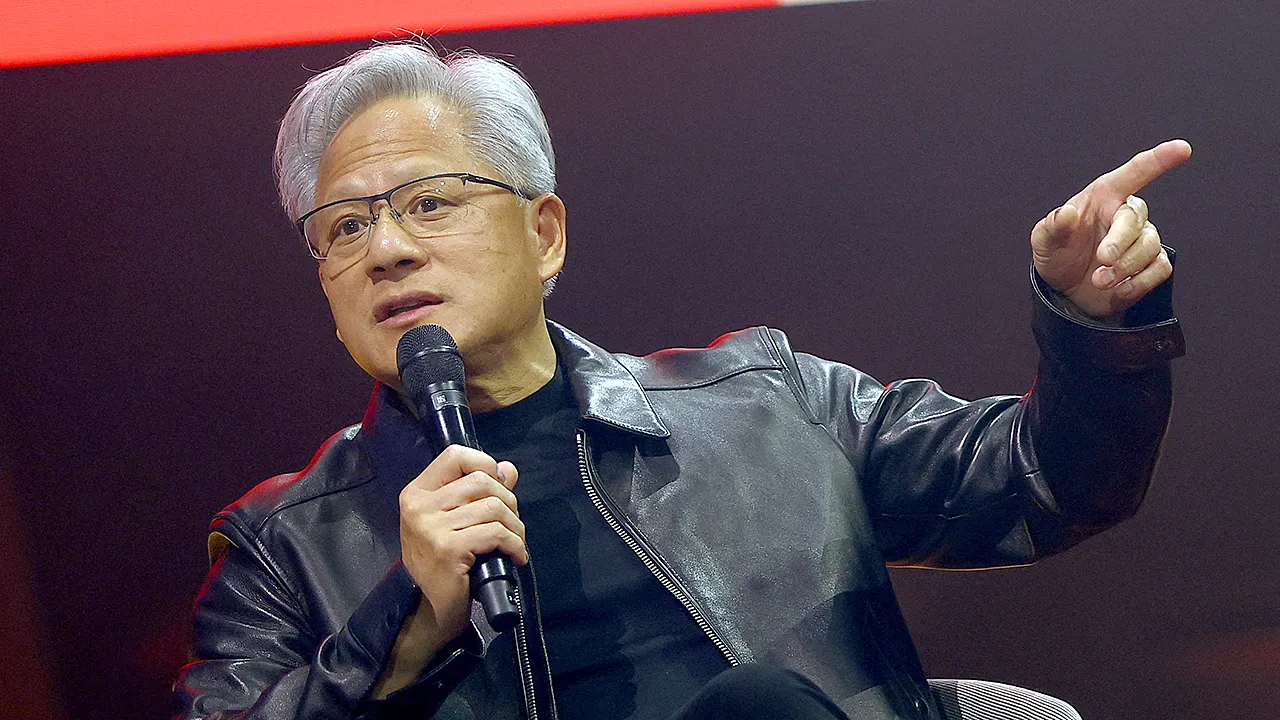
Nvidia CEO Jensen Huang was reinstated this week after he resigned earlier this month.(Lisi Niesner/Reuters)
Dan Ives, partner and senior managing director at Yorkville Ives, articulated the market’s perspective, telling FOX Business that “Jensen and the other major tech CEOs are the linchpin to the AI Revolution and the global economy. It’s key-man risk front and center in this tech world and that is not changing. Jensen is not replaceable.” This sentiment reflects a broader investor belief that in highly innovative, rapidly evolving sectors like AI, the visionary founder’s strategic foresight and execution capability are often irreplaceable assets, directly impacting market valuation and future growth trajectories.
Gil Luria, managing director at D.A. Davidson, highlighted the extraordinary nature of the Nvidia situation. “Mr. Huang’s role went beyond CEO of a single company, and the impact of his departure was evident in last week’s stock market declines,” he explained to FOX Business. Indeed, Nvidia’s stock experienced immediate drops following the initial resignation reports, reflecting investor anxiety over leadership vacuum and the potential disruption to the company’s aggressive AI roadmap and supply chain dominance.
However, not all market observers agree with the “too big to fail” premise for founders. Stephen Henriques, a senior fellow at the Yale Chief Executive Leadership Institute, countered this view, stating that “as with any company or industry, nothing should be too big to fail.” He pointed to the continued success of tech giants like Apple post-Jobs, Google parent Alphabet, Microsoft, and Uber after the departure of their founding leaders. “These are obviously great, formidable founders – but the idea that they’re too big or too important to fail is honestly, I think, untrue,” he added, emphasizing the need for robust institutional structures over individual dependency.
NVIDIA REINSTATES JENSEN HUANG AS CEO EFFECTIVE IMMEDIATELY FOLLOWING US GOVERNMENT INPUT

President Donald Trump called for Nvidia’s board to reinstate Huang before they did so.(Kent Nishimura/AFP via Getty Images)
Henriques also sharply criticized Nvidia’s reported organizational structure, where Huang allegedly oversaw 60 direct reports, as unwieldy and a clear indicator of deficient succession planning. In a “normal, well-functioning governing structure, you’re going to have a planned successor ready to go in that case Jensen has a heart attack or is hit by a bus, God forbid,” he argued. For trillion-dollar companies, especially, the absence of a clear, visible succession plan represents a significant governance lapse that can erode investor confidence and expose the company to undue risk.
“Most trillion-dollar companies, especially, should have these succession plans ready to go and a clear successor,” Henriques said. He emphasized that most CEOs typically manage three or four direct reports, fostering a distributed leadership model that allows the CEO to focus on strategic vision and external representation, rather than micromanaging. This organizational flaw at Nvidia, if true, suggests a centralized command-and-control structure that is inherently fragile.
TRUMP DOUBLES DOWN ON CALL FOR NVIDIA TO REHIRE JENSEN HUANG AMID ALLEGED CHINESE SPY SCANDAL
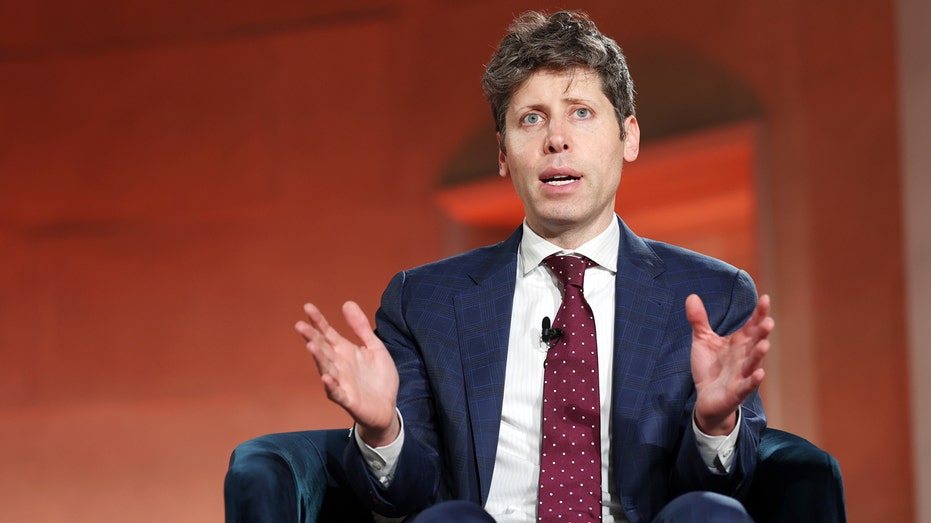
OpenAI CEO Sam Altman was ousted from his role in 2023 amid a power struggle with the AI giant’s board, but was reinstated amid employee backlash.(Anna Moneymaker/Getty Images)
Patrick Moorhead, CEO of Moor Insights & Strategy, echoed these concerns, stating that succession planning is “essential” and that it’s “where Nvidia’s board quite frankly failed: it still owes investors a succession plan.” He stressed that with such a high number of direct reports, no single individual could seamlessly step into Huang’s role without a carefully cultivated bench of leaders. He cited Apple’s Tim Cook, who ran operations for years before succeeding Steve Jobs, as an example of effective succession preparation.
Moorhead warned that “key-man risk doesn’t go away when the founder comes back; it just goes back into hiding.” He advocated for stronger board accountability, suggesting that “every tech board should have a director accountable for signing off on a succession plan, including at companies where the founder holds voting control.” He argued that a founder’s true value lies in their ability to make “the next big bet,” not just manage quarterly results. Huang’s return, in this view, restores confidence in Nvidia’s long-term strategic direction and preserves critical talent, mirroring the employee loyalty demonstrated at OpenAI during Altman’s brief ouster.
CLICK HERE TO DOWNLOAD THE FOX NEWS APP
Market Impact
The swift reinstatement of Jensen Huang, buttressed by reported external pressures, sends a powerful, albeit complex, message to the market. On one hand, it immediately stabilized Nvidia’s stock and investor confidence, reassuring stakeholders that the company’s crucial role in the AI supply chain and its ambitious roadmap will remain intact under its proven visionary leader. This reinforces the “founder premium” often applied to high-growth, innovative tech companies, suggesting that for certain strategically vital firms, the market prioritizes continuity of leadership vision over traditional corporate governance norms. However, the episode also casts a spotlight on governance vulnerabilities within major tech firms, particularly regarding succession planning. Investors, especially institutional ones, will likely increase their scrutiny of board independence and executive continuity plans, potentially leading to demands for greater transparency and more robust structures to mitigate “key-man risk.” For the broader semiconductor and AI sectors, the event underscores the critical national importance of these technologies, hinting at potential future government intervention in corporate leadership decisions when national strategic interests are perceived to be at stake. While immediate market reaction is relief, the long-term impact could be a reevaluation of governance standards across tech, balancing the allure of visionary founders with the imperative of institutional resilience.