
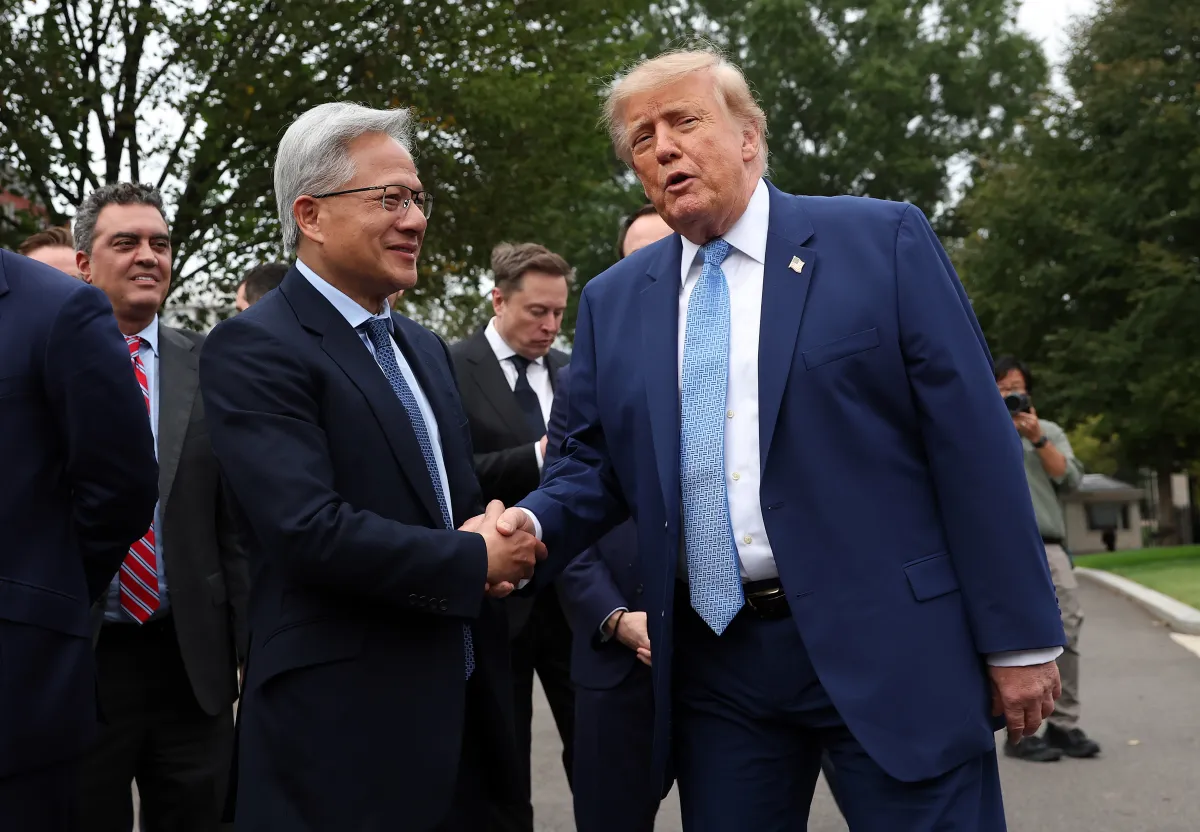
The tech world is grappling with an extraordinary saga involving Nvidia CEO Jensen Huang, a former data-center executive Alice Huang, and unproven claims of Chinese espionage. While Jensen Huang’s abrupt resignation and rapid reinstatement have stabilized Nvidia’s leadership, the underlying national security questions remain fiercely debated and unresolved.
As a tech journalist, here’s a fresh look at the complex narrative that continues to unfold, riddled with high-stakes allegations, political intervention, and a perplexing lack of definitive answers.
Key Takeaways
- Espionage Claims Remain Unsubstantiated:Despite initial intelligence reports suggesting Alice Huang, a former Megaspeed executive, was a Chinese spy, U.S. officials have yet to offer public evidence, and internal assessments now appear to contradict earlier concerns, raising questions about political influence.
- White House Intervention Shapes Outcome:President Trump directly lobbied for Jensen Huang’s reinstatement as Nvidia CEO after an affair with Alice Huang prompted his resignation. This political pressure is seen as a key factor in the administration’s pivot away from serious espionage concerns.
- Critical Questions Lingering:A web of conflicting intelligence reports, anonymous sources, and official denials leaves significant uncertainties regarding Alice Huang’s true role, the extent of any data compromise, and the leak that brought this sensitive information to light.
The Nvidia Scandal: Unpacking the Allegations and Reversals
In the high-octane world of semiconductor leadership, few events could match the dramatic arc witnessed recently at Nvidia. On November 12, CEO Jensen Huang abruptly resigned, acknowledging an affair with Alice Huang, a former executive at Megaspeed, a company once investigated for illicitly channeling Nvidia chips to China. Just days later, in an equally sudden move, he was reinstated. This roller coaster of executive leadership is merely the tip of an iceberg that hints at far deeper geopolitical and national security implications, pitting corporate governance against intelligence concerns.
The central, still-unproven claim that ignited this firestorm is that Alice Huang is a Chinese spy, an assertion that has been both circulated internally within the U.S. government and, more recently, played down by the very administration that initially raised it.
The Genesis of Suspicion: Intelligence Briefings and Leaks
The story began to coalesce publicly with reports of a highly classified memo penned in March, overseen by Secretary of State Marco Rubio. This document, circulated among White House officials prior to President Trump’s May trip to China, reportedly detailed concerns about Alice Huang. While its exact conclusions remain debated – the Wall Street Journal reported it did not definitively label her a spy, CNN claimed it concluded she was a Chinese intelligence asset – its existence formed a partial basis for initial media reporting.
What is less disputed is Alice Huang’s contact with Chinese intelligence. The Ministry of State Security (MSS), Beijing’s civilian spy agency, was reportedly in contact with Huang from spring 2025 until this past fall, a period overlapping her relationship with Jensen Huang. While the Chinese government has dismissed the spy claims as a “smear” and Megaspeed asserts Huang left in August 2025 with legitimate business practices, the intelligence community’s focus on her connections is undeniable.
The White House Pivot: From Concern to Reassurance
The narrative took a perplexing turn when top Trump officials began to publicly discredit the espionage claims. Attorney General Todd Blanche, formerly Trump’s personal defense lawyer, stated on Tuesday, “I have no reason to stand up here and say Nvidia is anything but a good corporate citizen.” President Trump himself suggested a pardon for Jensen Huang, though he believed it wouldn’t be necessary. Senior intelligence officials reportedly informed Congress that there was no actual evidence the MSS directed Alice Huang to pursue an affair with Jensen Huang.
These statements, however, carefully avoid fully exonerating Alice Huang as an intelligence agent. They merely suggest the Chinese government didn’t *direct* the affair, and that Jensen Huang committed no crime by having it. As many have pointed out, not being explicitly directed to have an affair is not synonymous with not being a spy.
The circumstantial evidence around Alice Huang remains concerning. Her previous role at Megaspeed, a company investigated for illicitly diverting chips to China, coupled with reports of her husband, Kang Wei, having close ties – potentially even working – for the MSS, paints a picture ripe for suspicion.
The President’s Hand: Political Pressure and Lingering Doubts
The timing of the administration’s reversal is critical. President Trump has openly admitted to lobbying Nvidia’s board “directly and indirectly” for Jensen Huang’s reinstatement. This undeniable political pressure raises a significant question: does the administration’s softened stance reflect genuinely new intelligence, or is it a politically motivated recasting of the facts to suit the President’s agenda? Publicly, no new intelligence has been identified to definitively resolve the spy question.
Doubts persist across the intelligence community and Congress. CNN reported earlier this month that intelligence agencies are still struggling to fully understand Alice Huang’s relationship with Jensen Huang, and that current intelligence does not definitively prove she acted as a Beijing spy. Rep. Jim Himes (D-Conn.), incoming chair of the House Intelligence Committee, emerged from a briefing unsure if she was a spy or merely a “useful idiot.” Furthermore, the Wall Street Journal highlighted that under Chinese leader Xi Jinping, top corporate executives often maintain informal ties to the country’s intelligence service without formal deputization as assets, blurring traditional lines of espionage.
Unanswered Questions in a Sea of Conflicting Reports
The cacophony of conflicting claims, largely from anonymous government sources, leaves many critical questions unanswered:
- Warning Protocol:If Alice Huang was under U.S. surveillance for over a year on suspicion of espionage, why wasn’t Jensen Huang warned privately and earlier, preventing the market-destabilizing public disclosure? One theory suggests an early warning could have compromised Huang’s cover.
- Impact of Influence:Assuming Alice Huang was a spy, what specific information did she transmit to the Chinese government, and what tangible influence did she exert on Nvidia or Jensen Huang?
- The Leak:How did this highly sensitive intelligence become public? The most plausible explanation points to a leak. Given President Trump’s reported ignorance of the concerns until recently, despite Rubio’s briefing in May, it suggests officials who felt unheard may have turned to reporters. The identity of the leaker and their ultimate intention remain unknown.
While Jensen Huang is slated to appear before the Senate Banking Committee next week, it’s widely expected that public congressional hearings rarely unearth secrets not already circulated. The public awaits clearer answers, yet the path to transparency remains obscured by layers of political maneuvering and intelligence secrecy.
Bottom Line
The Nvidia scandal transcends a mere corporate drama; it’s a high-stakes entanglement where national security, geopolitical rivalry, and the integrity of executive leadership converge. Despite the swift reinstatement of Jensen Huang and the administration’s attempts to downplay espionage concerns, the core allegations against Alice Huang remain unproven yet unrefuted. The episode underscores the persistent challenges in navigating US-China tech relations and highlights how political influence can profoundly shape the narrative around sensitive intelligence. Until a definitive, publicly verifiable account emerges, the Nvidia saga will continue to cast a long shadow over corporate governance and U.S. tech leadership, leaving the industry to wonder about the true cost of unaddressed questions.
When you purchase through links in our articles, we may earn a small commission. This doesn’t affect our editorial independence.
{content}
Source:{feed_title}