
Keep abreast of complimentary notifications
Just register for the Energy crisis myFT Summary — sent straight to your email.
The conflict involving Iran has triggered the most severe energy disruption ever witnessed, cautioned the director of the International Energy Agency, further stating that complete resumption of oil and gas shipments from the Gulf might require half a year or more.
Fatih Birol, whose position within the IEA has placed him centrally in endeavors to maintain energy supplies even with a fifth of global oil and gas disappearing, informed the FT that the confrontation represented “the most significant worldwide energy security peril ever.”
Birol, instrumental also in formulating Europe’s reaction to a gas shortage after Russia’s extensive incursion into Ukraine, stated that the quantity of gas halted by the hostilities is double what Europe forfeited from Russia in 2022.
A greater amount of petroleum has been depleted, he further noted, compared to the dual crises of the 1970s which initiated economic downturns and fuel allocation globally.
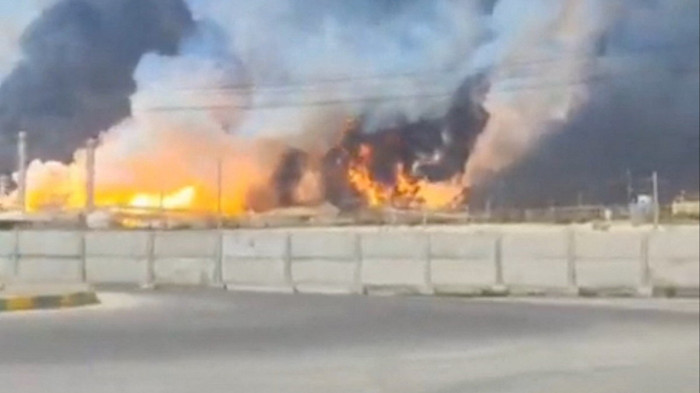
His remarks came after a week where crude prices ascended to nearly $120 per barrel as Israel and Iran both launched barrages of projectiles at crucial energy centers in the Gulf, such as the South Pars gasfield and Qatar’s colossal Ras Laffan facility.
Nevertheless, he asserted that political leaders and financial markets were still downplaying the magnitude of the emergency. The predicament would intensify daily as energy shipments from the Middle East, a region supplying a fifth of global oil and gas, remained ensnared by Iran’s effective embargo of the Strait of Hormuz.
“Individuals recognize this as a significant hurdle, yet I question whether the full extent and repercussions of the circumstances are truly comprehended,” he conveyed during a discussion.
Even were the hostilities to cease and the strait to become accessible again, Birol stated that “a considerable period would be required” to reactivate oil and gas fields, many of which have been decommissioned or harmed. “Certain locations will take half a year to become functional, with others requiring significantly more time,” he noted.
He refrained from speculating on the potential peak of oil and gas costs, but indicated that prices would probably keep ascending as long as the strait remained closed to maritime traffic.
Iran’s menacing declarations to target ships had caused “essential conduits to cease operation”, impacting global provisions of crop nutrients, plastics chemicals, textiles, and manufactured goods, alongside sulfur and helium. “These constitute indispensable goods for the worldwide economic system,” he declared.
In the preceding week, the IEA declared the deployment of 400 million barrels of crude and processed petroleum from international reserves to alleviate scarcities globally, a quantity Birol stated amounted to merely 20 percent of its holdings.
“Eighty percent remains at our disposal,” he remarked, further noting that he had engaged in discussions with Canada, Mexico, Brazil, Norway, and other nations regarding boosting their crude and natural gas output.
However, he contended that these supplies would not compensate for the absence of Middle Eastern energy. “The paramount step is the re-establishment of passage through the Strait of Hormuz,” he asserted.
He implored European policymakers to maintain curbs on Russian natural gas, stating that they ought to avoid replicating the error of excessive dependence on Moscow’s energy provisions.
Birol observed that utilizing Russian gas offered scant economic rationale, given its cost had historically been linked to petroleum prices.
“Russian natural gas would approximate the current European gas rates,” he conveyed. He further mentioned that Russia’s Nord Stream conduits were inactive and that Moscow’s standing as a dependable, enduring provider had been obliterated.
He additionally predicted that the energy emergency would instigate numerous policy shifts by administrations globally, likening the circumstances to the way political figures reacted to the dual petroleum crises of 1973 and 1979.
“Three reactions emerged. More than 40 percent of contemporary nuclear energy infrastructure was erected following that particular crisis. The volume of fuel consumed by the typical automobile decreased by half within a decade post-crisis. Furthermore, nations altered their commercial pathways,” he concluded.
Consequent to the conflict with Iran, he foresaw a fresh drive towards shifting to sustainable power sources, a further surge in nuclear energy, an acceleration for electric cars, yet simultaneously a reversion to greater coal utilization in place of natural gas.