
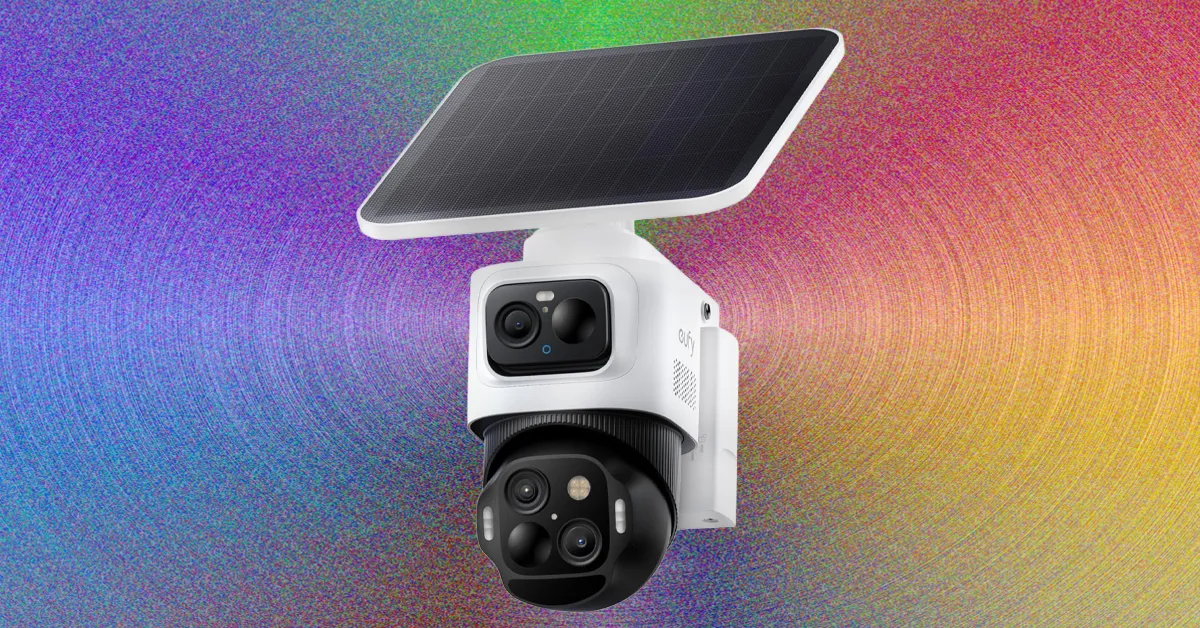
On-Premise Control Unit: Producers such as Eufy and TP-Link furnish intelligent central units that connect wirelessly to their surveillance cameras, providing scalable data capacity. These local control units occasionally facilitate greater on-device artificial intelligence processing (Eufy’s unit, for example, permits facial recognition). Furthermore, they can sometimes boost the wireless signal and enhance stability for cameras. These units frequently require direct connection to your router via an Ethernet cable.
MicroSD Memory Card: Inserting a microSD memory card into a camera offers an expeditious and straightforward method for local recording; however, should a trespasser abscond with the device, your recorded material vanishes alongside it. At times, producers of monitoring devices supply internal central units whose capacity can be augmented using a MicroSD card.
Network Attached Storage (NAS): Possessing a NAS server means you can likely set it up to retain your surveillance camera footage. Such apparatus house hard disk drives and possess upgradeable capacity, thereby providing a possibly vast volume of data retention.
Premium USB thumb drives and external disk drives are capable of being utilized to augment or transfer recorded media from certain aforementioned options.
Remote vs. On-Site Data Keeping
A comprehensive resource I’ve compiled explores remote versus on-site surveillance camera recordings, delving further into their fundamental advantages and disadvantages; however, for a concise overview:
Remote data retention signifies your visual content is archived over the internet, thus preventing access by trespassers. It typically offers swifter retrieval or live viewing while you are absent from your dwelling and obviates the need for supplementary storage equipment. Conversely, a recurring monthly charge is incurred, the visual data fails to upload if your wireless network falters or is compromised, and reliance is placed upon the service vendor, who might disseminate or utilize it in manners you’d rather they avoided (data compromises frequently occur).
On-site data retention involves a singular expenditure, operates independently of wireless internet, and gaining access to the recordings by anyone other than yourself is considerably more challenging. Nonetheless, a peril exists that someone might abscond with the physical apparatus where your visual content is kept, or that the equipment itself might malfunction. Furthermore, retrieval or live streaming of video can be more sluggish when you are away from your residence.
To achieve peak security, even when employing an on-premise setup, you could contemplate a remote data redundancy solution. The likelihood of your recordings being compromised can be diminished by selecting a remote service offering complete encryption from source to destination, for instance, Apple’s HomeKit Secure Video.
Safeguarding Personal Information
Entry to your surveillance camera streams and archived visual content ought to be fully encrypted from sender to receiver, and you must invariably employ dual-factor verification to secure entry to your account. Through complete encryption, only your sanctioned gadgets possess the capability to decipher your visual data. Utilizing 2FA, a temporary code will be dispatched to a verified telephone number, electronic mail address, or apparatus upon attempting to sign in from an unfamiliar device; consequently, your username and passphrase by themselves are insufficient for obtaining entry. Regrettably, these functionalities are not consistently activated by default.
- Eufy’s monitoring devices provide full end-to-end encryption; however, activation is required by selecting the upper-left menu within the application, then navigating toSettings,Security,Video Encryption, followed byAdvanced Encryption. To confirm 2FA is enabled, selectyour nameat the menu’s apex and thenTwo-factor authentication.
- TP-Link Tapo surveillance units do not feature full end-to-end encryption; nevertheless, you can configure dual-factor authentication for your profile by accessing theMetab, thenView account, and subsequentlyLogin Security. For encrypting recordings on microSD memory cards, navigate to your device’s configuration options, then selectStorage & Recording, followed byLocal Storage, and finally activateSD Card Encryption.
- Aqara, by default, provides full end-to-end encryption for your on-site recorded video. To enable dual-factor verification, selectProfilein the lower-right corner, then proceed toSettings,Accounts and Security, and ensure thatTwo-Factor Authenticationis activated.
{content}
Source:{feed_title}