

Meta President Dina Powell McCormick discusses AI innovation, potential threats, and details the platform’s new Muse Spark model on ‘Mornings with Maria.’
Meta’s AI Pivot Accelerates: Layoffs Signal Strategic Shift Towards Compute-Heavy Future
Key Takeaways:
- Meta’s latest round of layoffs, impacting 10% of its workforce, underscores a significant capital reallocation from human resources to intensive AI compute infrastructure, reflecting an urgent strategic pivot.
- CEO Mark Zuckerberg’s comments highlight ongoing uncertainty regarding Meta’s optimal long-term size, tying future workforce decisions directly to the evolving capabilities and return on investment (ROI) of its burgeoning AI initiatives.
- The move positions Meta for an intensified “AI arms race,” requiring sustained, massive investments in technology and infrastructure to compete with industry giants, potentially impacting short-term profitability but aiming for long-term competitive advantage.
Meta Platforms (NASDAQ: META) is once again in the throes of significant structural change, with CEO Mark Zuckerberg confirming a fresh round of approximately 8,000 job cuts – roughly 10% of its workforce – explicitly linking these reductions to the company’s escalating investments in artificial intelligence. This strategic pivot, announced during a recent company town hall, is not merely a cost-cutting exercise but a profound reorientation of capital and resources towards an “AI-native” future, signaling both opportunity and considerable uncertainty for investors.
These layoffs, anticipated to commence around May 20, arrive as Meta ramps up its spending on critical AI infrastructure, including advanced data centers and high-performance computing necessary to train and deploy sophisticated AI models. “We basically have two major cost centers in the company: compute infrastructure and people-oriented things,” Zuckerberg explained, according to Reuters. “If we’re investing more in one area to serve our community, then that means we have less capital to allocate to the other. So that means we do need to take down the size of the company somewhat.”
This candid assessment offers a clear glimpse into the economic realities facing large technology companies in the current AI boom. The pursuit of AI leadership demands prodigious capital outlays for specialized hardware – like Nvidia’s cutting-edge GPUs – and the energy-intensive infrastructure to power them. For Meta, a company with historically high operating expenses, this means a direct trade-off: fewer employees to fund more machines.
Zuckerberg was keen to differentiate these cuts from efficiency gains derived from AI tools internally. “Getting everyone internally to use AI tools and getting to do the work more efficiently is not the thing that’s driving layoffs,” he stated, clarifying that the reductions are instead a direct consequence of the massive, forward-looking investment required for foundational AI research and product development, including the ambitious goal of building autonomous AI agents.
Meta CEO Mark Zuckerberg said the company’s latest layoffs are tied to increased spending on artificial intelligence.(Alex Wong/Getty Images / Getty Images)
The market’s reaction to such strategic shifts is often mixed. While cost discipline is generally welcomed by investors, particularly after Meta’s “Year of Efficiency” that saw previous rounds of layoffs in November 2022 (11,000 jobs) and subsequent cuts months later (10,000 jobs), the continued uncertainty around workforce size can create jitters. The provided ticker data shows META closing down 8.55%, indicating some investor apprehension regarding the scope and implications of these ongoing restructuring efforts. This negative sentiment suggests that while the strategic direction toward AI is largely understood, the immediate operational disruption and the opaque timeline for AI-driven revenue generation are weighing on shareholders.
Zuckerberg’s refusal to rule out additional job cuts only amplifies this uncertainty. “We’ll see how all this stuff trends,” he commented, acknowledging the lack of a “crystal ball plan” for the coming years. This honest, albeit unsettling, transparency from leadership reflects the highly dynamic nature of the AI frontier, where technological advancements and competitive pressures evolve at a breakneck pace. CFO Susan Li echoed this sentiment during an earnings call, stating, “We don’t really know what the optimal size of the company will be in the future,” citing rapid changes in AI capabilities as the primary variable.
Meta’s commitment to AI is further highlighted by its development of models like Muse Spark, discussed by Meta President Dina Powell McCormick, signaling the company’s aggressive push into generative AI across its platforms. This ambition places Meta squarely in the global “AI arms race,” competing fiercely with tech titans like Microsoft, Google, and Amazon, all of whom are pouring billions into AI research and infrastructure. The comments from industry figures such as Elon Musk, who reportedly called himself a “fool” for funding OpenAI, underscore the immense capital requirements and unpredictable nature of this high-stakes technological race.
Meta CEO Mark Zuckerberg said the company is cutting jobs as it ramps up investment in artificial intelligence.(David Paul Morris/Bloomberg via Getty Images / Getty Images)
Beyond workforce reductions, Meta has also reportedly implemented internal employee monitoring, tracking activity like clicks and navigation within apps to train its AI systems. While potentially valuable for data collection, this practice, alongside the ongoing layoffs, has reportedly sparked internal criticism and concern among employees on company message boards, raising questions about morale and long-term talent retention in a competitive tech labor market. In an environment where the U.S. economy recently demonstrated strong growth in the first quarter, fueled by AI buildout and consumer spending, and the Federal Reserve has held interest rates steady, the availability of top-tier tech talent remains a crucial factor for companies like Meta.
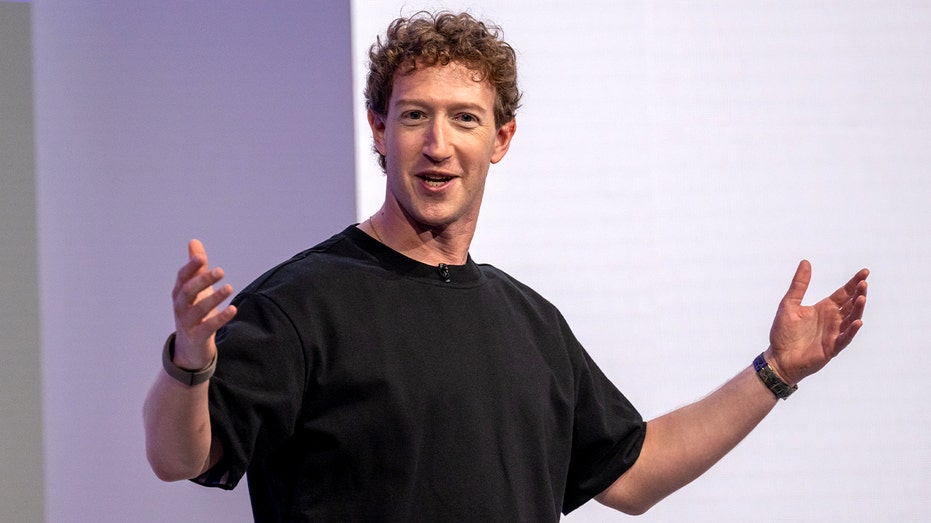
Mark Zuckerberg, chief executive officer of Meta Platforms Inc., appears during the Meta Connect event in Menlo Park, California, on Sept. 17, 2025.(David Paul Morris/Bloomberg via Getty Images / Getty Images)
As of December 31, Meta employed nearly 79,000 people. The cumulative impact of these successive layoff rounds suggests a fundamental re-evaluation of its operational footprint and a long-term strategy centered on capital-intensive AI rather than human capital expansion. For investors, the challenge will be to discern whether these bold, often painful, strategic moves will ultimately translate into sustainable competitive advantages and new revenue streams, particularly for its core advertising business and future ventures like the metaverse, which also stand to benefit significantly from advanced AI.
GET FOX BUSINESS ON THE GO BY CLICKING HERE
Market Impact:
Meta’s deep dive into AI, underscored by significant workforce reductions, presents a complex investment thesis. While the market initially reacted with a downturn, reflecting concerns over ongoing restructuring and short-term operational uncertainty, the long-term view hinges on Meta’s ability to monetize its substantial AI investments. Investors will be closely watching for clear indications of ROI from AI-driven improvements in ad targeting, new product offerings, and efficiency gains that can bolster Meta’s robust free cash flow. The strategic shift could be a necessary step to secure future growth in a highly competitive tech landscape, but it also carries execution risks and the potential for prolonged periods of heavy capital expenditure before substantial revenue generation. The success of this AI pivot will likely dictate Meta’s stock performance and its position relative to its big tech peers in the coming years, making it a critical area of focus for analysts and shareholders alike.
FOX Business’ Louis Casiano and Reuters contributed to this report.