
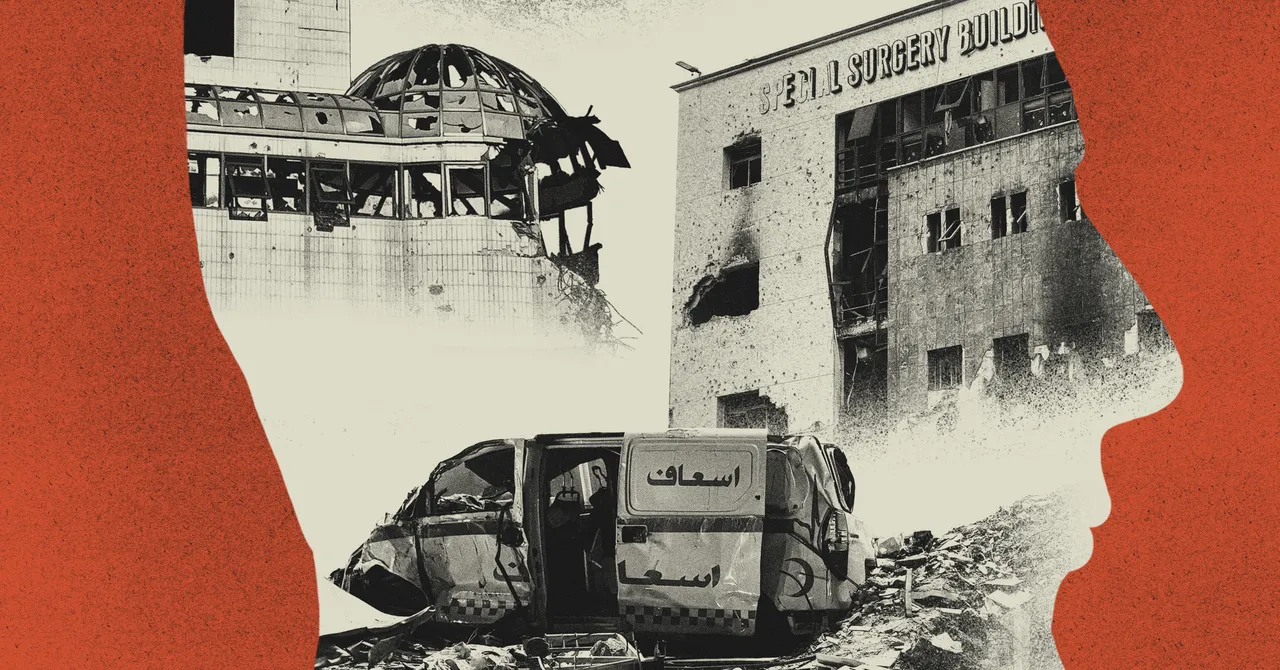
During the initial days of December, Ahmed recollects, “we perceived tanks moving forward from the border of the designated yellow zone.” Shortly thereafter, a 14-year-old girl was hastily admitted to the Intensive Care Unit, suffering from an abdominal injury caused by shrapnel. The young girl required a quarter-liter of blood, an invaluable commodity within Al-Shifa Hospital, along with the removal of her spleen. Despite scant provisions, even amidst an unanticipated offensive, the physicians at Al-Shifa rescued her life.
Upon Ahmed’s departure, the young patient was released, beaming. Such was the gravity of her injuries that the medical staff expended a portion of their allocated gauze on her. Nevertheless, the girl was compelled to go back to her family’s dwelling, an unstable setting for recuperation. Prior to her admission to Al-Shifa, she suffered from severe malnutrition. The reappearance of certain foodstuffs in stores has offered minimal assistance to her kin, who are unable to bear inflated costs. Ahmed, deeply concerned for the girl, maintains contact.
By the eleventh of December, Ahmed captured a four-minute audio message to document her reflections regarding her final day in Gaza. She notes that in the distance, earth-moving machines are operating. Emergency crews capitalized on the comparative tranquility to excavate the interior quadrangle, which had transformed into a makeshift burial site for countless individuals at Al-Shifa. “The scent of demise is palpable, in this instance,” she declares in the audio recording. A report from Al Jazeera, issued three days prior, indicated that the Palestinian Red Crescent had retrieved 150 deceased individuals.
“This medical facility is permeated by the numerous accounts of those who perished, and also by the narratives now surfacing, as we possess a modicum of room and duration to listen to them, detailing the plights of individuals,” Ahmed expresses. “This extends beyond Al-Shifa’s grounds alone. It encompasses the entirety of Gaza.”
Concurrent with the aggressions against Palestinian existence, well-being, and mobility is an attack on their remaining self-governance. The Israeli administration has, in recent months, allowed unfettered access for both governmental and settler appropriations of West Bank territory. President Trump has instituted a “Peace Council” intended to govern Gaza, commencing with the erection of a 350-acre armed forces installation to accommodate 5,000 soldiers.
The announcement of a cessation of hostilities, regardless of its partiality, has led numerous individuals, especially in the United States, to disregard the situation. Sidhwa, a trauma surgeon from California, asserts this “constitutes an utter catastrophe—it signifies the obliteration of Palestinians in Gaza.” Serving as Israel’s collaborator, furnishing it with weaponry and diplomatic protection throughout the genocide, the United States also represents the sole possible restraint on its conduct. “It is profoundly disheartening that we lack a political ethos, a media sensibility, or even the ethical framework to acknowledge our accountability for our own transgressions,” Sidhwa states.
However, Gaza transcends being merely a site of wrongdoing. “Evidently, a large portion lies in ruin, yet Gaza City possesses beauty, and its inhabitants are admirable,” Thorburn remarks. At Al-Ahli, she resided alongside ten women in their third decade of life. These included registered nurses, radiologic technologists, aspiring physicians, and laboratory technicians. They escorted Thorburn to the shoreline to observe individuals fishing—a perilous pursuit given the presence of the Israeli naval forces nearby—share a modest outdoor meal with their available provisions, and otherwise strive diligently to maintain an ordinary existence. Defying efforts to sunder them, they bonded tightly, each bolstering the rest, akin to woven fabric.
{content}
Source:{feed_title}