

Key Takeaways
- **Strategic Content vs. Political Scrutiny:** Amazon’s content acquisition strategy, exemplified by the “Melania” documentary, highlights the delicate balance between pursuing perceived commercial opportunities and navigating potential political backlash, which can impact brand reputation and regulatory standing.
- **Decentralized Corporate Governance:** Jeff Bezos’s defense emphasizes Amazon’s vast, decentralized decision-making structure, a characteristic of mega-cap tech firms. This structure offers operational agility but can also complicate accountability and fuel investor questions about corporate oversight in politically sensitive areas.
- **Evolving Streaming Economics:** The film’s reported $40 million acquisition cost versus its $16.6 million global box office raises questions about content valuation and return on investment in the opaque streaming market, where long-term subscriber engagement and retention are paramount.
Podcast host Emily Austin discusses Melania Trump’s film ‘Melania,’ and the hypocrisy of celebrity activism at events like the Grammys on ‘Kudlow.’
Amazon founder Jeff Bezos on Wednesday moved to quell mounting concerns among investors and lawmakers regarding the company’s decision to back a documentary centered on Melania Trump. Speaking publicly, Bezos vehemently denied any personal involvement in the high-profile deal, dismissing allegations that the strategic investment was an attempt to curry favor with former President Donald Trump amid an increasingly scrutinized regulatory environment for Big Tech firms.
In a candid exchange withCNBC’s Andrew Ross Sorkin, the tech titan pushed back against persistent reports suggesting his direct intervention in Amazon MGM Studios’ acquisition of the film. “The ‘Melania’ thing is a falsehood that will not die,” Bezos stated. “I see it reported all the time that somehow I was involved in this … It’s not true. We have denied it. Melania’s office has denied it. It’s not true.” His clarification sought to disentangle Amazon’s corporate actions from his personal political leanings, a critical distinction for a company frequently under the microscope for its market dominance and influence.
Despite disavowing personal involvement, Bezos staunchly defended the documentary as a sound financial undertaking. “It appears it was a good business decision. You know, it did very well in theaters, it’s done very well on streaming. People are very curious about Melania,” Bezos affirmed. “Even though I had nothing to do with it, it appeared that the Amazon team made a very wise business decision.” This assessment underscores the evolving metrics of success in the streaming era, where theatrical box office revenue often serves as a precursor to, rather than the sole measure of, a film’s overall commercial viability and its contribution to subscriber engagement on platforms like Prime Video.
BILLIONAIRES AND BUSINESSES FUEL GROWING EXODUS FROM BLUE STATES
Jeff Bezos, founder of Amazon, is pictured during the America Business Forum in Miami, Fla. (Eva Marie Uzcategui/Bloomberg via Getty Images, File / Getty Images)
Bezos further elaborated on Amazon’s sprawling operational model, emphasizing that major content decisions, even those involving significant investment, are routinely made without his direct input. He cited the blockbuster adaptation of “Project Hail Mary” as another prime example of successful, decentralized decision-making within the e-commerce and tech behemoth. “I also had nothing to do with ‘Project Hail Mary,’ which I regret because it’s an incredible success. I wish I had greenlit that, but I didn’t,” Bezos told CNBC. This narrative aims to reassure investors that Amazon’s growth and content strategy are driven by a competent, autonomous team, rather than a single individual. However, it also highlights the challenge of corporate accountability within such a vast organizational structure, especially when political optics are involved. “… Amazon’s a big company, it makes a lot of decisions, but no, this idea that somehow that is a way of buying influence is just not correct.”
JEFF BEZOS AND LAUREN SÁNCHEZ ENJOY ROMANTIC DINNER DATE AT UPSCALE MIAMI BEACH RESTAURANT
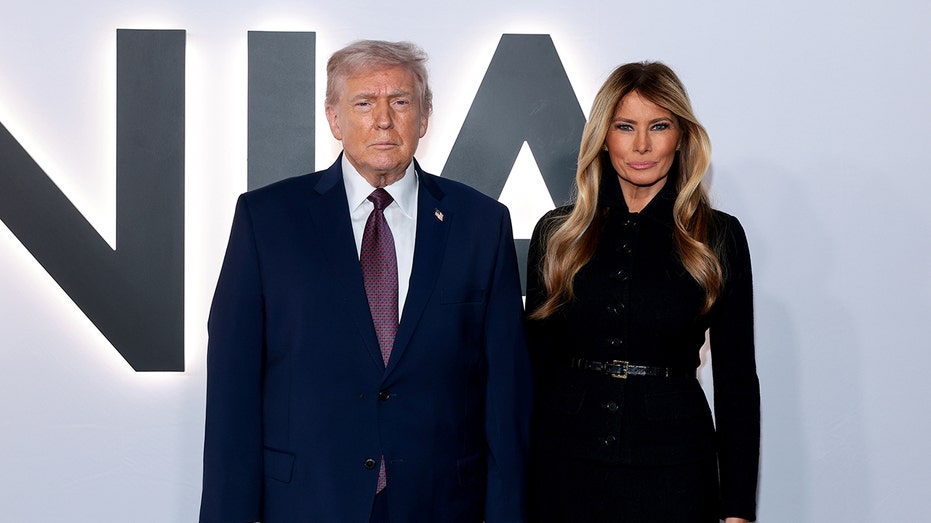
President Donald Trump and first lady Melania Trump attend Amazon MGM’s “Melania” world premiere at The Trump Kennedy Center in Washington, D.C.(Dimitrios Kambouris/Getty Images, File / Getty Images)
The “Melania” documentary, chronicling 20 pivotal days in Melania Trump’s life leading up to PresidentDonald Trump‘s anticipated second term, was a significant investment for Amazon MGM Studios. Reports indicated a staggering $40 million acquisition cost for the film, which debuted in theaters nationwide in February. While its global box office revenue reached $16.6 million, according toThe Hill, the true measure of its “business decision” success likely lies in its performance on Amazon’s Prime Video streaming service – a critical, yet often undisclosed, component of content monetization in the digital age. For shareholders, understanding the return on such a substantial investment, particularly one with a politically charged subject, is key to assessing Amazon’s broader content strategy and its ability to compete in the increasingly crowded streaming landscape against rivals like Netflix, Disney+, and Warner Bros. Discovery.
The deal quickly drew the ire of Democratic lawmakers, including influential figures like Sen. Elizabeth Warren and Reps. Hank Johnson, Dan Goldman, and Ben Ray Luján. In March, they dispatched a letter to Amazon CEO Andy Jassy, expressing deep concern over the “extraordinary” price tag and explicitly raising questions about a potential “pay-to-play” arrangement with the Trump administration. Such accusations, even if unsubstantiated, introduce significant reputational and regulatory risk for Amazon. In an era where ESG (Environmental, Social, and Governance) factors are increasingly weighted by institutional investors, any hint of impropriety or political influence-peddling can impact investor sentiment, particularly regarding a company already facing intense antitrust scrutiny and calls for stricter regulation.
BLUE ORIGIN EYES LANDMARK LAUNCH AS WHEELCHAIR USER JOINS NEW SHEPARD CREW
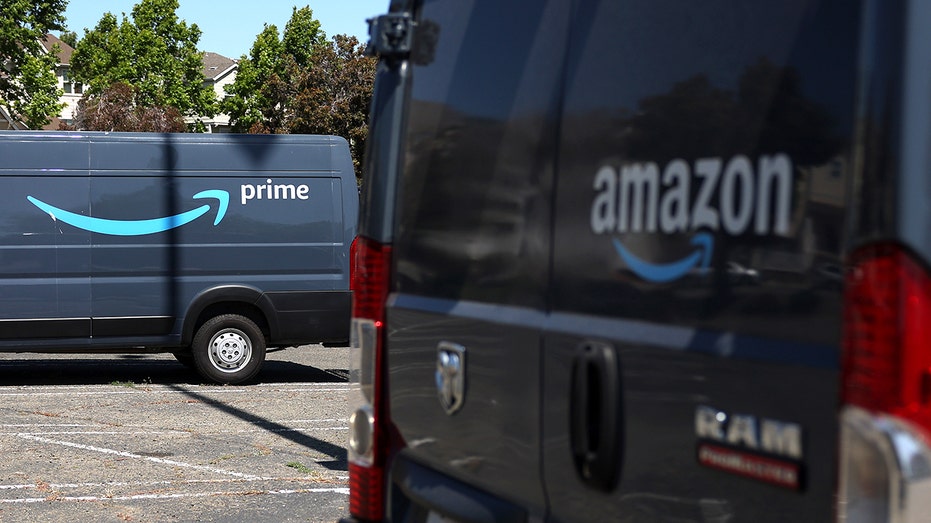
Amazon’s founder defended the company’s decision to back Melania Trump’s documentary.(Justin Sullivan/Getty Images / Getty Images)
Bezos also used the opportunity to briefly address criticism regarding his influence over The Washington Post, another high-profile asset in his portfolio. “By the way, the same thing at The Post, I want the opinion section right to stand for free markets, kind of what I’ve been talking to you about today, free markets and individual personal liberties,” Bezos said. “I think that those are [the] founding pillars of America. It’s one of the reasons that America has been so successful.” His comments, while brief, underscore the broader perception of concentrated power among tech billionaires, particularly as it relates to media ownership and ideological influence – a perception that can intertwine with investor concerns about corporate governance and public trust.
As of recent trading, Amazon.com Inc. (AMZN) saw its shares climb by +2.19%, reflecting broader market movements and underlying investor confidence in its core e-commerce and cloud computing segments, though specific content deals like the “Melania” documentary are unlikely to be primary drivers of daily stock fluctuations for a company of Amazon’s immense scale. Nevertheless, the ongoing narrative around such deals contributes to the mosaic of public perception and regulatory scrutiny that constantly shapes investor outlook on AMZN.
| Ticker | Security | Last | Change | Change % |
|---|---|---|---|---|
| AMZN | AMAZON.COM INC. | 265.01 | +5.67 | +2.19% |
Amazon and Bezos could not immediately be reached for further comment.
GET FOX BUSINESS ON THE GO BY CLICKING HERE
Market Impact
While the immediate impact of the “Melania” documentary acquisition on Amazon’s colossal market capitalization (AMZN) might be negligible, the broader implications for shareholder value and corporate strategy are noteworthy. Allegations of political favoritism, even if denied, introduce regulatory risk and potential reputational damage, particularly for a company consistently under antitrust scrutiny. Investors increasingly weigh ESG factors, and controversies that suggest a lack of robust corporate governance or an entanglement in divisive political matters can affect long-term institutional investment flows. Furthermore, the episode highlights the opaque economics of streaming content; a $40 million acquisition cost for a film generating $16.6 million at the box office necessitates significant unreported streaming success to justify Bezos’s “good business decision” claim. This opacity can create uncertainty for investors trying to value Amazon’s extensive content investments (MGM, Prime Video originals) against subscriber growth and retention metrics. Ultimately, for a company as pervasive as Amazon, managing public perception and navigating political currents is as critical as delivering quarterly financial results, directly influencing its operating environment, brand loyalty, and future growth trajectory.