
‘Varney & Co.’ host Stuart Varney discusses shifting Democratic positions on Israel, 2028 ambitions and growing divisions over foreign policy and national security.
**Key Takeaways:**
1. **Strategic Corporate Alignment:** The White House’s pivot to the Business Roundtable for G20 corporate engagement signals a deliberate consolidation of influence among a select group of leading CEOs, directly aligning business advocacy with the administration’s specific economic agenda focusing on deregulation, energy dominance, and innovation.
2. **Policy Certainty & Sector Focus:** This move provides clearer signals for investors regarding anticipated policy directions, potentially boosting sectors poised to benefit from reduced regulatory burdens, expanded domestic energy production, and R&D incentives, while potentially sidelining broader business concerns.
3. **Reframing Global Economic Dialogue:** By bypassing the traditional B20 framework, the U.S. is signaling a more nationalistic, efficiency-driven approach to multilateral economic discussions, which could reshape global consensus-building on trade, climate, and development, impacting international investment flows and geopolitical economic relations.
—
**FIRST ON FOX**: In a significant recalibration of global economic engagement, the White House is tapping the Business Roundtable (BRT) to spearhead corporate involvement during the United States’ upcoming G20 host year. This decision marks a notable departure from the long-established Business 20 (B20) framework, historically orchestrated by the U.S. Chamber of Commerce, sending clear signals to capital markets about the administration’s strategic priorities and preferred channels for corporate influence.
Administration officials indicate this shift is engineered to streamline business participation and ensure closer alignment with the Trump administration’s overarching economic agenda. This includes core tenets such as deregulation across key sectors, aggressive domestic energy expansion, and innovation-driven growth – policies that have historically resonated with specific segments of the business community and often translate into distinct market reactions. For investors, this move signals a more direct and potentially potent conduit for corporate interests to shape global economic policy, circumventing the broader, more diffuse advocacy of the Chamber.
In an exclusive statement, White House spokesperson Olivia Wales told FOX that the Business Roundtable, an influential consortium comprised of leading U.S. CEOs from the nation’s largest corporations, would play a central and integral role in advancing a pro-growth agenda throughout the G20 cycle. This targeted engagement suggests a preference for the perspectives of major corporate entities, which often have significant lobbying power and direct impact on employment and capital expenditure.
**WHITE HOUSE ACCUSES CHINA OF ‘INDUSTRIAL-SCALE’ AI TECHNOLOGY THEFT WEEKS AHEAD OF TRUMP-XI SUMMIT**
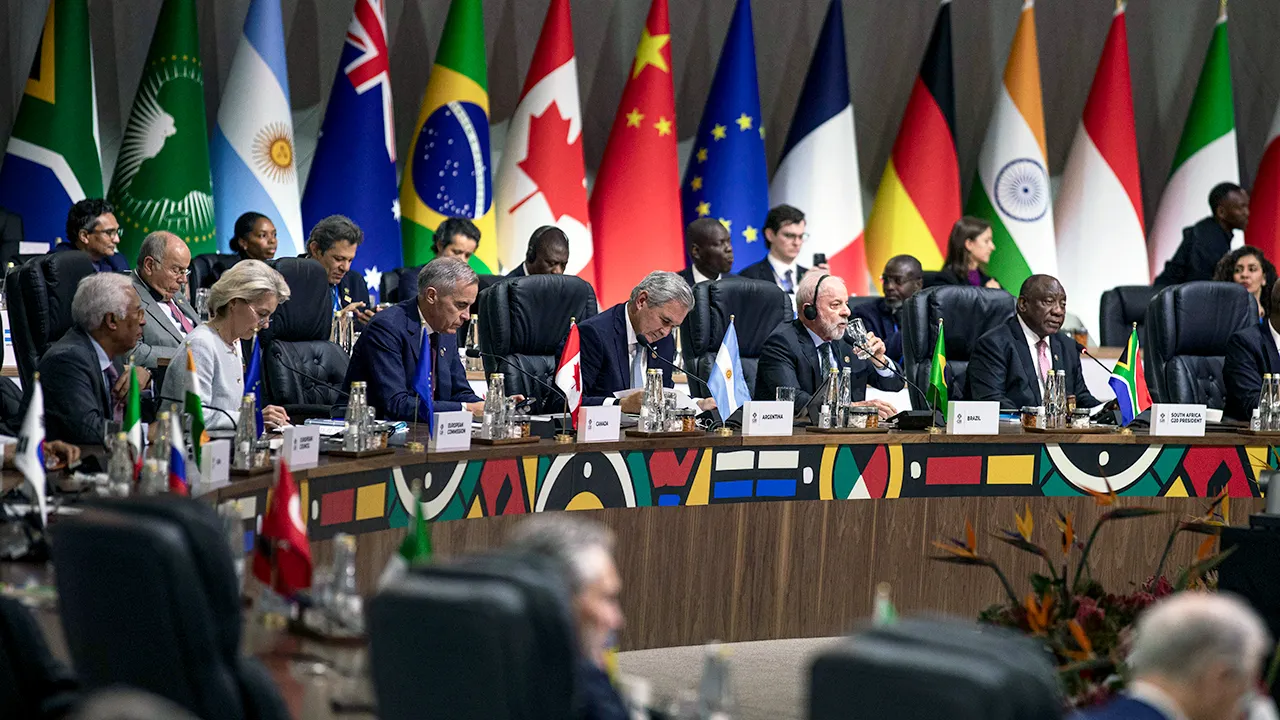
South African President Cyril Ramaphosa, right, chairs a meeting as heads of state and government met on the second day of the G20 Leaders’ Summit Nov. 23, 2025, in Johannesburg, South Africa.(Per-Anders Pettersson/Getty Images)
“Business Roundtable, led by top U.S. CEOs, is the right choice to champion business engagement during the United States’ G20 year,” Wales affirmed, emphasizing what the administration views as a successful economic model. This model, she articulated, is fundamentally built on strategically negotiated trade deals, expanded domestic energy production – a boon for the energy sector and related infrastructure investments – and robust private-sector job creation, which underpins consumer spending and economic stability. For portfolio managers, this signals continued emphasis on policies favoring domestic production and potentially a more protectionist trade stance, impacting global supply chains and multinational corporate strategies.
**PIRRO CLOSES INVESTIGATION INTO FEDERAL RESERVE OVER BUILDING PROJECT**
“The president’s tried-and-true policies are a model for the entire world, and the United States looks forward to discussing how other countries can replicate this success,” she added, underscoring the administration’s intent to project its economic philosophy onto the global stage through the G20 platform. This has implications for international investment flows, as countries seeking to align with U.S. policy might adopt similar pro-business, deregulation-focused approaches, creating new market opportunities or challenges.
Under this revamped structure, the Business Roundtable is slated to host a significant CEO-focused event at the prestigious Trump National Doral on December 12, strategically timed just ahead of the G20 Leaders’ Summit scheduled for December 14-15. The choice of venue itself, owned by the former president, reinforces the direct link between the administration and this specific corporate leadership group.
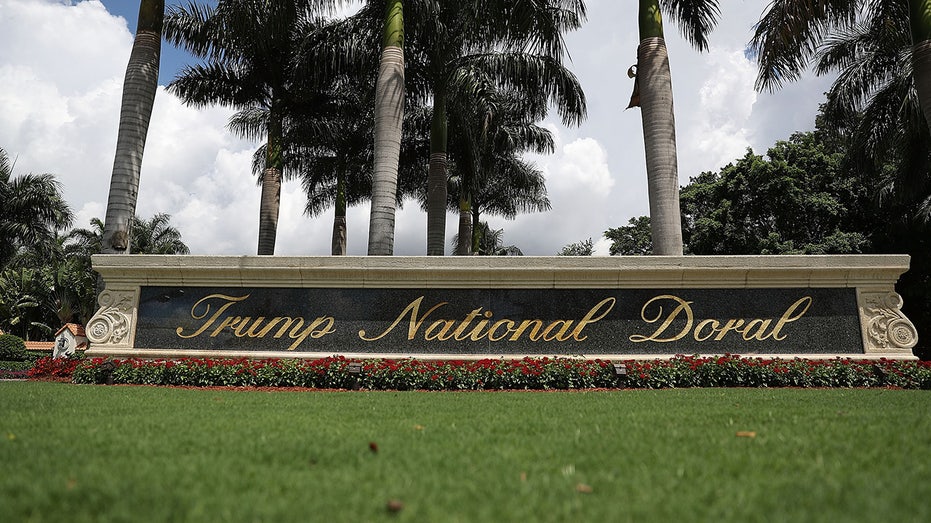
Trump National Doral, a golf course owned by Donald Trump(Joe Raedle/Getty Images)
This high-level gathering is anticipated to bring together more than 120 Business Roundtable member CEOs, alongside at least one chief executive from each G20 economy and invited guest nations. Discussions will center on critical themes such as accelerating economic growth through deregulation – a policy that can reduce compliance costs and foster capital expenditure – ensuring energy dominance, which impacts global commodity markets and energy security, and fostering innovation, a key driver for technology and R&D-intensive sectors. Such discussions at this level can provide early indications of policy directions, influencing investment decisions and market sentiment.
Further business engagement events are planned throughout the year, including sessions tied to Business Roundtable board meetings in Washington, D.C., as well as specialized programming alongside the crucial G20 Finance Ministers’ meeting in Asheville, North Carolina, with Treasury Secretary Scott Bessent. The presence of the Treasury Secretary at these discussions elevates their market significance, signaling potential coordination on fiscal, monetary, and trade policies that directly impact global financial stability and cross-border investment.
This move effectively sidelines the traditional B20 process, which has historically served as the primary, more inclusive vehicle for aggregating diverse business input into G20 deliberations. The B20, by design, changes hands annually, led by host-country business groups, aiming for a broad representation of national and international business interests.
**OSCAR DE LA HOYA JOINS THE BATTLE ON CAPITOL HILL TO REINVENT BOXING**
Administration officials described the existing B20 structure as “cumbersome” and “bureaucratic,” arguing that its broad-based, consensus-driven approach frequently yielded unproductive or overly generalized recommendations. This critique suggests a desire for a more direct, agile, and aligned approach to corporate advocacy, prioritizing speed and specific policy outcomes over broad representation, a strategy that could be viewed positively by investors seeking policy clarity but negatively by those advocating for more inclusive economic governance.
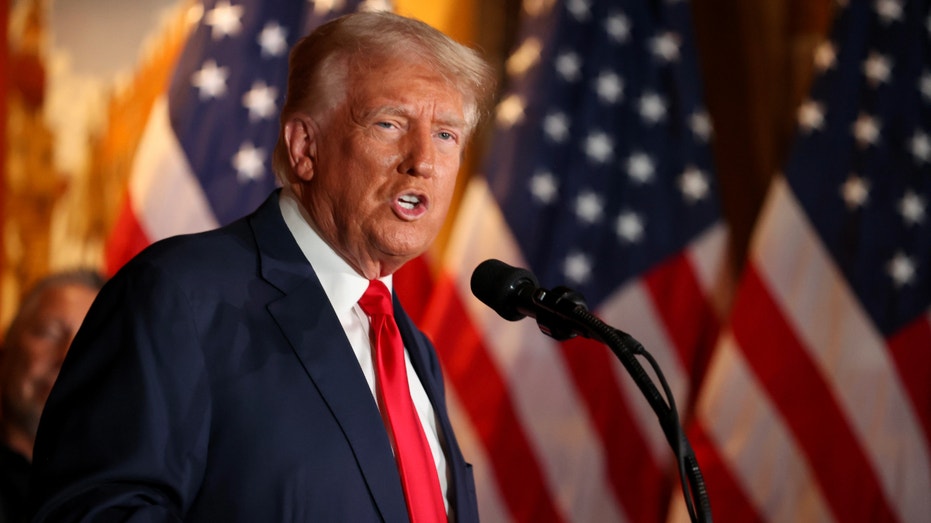
Trump administration officials described the existing structure as “cumbersome” and “bureaucratic.”(Ian Maule/Getty Images)
Despite this, U.S. Chamber of Commerce officials tell FOX Business they acknowledge the shift and are adapting. The B20 will still be held in a revamped format in the U.S. this year, demonstrating an effort by the Chamber to maintain its relevance and voice.
Jessica Boulanger, the Chamber’s senior vice president and head of communications and public affairs, said in a statement to FOX Business that the organization is working to host a “B20 unlike any other.” This indicates an attempt to differentiate its approach and cater to a different segment of the business community, perhaps focusing on small-to-medium enterprises (SMEs) or broader industry concerns not covered by the BRT.
“We’re working with top government and business leaders to hold B20 USA in November with dialogue that will be focused on a ‘back to basics’ agenda consistent with the Trump administration’s vision,” Boulanger said, suggesting a pragmatic alignment with the administration’s stated goals, even if through a parallel track.
“We welcome the engagement of the BRT and other organizations to support pro-growth dialogue between government and business.” This conciliatory tone suggests an understanding of the political landscape and a desire to contribute constructively, even if no longer the primary conduit.
**CLICK HERE TO READ MORE FROM FOX BUSINESS**
A source familiar with the plans for the B20 told FOX Business that Ross Perot Jr. will be the chairman of this year’s conference, a figure known for his business acumen and conservative leanings, further hinting at the “back to basics” agenda.
The move collectively reflects a broader shift in how business voices are integrated into global economic discussions during the U.S. host year. By giving top CEOs a more direct, unmediated role, the administration is clearly aligning their input more closely with its specific policy objectives, potentially signaling a more decisive and less compromising stance in global economic negotiations. This institutional change underscores the administration’s preference for direct access and influence from large corporations, which could lead to more predictable policy outcomes in certain sectors but also raise concerns about the breadth of business representation in global governance.
—
**Market Impact:**
This strategic realignment of G20 corporate engagement carries significant implications for financial markets. The direct channel established with the Business Roundtable could inject greater certainty into policy formulation for large corporations, potentially boosting sentiment in sectors aligned with the administration’s “deregulation, energy dominance, and innovation” agenda – notably traditional energy, manufacturing, and tech firms benefiting from R&D incentives. Investors may anticipate accelerated approvals for projects, reduced compliance costs, and a more favorable operating environment for these segments, potentially driving capital expenditure and M&A activity. Conversely, the sidelining of the broader U.S. Chamber of Commerce and the traditional B20 framework might introduce uncertainty for SMEs and industries reliant on more diverse advocacy, or those that might benefit from multilateral consensus on issues like climate change or broader trade liberalization. Currency markets could see increased volatility as the U.S. projects a more nationalistic economic stance, impacting trade relations and global capital flows. Overall, while promising clarity and tailored support for specific corporate behemoths, this shift could also lead to a more fragmented global economic dialogue, posing new challenges for international investment strategies and cross-border partnerships.