
Stay informed with free updates
Simply sign up to the EU economy myFT Digest — delivered directly to your inbox.
Key Takeaways:
- Strategic Ambivalence Deters Capital:Europe’s reactive, fragmented industrial policy, contrasting with the proactive, market-shaping approaches of the US and China, creates investor uncertainty and hinders the formation of continent-spanning champions in critical growth sectors.
- Erosion of Competitiveness in Key Sectors:Half-hearted commitments to domestic production in areas like EVs, batteries, AI, and defence risk locking European industries into perpetual catch-up, impacting their long-term valuations, market share, and technological sovereignty.
- Call for Unified Vision and Capital Markets:Without a clear, ambitious economic roadmap backed by integrated capital markets and concerted public investment, Europe will struggle to attract and retain the talent and financial resources necessary to compete effectively in the global innovation race.
In the high-stakes arena of global economic competition, where capital flows chase innovation and growth, Europe often appears to choose caution over conviction. When faced with seismic shifts in technology and industry, the continent exhibits an unfortunate tendency towards fear—a defensive crouch—rather than the aggressive pursuit of opportunity that characterises its global rivals. This posture has significant implications for investors, market valuations, and Europe’s long-term economic standing.
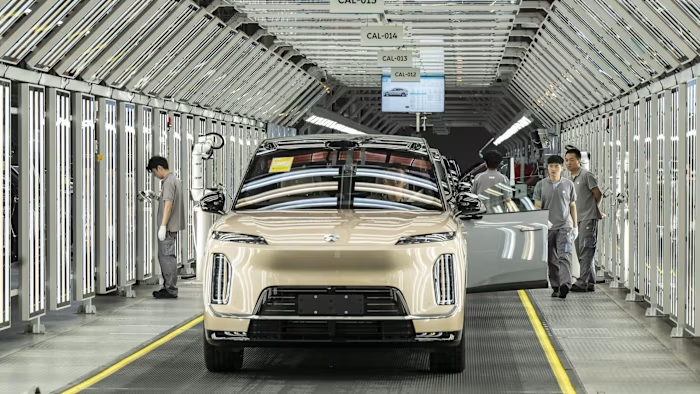
Consider the rapid ascent of China, which in just a few decades has not only vaulted to the frontier of several new technologies—chief among them batteries and electric vehicles—but has made them commercially viable at a scale that now threatens established incumbents. Chinese manufacturers like BYD and CATL command dominant market positions, underpinned by massive state-backed investment and vertically integrated supply chains, reshaping the global automotive and energy storage landscapes. The US, similarly, has built and come to dominate several industries that barely existed a generation ago: search, cloud services (via giants like Amazon Web Services and Microsoft Azure), social media, and now large language models (through companies like OpenAI and Google). These are not merely technological achievements; they are engines of immense economic value, generating trillions in market capitalisation and attracting vast pools of venture capital and talent.
The European reaction to this could have been a bold declaration: if they can innovate and scale, so can we. Both China and the US demonstrate not how hard it is to break new ground, but how eminently possible it is, given strategic focus and capital commitment. Europe, with its substantial resources, highly skilled workforce, and internal market scale, certainly possesses the fundamental ingredients. Yet, its focus remains disproportionately on the perceived disadvantages of progress elsewhere, rather than on cultivating the opportunities within its own borders.
It is, of course, correct to worry about the ways that Chinese and US achievements put Europe on the defensive. Concerns range from the bloc’s dependence on critical raw materials, defence capabilities, and digital technologies from external powers, to the threats posed to jobs and profits in traditional European industries. This defensive posture translates into tangible market risks: vulnerability in critical supply chains, erosion of market share for legacy European industries, and a potential chilling effect on foreign direct investment into strategic sectors. Hence, the proliferation of policies designed to promote domestic production and safeguard European interests.
Programmes such as the Safe common borrowing initiative were designed to favour European defence manufacturing, intending to stimulate local defence contractors and reduce reliance on non-EU suppliers. The Industrial Accelerator Act (IAA) aims to create “lead markets” for local supply chains by limiting public sector purchases and subsidies to “Made in Europe” supplies, signalling a preference for indigenous industrial capacity. Proposed cloud and AI development legislation contains a “sovereignty framework” for particularly sensitive applications, alongside some encouragement of local content, seeking to protect European data and foster home-grown digital ecosystems. Furthermore, Brussels has expressed intentions to favour European quantum technology companies in public contracts, eyeing the next frontier of computing power.
However, a closer look often reveals a disheartening lack of conviction underpinning these initiatives, leading to market scepticism. Europe’s heart is too often not truly in it. Some member states, for instance, are pushing for laxer limits on spending common funds on defence kit from outside Europe, diluting the intended boost for European defence primes. The local content requirements for digital services are modest to non-existent, even as European cloud and AI providers clamour that they have competitive solutions, only to see governments and major corporations continue to opt for US giants, who benefit from established scale and vast R&D budgets. This reluctance directly impacts the ability of nascent European tech firms to secure crucial early contracts and scale efficiently, thereby hindering their market potential and investor appeal.
Moreover, in the critical debates over the IAA, France and Germany have reportedly reached an understanding on protecting the car industry from Chinese EV imports. While ostensibly supportive of European manufacturing, their proposed plan significantly guts the requirement to use European-made batteries and battery materials compared with the IAA’s original, more stringent “Made in Europe” proposals. This compromise sends a mixed signal to the market, diminishing investor confidence in the long-term viability of an entirely European battery value chain and potentially reinforcing reliance on Asian suppliers for a critical component of the green transition.
Why such a halfhearted approach? Some reasons are well known and frequently cited in market analyses. One is that the EU market remains fragmented, lacking a truly unified capital market or robust common fiscal capacity, which limits the scale of collective investment. Yet, it is within leaders’ gift to solve these structural challenges. Another often-cited deterrent is the threat of retaliation from the US against attempts to overtly favour European production and provision where American companies have already cornered significant market share, particularly in digital services and advanced manufacturing.
More profoundly, European leaders struggle to commit to a clear, transformative goal for their economies, a strategic vision comparable to China’s state-led industrial master plans or the US’s private sector-driven innovation surges. If they doubt this is possible, they are mistaken. Proof of concept already exists in a European country under immense duress: Ukraine’s defence industry, galvanised by conflict, shows how rapidly innovation can be taken to the cutting edge and manufacturing capacity scaled up, demonstrating agility and market responsiveness under extreme pressure. This resilience and rapid adaptation, if applied to strategic commercial sectors across the broader EU, could unlock significant value.
Outside the urgency of Ukraine, however, Europe struggles to formulate, let alone agree upon, what it wants its economy to look like in 10 to 15 years’ time, beyond merely propping up what already exists. The recent UK-EU deal on food safety and animal and plant health illustrates the point. It removes barriers to trade in exchange for alignment with EU rules, a pragmatic step. However, it was not motivated by a strategic decision about Europe’s long-term food supply chain resilience or competitive positioning, but by something more pedestrian: making things cheaper for businesses and consumers. Reasonable enough, but hardly economic statecraft that signals a proactive shaping of future markets.
The lack of such conscious economy-shaping stops the EU from communicating credibly to China and the US that building certain capacities of its own is non-negotiable, irrespective of immediate cost efficiencies. It also obfuscates whether local preference should include friendly — “madewithEurope” — countries in return for reciprocity. If so, reciprocity must go beyond mere access to other countries’ subsidies. Those other countries must genuinely share the goal of autonomous supply chains and be willing to discriminate in favour of EU companies as needed, creating a true partnership rather than just a market-access agreement.
China decided it wanted a battery industry and acted accordingly — internally through massive state investment and overseas through strategic acquisitions and partnerships. The US does not always pick new industries so blatantly, but it certainly funds them vigorously through grants, tax incentives (e.g., IRA, CHIPS Act), and defence spending. Once these industries emerge, the US is adamant its companies should dominate. Without a similar level of ambition, strategic clarity, and decisive capital allocation, Europe will keep playing catch-up in a game always defined by others, leaving its industries vulnerable and its investors seeking opportunities elsewhere.
[email protected]
Market Impact:
The persistent lack of a cohesive, forward-looking economic strategy in Europe carries significant market implications. Investors, seeking clarity and robust growth prospects, may continue to divert capital away from European equities and into regions demonstrating more decisive industrial policies and innovation ecosystems. This capital flight can depress valuations of European companies, particularly those in nascent tech sectors or those grappling with intense international competition. Furthermore, the reliance on external supply chains and technologies increases systemic risk for European industries, making them susceptible to geopolitical tensions and commodity price volatility. Without a unified strategic vision and concerted effort to foster domestic champions, Europe risks becoming a market for others’ innovations rather than a hub for its own, potentially leading to lower long-term GDP growth, diminished competitiveness, and a weaker standing for the Euro against currencies backed by more dynamic economies. The opportunity cost of this strategic ambivalence is substantial, translating into missed investment opportunities, underperforming asset classes, and a gradual erosion of Europe’s industrial and technological base.