
Key Takeaways:
- **Immediate Airline Sector Volatility:** The nationwide ground stop triggered immediate concerns for airline profitability and share performance, as carriers faced substantial costs from flight cancellations, diversions, and passenger rebooking, impacting Q1 earnings forecasts.
- **Urgent Call for Infrastructure Investment:** The incident underscored critical vulnerabilities in the U.S. air traffic control system, highlighting the urgent need for significant federal investment in modernizing aging technological infrastructure and potentially creating opportunities for aviation technology providers.
- **Broader Economic Ripple Effects:** Beyond airlines, the disruption created ripple effects across the travel, tourism, and logistics sectors, affecting hotel occupancy, car rental demand, and supply chain efficiency, while also denting consumer and business confidence in air travel reliability.
Department of Homeland Security Secretary Markwayne Mullin says “public was never at danger” during Friday’s ground stop of flights at U.S. airports.
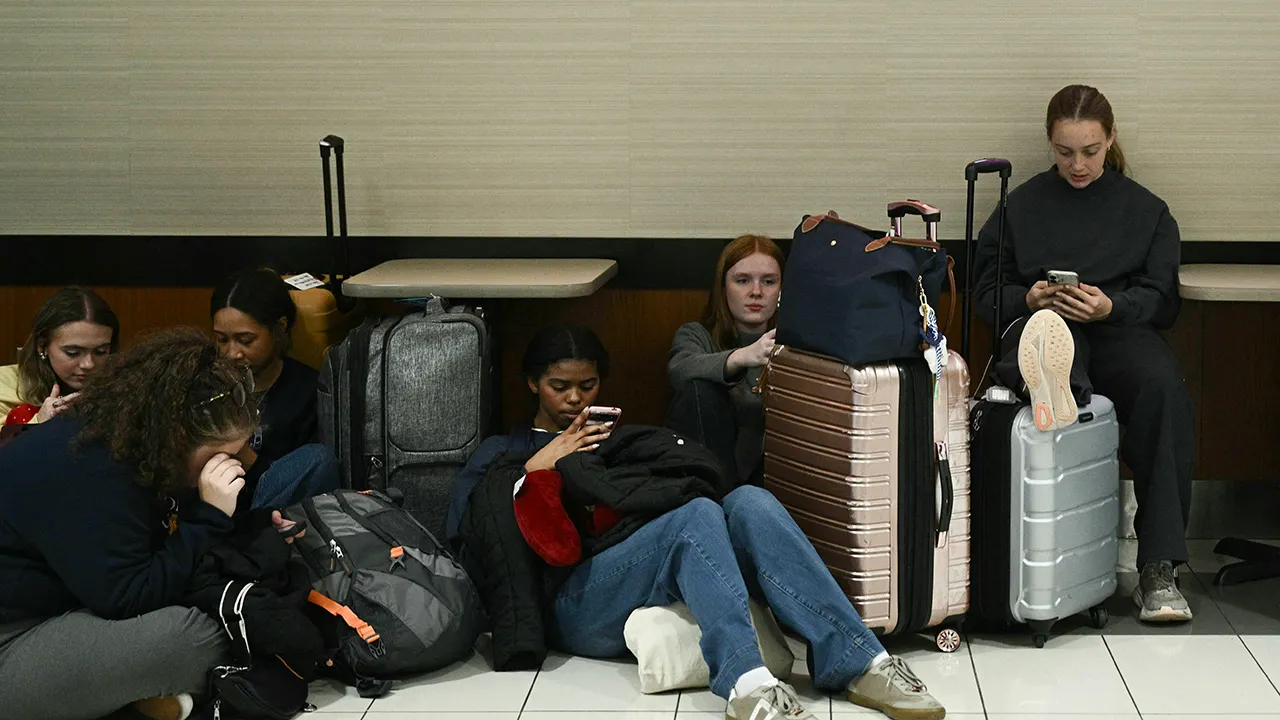
A sweeping, hours-long nationwide ground stop, initiated by the Federal Aviation Administration (FAA) on a recent Friday afternoon, sent a palpable tremor through the U.S. travel industry and financial markets. The directive, which effectively halted all domestic departures, was eventually lifted after 8 p.m. ET, as announced by Transportation Secretary Sean Duffy during a White House news conference. While the immediate crisis of halted planes eventually subsided, the economic fallout and the spotlight cast on critical infrastructure vulnerabilities continue to resonate, prompting a closer look at the financial implications for airlines, associated industries, and the broader economy.
Secretary Duffy, addressing the nation from the White House briefing room, confirmed, “We’ve opened up the airspace,” but cautioned that the return to normalcy would be gradual. “It’s going to be slow,” he stated, advising travelers to “check with your airline.” The root cause, he explained, traced back to approximately 3:36 p.m. ET, when the U.S. began experiencing “instability for our radar and communications” system, necessitating the ground stop out of an abundance of caution. This intermittent loss of critical communication and radar capabilities, while not leading to a complete blackout – certain “life-saving flights were allowed to continue” – was severe enough to warrant the unprecedented shutdown of one of the world’s busiest airspaces.
The incident immediately sparked concerns among investors and analysts regarding the operational resilience and financial health of major U.S. carriers like American Airlines, Delta Air Lines, United Airlines, and Southwest Airlines. Even a few hours of ground operations ceasing can translate into millions of dollars in lost revenue, increased operational costs from crew rescheduling, passenger accommodations, and the domino effect of missed connections and stranded aircraft. Share prices of these airlines, already sensitive to fuel costs, labor disputes, and demand fluctuations, experienced an initial dip as the news broke, reflecting market anxiety over potential earnings hits.
Duffy’s candid admission that the U.S. possesses an “incredibly old air traffic control system” and that “The system got overloaded” served as a stark reminder of long-standing infrastructure challenges. He further noted that previous administrations, including President Donald Trump’s, had called for funding to update the system, rhetorically asking, “What’s more important than having an air traffic control system that works?” This statement brought into sharp relief the urgent need for capital investment in modernizing critical aviation technology, a potential boon for aerospace and defense contractors specializing in air traffic management solutions and software.
An alert issued by the FAA at 4 p.m. ET confirmed the nationwide ground stop, citing “communication issues impacting multiple Air Route Traffic Control Centers.” The agency initially stated, “FAA technicians are investigating the issue,” and later clarified that the ground stop was implemented “due to extraordinary circumstances and for reasons of safety,” with all departing traffic instructed to “remain ground stopped until further notice.” Inbound international flights, crucial for global commerce and tourism, were managed on a “case-by-case basis,” reflecting the complex web of international agreements and economic dependencies.
Department of Homeland Security (DHS) Secretary Markwayne Mullin, during the same news conference, moved to reassure the public that “the public was never in danger through this process,” reiterating that the measure was an “abundance of caution.” While the FAA initially pointed to a communications issue, it notably did not rule out a cyberattack, a critical consideration for cybersecurity firms and defense contractors, whose valuations often surge amidst heightened digital threat perceptions. However, Air Space Intelligence (ASI), a company contracted by FAA/DOT to oversee the rollout of new AI ATC software, quickly clarified, “The current ground stop is not based on or a result of the SMART system, any product of ASI or our integration with FAA and ATC.” This distinction is vital for companies like ASI, whose market perception and future contracts depend on the reliability and security of their technology.
The incident, while jarring, was not entirely without precedent. Friday’s announcement marked the second time such a nationwide measure had been ordered since the Sept. 11, 2001, attacks, which saw the entire U.S. airspace closed. The more recent comparable event occurred on January 11, 2023, following a catastrophic failure of the FAA’s Notice to Air Missions (NOTAM) safety system, which led to thousands of delayed flights and hundreds of cancellations. Such events highlight the fragility of the nation’s air travel infrastructure and its susceptibility to single points of failure, a risk factor that investors in the airline and logistics sectors must carefully consider.
Immediately following the alert, flight tracking platform FlightRadar24 reported approximately 3,100 flights inbound to U.S. airports, many of which were allowed to land during the ground stop. The sheer volume of affected air traffic underscores the massive logistical challenge and the potential for cascading economic impacts across a multitude of industries. Jim Olson, Chief Communications & Collaboration Officer at Corus, who was stranded at Ronald Reagan Washington International Airport, vividly described the scene: “News started crossing our screens and on our phones. … The headline was that there’s a nationwide ground stop due to an extraordinary safety concern of some kind. So a very, a very vague message, at best. There was a lot of concern at that point.”
Olson, acknowledging his background in the airline industry, stressed the rarity of such an event: “Nationwide ground stops are very rare. … My initial instinct was to circle back to what it appears to be — a technical issue of some kind. Technical issues with an antiquated air traffic control system are nothing new. It’s never caused, or at least in recent years, not caused a nationwide ground stop, but that was kind of my initial instinct.” This sentiment reflects a broader industry understanding of the FAA’s technological debt, which, when triggered, can have profound financial repercussions.
The human element of the crisis translated directly into economic strain. Stranded passengers, like the one at New York’s LaGuardia Airport vowing to sleep there, or the two Canadian travelers whose flight to Toronto was rebooked for Tuesday – one of whom had diabetes and lacked his insulin medication – exemplify the severe personal and financial costs. Fox News national correspondent Bryan Llenas reported from LaGuardia, detailing over 260 cancellations and 600 delays at that airport alone. These disruptions impact not just the airlines but also the hospitality sector (hotels, restaurants), ground transportation (car rentals, ride-sharing), and local economies dependent on tourism and business travel. Companies relying on just-in-time logistics via air cargo also faced delays, potentially disrupting supply chains and manufacturing schedules.
Transportation Secretary Sean Duffy utilized X to provide updates: “The @FAAnews issued a nationwide ground stop for all U.S. airports following a communication issue impacting all Air Route Traffic Control Centers. FAA technicians are investigating the issue. We will provide immediate updates as we have them.” Mullin further emphasized at the White House, “This is not 9/11,” clarifying it was being investigated as a “telecommunication outage,” rather than a terrorist act. This distinction is crucial for market stability, as fears of national security threats can trigger more severe and prolonged market reactions compared to technical glitches.

Airline passengers wait Friday at Ronald Reagan Washington National Airport, Washington, D.C.(Brendan Smialowski/ AFP via Getty Images / Getty Images)
TSA DISCOVERS SUSPECTED COCAINE WORTH $27,750 HIDDEN IN COFFEE CONTAINER AT AIRPORT

People line up to try and retrieve luggage during delays and cancellations at LaGuardia Airport in Queens, N.Y., on Friday.(Adam Gray/Getty Images / Getty Images)
FAA GROUND STOP LEAVES COLLEGE FOOTBALL TEAMS STRANDED ON EVE OF CRUCIAL SATURDAY SHOWDOWNS

A departure screen shows canceled and delayed flights at a terminal of Chicago O’Hare International Airport on Friday.(Kamil KRZACZYNSKI / AFP via Getty Images / Getty Images)
AMERICAN AIRLINES PLANE NEARLY HIT BY AIR FRANCE JET AFTER TAKEOFF AT LAX
Richard Schroeder, an airline passenger traveling from Denver to Los Angeles, describes his experience being stuck aboard a plane during the nationwide ground stop.
NBA AND NHL TEAMS SCRAMBLE AS NATIONWIDE FAA GROUND STOP DISRUPTS WEEKEND SPORTS TRAVEL

Air Traffic Control issued a ground stop notice on Friday.(FAA Air Traffic Control System Command Center / Unknown)
Market Impact:
The nationwide ground stop delivered a swift, albeit temporary, shock to the aviation sector and its peripherals. Airline stocks saw immediate pressure due to direct revenue losses from cancellations, increased operational expenditures for rebooking and passenger care, and a potential hit to brand reputation and future bookings. Beyond airlines, the incident highlighted the systemic risks posed by outdated infrastructure, potentially spurring a push for increased federal spending on air traffic control modernization. This could create significant contract opportunities for technology and aerospace firms specializing in next-generation ATC systems, cybersecurity, and communication platforms. The ripple effects extended to the broader travel and tourism industry, impacting hotels, car rental agencies, and hospitality services, alongside implications for air cargo logistics and supply chain reliability. While the immediate financial dent is absorbed, the long-term market impact hinges on the FAA’s response to infrastructure upgrades, investor confidence in the resilience of air travel, and the government’s commitment to ensuring the stability of a vital economic artery.
The unprecedented, nationwide ground stop issued by the Federal Aviation Administration (FAA) sent shockwaves through the U.S. travel sector and broader economy, highlighting critical vulnerabilities in aviation infrastructure. The disruption, attributed to systemic issues rather than a cyberattack, forced thousands of flight cancellations and delays, reverberating across airlines, logistics companies, and consumer services.
Key Takeaways:
- Significant Airline Financial Hit:U.S. airlines faced immediate revenue losses from cancelled flights, increased operational costs due to crew repositioning and passenger accommodations, and potential long-term impacts on customer confidence, especially leading into peak travel seasons.
- Supply Chain and Economic Ripple Effects:Beyond passenger travel, the grounding affected air cargo operations (FedEx, UPS), potentially disrupting critical supply chains and delaying time-sensitive goods, underscoring the interconnectedness of air transport to the wider economy.
- Urgent Call for Infrastructure Investment:The incident underscores the severe underinvestment in critical FAA Air Route Traffic Control Center (ARTCC) systems, prompting renewed calls from Congress for substantial federal funding to modernize aging infrastructure and prevent future, costly disruptions.
The widespread operational halt came as FAA officials worked to resolve what was described as overwhelming system issues. Mullin, a representative privy to the crisis management, assured the public that all flights were accounted for and that there was no immediate threat to public safety. “We are able to communicate at certain levels, but it’s overwhelmed some of the systems we have,” Mullin explained, highlighting the systemic stress. He noted that Secretary Duffy was actively involved, coordinating with the President and other officials in what was described as a “phenomenal job in crisis mode.”
Air traffic control audio captures an announcement ordering all airports ground stopped and notifying aircraft operators of the nationwide halt (Credit: ATC.com)
President Donald Trump was briefed on the situation, later informing Fox News that the incident did not “seem” like a cyberattack. This assessment was crucial for market stability, as a confirmed cyberattack on critical infrastructure could have triggered far more severe and prolonged economic fallout, impacting cybersecurity stocks and overall investor confidence. The FAA itself debunked claims of a software outage issue, while senior officials speaking to Fox News Digital reiterated their belief that the problem was not “anything nefarious.” This distinction helped temper immediate panic regarding national security implications, allowing the focus to shift to operational recovery and infrastructure concerns.
Video from inside Denver International Airport shows passengers waiting after disembarking from planes Friday during the nationwide ground stop.
By 6 p.m. ET, the FAA confirmed the ground stop remained in effect, with recovery processes underway. “As en route facilities recover, flights will be allowed to depart through coordination with the Air Traffic Control System Command Center,” the agency stated, signaling a phased return to normalcy that would still entail significant delays and cancellations through the evening and potentially into the next day. This protracted recovery period translated directly into escalating costs for airlines and mounting frustration for travelers, particularly as the incident occurred near a peak travel period.
Major airports across the nation swiftly issued statements, detailing the immediate impact on their operations. Atlanta International Airport, a key hub, noted the temporary suspension of departures, advising travelers to consult their airlines for updates. Boston’s Logan International, Miami International, and Orlando International Airports echoed these warnings, with Orlando specifically highlighting approximately 220 scheduled departures affected between 3:30 p.m. and midnight. The ripple effect on airport revenues, from reduced concession sales to parking fees, while minor compared to airline losses, nonetheless contributed to the broader economic toll.
TRAVELERS AT NEW YORK LAGUARDIA AIRPORT DESCRIBES AIRPORT CHAOS AFTER GROUND STOP ISSUANCE

A view from the Chicago O’Hare International Airport, filled with waiting passengers on Friday.(Jacek Boczarski/Anadolu via Getty Images / Getty Images)
The Nashville International Airport went further, advising stranded passengers to secure hotel accommodations due to the uncertainty surrounding the ground stop’s duration. This created an unexpected surge in demand for local hospitality sectors, potentially leading to increased room rates but also operational strains for hotels and transportation providers. Pittsburgh International Airport clarified that essential medical and military flights remained operational, insulating these critical services from the broader commercial disruption.
Airlines faced an immediate operational and financial crisis. American Airlines, a major carrier, acknowledged the nationwide pause, anticipating “disruption to our schedule for the rest of the day” and committing “all hands on deck” to mitigate the impact. This meant significant unbudgeted expenses for rebooking, customer service, crew overtime, and potential compensation for stranded passengers. JetBlue issued a similar statement, emphasizing safety and advising customers to “expect delays and cancellations,” directly impacting their revenue forecasts for the affected period and potentially incurring costs associated with their customer loyalty programs.
STRANDED AIR TRAVELERS URGED TO BOOK HOTEL ROOMS AMID NATIONWIDE FAA GROUND STOP

American Airlines planes remain at their gates, as a Delta Air Lines plane sits on the tarmac at LaGuardia Airport on Friday.(Adam Gray/Getty Images / Getty Images)
The financial implications for the airline industry are considerable. Each hour of a nationwide ground stop can cost airlines millions of dollars in lost revenue, fuel burn, crew displacement, and passenger reaccommodation expenses. Coming in mid-November, as indicated by Frontier Airlines’ travel waiver for flights between November 13-15, the incident posed a particular threat to the crucial holiday travel season, potentially dampening consumer confidence in air travel just as booking momentum typically builds.
The Senate Committee on Commerce, Science and Transportation, led by Ted Cruz, quickly weighed in, framing the incident as a stark reminder of critical infrastructure deficiencies. The Committee’s statement on X highlighted that a nationwide ground stop is a “rare but major disruption” likely related to the FAA’s Air Route Traffic Control Centers (ARTCCs). Crucially, the statement pointed out that “no new ARTCC has been built since LBJ was in office,” underscoring chronic underinvestment. Chairman Cruz referenced successfully securing $1.9 billion in the Working Families Tax Cut Act to replace and consolidate outdated ARTCCs, making a strong case for prioritizing these modernization efforts to prevent future economic losses and safeguard air travel efficiency.
The ripple effects extended to alternative transportation and logistics. Amtrak reported “higher-than-normal call volumes” as travelers sought rail alternatives, potentially translating into a temporary boost for their revenue but also stressing their capacity. For cargo carriers like FedEx, the ground stop necessitated activating “contingency plans to minimize service disruptions.” This involves diverting resources, re-routing packages, and potentially incurring additional costs to meet delivery commitments, particularly for time-sensitive e-commerce shipments and manufacturing supply chains, which rely heavily on air freight. The ability of such companies to maintain operational integrity directly impacts their quarterly earnings and customer satisfaction.

People wait on board a plane at Ronald Reagan Washington National Airport, Washington, D.C. on Friday.(Brendan Smialowski/ AFP via Getty Images / Getty Images)
Even ancillary services felt the pinch. Enterprise Rent-A-Car confirmed “higher-than-usual demand,” indicating a potential revenue surge for car rental companies from stranded travelers, albeit coupled with operational challenges in meeting sudden spikes in demand. Meanwhile, Microsoft, having experienced its own outage the day prior, clarified that it had “no indication that the FAA’s nationwide ground stop is related to any Microsoft services,” proactively mitigating any potential spillover effects on its stock or public perception of its service reliability.
As the evening progressed, signs of recovery emerged, with some international flights departing from major hubs like Logan, Dulles, and LAX, including routes to Rome, Frankfurt, and Shanghai. Flights to Hawaii were also permitted. This limited resumption signaled a partial restoration of systems, mitigating the most severe economic impact by allowing some long-haul and critical routes to proceed. By just before 8 p.m. ET, the number of planes still in the air had significantly reduced to 389, and Frontier Airlines reported all its flights had landed, continuing to offer travel waivers for affected customers.
Fox News’ Jessica Mekles contributed to this report.
Market Impact:
The FAA ground stop delivered an immediate, sharp blow to the airline sector, causing significant operational disruptions and estimated multi-million dollar revenue losses for carriers like American, JetBlue, and Frontier. While the absence of a cyberattack mitigated a more severe market panic, investor confidence in aviation infrastructure and operational resilience will likely face scrutiny. The incident provides strong momentum for increased federal investment in FAA modernization, with the $1.9 billion already earmarked for ARTCCs potentially serving as a baseline for future infrastructure spending packages. Secondary beneficiaries included alternative transportation providers like Amtrak and car rental companies experiencing demand surges, while logistics firms like FedEx absorbed additional costs to manage supply chain continuity. The event underscores the critical economic interdependence on robust and modern air traffic control systems, signaling potential legislative action and heightened focus on aviation security and technology upgrades in the near future.